The Trend Report Podcast
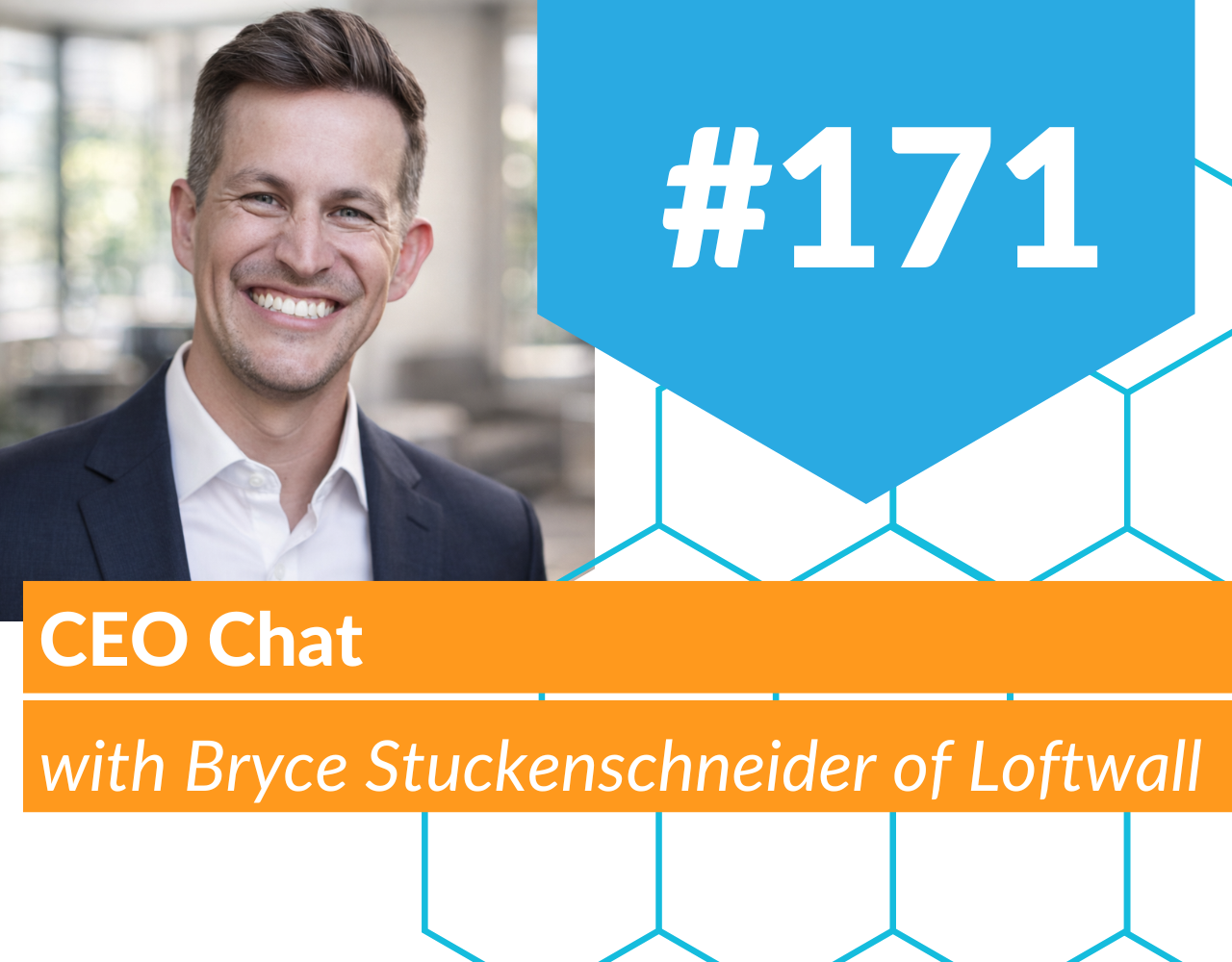
CEO Chat with Bryce Stuckenschneider of Loftwall
SPEAKERS
Sid Meadows, Bryce Stuckenschneider
What do office furniture, AI, and continuing education have to do with each other? Well, we're gonna dive into all of that in today's episode.
Sponsor:
We'd like to thank our presenting sponsors, Avanto, services and software that streamline how you operate and The Collaborative Network, a platform where leaders in the contract interiors industry unite.
Avanto Ad:Is your team overloaded? Avanto helps teams save time and money by using AI to handle daily work from order management and AP processing to task handling without adding headcount. It works inside the tools you already use, with no new dashboards to manage. Go to avanto.com to see how we can run your daily operations.
Sid:I'd like to welcome you back or welcome to the Trend Report, your inside look at the people, the products, and the ideas shaping the future of workplace design. I'm your host, Sid Meadows, and I'm glad that you've joined me for our first episode of season seven, and we're kicking things off with our popular CEO Chat series with our returning guest, Bryce Stuckenschneider, the CEO of Loftwall.
Hey Bryce, how are you?
Bryce:Um great. I'm excited to be an alumni of the program.
Sid:You are an alumni. We have to go way back to 2020 in the first season. Bryce's first CEO chat was episode number seven. That was in sometime in May in 2020. So it's and now you are episode 170. So we've kind of come a long way.
Bryce:You've had a lot of practice between our first time.
Sid:Yeah, we have. And I think if I think both of us maybe have a few more gray hairs.
Bryce:Oh, yeah. Yeah. I wear hats for a reason. Absolutely.
Sid:2020, there was a lot of craziness going on in the world when we recorded that. Navigating through turbulent times, and that's, I mean, all kinds of stuff. And now we're in a different form of turbulent times. Yeah. Yeah. Workplace, who's coming back? What are they doing? Are they coming back?
Bryce:I don't feel like we get at this point, you know, two years of uh stasis. You know, it's like every every 24 months, something crazy has to happen. And you your job is to decipher where we are in that cycle right now. And are you ready for whatever the next curveball is?
Sid:Are you ready? That should be the key phrase of the year. Are you ready? Because who knows tomorrow we can open the door and there'll be another curveball.
Bryce:Yeah.
Sid:So, Bryce, give us an update about Loftwall. What you guys are always busy. There's always something brewing, new products coming. So tell us a little bit about what's up at Loftwall.
Bryce:Yeah, I think some of that just stems from we're just naturally curious people. Uh we find that we've attracted some similar-minded people to the team over the years. I'm coming up on seven years at the company next month. And I look back at the shape of our team back then to now, and curiosity is just kind of woven into everybody, which means you're always up to stuff. You're always doing something. It might be product, it might be process, it might be people. And, you know, we got all three of those balls in the air that we're juggling right now to start the year that we're excited about. And I know probably the biggest one is doubling down on the stuff that we do great. You know, we we found that dealers love working with us because we love going fast. We like saying yes to crazy ideas, and at the end of the day, it's you're gonna pick up the phone and talk to a person. You know, like those are three things that we're gonna build the business around. And sometimes that can be in short supply, you know, if all it's not in the catalog and custom takes 12 weeks, and you know, just talk to this chat bot real quick and maybe you can get to a customer service rep. Like those are just things that are never gonna be us, right? But we're we're gonna parlay that into some really fun new products this year that that I'm pumped about, products we've been working on for a long time. That I don't know, probably shortly after this podcast airs, we will we'll be launching some of them. So we're good.
Sid:Okay, that's great. So we need to be on the lookout for product launch announcements from Loftwall. So now, Bryce, when we met the last time or when we recorded, we actually did it in person. And it was at your I had all kinds of technical issues. I'm just remembering this now. Remember the mic came unplugged, quit working. We're trying to do both of us on one mic. Yeah, that I was I was a novice podcaster.
Bryce:I, you know, I thought that was like a move that you had just to get me to sit like six inches away from your face. I was like, man, this guy's got this is a unique podcasting style, but you're my first.
Sid:Well, with no video then, but now that I'm remembering it, we're in person at your old location, and now you guys have moved into a bigger location, more I'm not gonna say more central, but definitely a little bit easier to get to than having to drive all the way downtown, in my opinion. I've been to your new place, but how is the new place?
Bryce:It's it's good. It's it's funny. We we signed the lease on it probably a month after you and I met at the old place, and that that lease comes up like pretty soon. And now we're trying to decide, I think we need more space, what are we gonna do? Which is a great problem.
Sid:I'd say that is a really great problem to have. I need more space, yes.
Bryce:Yeah, yeah, and it's it's been good. And you know, I know not all your listeners are in the DFW Metroplex, but Loftwall right now is in what we call mid-cities, so that's halfway between Dallas and Fort Worth, really close to the airport, which means you can kind of live anywhere in DFW and work for Loftwall, which is important to us. Uh, before we were downtown Dallas, right? And that's that's a vibe.
Sid:
It's a just a hike for people like me.
Bryce:
Yeah, it's a hike, and and I tell people now, like, hey, you know, you come visit us. We're not in the sexiest part of town, but it's an easy place to get to, and it lets us just recruit from all over, which has been great. We love it. I always tell people like you can almost see the Cowboys Stadium from our office, which that's like America's touchstone of where do you live.
Sid:So yeah. Not that there's any real football to watch there, but I mean, we we won't go down that rabbit hole.
Bryce:No, it's it's a soap opera with adult men and pads. So yeah.
Sid:Oh, that's great. So give us a glimpse of like can you tease us like what's gonna be a product that you're gonna launch this year?
Bryce:Yeah, yeah. So, you know, when I started the company, we were really focused on partitions and and room dividers and and a category we still do really well in. And we wanted to plant this flag uh to be more than about that, but about privacy in general. Like privacy in the office. We don't we don't sell walls, partitions, or screens, we sell privacy. And we felt like that was a unique corner that we could stand on and built this whole plan around it. We're loving the direction we were headed, and then uh, you know, COVID was the curveball of all curveballs, where we were trying to sell soft materials to allow focus. People were saying we don't need to be in the office, and if we do, we need hard goods because we want to spray it down with every bleach known to mankind. And so that was like a two, two and a half year diversion from our real plan, our real goals. And it was it was financially lucrative for the company, right? We pivoted quickly, uh, we grew very quickly, we parlayed that into you know, investing in our people and in the company that we're we're proud of. But, you know, we picked our heads up probably 2023, and we're like, oh, now we actually get to tell the story we wanted to tell all along. And that's kind of what we've been doing for the last couple of years and moving more into acoustic treatments, wall coverings, acoustic baffles, sound masking, things like that. I think the next frontier for us is uh is what we're just hearing from customers. We need more flexibility. And so I think you're gonna see a lot of uh freestanding architecture from us, things on a grander scale than you've ever seen from a company like ours. Uh, something you can't get from a mid-market US manufacturer right now. You either have to go to the big guys or you have to go to Europe. And you know, that comes with its challenges. And we think that there's there's a sweet spot for what we're what we're gonna come out with. And um, we think it's novel. Like it's something we we put a lot of time on that we think has some IP around it. We're pretty pumped, and and we've given a glimpse to a few of our reps and and the excitement we can't launch it fast enough for them, which is always a good problem, too.
Sid:Yeah, they always want it. You want it yesterday. So you have always been somebody that I view as being super creative, lots of ideas. And you know, almost two years ago now I bumped into you at Orcatec. And I know that you've been there a few times. What kind of inspiration is a European show for you and your product roadmap? Because product development is something that we always want to talk about, and people want to know what's coming and understand why it takes 12 months or longer to bring a product to market and these kinds of things. But I really want to like, where's your vision come for like what's the future of product development at Loftwall?
Bryce:Yeah. So part of that is informed from you know my time at Claris. I got to see a you know front row seat to what people thought was a pretty basic product, you know, like a rectangular piece of glass that just has paint on the back, and see what is what does vertically integrating do? Like the freedom it gives you in design when you can do all of the processes to it. Right. And Claris had a little bit more money behind it, and so we could take huge swings, but we've had to take calculated swings at Loftwall, and Orcatec's a great place for us to go test some of our ideas. Designers I trust have often said European design is two, three, five years ahead of what you'll see on the coast, on the coasts in the United States, let alone you know in the heartland. And so for us, we've convinced our team it's a little bit like looking in a crystal ball. And now it's a cloudy crystal ball. Like you've got to go and you gotta really discern. And each time we've gone back to a show like Orcatec, and we want to go to more shows, whether it's Orcatec's other shows, you know, they've got uh a show in Tokyo now that we're interested in. Uh I I've been to Clerkenwell Design Week in London and had an you know incredible experience with that. It just opens your mind. Like this is what's out there. But then the challenge for us recently has been we can't keep that knowledge or that that peak into the crystal ball to a select few people on our team. Like we got to keep bringing more and more people. So this last time that we went, uh, you would think we brought eight or nine people from our team and really let let them loose. And it was a great, you know, cultural team bonding thing, but people came back and now they will fight for their their ideas and they will cite things they saw you know a year and a half ago at the show. And so uh yeah, highly recommend it for any manufacturer. And then it's fun running into other US-based manufacturers over there, right? Because, you know, we're in a way, we're neighbors in a pretty small industry, and most of us are in this industry for a long time. And so you build deep relationships and you do the right thing, you take care of people, and and that stuff's fun, whether it's on our soil or overseas.
Sid:Yeah, I I actually agree with that. And for the first time this year, which is in May, I'm going to Clerkenwell, and then I will also be going back to Orcatec. It's just so great to be informed about what they're doing to help, you know, understand where we might be going or what's coming and see new ideas. But I mean, it's so different from Chicago Design Week, I think is what we're officially calling it these days, which includes design days and NeoCon, because the two are working together, and we will have more coming on that in a couple of months, but uh and that initiative that they're doing jointly. But, you know, it's interesting just to see what they're doing over there and compare it to where we are here. So I'm excited about going to both.
Bryce:And I've never been to Clerkenwell, so yeah, it's there's a few things that are really different when you go to a show abroad. It's the way that they procure furniture is completely different than the way we procure it. The way they think about materials is often very different. And even at a show like Orcatec, it's giant if you haven't been. It's hard to explain. I tell people it's it's probably five times the size of NeoCon, but it's across six buildings that span 55 football fields or something nuts. And um crazy. But you'll you'll go and you'll meet a brand there, and they will impress you like crazy. And then you'll get to asking questions and they're very open, which I love. And like, yeah, we we really only sell in our home country over here. And I'm like, oh, what are the challenges of selling, you know, across EU borders, you know, for a country, you know, say it's it's that's in Belgium or an Italian company, and they're like, Oh yeah, 90% of our sales are domestic to our country. And we don't really relate to that in the United States. It's a thing that we have, you know, a benefit to being here is intrastate commerce is just so much more common than the correlation there is like Loftwall only selling into Texas, yeah.
Sid:Versus a Belgium company only selling into Belgium. And that's very, very narrow when you think about the Europe is so big. Like, why aren't they crossing the borders?
Bryce:I think it's a lot of the laws and the rules and the labor unions and you you layer in things like installation. And so some companies do it well, but most really struggle with it. So you know, it just expands your worldview. That's my challenge to people is expand your worldview. You'll see stuff that you you never thought, and if you see people you recognize from the states over there, you know, share a beer, go go get some dessert, some gelato, like or at least try to.
Sid:Yeah, at least try to. We tried to, we tried to, we couldn't make it happen, but we tried. So yeah. It's the effort that counts. So, Bryce, you came to Loftwall in 2020. Here we are in 2026, beginning of 2026. In 2025, late 2024, 2025 have been not a direct correlation to 2020, but man, there have been lots of turbulence happening in our industry. You know, tariffs and the impact of tariffs and this and that, the impact to the workplace and what's happening in the workplace. So, what is one thing that you've learned in leading a company now through what could be called two different series of turbulent times? What have you learned from that process?
Bryce:Yeah, maybe two and a half. Uh I I count the mega mergers in our industry as as their own curveballs, right? Yeah, they are. And and we're not we're not out of those curveballs. Sometimes these turbulent times can overlap. What have I learned? Uh I want to be reminded. I feel the responsibility to remind my people, but to remind myself, we gotta just be great at what we're great at. It's really easy to chase stuff that's outside your lane or chase stuff that is in your sweet spot. And if you have clarity of vision and you know with conviction what you do great, then putting a hundred percent of your time into that is going to give you more dividends than spreading your bets. And I I think it's a head versus a heart thing for me, but but that's a huge lesson, is you know, incredible conviction of that, and then this is a phrase that has become maybe even a little cliche at Loftwall. People roll their eyes a little bit because I say it so much. But we we've started asking ourselves this question, and it's about all parts of life. You could do it for work, you could do it in personal life, whatever. What are you willing to tolerate?
Sid:Ooh, that's a great question.
Bryce:And it's a it's a good one too, and you're you know, it's a new year and everyone's kind of in that like, all right, new habits, new mindset. But if we're if we are consistent asking ourselves, what am I willing to tolerate? And that might be about a lead time, a quality of a response, a relationship, a partnership we may have in the industry, just treating people like humans, like are we really willing to tolerate that? And I think throughout the turbulent times, it's harder to stand your ground on that, right? Because you're like, well, I don't have the luxury. Uh, I'm gonna have to tolerate whatever I can just to stay in the business. And the cultural impact that can have and like the wearing down on the team, I'm like, just learn it's not worth it. But just be great at what you're great at, stand in your convictions and tell people, like be candid with them, just tell them straight up what it's this is who we are, this is what we do, this is this is the way we see the world. And if you see the world a similar way, we'd love to work with you. But if you don't, that's okay. Yeah, we don't have to be partners with everybody.
Sid:That's right. I love that. And I think that you can see when a company or leaders for that matter succumb to what I would call shiny object syndrome, that they go introduce a product because everybody's doing it, or they go introduce a product because they hear it's the hottest thing. And in either scenario, the product that they're introducing has no direct correlation to their brand.
Bryce:Yeah, yeah. And I've been guilty of that. But I I think part of that, back to the conviction of like, what are you great at is chasing the shiny object, is that gonna build the legacy that you want? That's another huge thing for us. We rewrote our core values recently and centered a lot of them around the legacy we want to leave. And that's a legacy can be financial, it can be cultural, it can be interpersonal, it can be my own growth, right? The legacy I want to be better every week when I leave on Friday than when I showed up on Monday. And I I want that to be contagious, right? And so I think the the legacy piece of that has become more clear for us as well. And and it's another like, hey, crystal ball, go back tell 2021 Bryce. What what things, what things should I tattoo on my body in 2021 that I don't forget for the next five years?
Sid:And legacy's one of those words then.
Bryce:Oh, legacy's one of them. I gotta, like remind myself every morning when I wake up.
Sid:Yeah, I bet. So, you know, be great at what you do and what you're great at, which I love that. What are you willing to tolerate? Both great things leaning into legacy and how you're gonna build out a legacy. And there's all these other things shaping in our world. And I know when I met with you, gosh, about about six months ago, I came down to your new office and we sat and chatted for a little bit, and you talked about AI. And this theme has been out there, it's been out there for years, let's be clear. If you've ever used Amazon Alexa, you've been using AI. If you've ever talked to Google, you know, hey, Google do this, you're using AI. It only became, let's call it customer facing in the last two years. And literally every day it changes. There's a new headline, Google does this, uh, Chat GPT does this, so and so does this. I mean, you it's hard to keep up with. So are you using AI? And if so, tell us how you're using it.
Bryce:Yeah, some of that goes back to the curiosity, right? I think one of our core values is incurably curious. Like you cannot like wring the curiosity out of me. That's great. AI is part of that. And I probably was like most people, you you stumble across it because of what you hear in the news or a friend says, you know, yeah. And and you're right, like it's not not only has it been around for more than November of 2022, is when ChatGPT launched to the public, it goes back to the 1940s. Like really? Oh yeah, yeah. Go watch so a movie recommendation for people who haven't seen it the Imitation Game with Benedict Cumberbatch. He was nominated for a best picture, and it's the story of the first at the time, computers were just glorified calculators, numbers in, numbers out, and this was the first machine, the first thinking machine, and it was used to. Break Nazi codes during World War II. It's like a crazy movie, largely based on a true story. He does have a few creative liberties, but uh that's like kind of the advent of artificial intelligence was the science of machines getting smarter. I've been smarter for a really long time. I'm a I'm a Jeopardy nerd. So, you know, when Watt IBM Swatson beat Ken Jennings best two out of three in 2011, that was like a watershed moment for me. I was like, oh no, Ken Jennings is my hero. And uh and so experiencing it in like a consumer product way like ChatGPT at first was really scary to me because I was like, holy cow, this is unbelievably impressive. But like a lot of things in life, new things can scare you really fast, and you can decide am I gonna be on the side of the road and let this thing pass me by, or am I gonna do something about it? And so for me personally, it was just getting obsessed with it. How can I learn as much as possible? And so it replaced most things I did for fun for about a year. You know, I kind of stopped watching sports, I stopped reading books, like I was just like, how can I teach myself? And then that that evolved into training my team and saying, hey, we we have we are uh a nimble enough company that we should be able to lead in this. And so I'm proud of what the team's been doing with that. We can talk about specifics, and then it's kind of evolved even beyond that because I'm in uh a CEO peer group with 15 other CEOs in Dallas, and you know, this group has become my friends and and people across industries and to see what some of them are doing with AI and just rethinking the way they do business. I was I was thinking about that earlier too. You're talking about the the turmoil or the tribulations of of what's happened in our industry from COVID to the crazy mergers to tariffs and return to work and all of that. It has felt for at least the last six years like we are playing by somebody else's rules and somebody else's scoreboard. Yep. And that's that's not a fun game to play, right? You roll out of bed and the rules are already determined, the scoreboard's already determined, and guess what? When you woke up, you're down in the game, right? That's hard.
Sid:Yep.
Bryce:And AI kind of felt like a force multiplier for me to reset the rules. And that's how we've been thinking about it at Law of Wall, and just how I think about it in general. I probably get a little too amped up about it. Uh a lot of people who ask me what I'm doing about 10, 15 minutes in, they're like, no, no, I get it. Thanks, man. That's great. But I'm passionate about it. I think that right now, 93% of companies say that they will be investing significantly more in the next three years in AI. And 1% of companies that responded say they're satisfied with the output they're getting. So that's a giant gap, right? 93% of people are like, we're throwing money at this, and 1% feel like they have a mature environment of usage that they're satisfied with. So that just means we're all figuring it out. And that's one of my one of my favorite quotes from Sam Altman at OpenAI. He's like, we are all figuring this out as we go along, and that's not only okay, it's the only way forward. And I'm like, this is the guy steering the biggest freaking company in this space. Like, but that gives you this license to like stumble and wander and try and ask.
Sponsor:We'd like to thank our supporting silver sponsors, KISP, who helps furniture brands visualize and sell products before specification. And Web Configurator Services, the leader in AI-powered online product configuration and quoting.
Sid:
Hey, let's pause here for a second so I can share something exciting with you. This podcast has always been about more than the episodes for me. It's been about you, the people listening, and the conversations that we're creating together. That's why I started the Trend Report Insider Community. This is a small private space for people who care about our industry, who want to stay connected beyond the podcast. No noise, no pressure, just thoughtful conversations and shared perspectives with industry friends, both old and new. You can learn all about this membership at sidmeadows.comslash community, and be sure to use the coupon code FIRSIN at checkout in order to get 50% off your monthly membership. And this is a thank you for already being part of our community. This discount is valid through February 28th. So for less than a cup of coffee a month, you can come in and join the fun. Visit Sidmeadows.com slash community. So can you share with us one way that you're using it in your business?
Bryce:One way? I sure we could go lots of ways. Right?
Sid:If he rambles for 15 minutes, I'm going to interrupt him.
Bryce:So I'll give you a good example. So we're we're launching this new product, I mentioned in the next month or so. And I think this product will appeal to many, many vertical markets. Uh, I think it will appeal to higher education, certainly will appeal to corporate. I think it'll appeal to tech. I think there will be an industrial use case for it and uh startups, uh kind of all across the board because it's it's modular freestanding architecture, and you know, you can imagine what you will from that. And our ability to train uh AI tools on our brand voice, on our brand values, on how we win, why we win, our perception of the competitive landscape out there, and then to have a back and forth dialogue about why this product will matter to eight different types of customers. You know, you've heard about buyer personas and things like that forever. But AI's ability to supercharge that for us to have, I feel like we got three or four years worth of launch intelligence in three or four days. Because how many, how many people like the new product starts hitting its stride in year three, year four, year five because of all the learnings you had to get along the way? So that's one example of AI shortening the learning curve for us. And I still think we're using a fraction of what we could for it. But it is it's woven into uh everybody's weekly one-on-one with their supervisor. It's written into our quarterly and annual reviews. We give a ton of training resources to our team. If you want, need, or have the curiosity for something in the AI space and want to apply it at Lawful Wall, like you're gonna get a green light. And so that's that's fun for us too.
Sid:So it is a huge topic. People are asking about it. When I did some interviews getting ready for season seven, I interviewed 25 different listeners. And one of the questions I ask in the interviews was, what's something you want to hear more about? Every one of them said AI. And I always try to share practical use cases. Like, how am I using it? What have I seen other people do? Because I am not an AI expert, nor will I ever be. I'm an enthusiast. I'm not learning about it the way you, I'm not sinking an entire year into learning about it, but I am absorbing information about it and trying to learn as much as I can to share practical ideas. So this season, in the first half of this season, we will have two AI experts come on. And one's gonna talk about like some really cool stuff that she did. She's a professor at the University of Southern California and how she's using it to teach, and she clones herself, and how you can talk to it, and you know, you can actually call her AI. I mean, it's just like really cool what she's doing. And the other one is gonna take a completely different approach, and he's gonna say, stop what you're doing and make sure you've got an AI policy, an AI strategy, a governance policy, make sure you know where your people are going. Like, so he's gonna give you the business case of it, like this is what you need to do before you open the floodgates. Because I believe most businesses are bare, just like what you talked about, barely scraping the surface with what is really possible with a tool like you know, ChatGPT or Gemini or whatever it is you want to use, right? I think we're just barely scraping the surface of it.
Bryce:I totally agree. And I would say I live somewhere in the middle. I think that it depends on the risk tolerance of the company, the role that you're in, right? The expectations that you've got. And so there are some places where the governance policy piece of it is incredibly important. And there are other places where I don't think it hurts to just go learn and try. Obviously, protect sensitive data and stuff like that, but I love the the analogy of like the way that I think I think it's 91% of people are just using AI as glorified Google, right? Like it's just like in enhanced search and help me write my email. Yep. And I say all the time, that's like just using your iPhone to make phone calls and be like, this thing's incredible. It makes phone calls across the country. And I'm like, do you know what else that device can do? And I feel that way about AI. All that said, I'm probably using about 30 or 40 percent of the metaphorical phone here. And I think that the the only limitations to any of this are time and curiosity. Yep. If you've got time and you're curious, you can figure any of this stuff out. I agree. Now that it's hard to engineer curiosity if you don't inherently have it. Um for some people it can be really hard to make the time. You just sacrifice, you gotta figure it out.
Sid:There's only so much so many hours in the day, right?
Bryce:Yeah.
Sid:I think that the third one, time and curiosity is what you said. I would add one to it, which is courage. The courage to try something new. And the courage, if it works, to own it and hey, we did this, this is the impact, but also the courage, if it didn't work, to say, okay, we tried that, it didn't work, let's try another way. Let's do something different. Because implementing something new in your business, especially something using technology that is like AI, can be really scary. So you've got to have the courage to try it. Now, one last question on this topic. Are you using it for customer-facing stuff?
Bryce:There is no part of our business where a customer interacts with AI. Okay.
Sid:
Do you think that's coming?
Bryce:
I think it's coming for a lot of people. We're not sure if or when it's coming for us. We are using it to accelerate our response time on outputs customers expect, but that is always delivered and verified by a human.
Sid:Okay, because you said in the beginning, one of your core competencies, one of your, if you will, one of the things that is, you know, your what helps you win is people. And you lean into people and talking. And I never want to not be able to talk to a person.
Bryce:Totally. And and part of that too, and you can read all sorts of blogs and books about this, is the difference between an AI first company and an AI forward company. An AI first company is like Microsoft. Microsoft reached astronomical valuations last year, record profits, and laid off more than 20,000 people. Like, make that make sense. It's an AI first company, not a people first company. An AI forward company says, hey, we're people first, but we're we're going to lead with this to make and enhance our people, you know. So maybe I'm not using it in eliminating jobs, certainly not doing that. But can I imagine a future as we continue to grow where I don't have to hire as rapidly because my my people who could do X before can do X plus Y plus Z because they are empowered? That's my goal. Like, do you look back in a year and say, I'm so much more capable than I was this time a year ago? And AI's part of that, but I think it's it's that infectious curiosity and that the pride of like, ooh, I can do things I could never do before.
Sid:It's amazing, the tools. I mean, it's just amazing. And we're gonna quit talking about it because I said that only went like five minutes or so. But anyway, we'll quit talking about it. But Bryce, you're somebody that I see, and we talked about this earlier. You've always been a visionary, you've always had ideas, you're always trying new things, you've got this entrepreneur heart to like let's go and buck the system. And with that, you shared with me when I ran into you at Healthcare Design that you got a little new venture going on over here. So tell us about design stage and what it is and what does it mean for you?
Bryce:Yeah, yeah. I'm very passionate that I understand why people get into this industry and they stay for a long time. But I also have just just inherent dissatisfaction with the status quo. And so design stage is kind of a fun.
Sid:I know, I know.
Bryce:That's it. But this is a fun offshoot of that. And so for a long time, you know, Lawful was a dealer-first brand that has tried to launch products that appeal to the design and architecture community. And uh one way that you can appeal to the design and architecture community is through continuing education, it's CEU credits. And it's no surprise to anybody. I think basically everybody at this point has been in one or multiple courses where the only thing people care about is when is the Panera order coming. And that process is pretty fundamentally broken, right? You got to go through the gatekeeper at the dealership or the design firm, and you got to get on the schedule seven months in advance, and you got to hope that the right people in that dealership or design firm are there that day, and they don't get asked to work through lunch, and then they come to your meeting and they remember to sign the piece of paper, right? And then they check out the entire time. And and you spent, you know, for for these brands who are hosting these courses, they spend thousands of dollars flying their best presenter there and trying to make a week out of it and all these things. And you're like, what did I really get out of that? And and part of that's even at Loftwall. Like, we have a couple CEUs, but one I'm really proud of. And we picked our head up a couple years ago and we're like, why do we only teach it this many times? Like it's it's great. Every rep that we travel to their markets are like, yeah, come teach it more. And my team said back to me, like, Well, Bryce, you're one of the two people that we feel good about teaching it. And so, do you want to get on an airplane more often? And I'm like, ooh, there's gotta be a better way for that. And COVID accelerated distance learning and the acceptability of that. Absolutely. So for gosh, over a year now, I've been working with a new team on what's just kind of side passion project that's you know now become its own company design stage. Really excited about it. You know, if I if I gave the elevator pitch for it, it's uh what if Netflix and masterclass had a love child and it only lived in the architecture and design industry, right? Like this on-demand but like high quality content that I could take a course in my pajamas. I don't have to search down for my certifications or certificates in the end of the day. It's it's really easy. It works on my phone. I can do it with the palm of my hand. And for these brands who are trusting people to go out and teach the course, and you don't totally know the quality, and did they really cover all the material? And I've been in a lot where the presenter gets up there and they say, Hey, this is 58 slides, and it normally takes all of 58 minutes, but we're gonna be out of here in a tight 32. And I'm like, I don't think that's what the brand had in mind, right, when they sponsored this course.
Sid:And so paid for the Panera, mind you.
Bryce:Paid for all that stuff. And so, you know, the mission statement behind it is that brands have a story to tell, and designers have a need to learn and grow. And can we live somewhere in the middle with a tech product that does that for them? And so that's Design Stage, and we've got kind of our first cohort of of courses launching this quarter. Yeah, Designstage.com. Pretty excited.
Sid:Is it just a website?
Bryce:It's just a website for now. I I get to see it being an app pretty soon. Yeah, we're having a we're having a lot of fun because the requirement for us is we have to be a part of the content capture. You don't send us here's a video of us teaching it, or here's the recording of somebody standing in front of a PowerPoint.
Sid:Yep.
Bryce:We design it from the ground up with you, we direct it like it's like documentary style, and it has to be in a beautiful place with an engaging presenter, you know, with multimedia. Like it's not meant to feel like anything else you've done on purpose because we think once designers take courses like this, they won't want to do it another way. They'll say this is this is much better experience.
Sid:So can anybody sign up and watch the courses?
Bryce:Yeah, yeah, anybody can. It's free for everybody. Obviously, if you're not a designer, you're not gonna get if you don't have a accreditation that you're going against. But yeah, anybody can take it at any time. It's you know, we think great content and and learning is good for everybody.
Sid:Amen to that. I'm a huge advocate of that. And I've said for years that I think salespeople should attend CEUs and listen to them, participate in them, not just give them and buy the lunch, right? They need to go to them to learn because the most successful sellers in our industry are people who are students in our industry and who can help answer questions.
Bryce:Answer questions and and connect it to stories that matter. And so my business partner Andrew and I, we've written CEUs for almost 10 years in the industry. Courses we're really proud of, not just for Loftwall, but for lots of brands. And we kind of picked our head up, we're like, man, we're only making a dent in this because you can write a great course, but you got to train that brand's team to teach it. You got to trust those people are gonna stay at the company, which in the last five years hasn't been the case. Yep. And then you you look up and he's like, it's not necessarily a content problem, it might be a distribution problem. And so that was kind of the North Star that we decided we were gonna chase after. And Andrew's you know, more on the technical side and the creative production side. I'm more on the why doesn't this exist? This is this is a need in our industry, and and certainly trying to pull in so many brands that I've I've become friends with over the years. And so far, we're pumped. Like we've got a a dozen courses that we're gonna launch this quarter, and you think we kind of want to have almost like quarterly chapters where we're releasing fresh content all the time.
Sid:Designstage.com. We will drop a link down in the show notes for you to go check it out. Coming out in the first quarter of 2026. I assume there's like a coming soon page there.
Bryce:There's a coming soon you can sign up for like let me know when it's live. Yeah, we'll uh I'm sure we'll we've I think he grabbed the Instagram on at on Design Stage.
Sid:@designstage. I like that. That's good.
Bryce:So yeah, we're we're excited about what it could be because everybody that we've talked to says, hey, this needs to exist. Whether it's us or not, like we just want to push the industry forward. Maybe somebody will pick up the idea and do it better than us. You know, we think we know the industry decently well. We certainly have the experience writing courses and being on the brand side of it, but also the frustration of talking to a ton of designers is that just make this easier for me. We're in the world of like everything has to be easy, everything has to be in your pocket, and this is like an antiquated process. And so it just felt like a fun, fun hill-to-go climb and and challenge to tackle together.
Sid:Well, I saw a preview of it at Healthcare Design on your iPad. It looked fantastic, and I'm anxious to dive into it. So congrats to you and Andrew for bringing it forward, and I look forward to uh seeing more of it. Now, Bryce, we're gonna jump up as we start to wrap up today. It's been a fun conversation, always. A few rapid fire questions for you. So you don't know what these questions are, rapid fire, one word, whatever, you know, like answer short, quick, and sweet. You ready? Yep. All right. So if we were to get in your car and go drive somewhere, what are you listening to? What's what are we gonna hear on the radio? Like, what are we gonna hear? You're smiling and laughing, so it must be something like totally unexpected.
Bryce:Oh, so I mean, 70% of the time it's gonna be tech and AI podcasts because I consume news that way, but the other 30% of the time it's gonna be uh a combination of Forrest Frank and other artists that my kids listen to. My kids have taken over my Spotify. Forrest Frank, he's like the hottest Christian artist in the world.
Sid:Okay.
Bryce:And all all the the preteen songs you can imagine, they've taken over my Spotify. It does not belong to me anymore. Spotify rapped, you know, tells you your age at the end of the year, and it's like, you're it's you're a teenager. I'm like, no, my my kids are teenagers. I promise I don't I don't choose that. So you're gonna hear a a fun balance of those two things.
Sid:So AI podcasts, what are you listening to? Like if you're gonna tell people to go listen to a podcast about AI, which one would you give them?
Bryce:Uh I would say my two favorite are Big Technology Podcast with Alex Kantrowitz. He's a journalist who cut just covers tech in general. Uh that I am I've met him personally, great guy. Really, really believe in. He brings on you know blue chip CEOs, he brings in actual operators who are working in this space. He talks about where the tech's going. He also is a guinea pig, too. You know, so like the last couple months, he's like, hey, I tried out you know four different AI wearables. Here's my experience. I'm like, oh, that's pretty helpful. I wasn't I wasn't indigo spring for all those, but I really appreciate you doing it. So that's a good one. Second one, this was the first one that I stumbled across that has been probably the most influential. It's called the Artificial Intelligence Show. Uh and it's two hosts, Paul Racer and Mike Caput. Met them as well. I actually went to their conference in in October. And they make it very approachable. So their format is once a week. Here's the three biggest topics in the world of AI right now. And then they'll do rapid fire news as well. And they always try and connect it to like, why does that matter for me? Why should that matter to a listener? And so both of them great podcasts, big technology and the artificial intelligence show. And some of them you can go back and listen to like some of the greatest hits too. Some of it isn't always evergreen, but the ones that are evergreen are incredible.
Sid:So we will drop the show the links to both of those shows in the show notes so you can go check those out. All right. Next rapid fire. If you could have I love this question because I think about my answer to this question a lot and it changes every now and then. But if you could have dinner with anybody dead or alive, who would it be and why?
Bryce:If I have dinner with anybody dead or alive, uh I'm a big sports guy. Yeah. Yeah, so I think I'd I'd pick like a legendary coach. Probably. Nick Saban. Uh, you know, I think. Yeah, I know. I know. Rough week. Rough week for the roll tide. Uh oh my god. I would say somebody like, you know, before he he sadly had a stroke last year, but Greg Popovich, the legendary Spurs coach, would have been really fun for me for me. I think some of the coaches, Coach K comes to mind. Great. Uh like great leaders of men would be really exciting. I love that.
Sid:Great leaders of men. I love that. And it should be noted in the defense of my tide, not that they they play like crap, so they deserve to lose. And I'm on Team Indiana right now, so go by the time this airs, when is the national championship? I don't even know when it is. It's like three weeks. By the time this airs, the national championship will have been done, so hopefully it's Indiana.
Bryce:Oh, so yeah. So what's your what's your score prediction? We'll see. We'll see if the future is correct. I'm rooting for them too. How do you not love a Cinderella?
Sid:No, my gosh. But somebody said to me the other day, well, if they end up playing Old Miss, Old Miss is actually the bigger Cinderella.
Bryce:Yeah.
Sid:Because they lost their coach in the middle of the sound. That's fair.
Bryce:Uh yeah, I I think there's a there's a world where that's really fun for them to win.
Sid:Yeah.
Bryce:I never like the guy bailing on his team when they're chasing their dreams. So yeah.
Sid:He's got a history of that. But anyways. But the interesting part about this is all four of those coaches that are in the final four of the college football playoffs coached under Nick Saban. They were all one of his assistants.
Bryce:Yeah, that's amazing.
Sid:There's a there's a there's an impact for you right there. All right, we've got to keep going. All right now, if we're gonna go to dinner together, what's the one thing that you're not gonna order?
Bryce:Like, what are you not ordering? I'm not ordering salad.
Sid:No.
Bryce:I gotta change that. It's a new year. No, no.
Sid:Is that because I'm gonna buy? Is that why you're not gonna order the salad? You're gonna order the caviar instead?
Bryce:No, we live in Texas, right? We only eat raw meat. So what thing am I not gonna order? I'm probably not gonna order anything raw.
Sid:Okay.
Bryce:I'm not a sushi guy, I'm not a beef tartare guy. I like things cooked. So I'll stay away from raw uh with very, very few exceptions.
Sid:Okay, I love that. All right. So, what's one thing that your children, all three of them, have taught you that's helped you become a better leader?
Bryce:Uh, all three of my kids are incredibly different. Incredibly different. If they didn't look like me, you would say these kids aren't related. So, what have they taught me? Uh, my my oldest has taught me that a friend can come from the most unexpected places. My middle child, my older son, he's 10, uh, has taught me that you can literally, if you are stubborn enough and you want to work hard enough, you can literally do anything.
Sid:I love that.
Bryce:He is just so has such strong conviction in working hard, which is really cool. And I could learn from that. And then my six-year-old, what has he taught me? Uh, he taught me that at the end of the day, like those kids and their mom are all that matters. Like when all the stuff's happening, all the turmoil, all the, you know, whether it's on the news or in our industry or whatever, on the on the freeway on the way home. Like, you get home and you see this guy and the way he lives his life, and I'm like, why does anything else matter? Yeah. And it's awesome. Yeah. So that's what those are.
Sid:Last question. Last question. Tied into this. What do you love most about being a dad?
Bryce:Uh I love most about being a dad. Probably two things come to mind. One of them is the appreciation for my parents and seeing that perspective and realizing like I was this annoying child at one time who had to be told to do the same thing over and over again. And, you know, my parents retired and in good health, and I'm grateful for that. And it just changes the way that I interact with them. It's, you know, I go from solving a child crisis and then picking up the phone and talking to them and being like, oh, you've been through all this. My my mom had four boys before she was 25 years old. Oh my gosh. Yeah. And she's she's five foot one, 82 pounds when she's wearing a winter coat, right? She's like a she's a warrior. And it just, you just get this appreciation for them. So that's that's one. I think the other one is that they guess it's pretty it's kind of cliche, like they have more to teach me than I have to teach them, but they are not going to remember 98% of the things that I say. But I'm going to beg myself to remember 98% of the things they say. And and so that that's a challenge. Um, especially we're we're on the last day of Christmas break right now. And so like these guys have been home for two and a half weeks and we're like, go back to school. But I still I still mean it. Like I'm better when I'm around them for sure.
Sid:So I think as the father of two, um, one of the things that I, you know, you're right, they're not going to remember the things that you say, but hopefully they remember the experiences. You do a lot with them. We're friends on social media. I see all the activities you're doing with your kids, coaching soccer and going to give to basketball games and all the and hopefully those memories and those experiences are they may not remember what exactly what you said, but they remember the experience they had with you and your wife when you go to these events.
Bryce:So Yeah, my wife's great about this is a quote she uses all the time. Like, even for them to their friends, they won't remember what you said, but they will remember how you made them feel. And that can be true for my kid on the school bus, on the soccer pitch, you know, at a sleepover with friends or with how we we treat our kids. So that's I give her credit for that one.
Sid:And when they're older and they're away, and they call you just to talk to you as they're walking from the subway or the tube, as she calls it in London, to her apartment, just to talk to you, that's a really good feeling right there. So enjoy those moments. I can only imagine those moments. And I'm gonna say one more thing, and I'm not just saying this to you, I'm saying this to everybody out there. As someone who can't call his parents anymore, I lost my mom in December and my dad when I was 33 years ago. So I can't talk to my parents anymore. Don't stop calling them. Don't stop calling them. I call them every day, call them every week. You know, it just like I look at my phone and my mom's number is still on my, you know, my speed dial. I don't know that I'll ever take it off, but there are times like I just want to talk to her. So take those time, take those, make that time to hit that phone or pick up your phone and call your parents and talk to them, even if it's for five minutes. Don't miss out on that opportunity. That's my message. Keep doing it, Bryce. And my message I tell everybody out there, call your parents.
Bryce:Don't miss out a resolution for sure.
Sid:Right there. So, dude, I cannot thank you enough for joining me today. We went way over time, not unexpected, because I think both of us like to talk a little bit. But Bryce, if our community would like to get in touch with you, what is the best way for them to do that?
Bryce:Oh gosh. Yeah. Uh email Bryce@loftwall.com. That's pretty easy. I'm on LinkedIn. I don't I don't love LinkedIn. I'm gonna be honest. I probably should like it more than I do. I don't. So email is great. Yeah. If you know Sid, he'll send you my cell phone number. We could geek out about AI stuff. Or if you were like, I've already listened to those two podcasts, give me two more. I need a book. You know, I I love if that kind of stuff like piques your curiosity and you're like, hey, I need someone in the industry I can just like run ideas by. I would love to be that for people. It's it's really, really fun for me.
Sid:That's great. Well, Bryce, I can't thank you enough for being here today. And I just want to thank you, the listener, for I hope that you enjoyed today's conversation. If you did, please share it with someone who you think might get some value out of listening to me and Bryce talk on about all kinds of things.
Sponsor:
We'd like to thank our community bronze sponsors, Catalyst Consulting Group, RESEAT, and Staffing Plus. And again, I want to thank you for joining us on the Trend Report, your inside look at the people, the products, and the ideas shaping the future of workplace design.
Outro:
I look forward to seeing you in the next episode. Go out there and make today great, everyone. And we'll see you right back here again next week. Take care.