The Trend Report Podcast
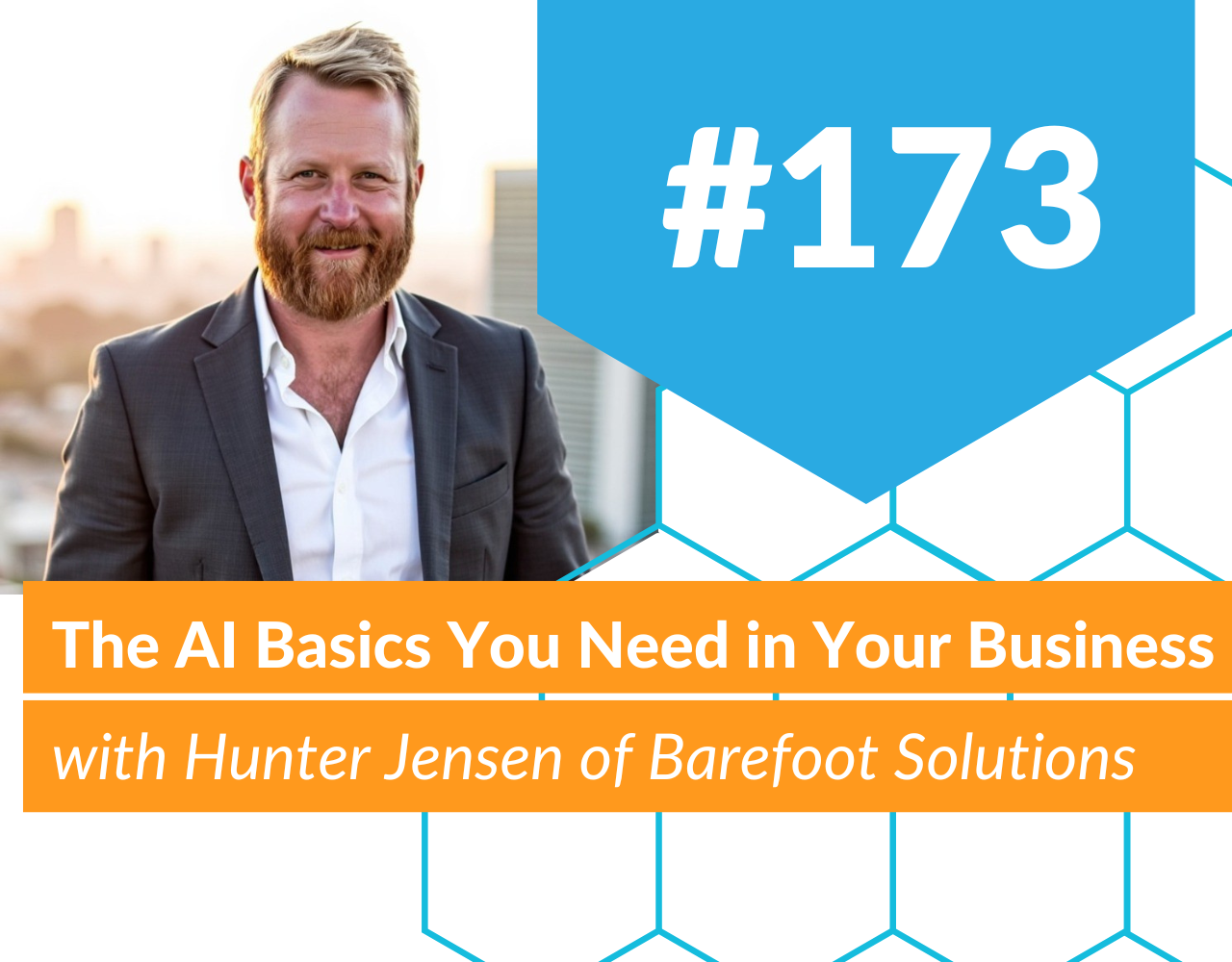
The AI Basics You Need in Your Business with Hunter Jensen
SPEAKERS
Sid Meadows, Hunter Jensen
AI is all the rage. Everywhere you look, people are talking about it. And there's no doubt it can be a powerful tool for you and your business. But before you go too far, there are some basics you need to make sure that you've got covered. And that's the focus of today's conversation.
Sponsor:
We'd like to thank our presenting sponsors, Avanto, services and software that streamline how you operate and The Collaborative Network, a platform where leaders in the contract interiors industry unite.
Avanto Ad:
Is your team overloaded? Avanto helps teams save time and money by using AI to handle daily work from order management and AP processing to task handling without adding headcount. It works inside the tools you already use, with no new dashboards to manage. Go to goavanto.com to see how we can run your daily operations.
Sid:
Welcome back or welcome to The Trend Report, your inside look at the people, products, and ideas shaping the future of workplace design. I'm your host, Sid Meadows, and I'm glad that you've joined me for today's conversation with my guest, Hunter Jensen, the CEO of Barefoot Solutions.
Hey Hunter, how are you today?
Hunter:
Hey, Sid, I'm great. Thanks for having me on.
Sid:
Dude, I'm really glad to have you here. And full disclosure to the listeners, I actually listened to a podcast that you were on with Katie Brinkley called Rocky Mountain Marketing. And after I heard all the things that you said, I'm like, oh my gosh, I gotta reach out to this guy, see if I can get him here to share your amazing insights about AI with our community as well. So I really appreciate you uh taking a random email from a stranger podcaster and answering the call. So thank you.
Hunter:
My pleasure.
Sid:
So, Hunter, take a moment, please, and tell us who you are and what is Barefoot Solutions. What do you guys do?
Hunter:
Yeah, so uh I'm the founder CEO of Barefoot Solutions. We are a custom software development agency that's been around for uh over 20 years. And more recently, I've become the founder CEO of Barefoot Labs, uh, which is a subsidiary where we're uh launching our product, which we can talk about later in the AI space, which is kind of why we're here.
Sid:
Yeah, that's right. In the AI space, I mean, talk about something that has come on with a bang. It wasn't just a few years ago that we saw OpenAI come out with Chad GPT and talk about an explosion of products. Why do you think it's moving so fast? Because every day there seems to be something new.
Hunter:
Yeah, it can be overwhelming at times. Yes. Uh it came so incredibly fast. Uh, you know, like if you look back at the timeline, it started in 2017. There was uh a paper published by a Google researcher. It was called Attention is All You Need. And in that paper was the discovery of the transformer model. And when you think about Chat GPT, that's a generative pre-trained transformer model. So 2017 to 2022, the race was on. All the big players were trying to, you know, figure out a practical application of this math of how a transformer model works. And what it did was it took a process in machine learning that was previously linear and it allowed it to run in parallel.
Sid:
Okay.
Hunter:
And by doing so, we were able to train models using machine learning uh with this new methodology in a time span that previously would have taken 100 years.
Sid:
Right.
Hunter:
Right. And so then comes November 2022, that's when ChatGPT initially launched. And the reason that it's happening so fast is that discovery, the transformer model. It has accelerated our ability to compute and to create models by factors of a hundred or a thousand. And so the speed at which this technology is being developed and being rolled out is just like breakneck at this point.
Sid:
You can't keep up. This one's launching this model, this one's launching this update, then there's a new one on the thing. And if you type in AI tools, the list is going to be hundreds of tools that are powered by AI or an AI, you know, that you can choose from. But to be clear, we've been using AI without knowing that AI is in the background. Like so Amazon Alexa is actually an AI tool, correct?
Hunter:
AI has been around for like 40 years. Yeah, we just didn't know it. Nobody was talking about it. So what what's new is generative AI. Got it. The AI, like the Netflix recommendation engine, is a is kind of a popular example of that, right? It's machine learning, and so it was a predictive model. It was able to predict what kind of TV and shows and movies that you would enjoy watching based on what you previously watched. And so generative AI is also actually predictive in that it's predicting the next word that it thinks you want to hear. And so the new thing is the generative part, creating text, creating images, and now even creating videos. That's the stuff that's only been around for a few years.
Sid:
And the images have come so far in just a couple of years, and the video is freaky. It's so on point. Like some of them are just so realistic. You're like, oh my gosh.
Hunter:
Yeah. You know, Tyler Perry, the movie producer and actor, he had an $800 million movie production studio project happening in Georgia, and he got an early look at Sora. And he canceled the project. He canceled it.
Sid:
Wow. That's amazing. That's amazing. So everybody's talking about this. Everybody's trying to figure out how to use it. Some business leaders are very forward thinking and embracing it. Some industries are very forward thinking and embracing it. And other leaders are just completely the opposite. Whoa, whoa, we're not going to use this. This is too scary, too much whatever. And then, same thing with businesses. And then you've got the people in the middle. And me, I'm not an AI expert, and I will never claim to be that, but I would call myself an enthusiast. So I am trying to educate myself and my podcast community and trying to learn about it so that I can share practical use cases that I see that work for me in hopes to spawn ideas that business leaders can take and implement in their business. And which is all great. But one of the things you talked about when I listened to you on the Rocky Mountain podcasting was like you got to get the basics covered. So what are the basics and why are they important? Like, what's the foundation? When you build a house, you got to build our building, you got to build the foundation first that holds it up. So what are the foundational elements that business leaders need to be considering before rolling out an AI plan or whatever for their business?
Hunter:
It's so important. It's so important. I can't tell you how many times I've come in to a company and they're saying, we want to use AI. And I get under the hood and I say, Well, we have six months of work here before you're ready for that. And it starts with your data. You need clean data, you need complete data, it needs to be accessible, and you need to have you know strong data governance policies in place. It's garbage in, garbage out. And so you need good data to start.
Sid:
All right, this is great. So, what is clean and complete data? Can you kind of give us an example of that? Because in the furniture world, when we think about data, because we use symbol libraries in order to draw and specify our products, we understand that that symbol of that chair needs to be clean and complete so that it's specified accurately by our distributor partners. So, in the world of AI, what do you mean by clean and complete data?
Hunter:
Yeah, so so messy data or dirty data might be duplicates. You have the same or very similar pieces of data, or maybe they're a little bit different, which is even worse, in different places. Got it. That's like a no-no. You need a master source of truth for your data, right? And so that's really what I mean by keeping it clean. And when I say complete, I mean, are you tracking the things that you're going to want to use in AI, right? Because you don't just need to start tracking it, you need like six months worth of it, right? And so if you're not tracking it right now, even if you implement that, you still have time before you're able to use it because you need an appropriate amount of volume for it. When I say complete, that's what that's really what I mean is are you are you storing the data that you eventually will want to use with an AI platform? These things are fundamental.
Sid:
And this could be a variety of different documents and spreadsheets and tools and information that's going to feed your AI. So I'm going to be practical for our listener for just a minute. So, like a product warranty. So every product that we have has a warranty. The warranty can be one paragraph, or some of them are three pages with all the little details of the warranty. What you don't want to see is the warranty version one in the data and warranty version 1.8, you want the most up-to-date clean warranty statement in that data rather than two in potentially two different folders, because then the AI is going to get fused or maybe hallucinated a little bit because it's reading two documents.
Hunter:
That is a wonderful example from your from your industry. That's exactly right. When we start providing similar but not the same, it creates a a lot of problems for these large language models. Like we need to have current data is another piece of like data hygiene in general.
Sid:
You call it the three C's, clean, current, and complete data. Love it. Love it. I just gave you a branding point, talking point there.
Hunter:
And then there's one other foundational piece, which is you need an AI governance policy. Okay. And so this is new for everybody.
Sid:
Right. So before we go into the governance policy, I want to go back for just a minute because I see again, I'm an I'm an enthusiast, not an expert. You're the expert. But what I understand the basics to be are the clean, complete, and current data. Okay, you got to have that as the foundation. But then you also need the direction for how your business is going to use AI, which in effect is an AI strategy, correct?
Hunter:
Yes, that's right. You need an AI strategy because we've spent a lot of time experimenting. There's been a lot of kind of experiments. And you're not getting a return on your investment in the technology, right? And it's time to get serious about this. It's time to spend serious money, but it's time to get a serious return on your investment. And so when I look at potential AI use cases, it always comes back to ROI for me. And I mean in that very literally, in that we might have five potential use cases, and we're going to break out the spreadsheets and we're going to predict what we think the return might be on those particular projects in order to decide where we're going to start and where our AI strategy is heading. You can't have a three-year AI plan. It's not realistic, but you can decide on that one kind of killer use case where you're going to get started. And that's a good way to ease your way into it.
Sid:
Because the reality here is as a business owner or a business leader, whether you have these in place or not, your people are using AI in some form or fashion, whether they're using it at home or in their office, they're using AI somewhere along the way, maybe as simple as responding to an email. So that's what I mean by like we got to have these foundational things. So we start with the strategy, which is the direction, which really in this case defines why and where AI matters to your business. So then the next step would be the AI policy that you put in place as a business owner, which is really like the guardrails. You're this is where you tell your team and your people how to use AI. The example that I think I heard you talk about, I know for other people talk about, is you don't want to take private customer data in a spreadsheet and upload it into a public large language model like ChatGPT, because if it's not secure, then ChatGPT can use that data to inform its answers to other people. So all of a sudden you've made client confidential stuff public. So talk a little bit more, if you don't mind, about the importance of an AI policy.
Hunter:
Yeah, and I can't stress this enough. If you don't give your employees the tools, they're going to use others. Everyone is talking about it, everyone wants to use it. If you're not providing those tools for your employees, then you are putting yourself at great risk of them sometimes. A lot of times it's just unknowingly. It's not like it's malicious. They just, you know, they want to do their job better and faster. And they say they'll upload a document. And just like that, you have effectively you have a data breach. Yeah, you have a confidentiality breach for sure. For sure. And so that's why, you know, when we talk about an AI governance policy, this is not just paperwork to go in your employee handbook, you know, to check some compliance box. This is a real thing that all of your employees need to understand. What can they use? How can they use it? What data can be used inside of it. And when you give them tools that are secure, you can have a much looser governance policy. When they're using ChatGPT, there's very little that they actually can do safely on a third-party platform like that, right? And so that's why, yes, the after the strategy, making sure you have your governance policy in place, you have a meeting about it where you go through line by line exactly what this stuff means and you answer questions because your employees will say, Well, I was hoping to use it for blank. Would that be okay? Business leaders need to be doing this if you if you haven't already, like this year, you need to have that meeting and you need to create that document.
Sid:
And I'm going to add to that, you need to do it sooner than later because again, your people are using AI. So there's four components here, which we didn't talk about all of them, but I think they're pretty explanatory. The AI strategy, which is your direction, the AI policy, which is your guardrails, which tells people how to use AI, your AI plan, which is your execution, defines how and when you execute this strategy. This would also include the tools that you're going to use and give them access to in a secure environment. And then the governance policy, which is probably the single most important of this list, but I think you need all four of them, which is the oversight. And it defines how you're really using it. And to your point, you got to sit down with them. You got to have a meeting. You got to make sure everybody understands this because at the end of the day, you're trying to protect your data as well as your customers' confidential data so that you can do the best work for your customers as possible.
Hunter:
Love it. Couldn't have said it better myself. Okay. I'm getting a lot of good material today.
Sid:
Yeah. Okay, you can use that in your next sales pitch.
Hunter:
Okay. I'm getting a lot of good material today.
Sid:
Um well, I just think this is so important because this is the basics part, is what I see people missing. Every day I talk to people, yeah, I used it to do this and I used it to do that. I talk to uh an office furniture dealer who's using it to systemize his presentation so that every presentation is easier for them to create by inputting certain data. And I'm like, are you using a secure one? Like that's behind your wall, because if not, you're exposing that to everybody. I mean, I love AI, I think it's an amazing, powerful tool. But to my business leader out there, you got to make sure you got the basics covered before it hurts you.
Hunter:
So I went to I was working with an HR company, and I said, Can you help some of my customers put together an AI governance policy? And they didn't even know how to do it. An HR company. An HR company. This was only six months ago.
Sid:
But I don't think governance has been around that long in the world. Again, this stuff's moving so fast, people didn't know what they needed.
Hunter:
Yeah, I mean, fair fair enough. And that's why I'm like banging my drum trying to get people to understand that they're putting their business at risk if they're not doing this.
Sid:
Now, I think this is a no-brainer question, but I'd love to hear from an expert's perspective. As a business leader, can I use AI to create these? To create a strategy, policy, plan, and government. Should I use AI? I know I can. Should I use AI to create this?
Hunter:
Yes. Yes. Unequivocally. Now, with some caveats though, right? You cannot trust the output of a large language model. Period, full stop. You have to it in the data science world, it's called a human in the loop. There needs to be human review of absolutely everything. Okay. But with that being said, you know, a large language model can be a tremendous resource when you're creating what is effectively a bunch of documents, right? Most of what we're talking about, uh putting the data hygiene aside, uh, is a series of documents. And so if you spend the time and give it the proper context, right? You have to work on your prompt. You need to explain what your business does, what your preferences are, all of these things, then it can be a fantastic starting point for this stuff. And it can come up with ideas that you never would have considered or thought of, or it can do research about what maybe some of your competitors or others are in your industry are doing. And it can do it very fast. You know, I like to tell people think of these large language models as they're like a genius, but they don't know anything about you. Yeah, you have to tell them about the scenario, you have to set the context, and then they can be a tremendous resource. You know, I I suggest that, and I do this myself. If I knew I need to come up with an AI strategy, I might book 60 minutes on my calendar to have a meeting with a large language model, or several, oftentimes I use at the same time, and really like be deliberate about it and say, okay, I'm gonna consult with this tool and gather a bunch of information and material, and then I'm gonna synthesize it myself and I'm gonna decide what makes sense. I'm gonna edit it and I'm gonna do some of my own things, but spend time with it because it can be really, really helpful.
Sid:
So practically you take one prompt that you feed chat GTP chat GPT, if I can talk, and then you take exactly the same prompt and you feed it to Gemini. You get their results, you compare them, and then put together between those sources what you think is best for you and your business. Is that a simpler way to say it?
Hunter:
That is one way to do it, to use multiple models, and and that's can be helpful. Gemini might come up with something ChatGPT didn't, and you know, throw Claude in the mix and all the rest of it. But another way is more uh as a refinement. Okay. Okay, you write a great prompt, you put it into Chat GPT, you get your response, and then you copy that response and you say, Here's what Chat GPT said, what is it missing? Oh, I love that. And now you get have like an editor, right? Yeah, and and and when you prompt it, you say, You are I I want you to edit my policy. You're an expert in AI and in strategy, and you're an editor. And so please edit this and let us know where there are gaps or inconsistencies, logical problems, whatever. And it levels up. Yeah, and you can kind of bounce back and forth that way.
Sid:
I think that's a fantastic tip. Thank you for sharing that. The last thing, and we'll put a pen in this and move on. The last thing I would say about this is once you get these documents together, I would highly encourage our business leaders to either review them, hire an expert like you, have them reviewed by somebody like you, or hire an attorney that understands policy, especially governance type policy, and have the attorney review them just to make sure that they are in sync and in line with what your business is and what your business needs. Would you agree, disagree, or comment to that?
Hunter:
Yeah, absolutely. I mean, speaking specifically about the AI governance policy, an attorney 100% needs to review that. Can be tricky to find one that really knows the space well enough. There are also organizations. I wish I had the name of one, but I'm not going to be able to come up with it. But if you do a little bit of research, there are organizations that are built around this specifically. And you could potentially engage with them in a consulting arrangement and have them help you work for it.
Sid:
We'll try to do a little research on our own for that. If we find anything, it will be down in the show notes for you to click a link and go to. So we'll do our best. Thank you for all that because again, I think this is the part that was missing that people are skimming over. They really need to go back and do a little bit of a reset and get these policies in place.
Sponsor:
We'd like to thank our supporting silver sponsors, KISP, who helps furniture brands visualize and sell product before specification. Navitas Credit Corp, your financial solutions for today's office. And Web Configurator Services, the leader in AI-powered online product configuration and quoting.
The Trend Report Community:
Hey, let's pause here for a second so I can share something exciting with you. This podcast has always been about more than the episodes for me. It's been about you, the people listening, and the conversations that we're creating together. That's why I started the Trend Report Insider Community. This is a small private space for people who care about our industry, who want to stay connected beyond the podcast. No noise, no pressure, just thoughtful conversations and shared perspectives with industry friends, both old and new. You can learn all about this membership at sidmeadows.com/ community and be sure to use the coupon code FIRSTIN at checkout in order to get 50% off your monthly membership. And this is a thank you for already being part of our community. This discount is valid through February 28th. So for less than a cup of coffee a month, you can come in and join the fun. Visit Sidmeadows.com/community.
Sid:
Let's dive into some practical use cases of AI. I mean, as someone who helps businesses focus on understanding and building products to help them use AI better, what do you see as some very practical use cases for AI and business?
Hunter:
Yeah, so just to set the stage for that, it's a large language model, which means it's good at language, at written content. And it's especially useful for team members that are doing knowledge work, right? It's not particularly useful to a plumber quite yet. But if you have knowledge workers, that's the area where you should be looking. Areas where you're creating a lot of documentation or consuming a lot of documentation, those are also good use cases. This new technology has made it such that a language model can take a PDF and understand it and answer questions about it. Five years ago, that was basically impossible, prohibitively expensive, right? And now it can't. So any scenarios in which you're uh you know managing documentation, you know, maybe you're combining multiple data sources, all of those are great use cases. And I'll give you a practical one. Working with a law firm, with their intellectual property group, they're using it to help them write patent applications because that requires a lot of inputs. They're looking at the statute, they're looking at comparable patents that already exist and prior art, and then they're drafting these long documents that have a lot of details in them. But there's a ton that are the same across many patents. And so being able to bring in that information, that's a wonderful use case. Uh another that's a no-brainer is customer support. Customer support is already being overtaken by AI. And the reason is it's very helpful, actually, to be able to have a 24-7 customer support person without having to pay serve for that kind of a team. A third that I'm seeing would be HR. Providing an HR chatbot for your employees is a use case that is I'm seeing a lot lately.
Sid:
Is that like answering simple questions like how many vacation days do we have? What are our vacation policy? Or is it I want to file a complaint against someone for whatever? Like, is it that deep or is it more basic?
Hunter:
It's about answering questions, which is a time suck for the HR team, right? It's you know, Sally wants to know if Invisalin is covered in her dental. That takes someone at HR a while to figure out, and it doesn't need to anymore. And that HR person can be focusing on the hard problems, like the complaint. That we want to elevate the work of our people by getting out some of the more menial and mundane.
Sid:
Because we all do every day, we all end up doing some kind of mundane trivia stuff, right? It's part of the part of the process.
Hunter:
We do, we do, and our ability to automate those things is so tremendous.
Sid:
So I want to go back to customer success or customer service for a minute. So, for an example, customer service gets inundated with all kinds of questions. In our world, it might be what's the COM requirements, which means customer own material, which for fabric for this chair. Another question might be, what's the lead time on this? Another question might be, what are the dimensions of this? So, in theory, what a brand, a furniture manufacturer could do is take their price books. In some cases, they're a lot of them. They're very detailed information with part numbers and descriptions and you know, dimensions and all this stuff. They could upload that into a LLM, like a uh um what's Google's called? I just totally lost it.
Hunter:
Gemini.
Sid:
Yeah. So you could upload it into that. You could create this agent, I guess, that then your customer support team could ask the question that they've been asked, input it, and instantaneously get the information back so they can much quicker respond to the customer.
Hunter:
That's exactly right. And the same principle applies to sales. Okay, say more. So that's very complex, very detail-oriented, right? A lot of times a request like that comes in and the answer is I'll get back to you within two days with that answer because I've got a whole log of them. But the now we have the ability to kind of figure it out in real time. And the same applies when you're on a sales call. You know, it isn't necessarily, well, let me price that out for you, and we'll get on a call next week. If you give a tool to your salespeople where they can just query this stuff in real time while they're talking to customers, think about how much shorter the sales cycle might get if you could do something like that. What does that mean for your revenue? It could be very profitable, very meaningful. And when when I was talking earlier about calculating ROI, actually figure that out. Look at what your average lead time is, right? How much do you think it could save? What would that do to your revenue? How much more could you sell? Figure that out. Get your ROI, and then you know, make sure that the investment you need to make to roll that out makes sense based on the expected return.
Sid:
Okay, so the other thing that came to my mind, again, I'm trying to bring in industry-specific things so the listeners understand what I'm what we're talking about. Specials catalog. We have a very complex sell process. Our products are very complex. And even though we have all these thousands of SKUs that brands have available, inevitably, almost every day, somebody's asking us to make a special. Like, oh, can you make this table a little bit bigger or a little bit higher? Can I do a special finish on there? Can you change the glide? Or can you do it? Literally happens every day. And I know the people listening are nodding their head going, yes, it does. You could take all of the specials that you've created and all the documentation around the specials you've created, put it into an LLM, create it where anybody, sales, customer support, customer service, whoever, ask the question, can we do a table like this? And it could spit out what you've done already. It could tell you, hey, we've made this table, or we've made this chair, we've done this bookcase, whatever it might be. And then quickly you've got an answer because what happens in the past is you call specials, you or you put in your electronic request, you have to type in, then you wait for them to do their research. Two or three, four, five, ten days later, they're calling you back saying, This is what we did. We could do this, we could do that. And now you can short circuit that and almost instantaneously have an answer to whether you could or could not do a special on something. I love it. Yeah, I love it. Very practical. Isn't that what this is about? Like saving time, increasing productivity.
Hunter:
It it really is. It comes down to time, you know, increasing the efficiency and the productivity of people doing knowledge work. That's at the core of this technology.
Sid:
I'm gonna make a side note for a future episode coming up. For those of you that might remember Carly Slocum, the vice president of sales at Three Form, will be joining us in a few weeks on the podcast to talk about what 3Form has done and how they've implemented an LLM in their business with their installation guides and talking about how they get using it in the field and they put it on their public website. So really excited to bring that conversation to you with Carly Slocum, the VP of sales at 3Form. So I want to keep moving with you. Thank you for letting me do that self-plug there. I appreciate it very much. So you've been absorbed in this, Hunter. Like you just like went down this path. What was it that was that moment for you that said, all right, I got to go deep into AI?
Hunter:
So I've been doing this my whole career, staying at the forefront of technology. We started 20 plus years ago as a web development shop making WordPress websites. We had one of the first hundred mobile apps in the App Store when that came online. Then we got into the Internet of Things and connected devices and medical devices. Then came blockchain and crypto, which was a wild ride. Yes, it was. And now comes data science. And this time it is a little bit different because of how transformative the technology is and how fast it's it's coming. But you know, we've had to make that transition about every four years, uh, you know, since we started. And so couple that with there was an exact moment in time, yeah, which was I've been testing these tools out for a long time. And I I landed on one, and these were tools that write code for you. And they were terrible and they were terrible and they were terrible, and then all of a sudden it was great. And I realized that my business model is gonna die because I'm I'm in the business of selling engineering hours. That's how we built. Oh, that will take a hundred hours of a programmer's time. Now it takes like three. What does that mean for my revenue model? So there was an existential threat to my business, which is what caused us to switch to a product model. We built an AI product, a private, secure, large language model plus a RAC database, which is for just uh file storage and searching and that kind of thing, to solve the problems that we're we're talking about today. And so, you know, it's both a threat, but but I found an opportunity in there as well. And so we this is a hard pivot, not just a new technology, but a new business model and everything.
Sid:
So, my takeaway from that is you were paying attention to what was happening within your industry. You saw something that was going to have a dramatic impact on your business, like a devastating impact on your business. And you said, We got to make a change, and you pivoted to rather than coding, you're now making products to help businesses be more successful and smart about using AI. Did I say that correctly? That's perfect. Okay, that's perfect. That's exactly right. One of them is an LLM, which is what we've been talking about, and then the other one is you said it's a RAG something. Say it again, please. It's a new term for that. Sure.
Hunter:
So these are in combination with each other. So uh a large language model plus a rag database, rag stands for retrieval augmented generation. Okay. What they're for is you upload files into a rag database, and the large language model knows how to search through that database to find the answers that you need. It's a specific type of AI technology that's been around for a while, but it's a really great use case for large language models. And so, as an example, when you upload a file in ChatGPT, yep, it goes into a RAG database. It's just behind the scenes, you don't really see how that's how it works. Okay, yeah, that's how it works.
Sid:
Well, we're an industry that loves acronyms, and you just gave us a new acronym. So RAG Retrieval Augmented Generation. Thank you for adding an acronym to our list. Now, this led you to writing a book. So, what's the name of your book? Tell us about the book, and when is the book coming out?
Hunter:
It did. It did. Oh, it came out already. No, no, no, no, no. It led me to writing a book. Uh it's coming out in February, it's coming out in February 2026. So that's next month. It's perfect. It's in final proofreading, and we're designing the cover right now. Good for you. And you know, what led me to do that was really I'm just I'm like kind of worried about businesses right now that aren't paying attention. And I'm trying to, you know, I go out, I do these podcasts, I write a lot, and now I've got this book, and these are all largely our tools to help businesses go in the right direction. I I'm just I'm worried that businesses are going to fail if they mess this up. It's that important. And so the name of the book is called The Killer Use Case, and it talks about how you can't try to boil the ocean with AI. You can't just add AI to every process you have. You need to find that one use case or you know, a handful of these things where you know you're gonna get a great return on your investment and you start there so that you're not overwhelmed by all of this. That's great. And so that's the that's the book coming out hopefully in about three weeks.
Sid:
So this episode is being recorded on January 22nd. I do not remember the published date of this episode, but if the book is available, we will drop the link to Amazon in there for you guys to go grab it. So here's a quick follow-up question for you. I'm excited to get your book. I got like three AI books over here that I'm reading through and trying to understand. Again, I'm an enthusiast, so I'm trying to learn and absorb, never to be an expert. But is there an A another AI book besides yours that you would recommend that our listeners possibly go and grab and either read or listen to? I stopped reading books. Okay, and I'll tell you why. Tell me, I'll tell you why. If you hang on a second, if you're gonna kill my favorite pastime, I don't want you to answer that question because I love reading. But go ahead, tell us why.
Hunter:
I didn't stop reading all books, I stopped reading AI books. Okay, and the reason is that it is either woefully out of date or it is too abstract and general to be helpful for me.
Sid:
Understood.
Hunter:
And earlier you talked about the speed at which this is coming. This is a symptom of that speed. By the time it gets written and published, it is often out of date and obsolete. Now, the book that I'm writing is not actually an AI book, it's a business book. Okay, it's about applying technology, and that's why I still think it makes sense to write a book, even though I don't read books about AI. Understood. So I don't have a book recommendation, but I can give a recommendation, please. Which is what I do is I read newsletters every morning. I spend about 90 minutes reading daily newsletters. That's how I stay up to date. And there's one that I love, and it's called the A The Rundown AI. I read it every morning, like religiously. And so if you want to just feel like you're kind of know what's going on a little bit more, I actually suggest reading stuff like that, stuff that's being published every day or every week. That way you know you're reading current stuff.
Sid:
That's great. I will absolutely go find the rundown AI newsletter. I'm gonna go subscribe to it. We'll drop it in the show notes for everybody. Well, I mean, this has just been amazing information. Thank you, Hunter, for sharing the foundation, some practical use cases. I want to wrap up with just making sure that everybody listening understands your business. So if I'm an owner of a business or a business leader and I want to build out tools that my team can use using the clean, current, and complete data, you can help me build that through your products that you pivoted to rather than coding, you can actually help us build that. Is that correct?
Hunter:
Yes, that's right. So, so we have a model that's product plus service. Okay. And so we have a product, it's called Compass, and it is the large language model plus RAG database that I talked about previously. It lives in your cloud infrastructure, so it's on your servers, which is what makes it secure, what makes it able to connect to your other systems. So we can license that product to customers, but we can also help with customization, with cleaning your data, with kind of all the stuff around that. And that's the services component. Got it. Um, because we found then a lot of companies aren't quite ready for Compass yet. And we help you get ready. That's perfectly and then and then we move into the product.
Sid:
Well, I'm so glad I hit play on the episode you did with Katie Brinkley on Rocky Mountain Marketing, because that led us here. You've shared some amazing information with our listeners today. I hope you guys are all inspired to be thinking about the right basics to put in place, the foundation you need to put in place. Hopefully, you got some ideas about some practical use cases in your business. And now you understand what our guest does and how he can help you. If you're interested, please reach out to him. And with that, Hunter, if our community would like to get in touch with you, what is the best way for them to do that?
Hunter:
Absolutely. I encourage you to reach out. You do not need to be a potential customer, but I love talking about this stuff. And as a thank you to you, Sid, for having me on today, I encourage your listeners to email me directly, hunter at barefootlabs.ai. And in the opening line of the email, mention that you heard me on this podcast. And if you do that, I promise I will get back to you and we can and we can schedule something. If you don't do that, I get a lot of emails. I can't guarantee it. But if you mention the podcast, I promise that I will get back to you.
Sid:
Okay. I'm gonna stand up and say, first off, we're gonna have your email link down into the show notes. People have immediately access to it. And I'm gonna stand up and say he is true to his word. He is a man of his word, because that's exactly what he said on the other podcast, and that's exactly what I did. It took him a little bit to get to me, but it's exactly what he did. And my what my request was I heard you on Katie's podcast. I'd like to talk to you about being a guest on mine. I'd love to connect with you if you have time. And about a week or so later, there was an email from him. So he is a man true to his word. Be sure you drop name my name and the trend report in his uh in your email to him, and I promise he'll get back to you.
Hunter:
That's right. I had forgotten that, but I I will. I am a man of my word.
Sid:
Oh gosh, Hunter, thank you so much for joining me today. I really appreciate this conversation in your perspective. This is a topic that we all need to embrace and continue to learn about.
Sponsor:
We'd like to thank our community bronze sponsors, Catalyst Consulting Group, RESEAT, and Staffing Plus.
RESEAT Ad:
Every piece of furniture you buy has a future. The problem, most companies lose track of it. Spreadsheets get outdated, assets disappear, and perfectly good furniture ends up in landfills. RESEAT changes that. RESEAT is a real-time furniture asset management platform that tracks everything you own by issuing digital product passports from day one. Manage all your assets in one place. To learn more, visit RESEAT.com.
Outro:
So thank you again very much for being here. To you, the listener, thank you for joining us today on the Trend Report. Your inside look at the people, products, and ideas shaping the future of workplace design. Go out there and make today great, and we'll see you in the next episode. Take care, everyone.