The Trend Report Podcast
Building Effective A&D Partnerships with Krystal Lucero
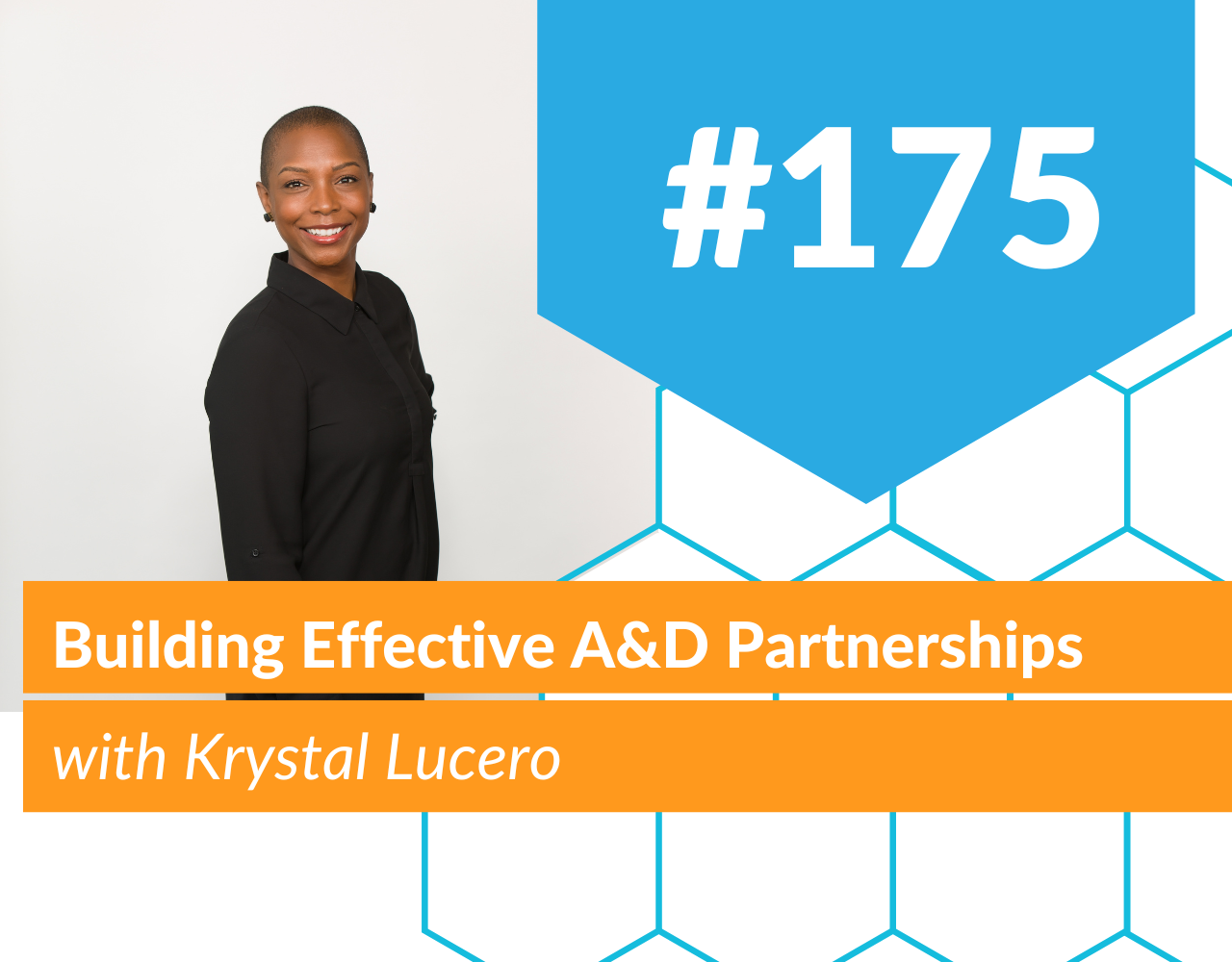
SPEAKERS
Sid Meadows, Krystal Lucero
Building meaningful relationships with the A and D community has never been more important or more challenging. Designers are being approached from every direction, attention is fragmented, and trust has to be earned, not assumed. Today's conversation is about cutting through the noise, showing up with intention, and building relationships that actually last.
Sid:
We'd like to thank our presenting sponsors, Avanto Services and software that streamline how you operate and the collaborative network, a platform where leaders in the contract interiors industry unite.
Sponsor:
Is your team overloaded? Avanto helps teams save time and money by using AI to handle daily work from order management and AP processing to task handling without adding headcount. It works inside the tools you already use, with no new dashboards to manage. Go to goavanto.com to see how we can run your daily operations.
Sid:
Welcome back or welcome to the Trend Report, your inside look at the people, products, and ideas shaping the future of workplace design. I'm your host, Sid Meadows, and I'm really glad that you joined me for today's conversation. My guest today is Krystal Lucero, a senior interior designer at Edward Mulhausen in Austin, Texas. Krystal brings a thoughtful, human-centered perspective to design, leadership, and relationship building, and she's someone who deeply understands the value of trust, mentorship, and visibility in our industry. And she's a bucket list guest for me.
Sid:
Welcome, Krystal. How are you? It's great to have you.
Krystal:
I'm doing well. I didn't realize that was on your bucket list. I'm honored. Thank you for having me here
Sid:
So we actually met in 2020, I think, on this little uh talking app called Clubhouse. And there were lots of conversations about our industry that I was hosting, Amanda Snyder was hosting, and you showed up to a few of them, and we got to know each other. And then we actually only met in person last year at Neocon, correct?
Krystal:
Correct. It's like, and I knew you right away, and we just ran up to each other like well, I guess we have known each other for five years at that point. Old friends who've never met. We were internet friends, just don't tell our moments. Exactly. You can't meet your best friends onto the internet, but we do know. But Clubhouse was great, right? Clubhouse was great during that time. I was pregnant. It was you know, COVID. And it was just such a great platform that I looked forward to getting on to daily.
Sid:
It's still around, by the way. It's just not near as popular as it used to be. Obviously, during 2020 and 2021, there was a reason why it was really so popular. We had a lot of free time on our hand, I think. And everybody working from home. But I mean, it's still there. I still go on it. I go on it now and talk about podcasting with my podcast friends. But uh I do miss it. We had some really fun conversations back then. It was a great way to bring our community together, I think.
Krystal:
We did, we did. And I I guess people are using maybe LinkedIn a little bit more for that kind of platform and that connection, maybe.
Sid:
Actually, LinkedIn stopped their audio. They no longer have their audio rooms. Yeah, they don't do it anymore. It's a hard thing. There's another app called Chatter I've been on a few times, but I just I don't have the bandwidth for it all. I gotta do it early in the morning or I'm not doing it at all. I'm just too busy doing other things.
Krystal:
That makes sense. That makes sense. Well, I'm glad that Clubhouse brought us together.
Sid:
Me too. And I will say that like when I meet people, whether it's virtually or in person, and I hear their story, I hear a little bit about them, or I listen to them on other people's podcasts where I've listened to you. I've listened to you on Doug Shapiro's podcast. Um, love what you do at JSI and previously on Imagine a Place. And so I'm like, okay, she's on my list of people I'm gonna get on this show. So yes, you've been on my bucket list, and I'm glad you're here today.
Krystal:
I tease Doug about just, you know, what does he want to talk to me about? But it's been fun every time that we get together. And again, it's just like talking to friends.
Sid:
So I'm gonna take a picture of us real quick and I'm gonna text it to Doug. Okay, we can get on with the show. So, Krystal, you're a busy lady, you're a mom of two, you're involved with your kids, you coach basketball, you're a senior interior designer, you're involved in all these amazing projects. Let's start off with how do you balance it?
Krystal:
Well, of course, I I've always said, and you've probably heard me say this previously on another platform is it's a juggle. It's a juggle. Really, you know, I didn't know I could be a mom. I didn't know I could have children. And so that's, you know, last my oldest will be seven this weekend on the seventh. And so that is like my number one. But I also love for them to see what I do. I love them to be able to drive down, you know, the highway and say, hey, mommy's working that. You see that big hole in the ground? It's nothing now, but mommy's working on it in seeing the floor plans if I'm working at home or something, seeing what I'm working on. So I do like to juggle, but then I also like to integrate to having them come to the office and see what I do. You know, my husband is a real basketball coach, right? I play one on the weekends and Thursday nights.
Sid:
But uh it's easy to see what dad does for work. Sure. They get to they get to experience it and see it all the time. But you know, I think that's one of the best things about what the industry that we're in is being able to walk away and see the finished product and whether it's the building or the interiors or the furniture, and you get to stand there with your head held high saying, Hey, I did that. I worked on that. I was great.
Krystal:
And we got a new office here. So my boys we we had pizza next door and we walked by the job side on Sundays. And so being able to have my kids integrate it, you know, going to events, even with we have a uh project tour on Friday with IEDA, and I'm gonna take the boys, you know, if I want to high-rise. And so I really I think the juggle is the integration and then working for people who allow you to be you. So I am able to, you know, some days I say kids have more PTO than us. So, you know, some days they do there might, there might be a kid in the lounge, you know, hanging out and they know where the snack drawer is. And so the balance is I integrate my life and and not keep it so separate.
Sid:
So you bring up something I think is really important, which people talk a lot about, I'm air-quoting here, work-life balance. And I don't believe that there is such a thing as work-life balance. If you listen to the show for a while, you've heard me say this. Balance implies that both things are equal. And life and work will never be equal. One always outweighs the other. Project deadlines, work's outweighing it, family issues, family deadlines, whatever it might be, the family is outweighing it. And you use the term integrate, and I think that's how we should all think about is integrating our work and our life together to have a happier, more fulfilled, more joyful life. And you're a great example of that.
Krystal:
Well, I appreciate that because it is hard to, I mean, I thought, and you might have heard me say this too, is I thought once I had kids, I would just turn off work when work happened. And when I went home and or when I um and I don't. I I do love what I do. And so it's hard to just can flip that switch when you're at home. And also, you know, of course, you know, there's times you have to email your kids, teachers, and doing things, you know, with the with the kids while you're in the work hours, but also having the time to like, I know if I step away to go to creation station on Thursday, I'm also gonna make up those hours in another way. And and um, and I can do that during the work hours also.
Sid:
So I love that. It's nice to work at a place that respects that and and really supports that integration. So we talked to me about you being busy and integrating. I'm really curious, what made you want to become a basketball coach? A boys basketball coach. Let's go ahead.
Krystal:
And keep and keep in mind they're you know, six and seven-year-old boys.
Sid:
So then what made you want to become a six and seven-year-old boys basketball coach?
Krystal:
Well, honestly, my thought is I'm gonna have to take him to practice anyways, and I'm gonna sit there and I'm gonna have my thoughts and opinions on things. So if I'm gonna have those opinions, then why not put myself in that position? I've also gotten to the mindset of unless you've done it, you can't judge somebody. And so, you know, I I have sat on the sidelines for many years watching my husband coach, and I have a lot, a lot of opinions. His joke, he always talks about the first day I came home from practice. He had just gotten home from practice, and I'm like wanting to talk to him about my kindergartner. And he's just like, oh my god, I was I was just so pumped. And so I'm like, how do you do this every night? We come home after, and like my brain's going, my brain, I project manage our team. Like I the you know, the WhatsApp. I have practice plans. I put thought into this, uh putting it together. But I love the sport. Um, I met my husband through basketball. It's always it's been a part of my life since I can remember. And so having opportunity to coach my little has been has been fun and to get to meet his his little buddies too.
Sid:
Oh, that's great.
Krystal:
They're yeah, they're fun. Yeah, it's fun.
Sid: So, what do you think coaching basketball has taught you about leadership, communication, or patience?
Krystal:
That's exactly what it's taught me patience. It's taught me patience. And and then it just it is kind of managing that. I'm gonna say like herding cats, like managing the herd of cats and then seeing stuff click to them, like and seeing their light bulbs go off. And, you know, of course, there's always a few kids here and there that you know are there because they have to be. Sometimes it's my kid. Sometimes that's my kid. But just um it and also having my son be proud that I'm his coach too. Uh one practice I had Robert help me at practice, and he's like, Well, mom, mom's the coach. Like, why are you why are you here, dad? Robert is dad. Robert is Robert's dad, yeah. Robert's dad. So he's like, why is dad here? You know, and so I'm like, oh, well, he's just gonna help us today. But he's very proud to have me as the coach. So it's definitely taught me patience in learning how to work in a little bit of a chaos.
Sid:
Ah, yeah. I mean, you could correlate that directly to our industry and to projects because there is a chaos point that happens within our world, right? Unfortunately, I think too many chaos is so let's talk a little bit about your journey. You went to school down in East Texas, Southeast Texas, in what we call the Piney Woods area, which is uh East Texas, at Stephen F. Austin State University, which is where my daughter went, and Axum Jacks. And so what was the lure? What was it that said, I want to be an interior designer?
Krystal:
Well, it's funny because I always like to talk about like I am the unicorn in the sense of I only picked SFA to go to. I only uh SFA was the only school I applied to. I only started in interior design. I didn't change my major ever. And 20 years later, I was still in the so it was around the time all of those HD TV shows came on. I always thought I wanted to be an architect and not just the language we knew, right? We didn't we knew architecture worked on spaces and uh buildings. And so I I had always been uh kind of a crafty kid and just tinkering and my Barbies, I made my Barbies houses and you know, do all these things, you know, I cut up socks and fashion, you know, so all any kind of design. I was the kid that was all over the place doing those things. And so whenever I talked to my parents about wanting to be a interior designer after seeing an HGTV show, and they said, Oh, it's interior design, I was like, oh, that's something like it's not architecture, it's interiors. I talked to my parents and they um they saw they told me that their classmate, Sally and Swearingen, was in SFA at SFA uh teaching interior design. Cool. And that was probably my junior year high school. And so after that, I was like, oh, okay, that's where I'm going to school and that's what I'm doing. And I'm originally from East Texas, so it was like the easy transition to go to SFA. Yeah, I grew up in KD outside of Houston, but yeah, I'm originally from East Texas. So it was easy going to see my grandparents and aunts and uncles and stuff like that.
Sid:
So if my daughter's listening, the kids that go to school there, she's graduated. They lovingly refer to it as NACA nowhere because it's in Nacados, Texas, and which happens to be the oldest city in Texas, but the college kids refer to it as NACA nowhere because it is literally in the middle of nowhere.
Krystal:
It really is. And and I um anytime I have an opportunity to talk to students at Texas State or UT or ETSA, I tell them how lucky they are to be so close to cities that they can have such connections with um industry folks, you know, through the uh networking events. Because we were so remote in our little island in Nacky Doges. We went to, you know, maybe we go to Houston on trips or Dallas, and you just had to kind of really work intentionally on making those relationships. But here they they have us at their fingertips.
Sid:
So I always go down the road from them, literally down the road from them. Exactly. So use us, use us. So, you know, you went to school, become an interior designer, you've had a couple of different positions until you landed to where you are. What role has having a mentor played in your career?
Krystal:
Having a big role. Actually, getting my job here with Harmony and Kathleen. So I met Kathleen or I met Harmony actually in 2007, whenever I moved to Austin. I had just gotten married. Robert and I had just gotten married, and he was he's teaching, he was teaching at the high school. And his one of his students told him, Hey, my dad's an architect. You know, if your wife is looking for a job, you know, they should connect. So when I connected with her dad, he's like, you need to meet Hermione Edwards. And so this is 2007. We meet, we we have a connection. She's really involved in IEDA. She had just started her own firm. And it, I mean, it was just easy, easy connection. I started working for Graper Simmons and Cowan at that time, then transferred, or not transferred, got a new position at Austin Community College in their facilities department. So her and I actually crossed over and worked a little bit on a project when we were at uh when I was at GSC. Then when I was ready to make a change, I just called her and I was like, okay, I have a few opportunities. Here's one and here's another one. And this is in like 2013, 14. So our relationship had grown over the years. And she's like, Well, you know, those are she gave me her opinions and she said those are good opportunities. Well, but why don't you just come work for me? And that was like, oh, okay. It was the easy, I mean, and that's you know, 12 plus years ago now. And it was the easiest transition because again, she had been my mentor for all these years, not ever even thinking about me being one of her employees, you know. Right. And we still to this day have like a very open and and honest relationship. So it was just fun like seeing, yeah, seeing that grow. And of course, I have mentors. I call like I have people I reach out to, like Cheryl Durst. Like, I have all these people that I I have access to that I'm able to connect with. And it and it's amazing how open and honest they are with me.
Sid:
Well, that's what that's what a mentor is supposed to do, right? To be open and honest. And you really, when you think about a mentor, you're looking for someone who's walked up a similar path that you want to walk so they can share their experiences, not necessarily tell you what to do, but at least share what their experience was with it in order for you to make an educated decision. So you're like a rising little rock star in the interior design community. You're getting involved in more and more things. You're you know involved with IIDA locally, but I believe you're also involved nationally as well. So what's that journey been like?
Krystal:
Oh, the IIDA foundation is one of my favorite boards to be uh a part of. So it's been a it's been a lot of fun being able to be part of it locally and then kind of growing. Again, that whole mentorship thing. Honestly, with my relationship with Cheryl, it's Cheryl Durst, it's more of um seeing her as a representation. Like I, for a long time, I just I decided I'm not gonna be involved in IEDA. I'm not gonna do it. It's you know, it's just a group that I didn't think I was gonna be part of or that I fit or I belonged in. And then once I got got hooked, I um saw her in the leadership role she's in. And I was like, oh, okay. Like there is a way for me. There is somebody who looks like me and that I can reach out to and I can look up to that I can have this relationship with. So the foundation, again, has, you know, we give away money, is what I say. I was like, we get to raise money and give away money, and it's fun to see students. I've known a few of the students that have gotten, you know, $10,000 scholarships, and they, you know, can't believe that they got selected, but they put the work in. And it's nice to be part of those uh groups that give back to our industry.
Sid:
So Cheryl is an icon in our industry. And I'm gonna do this parallel, but I cannot, for the life of me, think of this lady's name. Who is she's not this way, but who's the the lady Mer Meryl Street plays in uh Devil Wears Prada? What's her name?
Krystal:
Uh Miranda.
Sid:
Miranda Priestley, yes. So, like Miranda Priestley is this icon in the fashion industry. That's Cheryl Durst. She is an icon in our industry and has led IIDA for decades. And I think it's just fantastic that she's helping and giving back, and you're doing part of that. And as you continue your rise, and I'm excited to watch your rise into stardom in the furniture interior design world. You've also started writing. So you are officially a columnist for Office Insights magazine. So that makes us colleagues because I write for their other magazine called Viewpoints. So we're actually colleagues, writing colleagues. What's that journey been like for you?
Krystal:
You know, I never I actually I'm really I connected to one of my English teachers from high school, and I haven't sent it to him yet, but I do want to send it to him because I never thought this would be part of my journey. Maria with OFS, she was a columnist for a while and she was ready to um kind of give up the reins a little bit. And she tapped me and tapped Rob to make that connection. And I it was like, again, what will I say? You know, how can I share? But then I realized that if I don't share, who else will? And if people see somebody who looks like me and who has the, and I'm gonna say unique, but has a a point of view that maybe isn't the same as theirs, putting their thoughts together, it is um, it's always a win. So I've again sharing on the podcast has been natural because I can talk. I can talk easily. So being able to put your words on paper and seeing them come together, it it's pretty awesome. It is fun. I've only done my column. So I mean, I'm at that, I'm like at that thing. I'm like, can I call myself a writer yet?
Sid:
Yes, you can. Yes, you can. So we will be sure to drop a link to the Office Insights magazine. You do have to subscribe to it. We'll drop a link. If you're not following Crystal on LinkedIn, be sure you're following her over there where she talks about our article. But you know, becoming an author or excuse me, a journalist, it is a journey in finding your voice. And I can't tell you how many rewrites I've done of things, and just like, oh, this doesn't sound good. But you said something that is so very important that is exactly why I write, exactly why I do this podcast. If I don't share, who is going to? If you don't use your voice, who's gonna share your ideas? Who's gonna share your perspectives? And our industry needs more voices. We need more voices of people to stand up and talk about different topics and different things in order to help move our industry forward. So kudos to you for doing that. Thank you.
Krystal:
Thank you. I I thank you for doing what you're doing too. Again, I you know, I've been a fan of you for five years, so it's it's been crazy.
Sid:
I appreciate you. It's uh it's the being on the journey of being a podcaster is like totally crazy. I just would have never seven years ago when we started this thing, I would have never thought we'd be here today. I believe this is yeah, this is episode 175. I don't know what the heck, you know, who would have thought that I would have had 175 episodes, 90% of them interviewing people, but you know, I love to talk. And as I say to the listeners and anybody that I am encountering with, you don't have to agree with me. In fact, I prefer that you don't agree with me. But if I made you think about something happening in your business and I made you come up with ideas or solutions to change something in your business that moved your business forward, then I feel like as a content creator, meaning a writer and a podcaster, that I've done my job because my conversations encouraged thought that helped you grow your business. And that's exactly what you're doing, encouraging thought with people.
Krystal:
I love that. And you know, I never even thought about it. Yeah, content creator, that's what you are. I mean, it's putting it all together. And um just a quick story is that I've been at Neocon. And again, just from being a uh guest on podcast and having interactions with um designers that, you know, were crying when they met me. And, you know, me, I'm like, what? Why are you crying? It's just like I'm and just something that I said during the interview process hit home to them.
Sid:
Sure.
Krystal:
And you don't know who's listening and and what resonates with with them when you're communicating. So like you said, the thought, having them think about something differently. So I'm I'm happy to be part of that and getting to share things that I've I've been part of here.
Sid:
Well, I'm excited to follow your journey of writing and have listened to the other podcasts you've been on. And maybe one day you'll have your own podcast. Who knows, right?
Krystal:
Maybe it could be without the mic. I know. I do, I do love when you and Doug and Doug, you know who we had. He interviewed Design Matters. Uh why can't I think of her first name? But the Design Matters podcast host. He interviewed her. I heard that podcast, but okay. Oh, I'm listening to you. But she uh I love hearing podcasters interview other podcasters. Yeah. It is fun to hear you guys interact and kind of have that banter, uh, having that podcast interview.
Sid:
It's a it's it's a little click over here of us podcasters, and you know, we understand what it means to be behind the mic. So I'm okay with uh, you know, people interviewing me. And you know, we've got a big episode coming up in 25 weeks, basically, which is episode 200. Oh wow. And I'm like, what are we gonna do? So we're thinking embracing all these ideas about what to do. So who knows? Hey, if you've got any ideas, Crystal, or are you listening about how we should celebrate 200 episodes? Shoot me a message. Or better yet, go over to the website sydmetows.com slash podcast, and there's a a little speakpipe feature on the website where you can push this button and you can leave me a recorded message. And I would love to get a message from you telling me your thoughts about today's episode, or more importantly, ideas about how we could celebrate 200 episodes. I love that it's a recording. Yes, because we can use a recording here if we want to. Yeah. You don't have to give your name, you don't have to give your email address. You literally just hit record. If you want to say your name, please do. That's fine. I'd love to know who you are. But otherwise, bring them on.
Sid:
We'd like to thank our supporting silver sponsors, KISP, who helps furniture brands visualize and sell products before specification. Navitas Credit Corp. Navitas makes great workspaces affordable, turning furniture projects into easy monthly payments. Web Configurator Services, the leader in AI-powered online product configuration and quoting.
Sid:
So, Krystal, let's jump into the real meat of this conversation. And I said to you in our pre-call that I believe one of the biggest challenges facing the furniture side of the business is access to the interior design community. And everybody that I talk to talks about how we're such a big relationship industry, which I do not disagree with at all. You know, relationships drive a lot of what we do. But the design community with remote work or telework or hybrid work, whatever you want to call it, offices all around the country, you know, some people in three days a week, some people not in. You might have a designer on your team that lives in Florida that never comes in, but maybe once a quarter. This is a huge challenge for us product sellers. You know, from your perspective, what can we do to build relationships and get the attention of the very important influencer specifier community that's involved with our products? Well, that's you know, that's a loaded question.
Krystal:
Well, that's you know, that's a loaded question. That's yes, of course, you've you've asked, I know you've asked many people the same as you said. And so I, you know, I've thought I've thought about it. And I think it, I think it it's on us as designers too. So it's on us to want to use you guys as a resource and for you all to be a resource in a partnership. So the the thing I'm thinking about is whenever I know that you're gonna be responsive. So I have a specification that I'm trying to work through and I'm looking at the website, and then there's a few parts and pieces and things that I'm not sure about. I want to be able to, you know, do a few snips, shoot a few words, and send that email off. And, you know, I'll give you 24 hours to get back with me. But then if it's longer than that, it's out of my brain, and I'm thinking on to the next thing. So it's like being that resource uh for us and having that partnership and for us as designers to know that y'all are partners and that yes, you're selling a product or materials, but also knowing that you're the expert in that field and in that product that you're selling. So we know that you know, a lot of chairs and you know, lounges and things have similar features. But if I know that I want to work with you, and not because I just, you know, like you when we go to happy hour or, you know, or I, you know, liked you when we were at that IDA event, if I know that you're gonna give me the correct feedback and you're gonna do it in a timely manner, that's the reason why I want to go back to you. Because I can go somewhere else and ask the same question, get a similar product or similar thing. But if that relationship or that feedback from that that rep or um that manufacturer, you know, is quickly in accurate, because that's another thing. I've had projects where you have this little tiny specification that they get wrong. And then why would I use you on my big projects if I know that you can't specify three file cabinets correctly? So I think also knowing for us as interior designers, you guys are in everybody's offices. Y'all are around around the state, around the country. Yeah, and so one thing that helped me also, besides having got mentorship when I moved to Austin from Houston, is the reps. So I was connected to local reps from my independent reps. Okay, our factories. Actually, these were yeah, these are one was an independent. No, you know, both of them are factory. Okay, but like, so it was uh, I'm gonna date it myself. It was tricus. So I guess it's momentum now. So my tricus rep in Houston, when she found out I was moving to Austin after I got married, she's like, oh, well, let me connect you with John Carroll, who can connect you with the design firms.
Sid:
Yep.
Krystal:
And then Kristen Fair, who was at the time Corusil, she uh went to SFA. And so when she found I was moving here, I had a list of firms that I could go, you know, it wasn't it was 2007, so it wasn't as easy on the internet to find all of a list of all the firms. But she had that spreadsheet that she was able to send me. And so for us as designers, we need to realize that you guys are the resource and a resource to know how maybe our next job.
Sid:
True, or to help your project finish on time and under budget. So you said a few things I want to recap, which is be a resource, which I absolutely totally agree. We need to be a good resource to you that provides accurate information, be quick to respond. Everybody wants a quick response. I think most people understand that. But the thing that I think you said that is the most important is this is a two-way street. But we as furniture sellers don't really have an ability, in my opinion, to influence the designer to open the conversation to a two-way street. So, how do we go about doing that? Like, what are what's like a piece of advice you could give us that would help to open the dialogue so that it can be it's not gonna be a two-way street overnight, but like so they can become a two-way street.
Krystal:
Well, and that's why I think it's on us as the designers. Like, I think that respond to the emails, like talk to them, talk to them when they are just popping in your office. You guys are naturally, as um reps, are going to attempt to make that relationship happen, right? Like y'all are putting yourselves out there, you're coming in the office, you're bringing breakfast, you're bringing lunch, lunch and learns. So that's already, y'all already started the first step of those relationship building. Then it's on our side as the designers, which and I'm talking to um, I I'm an elder millennial, so I like to pick up the phone and call you guys too. And I like that. Yes, I like to have that conversation, but that's where I'm putting that second half of that relation or that um two-way street on us. So if you can't force anybody, obviously, to have that really to build it. But again, the kind of the recap if designers don't use you guys whenever I'm looking for a position. I know if somebody calls you and asks about me, you're gonna have plenty of things to say. But if you don't have a relationship with a designer, when they call you and they're like, Oh, how's Maria? And then you're gonna say, Maria who? Oh, oh, yeah, that that one designer. I've had little interaction with her, I'm not sure. You know, so I think that they need to realize that y'all have a bigger hold than we we utilize. And, you know, even my bosses, they will reach out to reps and people to ask about other designers who they're hiring. So know that that relationship is full circle, not just you guys uh you know, reaching out to us. We have to do the other way.
Sid:
I mean, it's such an important group for us to be able to get in front of. And I think everybody listening understands that building relationships take time. So if you immediately go for the jugular and start selling at the IIDA Christmas party, you're probably not gonna be invited to come back or to the sellers, you've got to be strategic. You gotta create a relationship, whether that's through, you know, social media, whether it's Instagram or LinkedIn, you've got to create some conversation with each other. You just whether it's to send an email, hey, it was great to meet you. Don't hey, it's great to meet you. Do you have a project I can help you with? Don't do that. Like, that's not building a relationship. And you gotta take the steps to actually build the relationship and get to know somebody so that when you do ask, you get recognized in the hallway and you get a hug for somebody you've never met before. And when you do ask to come on the podcast, they immediately say yes. Like it just takes time to do those things. And right, as salespeople, we most of us are type A. We want everything now, like now, now, now, now, now. But Rome wasn't built in a day.
Krystal:
And designers are the same way for type A too. So it's like these two type A's, and it's the same, it's kind of the same side of it. And and like I said, even if you hear about the way I built my relationship with Harmony, like that was multiple years of relationship before. Now, I mean, I I couldn't imagine where I would would have been if I wasn't here. Like for 12 years, I've been at the same firm. And at this time, you know, you can probably contest us. It's there's not very many designers who've stayed at the same firm for such a long time.
Sid:
Self-people change too, yeah.
Krystal:
Oh, exactly, exactly. And and so I think that, you know, it it does take time. I think that's a big part of it. But also just being a resource, you know, knowing that when you come into my firm, you know, we're higher ed healthcare. There's our primary. We do a little bit of corporate, but if you bring all this hospitality, upholstery or furniture types or things, and I'm like, well, they didn't do their research, they have no idea what we do. So that's not a resource if you're just gonna come and just because that's what you have, uh, new, or know that we have this healthcare project coming up. And and I know you'll have a lot of leads and things that you can kind of see. So, you know, use that as your tools and say, hey, Crystal, I know that y'all are working on the Austin Convention Center doing the furniture. Like, okay, these are some of the new things that we have available that would accommodate those spaces or that's so good.
Sid:
That's so good. I I'm gonna tell you, if you're listening to this episode, hit the back button twice. Listen to what she said. They do education, health care, and a little bit of corporate. Don't bring her stuff to show her or talk to her about that is irrelevant to the projects that that their firm works on. Do your research, know who you're calling on because you don't want to bring in hospitality fabrics to talk to a designer that does healthcare.
Krystal:
Right.
Sid:
Or it's doing, you know, education, it's completely different. So, I mean, that is gold right there. Like we've got to do our part and realize that building the relationship is going to take time and you know, and then do our best. Right.
Krystal:
And yeah, and and then also like, you know, we talk about that networking thing and you know, from I D A, A S I D or whatever you're part of. And when you're volunteering for those positions and you're a rep, because sometimes we have heavy rep years, you know, and both volunteer, but because that's how you start to learn. If you're gonna volunteer and you're gonna work with a designer, you're gonna have to be on top of your stuff as a volunteer, too. Because we see that as like, oh, well, whenever they were supposed to show up on time to, you know, volunteer for this position, they didn't do it, you know, they didn't do it, or they had, you know, maybe a bad attitude or something because the relationships can go south, yeah, especially with volunteer. I've seen that some of those things happen.
Sid:
Well, you that's a door that I hadn't thought about as a way to get to know the design community, is be an active member of IIDA or ASID or whatever might be in your area, right? Right. Be an active member, volunteer. Don't just show up to meetings and then yeah, yeah. Just volunteer, be part of the organization and do things. And when you show up, be sure that you're actually there volunteering and not selling, right? I mean, that's yes. So, what role does thought leadership have in this conversation? I mean, we talked about that a minute ago. You're writing, I'm podcasting, I'm writing, that I'm posting on social media. That's thought leadership. In your mind, as a designer, who is an ideal target for the sellers that are listening to this podcast, what role does thought leadership play in this for you?
Krystal:
I mean, I think it plays a big role in the sense of visibility. I would say visibility. Like if I go on LinkedIn, I'm gonna see you, I'm gonna see Maria from OFS, and I'm gonna see Doug, uh JSI. I see that you guys are consistently posting and putting things out there and sharing your content. So if it's visible, you know, like we were saying, we're type A, but then we're also on to the next one. I send that message, I'm on to the next thing. But if I continue to see your things, I realize that, oh, you know what, JSI does have some good products. And I like Doug, I like Maria, I love OFS product, but I really like Maria and um the MVI team that she works with locally, you know. So how can I make sure I go to those three or four web websites prior to when I'm starting to pull furniture or starting to pull things to look at? So I think it's mostly being in front of, even if I don't read everything that Doug or Maria or you write, don't have time. I still yes, I still see you, I see you constantly. And so I think that that is it's easy because also easier for maybe you. I'm listening to the three of you guys because y'all are top of my mind, but I don't know if that's something that every local rep can really put themselves out there in that way. But they could. They could. It doesn't have to be on these type of platforms as the podcasting and and content creating way.
Sid:
So I think there's a I mean, potentially there's a lot of options here, but first off, let me say thank you. I'm really honored to be included with uh Doug and Maria, and that's like really good company for me. So thank you for including me into that category. But I mean, if you're listening, there are ideas here. Hopefully your wheels are turning that you've heard Crystal talk about, obviously, volunteering, being part of committees, doing those things. But you know, thaw leadership doesn't mean you got to be on a podcast, doesn't mean you got to do a video on LinkedIn, but you could do a personal, underscore the word personal, weekly, monthly, quarterly newsletter to the designers that you know. Not front focused on all the products that you sell and the $99 task share, great deal, 60% off, come get them today while the supply's less. Don't do that. But do a really thoughtful newsletter talking about things that are important to our industry, a trend that has resonated with you that you heard, and you share the trend. Maybe you share an example of a project that implemented that trend. Share a picture of your family and something that you did this summer with your family. If you like to drink, share your favorite cocktail recipe. If you like to cook, share your favorite cooking recipe. There's so many things like that that you can do, and that really resonates with people. It's a soft touch. And guess what? It's gonna come in your inbox and you get to read it when you want to read it. And if you learn that it's going to add value to your life, to your work, and to your day, then you're gonna be more likely to read it. It's a great tip.
Krystal:
Yeah, no, I think that's it. I mean, you took that tip and ran with it. So I will give that that one too.
Sid:
My brain's always thinking. I'm a salesperson at heart, Krystal. My brain is always thinking about how do we close the sale.
Krystal:
I don't love it. Because yeah, you took what I said and ran with it. I and I think that's great. Yeah, it's straight to your inbox. And and when you're setting up the tabletops, like I have one rep that she has a theme that she does. She'll leave a book, she'll leave like little, you know, deck act stuff around. And but it's she's selling upholstery, but she makes it look she makes me want to go over to walk to the table versus just throwing things out on the table.
Sid:
So, what is it that she does that makes you this is a tip. So, what is it she does to bring you to the table? And what is she putting out there?
Krystal:
So, yeah, uh this past when she had everything was color coordinated. So I think she said it was a summer, a winter soiree or something. It was very like wintery colors, but bright. And then she had a book out that kind of went through like the again in the same color combination that I wanted to go through, just like a coffee table book that you want to go through and look through. So it was super, super simple, but it was very like okay, I want to go see what else is there. I want to go, you know, I don't, it wasn't just like all of her new products. She had the mixture of the old and the new. And again, it was upholstery. So just being able to see that, but like a scene, setting a scene.
Sid:
Did she give you a takeaway with her logo on it?
Krystal:
There's no takeaway with her logo. She's love that. She didn't make me sign, like there shouldn't be no chat cheese or even um a sign-up. Okay. So we had one tabletop that had a sign up, and I'm like, why are we like you can go to our website and get all of our emails and names? So I know I wasn't sure about what that one was about.
Sid:
But you know, again, that was email capture, it's analog email capture, is what that is. Yeah, fill out and write your log email address.
Krystal:
Exactly. This is just a side note. I don't know if I shared this with you, but my dad was in outside sales for 36 years. Okay. Yeah. He sold building supplies for Temple Inland. I don't know if you remember that company. They're East Texas. They were East Texas based before they got bought by Georgia Pacific. So I was the kid who grew up with the dad with the notebooks and the buying and you know, all the samples, shoot rock samples and signing samples. And so I can always think about the Tchotchkes. That's what made me think of. Yeah. When you said tchotchkes.
Sid:
I got like I have I still have a tape measure for so no Tchotchkes no sign-up list, do something that's exciting and bring in. And then I will add to that, don't throw up product feature and benefits to me when I walk up to your table. Right. Don't throw them up. You don't need a you don't need a full-blown pitch. So last question, because we're out of time, like what advice would you give to a new seller that's coming into our industry that has zero contacts, zero relationships with the interior design community? What what tips would you give them to start getting ingrained with your community? We've probably already talked about most of them, but what's one tip you do?
Krystal:
Yeah, I would say research, do your research. So that way, I and that kind of goes back to our other thing. And then feel comfortable when you're doing your research with, you know, grabbing a coffee and saying, hey, Crystal, I don't really understand how this works because we all want to share. I'm not sure which firms do this. I'm not sure how to connect with, you know, whatever it might be with the project that you need help with. So I think kind of being vulnerable and letting us know that you do want to know our input and that you do want to be able to understand. And it's okay if you don't know everything at at the beginning because it'll all we've we've had lots of trial and error, haven't we? Yeah, we have that that makes us know for the last 20 plus years that how to do things, but you're not gonna know that rock coming in.
Sid:
So that's great. I love that. And I have a lot of gray hair to show for that. You don't have any, so I have a few in there. You're hiding it really well over there. So ask for help was what your message was. Ask for help if you're new or young to the industry, just getting to know, ask for help. And people love to share, people love to help. Okay, I lied. I got one more question. Yes, yes, yes. As an industry, most people look like me older, gray haired white men. That's just factual. Look around our industry. What can we do as an industry to attract more minorities, more people of diverse backgrounds into this amazing industry? Speak to this question as if you're talking to just One listener, here's one thing you could do. What can we do?
Krystal:
So the first thing that came to mind, because you did not prep me on this question. So the first thing. You're on a podcast. I'm not supposed to prep you on every question. Come on. That's true. That is true. But the first thing that came to mind is we're we're already out there. We've proven that. Like that when people are like, well, we can't find diverse people to hire. We are all out there. We we're sprinkled throughout. But the people that are already sprinkled throughout, bring them to the forefront. So like I feel like I'm being kind of brought to the forefront. Maria, like a lot of people of color that I've seen are being celebrated. And I feel like Doug is one of those people who is a good ally to bring a lot of uh people to the forefront. And so we're already here. So once you bring the people to the forefront that you already have, the people of color you already have, then the students will see it. And then they want to, like I get with Cheryl. When they see people in leadership, when they see people sharing, when they see representation, then they are like, oh, well, I can be this. Yes. I won't be the only person in my firm. And then once they're brought to the forefront, let them just be them. Like I am, again, very lucky. I know I am at the firm I'm at, that I don't have to hide who I am. I mean, I can't, I can't pretend that I am a woman of color. Yep. But I don't have to pretend to put on a base or do anything different than just to be myself. So allow them to be themselves and then also amplify their voices once they are already there.
Sid:
So I love that. Because the more diverse people that sit around the table, the better the ideas, the better the outcome, and the more success that your organization can have if people around the table all look differently and come from different backgrounds. Yeah. And that means doing different jobs too.
Krystal:
Oh, exactly. Exactly. And and I I mean, it's we're all we all hear stuff differently too. Like we all absorb the information. Even that I we have project meetings all the time where I'm like, well, I heard it this way, and then somebody else heard it a different way. So it's like coming together and it helps your design, it helps your industry. So again, I appreciate you having me able to share that answer because that was not a pressed response.
Sid:
Well, I wasn't going to give you all the questions, so but I love the opportunity to visit with you today, Crystal. I mean, thank you so much for joining me. I loved all of your insights. I really do appreciate your openness, your perspective, and the way that you think about things and connections and ideas and things you share to help people in our industry. If our community would like to get in touch with you, what is the best way for them to do that?
Krystal:
Well, I am around LinkedIn and Instagram. And I guess we'll share it on the show notes, right?
Sid:
Yes, we will. We'll put her on Instagram. She has a lot of fun stuff on IG and LinkedIn and email and all that will be in the show notes as well as the website address to their website. So you can check out all the things that they're doing. Krystal, thank you again for so much for being here today.
Sid:
We'd like to thank our community bronze sponsors, Catalyst Consulting Group, RESEAT, and Staffing Plus.
Sponsor Ad:
Every piece of furniture you buy has a future. The problem, most companies lose track of it. Spreadsheets get outdated, assets disappear, and perfectly good furniture ends up in landfills. RESEAT changes that. RESEAET is a real-time furniture asset management platform that tracks everything you own by issuing digital product passports from day one. Manage all your assets in one place. To learn more, visit RESEAT.com.
Outro:
And to those of you listening today, thank you for joining the Trend Report. Your inside look at the people, products, and ideas shaping the future of workplace design. Go out there and make today great, and we will see you in the next episode. Take care, everyone.