The Trend Report Podcast
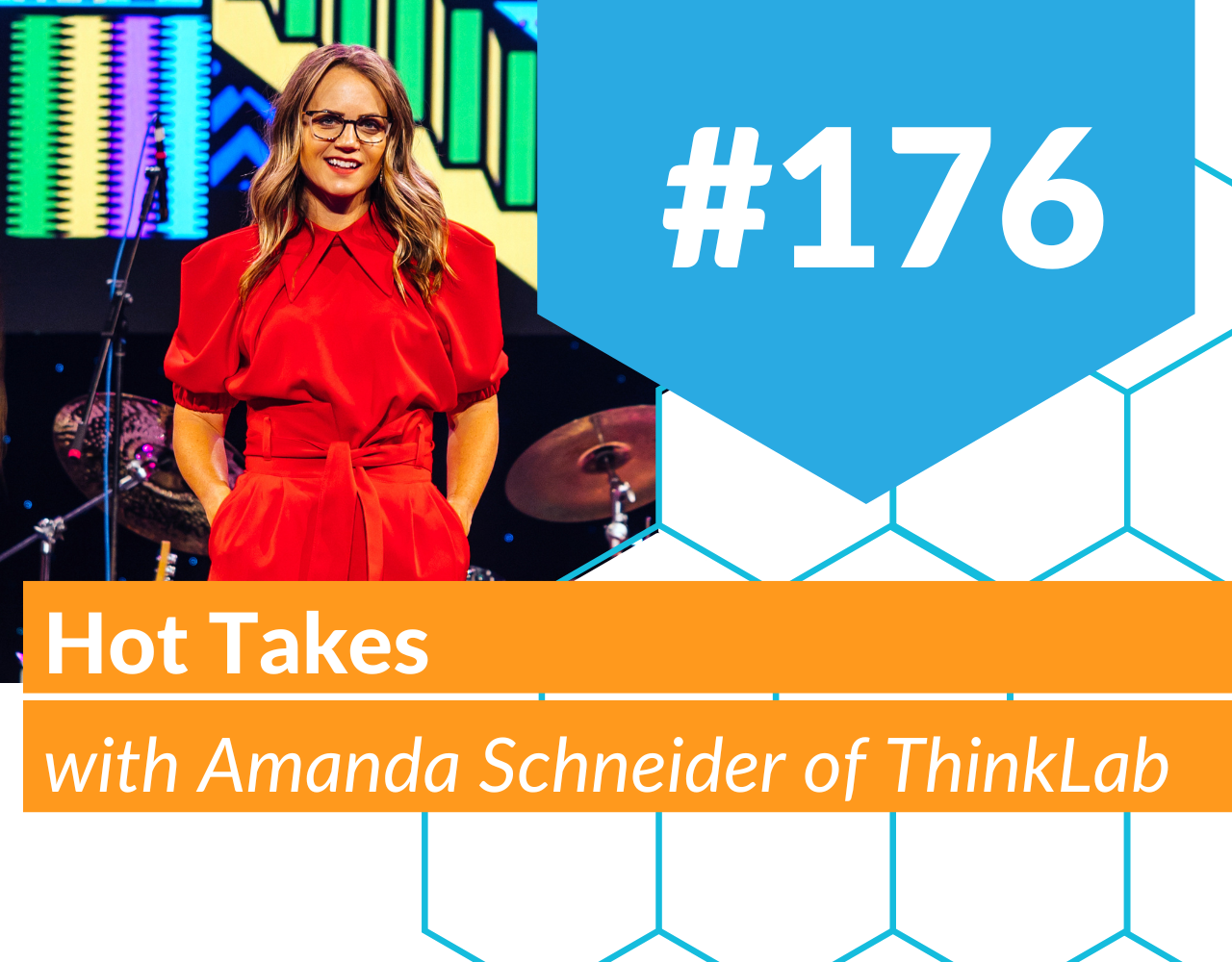
Hot Takes with Amanda Schneider of ThinkLab
SPEAKERS
Sid Meadows, Amanda Schneider
Have you ever wanted to pick the brains of an industry leader, an influencer, or someone who's shaping the future of our industry? Or maybe just someone who's been in the trenches for a while and has real thoughts and ideas? Well, today we're going to do just that.
Sponsor:
We'd like to thank our presenting sponsors, Avanto, services and software that streamline how you operate and The Collaborative Network, a platform where leaders in the contract interiors industry unite.
Avanto Ad:
Is your team overloaded? Avanto helps teams save time and money by using AI to handle daily work from order management and AP processing to task handling without adding headcount. It works inside the tools you already use, with no new dashboards to manage. Go to goavanto.com to see how we can run your daily operations.
Sid:
Welcome back or welcome to the Trend Report, your inside look at the people, products, and ideas shaping the future of workplace design. I'm your host, Sid Meadows, and I'm glad that you've tuned in for this new addition to our lineup, Hot Takes, where I'm joined by a co-host, we spin the wheel of topics and we share our unscripted hot takes in real time. And please join me in welcoming back to the show, Amanda Schneider. Hey Amanda, how are you?
Amanda:
Hi, good to see you, Sid. Thanks for having me on.
Sid:
Oh, I'm glad to have you here. I love the fact that you're joining because you're one of the people that I know that always freely and openly shares their honest opinion about things. And so we're gonna hot take on some questions today. But before we do that, give us a little update about what's happening with Amanda. You've been busy.
Amanda:
I've been very busy, very, very busy. So for your listeners that I haven't had the privilege of meeting before, uh, I'm the founder and president at ThinkLab. We are the research division of Sandow Design Group. So I founded Scaled and sold the company. We've been part of Sandow uh since about 2018. We now run all of the interior design giants of design. We do a U.S. design industry benchmark report that just launched. So lots of design-wide industry studies. Uh, I'm also the host of Design Nerds Anonymous. You can see the swag here, top 1% podcast. And as far as what I've been up to recently, thrilled to say I did a TED talk in 2024 that has been pulled by TED to the TED.com stage, now has over half a million views. And with that starting, I was like, all right, time to fulfill a lifelong dream, uh, which I've had for a long time, which is to write a book. So so proud to say that in May of this year, May of 2026, I'm launching my very first book, which is titled Work for What's Next, Why Workplace Culture is Failing, and How the Next Generation Can Help Us Fix It. So it's building on years and years of research uh across the design ecosystem and beyond to really help us kind of tackle this interesting moment that we're in in time around kind of the fidgital world, as we call it, this blend of physical and digital, and you know, how it's changing some of the challenges in our business and how we might be able to solve it.
Sid:
If you're not already following Amanda, you need to be sure that you're following Amanda because they and ThinkLab, because they put out a ton of amazing resources for our industry. And there's value, whatever your role is, there's value in all the things that they put out. I attended the benchmark presentation, like was it just last week, I think? Yeah, it was just last week.
Amanda:
Erica Weinberg, shout out to Erica.
Sid:
Yeah, Erica, she did a great job with it. I mean, it's such really important information, and you can learn something from it, you can take something away from it. But before we jump into the questions, let's go back to the book for a minute. So, I mean, I saw the TEDx, I watched it when you put it out, then I saw it that you moved up to the big stage, as they say. And it's a really great, what, 17 minutes, I think, right?
Amanda:
It is uh 12 and a half minutes. Yeah.
Sid:
So it's worth the listen. Insights again, and what Amanda shares is really awesome. And the book's gonna carry through some of that. And you said earlier that regardless of what your role is in our industry, there's something in the book for you, right?
Amanda:
So I really look at it across kind of three spectrums. A lot of people in our industry really want to talk to their clients about future of work. There are tons of contents in the book for you to really generate those conversations with your client. It also, secondly, benefits your own business. You're looking at your own talent pipelines, you're trying to build culture within your own organizations, your own dealership, your own company. There's lots of information in there for you. And third, I would say is for you as an individual. There's lots of hints about how you can kind of manage your own work-life balance, but also there's clues as an individual if you are a B2B seller. We know that this world of sales has really changed a lot. And how to connect with the next generation of influencer is really a big topic specific to our industry that we're finding has a lot of relevance everywhere.
Sid:
Yeah, that's great. And so let's go and support Amanda and all the work that she's doing. So we're going to drop the link to the TED talk as well as the book, the Amazon link to the book. Go out there and pre-order the book. It comes out in May, but go pre-order the book and let's help support Amanda because for our industry, this is a really big deal because we kind of stay hidden behind so many different things. This is a big deal for our industry.
Amanda:
It is. And I will say, you know, we've had viral articles in Forbes, MIT Sloan, now this TED Talk taking off. And I think what's really exciting, you know, of course, for me personally, but really should be for everyone in our industry is suddenly the average human cares so much about physical space, how they feel in physical space, where we're headed. And I think all of this virality that we've had at Think Lab and in my role really says that the world suddenly cares about all the things that this industry has been thinking about for a really, really long time. So I love that because I want to help more voices in this industry get heard.
Sid:
So if there's anybody that works every day to move our industry forward, it's Amanda. So be sure you're following her, follow Think Lab, go pre-order the book. And without further ado, Amanda, I'm gonna share my screen here and we're gonna spin the wheel of topics. Can you see the wheel pretty good, yeah?
Amanda:
I can.
Sid:
Okay. All right, let's spin this wheel. First question.
Amanda:
Drum roll, please.
Sid:
Oh. This is really good. So, Amanda, what do we really sell?
Amanda:
Okay, so what do we really sell? I think most people get this wrong. I think most people in this industry think we sell product. But this is again what's so exciting about the future of work is we all spend so much time at work. We spend so much time away from our families. And I think if we can improve people's work lives, we can absolutely improve their lives in total. So I think where we maybe get things wrong is we think we're selling a product, whether it's a chair, whether it's carpeting, whether it's flooring, lighting, you name any other category that we serve. I think what we're really selling is a better future for the people working in these spaces, healing in these spaces, living in these spaces. And I think the other thing that a lot of people get wrong is in addition to we're not selling a product, is most people are looking for ease in the process, even more than they're looking for threaded metal inserts, you know, whatever X gauge steel, whatever materials, you know, I know that they care about those materials, but I have long said innovations, the biggest disruptions in this industry are gonna come from process innovation, not product innovation. So I think that uh I would encourage our listeners to think about how are you selling easy? How are you selling less risk? Because I think that's gonna be even more important than product.
Sid:
Okay, that is so good. And I'm gonna tell you that quote that she just told you about our industry will be transformed by process, not product. Go back to like 2018 when she was on the show. If we can find the episode, we'll drop it in the show notes. She said exactly that same thing then, and I have never forgotten it since you said it. So it's so powerful. And I totally agree with everything that you said. What I would add to it is I think that we do get so caught up in the products. We get because we love the products. I'm a product guy myself, right? So we love the products and we love the features and benefits and all that kind of good stuff. But really, what we're selling is solutions to the problems that our customers have. And but I think our challenge with that is so many people don't understand that our products actually solve a business problem for our customers. And that's where we really need to lean into because at the end of the day, there's thousands of products and so many of them are all just alike. And they all have so many similar features and benefits. But I think what we truly sell is solutions and we need to lean in a little bit more to understanding the problems that our products are solving for. So all right, let's go on to the next one. Okay, question number two. Okay, best leadership tip or advice.
Amanda:
Okay, best leadership tip or advice. I think my best leadership tip or advice would be in this era, no one has time and everyone is really trying to manage their energy. So I would say my best leadership tip, whether you're leading a team, whether you are just communicating with your clients, whether you're an individual contributor, is how do you reduce stress on the people that you're communicating with? How do you make their lives easier? Because anything that you can do to reduce stress, to make their lives easier, to remove friction, is going to make them want to work for you, want to work with you, want to uh come back to you. You're gonna become the easy button for them. And I think that, you know, that's coming up a lot in our research right now is this time famine, this time drop that we're in, is this risk aversion that is just rampant and everywhere. And you put those two things together and it's all about attention. So, how do you get attention is you've got to be immediately useful and you have to help them manage their energy to make sure you're reducing friction and not adding to it.
Sid:
I love that. And I'm gonna kind of add to that, piggyback on it a little bit. And I've said this a couple of times before. Honestly, I believe the best leadership advice I can give to any leader, whether they're been in leadership for 30 years or they're just an emerging leader. And I think it's important to remember that everybody is a leader, whether you have that title or not, is uh lead from the back. And what I mean by that is empower your team to do what you've hired them to do. You hire really smart people, you hire really talented people, but you stifle them with telling them what to do and micromanaging their processes. And have they followed this step, have they filled out this form? But if you empower them, they're gonna be happier, they're gonna find more joy in their work, they're gonna be more confident in making decisions because you as a leader have empowered them because you trust them. Now I think you have to create a safe space for this and make sure that they feel that they are empowered. And that means don't solve the problem for them. You bring a diverse group of people around the table, you present the problem that your business is having, and then you sit back and you let them solve the problem and you listen to them. You don't judge them, right? You let them throw out the ideas, don't comment on every idea, let them formulate ideas and let them take those big buckets of ideas and boil it down into a few actionable ones that are gonna solve those problems because you hired them, because you trust them, because of their skill set, because of their talent, their education. You got to empower them to be successful.
Amanda:
Can I add to that? Yes. I I just want to build on what you're saying too. And I'm so pleased to say that uh Deb Golden, who is the chief innovation officer for Deloitte, actually wrote the forward to my book. So I met her through the TED circuit and she just did a TEDx talk herself. This past year, I had the privilege of introducing her. But her whole forward of the book talks about rethinking and unlearning. That again, in this era of rapid change, one of the most important things that we can do is actually let go of what we've previously believed to be true. And, you know, change is happening faster than ever before. That ain't slowing down anytime soon. And so I think as we look at that rethinking and unlearning, one of the topics we present in the book is also around asking better questions. I think it used to be those who knew the most, had the most experience, you know, were the most valuable. That is absolutely still true. We still have to be knowledgeable. We still absolutely need all of that experience, that lived experience that cannot be compared, especially as we enter this era of AI that is going to even accelerate the change that we're all overwhelmed by and already feeling. Uh, you'll notice anybody who's been in AI and working with that tool, it's not about giving it information. It's about prompting it to ask better questions to exponentially enhance the knowledge that you have. And so I think that that is a big lesson for leadership as well, is really looking at knowing is important. But what becomes even more important are asking these better questions because what that does not only activates AI and some of those digital tools, but it also activates your team. Rather than them, you know, good sports analogy, waiting for the ball, waiting for the leader to throw them the ball. They are on offense mode and it really activates them and empowers them to do more as well.
Sid:
That's great. As you could tell Amanda and I could probably go on and on about these things.
Sponsor:
We'd like to thank our supporting silver sponsors, KiSP, who helps furniture brands visualize and sell products before specification. Navitas Credit Corp. Navitas makes great workspaces affordable, turning furniture projects into easy monthly payments. Web Configurator Services, the leader in AI-powered online product configuration and quoting.
Sid:
We're gonna spin the wheel again. We're gonna try to get two more in, so let's go. Okay. If the industry had a dress code stereotype, what would it be? And is it helping or hurting us?
Amanda:
So I would say in my world, it depends on which audience I'm speaking to. So I live in a dual world. One is the design side of the industry. So I'll start there. Uh, that the design side of the industry definitely has a dress code. It is black on black on black, head to toe.
Sid:
Really?
Amanda:
Oh, always. You go to one of these events, I tell you, you want to stand out, just wear a color, and everyone's gonna notice you in the photos. And I I think it's natural, you know, because designers they love this understated, you know, neutrality that lets their design shine, maybe instead of them sometimes. So I don't know that it's helping or hurting us, but it's just an interesting thing that I have noticed in my world when I speak to the specifically AD architecture and design side of this industry.
Sid:
So this adds up for me because every time I've seen you on stage, you're wearing a bright colored dress or bright color pants, like a couple of neocons ago when I was there on a Friday, you were a red jumper or something, right? Forgive me for butchering it. And then most recently, I've seen you on the socials of the world sporting these uh fancy tiger pants.
Amanda:
The tiger pants, yeah. There's a funny story behind those tiger pants. Uh but yeah.
Sid:
Okay, we'll have to learn that later. So for me, you know, I think about when I started in the industry, our dress code was suit and tie. Like you wore a suit, you wore a tie. I remember going to Neocon, I haven't taken three suits with me for three days and different ties. And, you know, that I think at that point in time, that's what corporate did, right? But I do think the suit and tie that is carried over into the world today, I do think actually hurts us a little bit. I think it makes us feel stodgy and stuck up or maybe stuck in old ways. When you look at the world of business today, at least not financial or not attorneys, they always are in suits and stuff. I just think there's a way that we can business casual it up a little bit with really cool jackets and shirts and things that really for guys specifically allow us to bring our personality into it rather than a suit and tie. And funny, we'll add to this. About two years ago, I threw away all of my ties except for three of them, and I kept them so that if I needed a tie for a funeral or a wedding, I at least had one. And I cannot tell you how old those ties are.
Amanda:
Hopefully you donated them. Hopefully you donated them. Yeah. Yeah, but anyway, I will also say as a on behalf of womankind here, I am so thankful that the pandemic made it cool to wear tennis with a suit or tennis and a dress. Thank you for upcoming Neocon because and that is definitely helping us because those shoes were hurting us on these long days of journey.
Sid:
If you look around, you see a lot of people wearing white sneakers, white tennis shoes. They're kind of fancy-ish type, golden gooses or whatever my daughter has, right? Or other types of Deha's. I have a pair of those. I mean, it's really cool, but yeah, the white tennis shoes, I do like that too. So all right, let's go. One more question. So far, we haven't disagreed really on anything.
Amanda:
I know, not yet.
Sid:
Oh, okay. This is one of my favorites. What book are you reading now? This is a great one to end on.
Amanda:
It is a great one for me because you know I always have one here. So I am currently reading Jonathan Hayes The Righteous Mind. So if you're not familiar with Jonathan Hayes, he wrote The Anxious Generation. The Anxious Generation is, you know, about why our kids, I've done a lot of research on Gen Z, why they're getting so anxious and what's happening with this hyperconnectivity and what this is about, the righteous mind. The subtitle is Why Good People Are Divided by Politics and Religion. And we won't get into politics and religion right now. We're not going to get into uh any of these taboo subjects. But what's interesting about this to me, running a research firm, when we present large research problems and the final results to a lot of our clients, one of the things we do is we asynchronously deliver the research in advance to allow them to kind of process immense amount of information and come to a QA session so we can synchronously process together. To kick off those sessions, especially when it's large, we often ask, what is one thing that surprised you from this research? Yep. Or one thing that confirmed what you already believed to be true. 90% of the time, Sid, 90% of the time, people choose something that confirms what they already believed to be true.
Sid:
Wow.
Amanda:
And I think that this is a real challenge that we have that I see in our research world is that we are looking for research that validates us, that confirms what we believe to be true, whether we're searching on AI, whether we're Googling, whatever we're doing, and then we stop looking. And we won't get into politics or religion or RTO or any of the other topics that we might be talking about that could be really polarizing and divided. But I think that, you know, what I what interests me about The Righteous Mind in this book is it talks about evolution and what makes us want to really defend our tribe that keeps us in these zeros and ones world rather than being able to really understand the gray space and exist in between.
Sid:
Okay, that's awesome. So um, is it on Audible?
Amanda:
I don't know because I am a paper book reader. I want to highlight and circle and it says something about my age, but um, I'm sure you can probably find it on Audible. It just, it just dropped. I literally just got this last week.
Sid:
So I sometimes read and listen at the same time. When I really want to like make sure I'm getting the message, I'll listen to it and then I'm taking notes in the margin of the book or highlighting things until I'm reading at the same time. That's a problem. Not everybody should do that because you're paying for two books, but I love hard books. But the book that I am reading right now is called How AI Changes Your Customers by a guy named Mark Schaefer. He's a speaker, he's written like 17 books, and he actually has an event in April that I'm going to. I'm gonna get to meet him for the first time. And it's just really interesting because we think about how AI can impact us and how it can help us be more efficient, help us reduce workloads and task and all management, all that kind of stuff. But are we really thinking about how it impacts our customers and what are they doing? So I'm learning a lot through this process. So, how AI changes our customers. But Amanda, I'm gonna do a second question on this. Do you read anything that is like nonfiction? Are you reading anything that's not a business book?
Amanda:
I do, yes.
Sid:
You have one on top of your mind that you just read that is
Amanda:
like I don't know, I don't know if I can say them. It's all the Rebecca Yarrow stuff. I don't know if your wife is into that stuff, but I shouldn't be admitting this publicly on a podcast.
Sid:
I don't even know who she is. So Rebecca Yarrow.
Amanda:
Okay, well, you can look it up. All the women listening will know who Rebecca Yarrow is.
Sid:
Okay, I'll have to go ask my wife about it. So I discovered Kristen Hanna and uh through TikTok because I'm on book talk and I just ever, yes. I read The Nightingale. I actually created a video on TikTok about it, and the last five pages of the book just are killer. And um, I did a video and I'm like, that beat you, Krista and Hannah. This book is so powerful. It's set in World War II, it's just so interesting. And so now I'm like, I got one of her other books, The Women that I'm about to read. So I've read that one too. Yeah, so good. Hers is great.
Amanda:
Everything. Her. You can't go wrong, but the nightingale is my favorite.
Sid:
Okay. We'll have to compare notes later. Amanda, I can't thank you enough for being here today and doing the hot takes. What did you think about it? It's a new format for us. So tell me what you thought about it.
Amanda:
So fun. I am a type A preparer. So I love to be able to prepare, but I also love the Stump the Chump game on stages everywhere. I do about 30 keynotes a year. So super fun to merge both worlds here. So thanks for trusting me to come back again, Sedley.
Sid:
Oh no, I love having you on. And I hope that you will come back maybe later in the summer and share more update about exactly what's going on with you and give us some more insights into the world of Amanda. And the book will be out by then. So that's exciting.
Amanda:
It is.
Sid:
Amanda, thanks for being here today. I'm going to put all your contact information down in the show notes. Everybody knows how to contact you. Remember to go out and pre-order a copy of Amanda's book.
Sponsor:
We'd like to thank our community bronze sponsors, Catalyst Consulting Group, ReSeat, and Staffing Plus.
Outro:
And I want to thank you for being here today. I hope you enjoyed this episode. We're still tweaking these as we go along, so they will continue to get better. I'm going to continue to have really amazing guests like Amanda. So I appreciate you joining us on the Trend Report today. Your inside look at the people, products, and ideas shaping the future of workplace design. Go out there and make today great, and we will see you in the next episode. Take care, everyone.