The Trend Report Podcast
The Future of the Independent Rep with Ed Eisaman
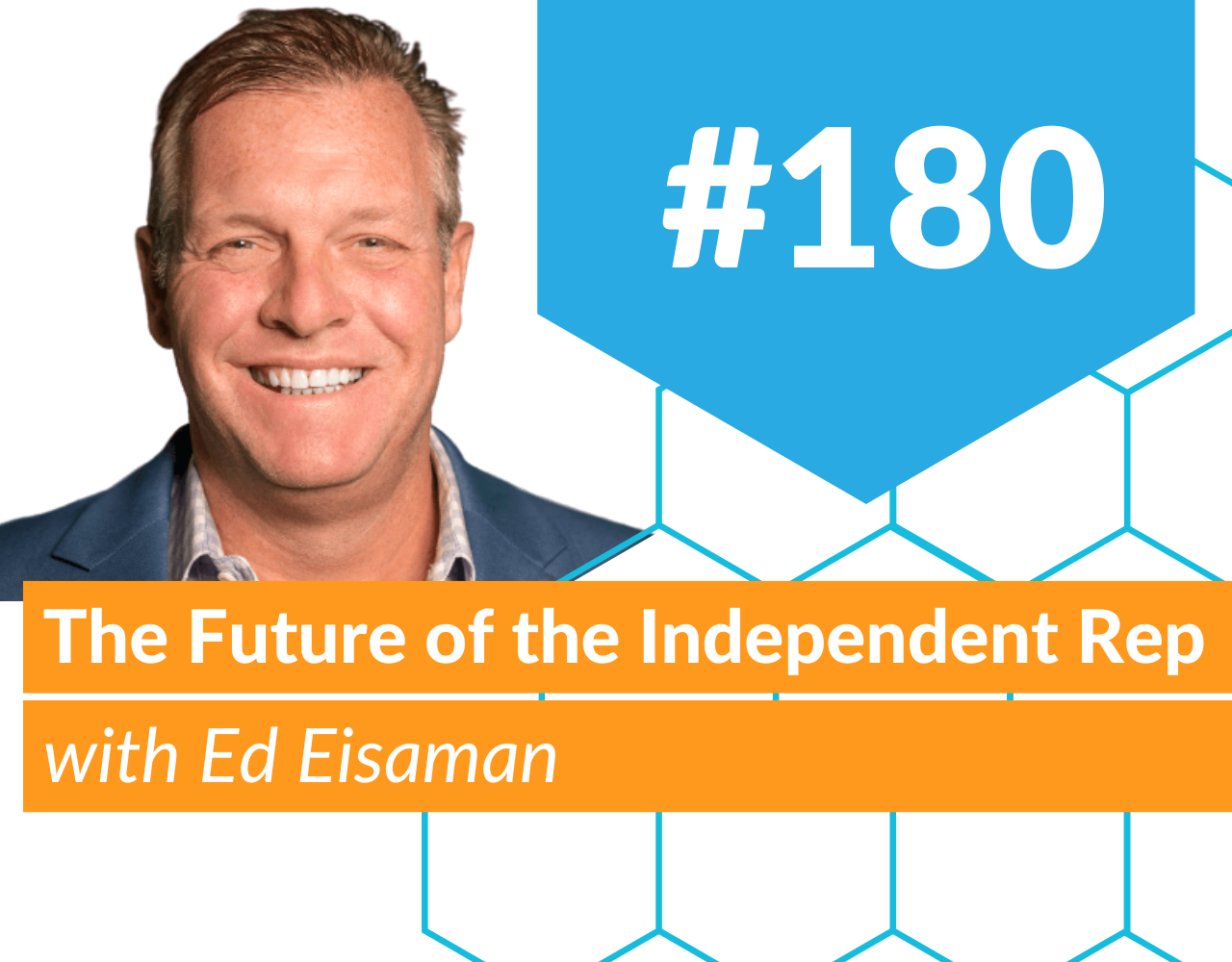
SPEAKERS
Sid Meadows, Ed Eisaman
The independent rep model has always been relationship driven, but today it's capital intensive, complex, and evolving faster than ever. From showrooms to staffing to succession planning and manufacture expectations, reps are being asked to do more than ever before. My guest today isn't guessing about the future, he's living it. With multiple showrooms, decades of experiences, and a clear point of view on what it takes to stay relevant, competitive, and valuable, this conversation goes deep into what's working, what's broken, and what comes next for independent reps.
Sponsor:
We'd like to thank our presenting sponsors, Avanto, services and software that streamline how you operate and the collaborative network, a platform where leaders in the contract interiors industry unite.
Avanto Ad:
Is your team overloaded? Avanto helps teams save time and money by using AI to handle daily work from order management and AP processing to task handling without adding headcount. It works inside the tools you already use, with no new dashboards to manage. Go to goavanto.com to see how we can run your daily operations.
Third-Generation Rep Firm Story
Sid:
Welcome to the Trend Report, your inside look at the people, products, and ideas shaping the future of workplace design. I'm your host, Sid Meadows, and I'm excited to be joined today by Ed Eisaman, the principal of Eisaman Contract. It is a multi-line, multi-market rep firm with showrooms in Pittsburgh, Buffalo, and Manhattan. And he's been thinking deeply about the evolution of the independent rep role, the investments required to compete, and how reps, dealers, and manufacturers can build stronger partnerships moving forward. This is going to be a real conversation with some real thoughts. Welcome, Ed. It's great to have you on the show.
Ed:
Great to be here, Sid, and always love spending time with you, my friend.
Sid:
Oh, well, thank you. So we met years ago, and I don't know how many years ago. Um, when I was at AIS, you became an AIS rep, and you've been there as one of their leading reps for a really long time now. And so that's how we got connected. And you came into the collaborative network a few weeks ago and talked to our sales leaders about the independent rep model and the importance of it and the evolution of it. And I thought, this is a really great conversation, and we're going to bring it to the podcast because you guys play a pivotal role in our industry.
Ed:
Well, I'd tell you, I'm so happy you're focused a little bit on the independent reps. You know, we're we're excited to be uh having this topic, to say the least. So you have a, I think you told me third generation family business. Third generation. My grandfather was a dealer back in the 50s and 60s and uh 40s, 50s, and 60s. This is back when uh, you know, royal typewriters were the uh main product category, but he sold it, I'll date some people, he sold Yom and Herbie Desk, which was the precursor to Steel Case. Oh, wow. Believe it or not, back in the day, old Battleship Great Desk. And then my father actually worked for uh KI Krueger at the time before it became KI and worked for Bill Corbett's uh seniors group back in the uh 60s and 70s. So it's in my blood, my friend.
Sid:
And so did your dad start the independent rep group, or did you say, okay, I'm gonna follow into the industry and I'm gonna start an independent rep group?
Ed:
He started it. He started it back in 1980. Okay. And uh I joined him in '89 after a couple years in the uh Xerox and uh he told me how wonderful it was. And remember, I took a cut in pay, and uh I joined him, and it turned out to be the best decision of my life. One of the best decisions of my life, certainly in my career.
Sid:
Truly a family business because your sister is involved in it, right? And your brother is involved, but now he's in Carolina at a different rep group, right?
Ed:
He's at PSA with Bill Wilson and uh in covering South Carolina for him.
Sid:
Yeah. Okay, that's great. So, what does it feel like? What is it like working with your family on a regular basis, on a daily basis, actually?
Why Showrooms Still Win
Ed:
My sister, yeah, I mean, she's she's amazing. So to answer your question shortly, it's it's great. We're a family that anybody knows the Eisamans knows we're we we are emotional on our sleeves, and you know, if we have to get anything out, we get it out, and then we get over it and we hug and kiss and move on. So it's been it's been a great, certainly a great relationship with her, and uh it's been awesome to watch her and her family grow in this industry. And uh she does a great job for us in Western New York. She manages the Western New York territory and out of our Buffalo showroom.
Sid:
Yeah, which is impressive that you have a showroom in Buffalo, New York. It's not a marketplace where you think about independent reps putting showrooms. You got one in Pittsburgh and then a new one in Manhattan, because you do cover for some of your lines, you cover part of New York. So, Ed, is this showroom strategy important to independent reps? And if so, why?
Ed:
I I think it's massive. Uh it, you know, we we've been very fortunate. You know, the Pittsburgh Show was the first real investment in uh in the downtown Pittsburgh show. We had one out in the suburbs a while ago, but uh it paid for itself literally within five years with revenue growth. Uh my wife and I bought it, uh, bought the building, and it it worked so well for us. We did the same thing in Buffalo, New York, you know, and Buffalo uh is near dear to my heart. I went to college there and just some of the best people in the world. And uh so we made that investment in that market, and that's you know, that's done extremely well for us as well. And now we've evolved into metro in the Manhattan, in the New York City area with a few of our product lines there. So so I'm a big believer. And it's just you know, it's a place where people can can come in a relaxed, uh controlled setting and and see product, and and it's been amazing to watch how they come for a certain reason. And when they're here, they see other things. Oh, I didn't know you did signage, I didn't know you did erase flooring, I didn't know you did you know weight noise, and and before you know it, you're solving multitude of products. Yeah, and it's it just grows exponentially. Our goal used to be 10% of every project. Now it's you know 25-30 percent, in some cases more, depending on the deal with partner we're involved with. But I'm a big believer in it.
Sid:
So they get to come to your showroom, they get to experience the Eisaman way, if you will, and they get to see all the various products that you represent, not all of them, but a good selection of them in applications. And so they come in to look at a workstation from AIS and they leave with four or five other ideas to put into their project. So you've actually, because of your investment in the showroom, you've expanded your opportunity to increase the sale with other product lines. 100%.
Ed:
You know, the vertical selling is a big part of quite frankly, it's a big part of what we do. I think it's a big part of what the dealer communities are doing. You know, and be for us to be able to offer those services to our dealer partners and A and D partners, and we had another architect come in here today, and again, their whole point was to come and look at the demo wall. And uh while they were here, they fell in love with uh a JSI lounge piece, and we've now got that setting, and they were looking to use another product line at the time. And then we got into dining, you know, their quote unquote admin dining area, and uh they used another, you know, Palmer Hamilton, another one of our product lines he saw. So, you know, these are all it's such a visual industry, and it's such a physical industry, physically, they want to touch and feel. But more importantly, they don't have time to go see. If you can, yeah, if you can be one supplier and supply a lot of these tertiary applications and ancillary spaces, I mean it's it's the the more power you're gonna be on the whole project.
Sid:
Sure. And where you are in Pittsburgh and Buffalo, New York, is not a mecca for showrooms like Chicago or maybe High Point, North Carolina, or New York, where there are showrooms everywhere. I mean, you're putting them in middle America for all practical purposes, and people are coming to see them and experience, and it's paying off. So why do you, Ed, if you have an opinion on this, why do you feel that a lot of reps don't want to lean into the showroom strategy? Obviously, it's worked for you.
Vertical Selling With Architectural Lines
Ed:
Yeah, it has. I think a lot of its cost. You know, sometimes the future of the rep model is so important to me, and I'm always trying to explain to them that you know it's an investment. But if you do it well and you use it the way it's designed, uh and not, you know, as a storage facility, it'll pay massive dividends for you. And I'll share this with you. I mean, from a from a net worth standpoint, we own the buildings. Sure. So, you know, if you do have a bad month, you know, you don't pay yourself rent that month, you know, and uh so you can get through it. But I mean, you know, you're paying yourself rent. I mean, years ago, I ran into Frank Cass, who most people know is a legend of the industry. He's one that founded Continental, and and he said, And I I don't believe in renting. And I was probably 25, 26 years old. And I was in this location at one and and I'll never forgot that. You know, I I've used that in uh you know the real estate of our business. And uh huge dividends. Because that's an investment.
Sid:
Real estate is an investment, and it grows with you over time. And but I want to go back for just a minute. You mentioned something that I don't want to skip over, which was you were refer to it as vertical selling. What does that mean to you? And and explain to us what that is.
Ed:
Well, as you know, uh it basically is top-down selling throughout the entire space. So, you know, there might be a certain product category that's driving their interest predominantly. And then while you're in that conversation, we all know because we're experienced, there's plenty of other products that they're gonna need in that building.
You know, one of the things that frustrates me is like we do a pretty decent number with signage. And I'm amazed at how few of our dealer partners and even other reps get involved in signage. They let it go to the contractor, the general contractor. And I'm thinking, this is the only thing by law you have to get an occupancy permit in your space and ere we let that business go. So, you know, that's a nice kind of a uh a process of how we get more vertical. And then we have an architectural division of our rep group, which is really driving a ton of our conventional FFE because you're involved in a project so early.
Sid:
Yep, way before the normal furniture process.
Ed:
It's powerful. Every rep group should uh look into architectural products. You know, raised.
Sid:
And when you say architectural, okay, that was about to say, what are the product categories that fit into architectural?
Ed:
Certainly uh architectural demotable wall systems, casework, raised flooring. I put light noise into it, sounds like signage, signage, obviously. You know, these all are part of the building that are attached. They don't hold the building up, obviously, but they make the building more functional. And you know, that that falls into the architectural side of the specifications, which, as you know, is preliminary to the FF and E side, which feeds us.
Sid:
Which basically preliminary means it's 12, 18, sometimes 24 months before they ever get to the furniture aspect. So now you're involved in the process selling the architectural product, so you know the product project's coming. You kind of know the timeline because you've been involved in the other aspects of it, so you know when to start being a pest, if you will, about the FFNE package.
Ed:
It's it's so powerful. I mean, it's so powerful. And you know, like you said, it worst case, if you don't get that portion of the quote unquote architectural products, you find a lead for furniture. Put furniture in Ed Space at some point.
Sid:
Now, Ed, do you have a specialist that is an FFNE specialist in your marketplace, or do you ask your reps to be you know generalists in all the categories?
Ed:
We've cross-trained all of our people that they can they can be specialists in that world. Okay. And we've been in it a long time. I've been selling demotable wall systems since uh, you know, we go back to the Trenwall days when they were rounds. We're back in the early 90s. Yep. You know, so um so we we've been in love with that market for that kind of time. Like now we got multiple manufacturers getting involved in casework and ASI is in health work, healthcare casework, AIS is in conventional casework. So it's it's opened up a ton of doors for us.
Building A Full-Service Rep Team
Sid:
Well, and I will say, as a voice of experience here, there are a lot of manufacturers looking for reps in all categories inside of our industry, whether it's in the architectural side or the FFE side. If you are an independent rep and you're looking to expand your portfolio and you want to look at architectural products, there are manufacturers looking for reps. So I think it's the opportunity is there for you to get it. So with this strategy, you know, you needed to look at how your business could grow and expand. And that correlated to people growth. So tell us about how your organization is set up and the type of services that you're offering to your pro-dominant customer today, which is the dealer customer.
Ed:
Well, all of our all of our employees are W-2. They are they are employees. We pay a salary and a bonus.
Sid:
Um that's different than most independent reps.
Ed:
It is. It is. I think it's important from our perspective. You know, they kind of teach with the Eisaman way and they understand the culture, and it just, you know, to me, it makes a ton of sense. Um, and then you know, and then we've got support staff, you know, that you know, we I got a full-time marketing person that handles all of our our digital marketing aspect. And we we do it uh it's uh it kind of sounds daily when I save email, but it's it's an image-based. It's you know, we have we send three a week out, one to the dealers, which is about almost a 45%, we're a little under 45% open rate. We send one to the A and D community, a separate, separate one. Again, they're all image, keep the verbiage as little as possible. So we call it the we call it the green light newsletter. As long as they're the we're waiting for the light to turn green, they can scroll through and check out our images that we're focusing on that week. And it, you know, then we have one to the end users. We do that once a month, you know, the commercial real estate end users.
Sid:
But you know, five sellers, you got a marketing person. Do you have a designer on your staff?
Ed:
Well, we we do have two. One of our support staff is a full-time designer, and she also handles a little bit of customer support. But you know, we've got multiple CET licenses and project spec licenses. So, you know, we understand, you know, the the margins have been squeezed, right? I mean, that's why the vertical selling is so important. And some of the real, the real are our real good dealer partners are paying attention to that and they're selling more vertical as well. And our our our ancillary products are you know, generally we like to think they come to us a lot for that. And then we where everything else fits. But because of this, the tight margins, with the more support as rep organization we can give them, the more important we're gonna be to them. So we get I mean, I'd bet as a firm, we average about eight, nine hundred emails a day. You know? Yeah, it's amazing when you think of that, you know, with all the people on the street selling for us and then our in-house staff. So, you know, every one of those uh is for some reason, some are duplications, but bottom line is you know, okay, and I need a quick price on this. How quick can we get that to ship? You know, can you do a quick rendering? You know, so we have staff that has the capability of firing out of CET rendering fairly quickly, you know. So those services are have become extremely important to our dealer partners. How quick we can provide those quotes to them.
Sid:
So what's happening here is a shift that a lot of times in the past, the dealer would do the specification, they would call you and say, Ed, I need 10 chairs for this project. And you'd say, Hey, I'm gonna use this chair or whatever, right? I'm simplifying it for sake of time here. And then they would go and spec it and price it and all that. But demand on the dealer is increasing, which means the demand on you is increasing. The margin for the dealer is decreasing because of the competitive nature of our marketplace at current times. And so the dealers, and this is not just in your area, I hear from reps all across the country that this is happening. The dealer is calling and saying, Hey, here's a floor plan. I don't have time to do all this. I got to plug in the workstations or whatever from my major brand. Here's the rest of it. Put your stuff in, send it back to me, give me a price. So you're doing that. You're drawing the tool that they know how to draw in CT, you're specifying it. If you know the finishes, you're putting the finishes on it, you're giving the list price, and you give them the discount, and you're sending it back to the dealer. So you just made the dealer's life a lot easier. But the cost of that burden shifted from the dealer to you, and the only way you recover your cost is if that sale actually goes through, right? 100%. Yep. So that's risky for people to.
Ed:
Well, it is. It is. And then we we put under the cost of doing business model, you know. But but we're fortunate because we've been doing this a long time, and that you know, the dealers are, you know, they're coming to us a lot to make it work. The scale works for us. You know, obviously we pay attention, you know, we call them touches, we pay attention to things that we don't win and why we didn't win. But it's interesting, we're pretty fortunate. I can't, you know, I'd say less than 15, 20 percent of what we quote doesn't turn into an order. You know, we probably close 80 to 85 percent of all the jobs we quote. It's not a bad ratio.
Sid:
That's not a bad ratio. That's not a bad ratio.
Manufacturer Partnerships And Fair Pay
Ed:
I mean, not at all. I mean, it's and what's nice too is when they call, say, you know, I'm also looking for that custom reception center. You know, even though anybody does it, well, yeah. I mean, by the way, I when I was in your showroom, I noticed you had that power solution at race floor, is um uh, you know, let's give me an idea what the budget is on that. You know, the we have sound problems we're hearing, you know. So it that opportunity for that quote of those 10 chairs turns into other things. Because that dealer is trying to do the exact same thing we are, and they know they can come to us because we have the product solutions that can help them. And I tell them that the best compliment they can never provide, they can never provide Iceman contract is you know, if you can't find something, call Ed. Yeah, call Judy, call Mike, you know, call, you know, and uh if we don't have it, you know, we sleep and direct them to the place that that does to it.
Sid:
Be a true partner to them in directing them to the right place. So, Ed, what is it that you feel like that manufacturers today need to understand about the evolution of the independent rep model that they don't understand currently? You know, it's interesting.
Ed:
I think I think it's getting dire. But I I I think some manufacturers don't really understand the true cost structure of a rep organization. You know, what it really costs to run the organization. When I got in this industry, our average commissions was were 9, 10%. But we're at 6.7 is our average commission right now. I mean, it's and it's dropped. You know, so that's one of the reasons we have to sell more vertical. You know, we have to capture more. Our cost of sale has to improve to continue to provide these services. But most of the better manufacturers, they realize, you know, we're talking that for our partners, we're fortunate because they understand what we do. And they most of all of them have been to our showrooms and and seen how we staff up and the money we spend. And I'm very open about it. I mean, I I sure here's our average commission revenues a month, here's our average costs a month. And uh, you don't have to go to Word School of Business to see, you know, where that would fall. And, you know, they I think they appreciate the fact when they send that that commission check, it's just not going into Ed Eisaman's pocket. You know, this is that that's our gross revenue.
Sid:
You know, my takeaway there is transparency. Be transparent with them. But I also think that manufacturers need to understand, and I want your thoughts on this, please, that the relationship between the factory, the manufacturer, and the independent rep should be a partnership and not a you work for me thing. This should be a partnership. And the more that it is an effective partnership, the better the relationship will be, the more sales that will happen, the more things you can actually accomplish together on all aspects of it.
Ed:
There's no I mean, I'm fortunate because the big partners I work with, they they all get it and they're phenomenal. I mean, I I we have represent the best product lines in the industry in their categories. That being said, you know, I think the model, the rep model is the most to me, it's the the best model to go to market with. Yep. Because you have a good rep if you find a good rep organization, they're involved in almost every opportunity to some degree, you know. And no offense to direct reps, but I mean, sometimes, you know, they're they only have a few things to talk about. And you can't you can only go to the well so many times before a dealer gets annoyed. You know, so I you know, we can literally talk to some our same dealer partner every every other every week and have something new to talk to about and keep relevant. And we I go back to the COVID days where you know a lot of people had to sit at home. We were so busy during COVID because everybody pivoted to the you know remember the divider screens, and you know, we had we had a couple of factories do a great job. Fluid concepts did a fantastic job. They had a mitigating uh COVID program that opened up a ton of doors, you know. But the independent rests, the good ones, they are involved in many facets of the of the uh the sales influencer, whoever they may be, because you have so many relevant products to again make that space better for that particular decision maker.
Sponsor:
We'd like to thank our supporting Silver sponsors, KISP, who helps furniture brands visualize and sell products before specification. Navitas Credit Corp. Navitas makes great workspaces affordable, turning furniture projects into easy monthly payments. Web Configurator Services, the leader in AI-powered online product configuration and quoting.
KiSP Ad:
Selling contract furniture is getting harder. You're dealing with complex products, disconnected tools, and buyers who make decisions before you ever get to spec. KiSP helps fix that with clean product data, visual sales tools, and expert visualization services built for the way furniture actually gets sold. Backed by 30 years of experience, KiSP helps dealers and manufacturers visualize, configure, and get chosen early before specification ever starts. To learn more, visit KISP.com. You've said in the past that the bar has to be raised for reps. What does that mean?
Ed:
Well, we got to get out of the house. We got to, you know, I I think it's important to have a uh a location to uh, you know, I know some people have mobile invest in their business, mobile showrooms, which I think are great. Those are fun, actually. I think they really enjoy seeing those. You know, reinvest in their business, you know. I mean, the CET and design support is important. Have that capability. You know, so the again, factories look at that. Where they're you know, who's gonna represent their product the the best way? And you know, is my my commission dollars going to the best use to continue to grow that particular manufacturer in that particular market? Yep. So providing these services is is critical. And I think we pay attention to that. We want all of our manufacturing partners to know that you know that their money is looking to expand their business. You know, everything we do, everything I decision I make, uh is how do we grow our manufacturer partners' volume, which obviously grows hardly.
Sid:
That grows your volume too. Yeah. So on that note, I mean, we talk about pricing pressures and pressures on the dealer and margin pressures. Those same things exist on you because every time there's a special discount given on a project, first they come is to you to reduce your commission. And so when you think about this, like those pressures continue to be a challenge on the dealer side and on your side. How should manufacturers start to think differently about compensation? Independent reps.
Ed:
Well, I base everything on performance. I've always been an outcome-based guy. So, you know, everybody's it's all about growth. I always tell everybody, I said, you know, if you stay the same, it's two or three things happen every year. You'd stay the same, shrink, or grow. Two of them are bad. You got to continue to grow. You know, some cases it might only be 3%, some cases it might be 30%, but you got to continue to find ways to grow. And uh adding value to your business will do that, whether it be digital marketing, whether it be uh more participation in trade shows, whether it be showrooms, it's you know, expanding showrooms, uh mobile showrooms. You know, these are all things I think manufacturers look at and say, boy, that's the best use of my you know, seven or eight or nine percent commission is look what this guy's look look at this firm and his organization's doing. And uh I worry, I I worry. I've talked to my close manufacturer rep friends, and I said, you know, we gotta worry about the next generation. You know, I mean, we gotta make sure our our the rep model continues to be relevant in the manufacturer's eyes. So I'm always trying to build the the rep brand. And I think designers are the greatest opportunity to join our profession.
Sid:
To come to your side of the table.
Yeah.
Ed:
I mean, yeah, well, first of all, young designers, designers in general, I think, are the huge part industry. Those are the ones that are joining dealerships and and they're starting out maybe in design and they have if they have an aptitude for sales and marketing. And I know sales is a bad word, but I call it influence or advocate, you know, and they like that word better. But you know, they have a tremendous opportunity. I probably three or four times a year, I go to our uh some of our lead design schools in our territory. Yeah. And they have vendor days, and and I sit there and I I always have a fun time with it because you see these, you know, they all want to be the next Frank Lloyd Wright and you know, you know Michael Graves. And I and I and I say, Hey, who uh, you know, who here is interested in sales? Oh, no, no, no, I can never. I can never. And I said, Boy, you just did a good job selling me on the fact you could never. And I and I said, What do you think you do when you take your your design and your space plan to your client? I said, You're influencing their thoughts on that space. I said, That's you know, forget the sales word. That's a bad word. I get it. But boy, if they have an aptitude to sell with a design degree, my gosh, the sky's the limit is a rep. The sky is the limit.
Sid:
Yeah, I think they come with a little bit more trust, if you will. Their credentials, give them a little bit of that. That elevates them, I think. And typical designers, even with a aptitude for sales, they're not I hate this word, they're not salesy. I'm air quoting, they're not salesy as a lot of salespeople can be salesy, which is what's given us a bad rap, which I don't think we've earned it, right? But um, it is an important thing. Do we need more young people coming in into all different aspects of our industry? So when you think about directly to the manufacturer in changing compensation and not always reducing your commission structure, what I'm hearing you say is alternative things like contribution to the showroom, bonus structures based on growth, how you're growing the business. These are all things that contribute to your bottom line because, yes, you have a bottom line. You have all these employees, you have all this real estate that you're having to pay for on a regular basis, and you rely on the sale because you don't get paid until you sell something and the customer, in any case, the dealer, actually pays that bill.
Ed:
I mean, look, at the end of the day, you know, that's the the sales what we're all driving. But you know, the growth model and most of our manufacturers have it. They have a bonus structure based on that. And and that's part of our negotiations when we interview for a product liner. You know, we're we're on a couple rep councils for our factories, and they listen. I mean, they listen in that, you know, and again, they know that that's gonna get mind share from you at the end of the day.
Sid:
Correct.
Succession Planning And Mentoring New Reps
Ed:
And uh it's gonna help you build, you know, again, build your business with just the just the things you talked about.
Sid:
So, you know, a lot of people in our industry look like me and you, really good looking, handsome, young, sixty something early with glasses and gray hair, right? 100%. Yeah, so but you know, our industry, we struggle to attract new and young people to it. Yeah, and we explicitly, in my opinion, struggle to attract people to the independent rep model, and that's because of the cost of entry to becoming an independent rep. Again, you don't get paid until you've sold something and that customer pays their bill, which could be six months. Are there things that we could be thinking about as an industry that would open the door for more independent reps? Because let's be clear, we need more independent reps. There are not enough of you, there are not enough good ones like you out there for all the brands that are currently looking for representation today. So, what can we do to bring people into your side of the table, Ed?
Ed:
Well, look, there's a couple ways to do it, right? I mean, uh quite frankly, the easiest way, I mean, you you you could take some of the large the leading rep groups in every market, and they're they all look, they're a lot look like me. I'm 60 years old. Yep. You know, I've got three kids, none of them are interested in the business. But I I saw that. So I've got yeah, uh, I hired a young vice president of sales, Michael Sharp, who's uh fantastic, well respected, you know, 16 years on the dealer's side, and uh he's been great. You know, he he has the interest in buying a business down the road. My wife says, When are you gonna retire? I said, retire. I said, My dad had the greatest definition of retirement, and that was doing what you want to do when you want to do it. You know, I love the business. As you know, Sid, that's why we're talking. I mean, the these relationships are 35, 40 years. These are some of my best friends. Our dealer partners, our architectural partners, our commercial real estate partners. I mean, I'd hang out with these people anyway. Sure. You know, and as you know, the older you get in this business, the easier it gets. I mean, you there's nothing that really surprises us anymore. So I I look at some young people, and Michael's, you know, he's 44. And um, you know, I've hired uh a couple people in the last six months, and they're all in their 35 or younger, you know. So we know that's the future of the business. I mean, at the end of the day, who better to talk about the future of a space to try to draw people into it, whether it be a commercial office, whether it be hospitality, whether it be a you know education, is somebody younger. They're building senior citizens' homes for people like us, but uh the younger, the younger people. Okay, well, please, yeah. The younger people have a lot that they they they know what would interest them. So why not talk about it? But so I think that's a that's a great way for them to enter. To start, you know, some people like us start to look at that succession plan. Most of them already are. If they don't if they're not, they should be.
Sid:
And well, succession planning, yeah, it's super important, and a lot of our industry is not necessarily focused on it, doesn't have it necessarily. I'm generalizing. So if you have a succession plan, don't get mad because I said that. But I think also the role here is mentorship. Like, how could you help someone that expresses a desire to want to get it into our your side of the table, right? Into the independent rep world. What's the role you could play in helping them understand what they need to do and how they need to do it, right? And I think that's really important.
Ed:
Yeah, it is. And I and I think, you know, there's I think some manufacturers are are are looking at that too. You know, if some young person wants to start their own rep group, they help with the programs to help finance it. They might do some guarantees for a while to help them. I always tell anybody starting out, give yourself six months of zero income.
Sid:
Yep.
Ed:
If you can get through six months of zero income, it'll start to come in about six months, six, seven months. If you're working, you're working every day, you know, you'll see it. And then once you get through that tough spot, you know, you keep working. It just keeps building and building and building.
Sid:
Well, I think one of the things you said there that I think is really important is creativity. And be creative as to how you approach your manufacturers, as to how they could help prop you up, help you get started, seek funding, whatever you want to call it, like your partner manufacturers, what role could they play in that? Like you said, it give you a guarantee for six months and then work on the back end to do things later. I mean, I think if you can be creative in how you have those conversations, if you have a desire to be an independent rep, which is a lot of fun, a lot of freedom, you get to travel, you get to meet a lot of different people, it's a very important role inside of our industry that is not going away. I think it's evolving, but it's not going away. If you have this desire, you can find a great mentor like Ed here and talk to your brands about potential brands about what could they do to help you get started. I think that's just a couple of really good action steps.
Ed:
For sure. I mean, and and again, find an experience rep and spend time with them. Go to lunch, go to dinner, talk to them. I've talked to a few of my my peers about, you know, again, we've all made good livings in this business, and uh, we wanted to continue this this particular this particular role in our industry. And um, you know, don't be selfish, you know, talk to them, spend time with them, be open about the good and bad, some of the challenges that we knew there are some tough times.
Sid:
They need to go into it with their eyes wide open. Yeah, exactly. Right. But it is incumbent upon us, I believe, for those of us that have had amazing careers in this industry, 30 plus years and doing the things that we love to do. Now is the time for us to give back. Now is the time for us to reach behind us and help those people coming up behind us because somebody's gonna take your place. It's not the fact that somebody's gonna take my place. It's not the fact that they're gonna be our competitor. It's the fact that you are empowering the next generation of people in an industry that has given so much to us. And I think it we have an obligation to give back to the people coming up behind us.
Ed:
That was so well said. And it's so true. I mean, it's in a great business. I always tell people it's the last great relationship industry. I mean, I tell people, I said, I remember years ago they tried to, you know, they're gonna get replaced, replaced by the computer. And I said, you you still have to make the common call. You still have to go to the space, you still have to talk to people, and and that's that's what makes this industry so wonderful.
Sid:
And if you're really uh into the furniture world, you're gonna walk to a lobby somewhere and turn over a chair and look at the bottom of who made it.
Ed:
That's when you know you made it, or you've crossed over to the crazy side.
Sid:
Yeah. See, you want that like who made that? Do I want to pick up the quad-com? That's actually really cool stuff.
Tech Plus Relationships That Scale
Ed:
Yeah, take start taking pictures of it.
Sid:
That's right. So let's start to wrap up here for a second, because I know you got lots to do, and I appreciate you joining me today. Looking ahead, five to ten years down the road, what does a successful independent rep firm look like to you?
Ed:
Well, to me, it's it's a standalone business, ideally. Uh showroom, uh, you know, whether they own it or rent it, what does it matter? Have a place that's a controlled setting, you know, mobile showroom maybe. You gotta get products to the client. You gotta you gotta get it there. Now, I I've I'm in a market where if I sold chainsaws, I'd be a billionaire. We have a lot of space between Pittsburgh and Buffalo and Rochester and Syracuse and Charleston, West Virginia. But you have to get you have to you have to be there. You have to show up. You know, so have the ability to do that if you have a central location or have a mobile, mobile showroom, and be strategic in your your partners. And you're gonna have to add staff. I mean, you're gonna have to bring people on where you're you know your greatest talent is to is to be consultative, to be be out with your your clients, whoever the influencers are, but you're gonna need somebody that's gonna be available to pick a quick email up, you know, take a phone call, get you the information, and and then and then from there it'll just continue, it'll grow. You know, if you if you can get those, you're fortunate enough to get those couple things initially, you know, not necessarily right out of the gate, but once you get to the point where you've got positive cash flow, I think that'll say a lot and that'll put you at a different level when manufacturers are looking in your market for for good rep organization. That'll separate you.
Sid:
I think another thing I would add to that, thank you for sharing that. Another thing I would add to that is how can you leverage technology? How can you leverage technology to help you do things faster, to help you show up where you need to show up when you need to show up, and to really be able to respond, be out in the field, going to those dealers, and then you know, being able to use technology to do other things, but it's also about tracking your business. And and today, there's so much more technology available to people than when we started. Oh my gosh.
Ed:
I mean, I I take it as a given now. I mean, you've got to be relevant from a technological standpoint.
Sid:
Yeah.
Ed:
And and use, you know, use uh digital marketing and social media, and it's paramount. Like I said, we've been very successful with the newsletter. So uh social media is uh is something we use and we pay attention to, but you know, we're we're fortunate enough that we have over 3,000 people in our database, and you know, we have that open rate I talked about earlier. So we don't have to go out to social media sometimes where maybe your competitors might see that, hey, you know, so-and-so just did an auditorium job at the University of Pittsburgh. And so I'm a little leery of that sometimes. But um, but you have to be relevant technology technologically, has to be something you pay attention to.
Sid:
And I also think you don't need to lose sight of the core of what you said a few minutes ago, which is relationships. We're a relationship business, and you got to build relationships with people, and we know it can be hard. We know that there's a 30-year relationship with that and a dealer principal. That doesn't mean you can't have a relationship with that person, right? It doesn't mean you can't get to that design or maybe a little harder to get to it, but I love seeing some of the creative things that I see the younger generation doing to open the door to relationship building. I love the like I see some reps doing yoga, which I think is fantastic, right? And bringing young designers in to do yoga. I see them hosting, you know, reef making things at uh Christmas time, right? All of that is about relationship building. None of that is about selling a piece of furniture.
Ed:
The word sell, I mean, we and you and I use it a little. We we have to use it because we we know what it is, but we're so confident, it's consultative now. I mean, it really you don't even have you know it's it's almost an assumptive close. You you know, you have the ability to recognize where a product might make sense, and and then you can you can explain why. You know, but the the networking part of it, the relationship building part of it is is so much fun. Uh you said some of the creative things people are doing now. Some of my my young actually we're hosting uh in Albany tomorrow. I think it's tomorrow, Thursday. Kim Hansen, our young our new rep, is hosting a function. She's got uh 18 or 19 designers showing up for it. And uh I think they're they're gonna build bracelets. Well, I love it. Yeah, it's uh it's a it's Valentine's.
Sid:
That's kind of appropriate.
Ed:
Yeah. Exactly. It's just close to Valentine's. Yeah, it's just uh, you know, they're showing up for it, we're paying for it, and it's uh it's awesome. You know, it's fun to watch, it's exhilarating for me, you know, to see the young people uh enjoy it, have fun with it, laugh. I mean, to me, it's I've always been a rising tide, raises all ships guy. Yeah, you know, uh, even our own market. I mean, I've got some of my best friends are our competitors. I mean, I respect them so much. And, you know, like I said, we're we're in this crazy thing together and we share ideas, and it it it seems to, it seems to work.
Sid:
And I you're a perfect example of what I refer to as co-opetition. I mean, there's no reason that we can't work together because you're right, a rising tide lifts all ships, and there's enough business out there for all of us. So let's work together, right? Let's work together to uplift our industry, to make our industry better, to bring more people to it. So, with that, Ed, I'd like to ask you one final question. If you could leave our listeners today with one challenge or one mindset shift or one idea to think differently about the role of an independent rep, what would that be?
Ed:
Well, there's a lot, a lot come to mind, but uh the the biggest thing is is be present, be available, and uh get out there, spend time with them, go make the call. You know, sometimes we rely too much on technology to do a work for us, but yeah, go see them, go sit down with them. And and it's amazing where that relationship will take it.
Sid:
So I'm gonna add to that and reframe it just a little bit, which is if you're a deal or salesperson, you're an interior designer, you're a real estate broker, and a new independent rep or a young independent rep calls you, take the call. Sit down with them, get to know them. They have a job to do just like you have a job to do, and it's not just another salesperson coming to knock on your door. They're trying to do their job too. So our industry is built on relationships, and relationships don't start and don't develop if you don't take the first step. So take the call.
Ed:
Right?
Sid:
Brand advice. Take the call.
Ed:
It elevates the industry, my friend.
Final Challenge And How To Connect
Sid:
Yes, sir. Ed, I cannot thank you enough for being here. I mean, this has been a great conversation. I always appreciate your honest approach to things and you sharing your experience, your perspective. I mean, you certainly are leading the way and helping to raise the bar in our industry. So thank you very much for joining us today. Ed, and if our community would like to get in touch with you, what's the best way for them to do that?
Ed:
Uh, email's great, but they can all feel free to call me at uh my cell phone or uh 412-427-3813. I'd love to talk to anybody considering being a rep and love to give any insight and any assistance I could provide for them. Well, I'd be appreciate that.
Sid:
No, thank you, man. We'll drop all that down in the show notes along with his website so you can go check out what he's doing. And Ed is a recognizable figure. So if you see him around the halls, are you hearing around the halls, this Pittsburgh accident, be sure you stop and let him know. And we'll put his LinkedIn profile and all that down there and let him know that you heard him here on the Trend Report, and that's why you're reaching out. So thank you again, Ed.
Sponsor:
We'd like to thank our community bronze sponsors, Catalyst Consulting Group, RESEAT, and Staffing Plus.
Outro:
Thank you, the listener, for joining us today on the Trend Report, your inside look at the people, products, and ideas shaping the future of workplace design. We'll see you in the next episode. Go out there to make today great, everyone. Take care.