The Trend Report Podcast
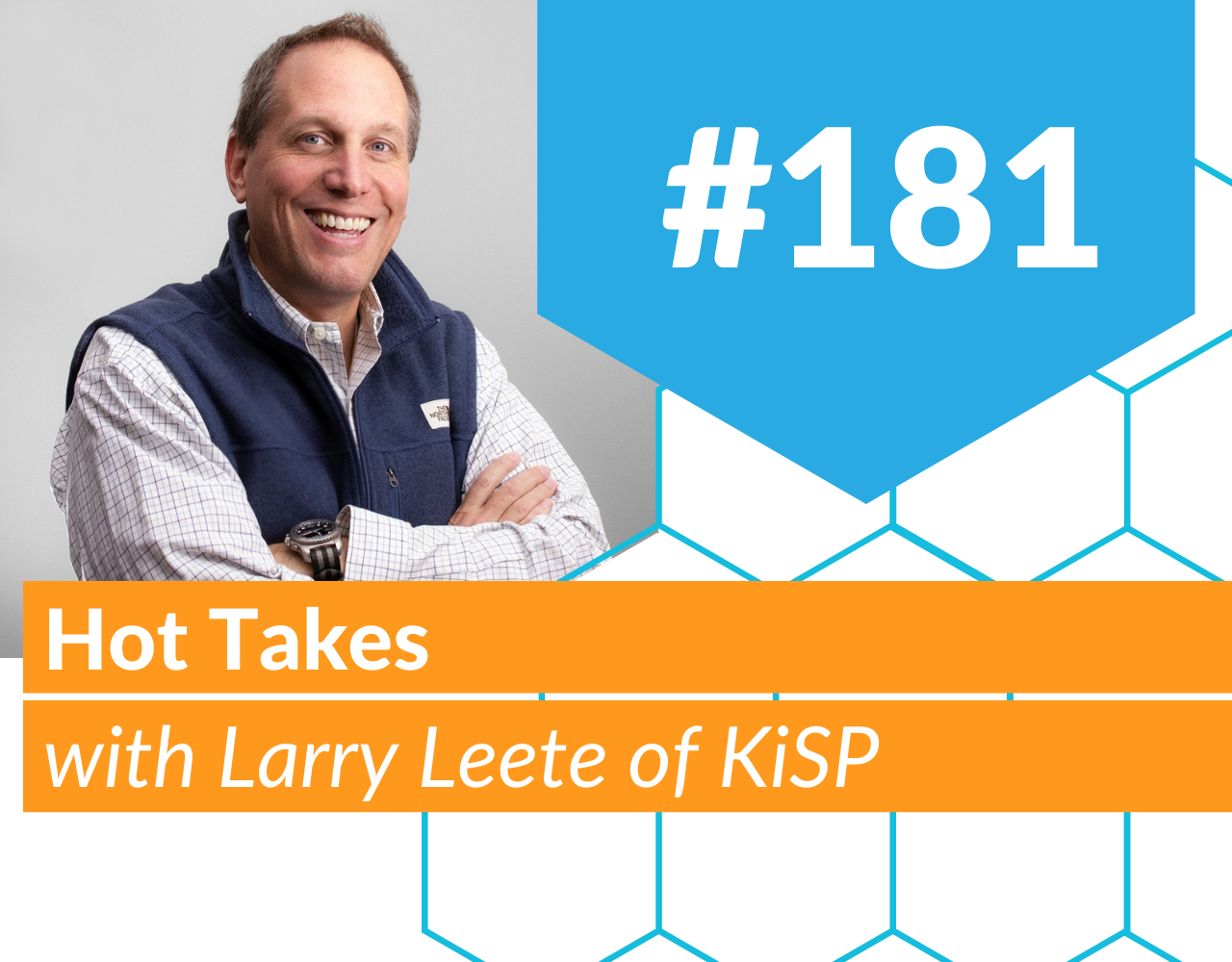
Hot Takes with Larry Leete of KiSP
SPEAKERS
Sid Meadows, Larry Leete
Have you ever wanted to pick the brains of an industry leader, an influencer, or someone who's shaping the future of our industry? Or maybe someone who's been in the trenches for a while and has real thoughts and opinions? Well, today we're going to do just that.
Sponsor:
We'd like to thank our presenting sponsors, Avanto, services and software that streamline how you operate and the collaborative network, a platform where leaders in the contract interiors industry unite.
Avanto Ad:
Is your team overloaded? Avanto helps teams save time and money by using AI to handle daily work from order management and AP processing to task handling without adding headcount. It works inside the tools you already use, with no new dashboards to manage. Go to goavanto.com to see how we can run your daily operations.
Sid:
Welcome back or welcome to the Trend Report, your inside look at the people, products, and ideas shaping the future of workplace design. I'm your host, Sid Meadows, and I'm glad that you've tuned in for another hot takes episode where I'm joined by a co-host We Spin the Wheel of Topics and we share our unscripted hot takes in real time. So please join me in welcoming to the show Larry Leete the general manager of KiSP. Hey Larry, how are you?
Larry:
Hi, Sid Good. How are you?
Sid:
I'm doing great. Thank you. So before we start spinning this wheel of crazy questions, please take a moment and tell our listeners who you are and what you do.
Larry:
Well, I'm Larry Leete. I'm the general manager for uh for KiSP Inc. KiSP is probably a company uh that a lot of people might have heard of on the peripherals. We've been around for 30 years. We're a technology integration company, and we've been kind of leading technology applications for the past 30, 30 years. And we focused, Sid, in uh in areas in the entire life cycle from brand engagement, sales specification, order entry, asset management, and e-commerce enablement across the industry. So a lot of what KiSP is known for is kind of the front-end experience side of things. And on the back end side of things, we're kind of a little bit more enigmatic. But if we go back to, you know, when we started things, KiSP was involved in a lot of the uh early e-commerce enablement applications that were out there. Asset management plays in the industry, and our technology kind of leads that way. So we're a technology company that's really trying to help enhance the uh the office furniture environment through visualizations and other technology software.
Sid:
Okay, that's awesome. And you guys are industry specific, correct?
Larry:
We started as an industry-specific application. We're starting to brand out branch out. We play now in technology. When I say technology, we work with companies that focus their own efforts on technology applications. I'm having trouble telling you because I'm kind of under NDA about brands because I can't release those names. Yeah, yeah, yeah. Uh but we're involved in that. And then we also do a lot of work on uh what we call integration technologies. We work with Lagrand, for example, in bringing their products into the marketplace. Not just the uh the you know, the screens and uh video applications that they have, but also the the integrations, the the floor boxes and the uh wireways and things of that nature. And then we're also branching into other aspects of the industry.
Sid:
That's great. Well, I'm excited to have you here today, and I also want to take a moment and just say thank you very much. Frequent listeners of the show will realize that you are a silver sponsor, a supporting sponsor of our show. And I want to thank you and the KiSP team for being part of that. And this show would not be possible without our sponsor. So, Larry, thank you and your whole organization for sponsoring the show. We appreciate it.
Larry:
Uh, Sid, you know what? I I think the other thing, though, is that we should be thanking you because a lot of what happens in this industry sometimes goes unnoticed without people like you bringing out bringing it to people's attention. So I think the the the thanks should really go to you. We're just happy to help.
Innovation Versus Distribution Debate
Sid:
Thank you. I appreciate that very much. Now we're gonna quit talking because this is not an interview podcast. This is a QA and we're gonna go spin the wheel of topics. You can see the wheel there, Larry?
Larry:
I can.
Sid:
Okay, great. If you're watching on YouTube, we've got a new setup on YouTube that's all colorful, and you can see the wheel and everything. So, Larry, let's go for our first question. Okay, first question is what's more important today? Product innovation or distribution strategy? Larry, what do you say to that?
Larry:
Wow, that's uh that's a very good question, Sid. Uh I think from my perspective, I think they're equally weighted. You can have all the product innovation that you want and have the coolest and new applications that come out, new designs, new features, uh, new aspects of of where things could go. But if your distribution isn't in place, the coolest applications that you come up with and the innovations that you come up with aren't going to have any momentum in the marketplace if nobody knows how to get them. So I I actually think that it's not an either or, I think it's a both answer.
Sid:
Okay. I can take that. I mean, listen, there's no right or wrong answer to these questions. These are just questions that we came up with. But, you know, I often ask myself, and please product manufacturers don't hate me, but I often ask myself, do we need any more new products? I mean, we have a ton of products. But innovation of products is important because of how the workplace changes, how technology changes. So innovating products, I think it is important. But at the end of the day, I'm gonna disagree with you just a little bit and say, hey, you you say they have to equal, but if you don't have the right distribution strategy, you're gonna have a hard time with your products being visible, with your products being discovered, and your products being specified and sold. And you need the right distribution strategy. And there are a lot of dealers in our industry. I think somewhere I heard over 5,000 different dealers in our industry and a lot of different ways you can go to market. If you have the right distribution strategy, I think you can increase your sales and grow and have your products be visible, even whether you're innovating or not. So that's my two cents.
Larry:
I guess the other thing is what are we defining innovation as, right? I mean that's the other the other question.
Is Marketing Helping Customers
Sid:
That that's a great. I'm gonna have to add to that question, maybe uh, you know, change that question when it comes up again. So we kind of agreed, but we disagreed just a little bit, which is okay. All right, let's see what question number two is. Okay, here's the question. Be honest. Are most marketing efforts in our industry designed to help the customer or to make us feel relevant? This is a really good question.
Larry:
Okay. So marketing from my perspective is intrinsically important. And I have no doubt, Sid, that however I answer this, you're gonna get feedback one way or the other. Because I'm gonna anger somebody. We're gonna be in trouble, is what you're saying for this question. Yeah, I would say it's it's the latter. It's to help make us feel relevant. And I say that only because there's so much marketing noise out there from a customer's perspective. They're getting it from all over the place. And how do you discern, you know, what's important from what's not important? And I have to come back to that point and say, you know, it's predicated on what the marketing focus and the strategic intent is. I think it's to help the brand become more relevant in their own eyes. And that's how I would answer that question.
Sid:
So I think we're gonna agree with this on this topic for the most part. Marketing can drive sales. Marketing and sales, in my opinion, should be under the same umbrella and they should work collectively together. They should be partners. And I'm gonna reframe what I just said. Marketing drives sales. Okay, it drives sales. But I believe that most of our marketing efforts, and I'm gonna talk maybe more strategically around social media digital first, are ineffective. And I believe that because all we do is talk about our products. We show pictures of our products and we talk about this warranty, that warranty's got this many finishes on it. And if you're a marketer, or even if you're a seller, and you go and you look at a brand that posts about their products all the time, and then you go look on LinkedIn or Instagram, and you really dive deep into it, what you're going to see is on the engagement that they get are from the employees and the reps. That's great, but that's not the engagement that you want. The engagement that you want is from the designer, from the end user, from the real estate executive, from you know, from the people actually either influencing or purchasing the product, and that's not what you're getting. And so when all we do is post about our products and our features and benefits and scream how great our chair is and it's available in 25,000 different finishes, that makes us feel relevant, and that's not helping our customer. So I think we're agreeing on that topic.
Larry:
I would say that the statement you made about sales and marketing being under the same umbrella. I agree 100%. I look at marketing as the strategic uh development of the process and sales as the tactical implementation of it. So it's basically, you know, the same coin, but two different sides. Uh, one's kind of driving the strategic direction, the other is implementing that side of it. And to your point about target, I think you're absolutely right. The target is the dealer, and it is maybe the independent reps because we want those folks out to sell the product. Yep. It's not targeting the end user or the AD community as we want it to. It's because it's that revenue lift we're trying to drive.
Sid:
100%. Because if you're not a major brand, one of the top five or six, you have a discoverability and a visibility problem. And just posting about your products every time, all the time, is not gonna help you be discovered by the specifier community. So it's just not.
Larry:
I agree a hundred percent.
Sponsor Break And Back To Hot Takes
What Designers Miss About Furniture
Sid:
And I probably just made a lot of marketers mad. Sorry, marketers, you know I love you. You're not gonna win on this one.
Sponsor:
We'd like to thank our supporting silver sponsors, KiSP, who helps furniture brands visualize and sell products before specification. Navitas Credit Corp. Navitas makes great workspaces affordable, turning furniture projects into easy monthly payments. Web Configurator Services, the leader in AI-powered online product configuration and quoting.
KiSP Ad:
Selling contract furniture is getting harder. You're dealing with complex products, disconnected tools, and buyers who make decisions before you ever get to spec. KISP helps fix that with clean product data, visual sales tools, and expert visualization services built for the way furniture actually gets sold. Backed by 30 years of experience, KiSP helps dealers and manufacturers visualize, configure, and get chosen early before specification ever starts. To learn more, visit KiSP.com.
Sid:
All right, let's spin the wheel. We've got two more spins to go. So all right, here's the third question. Hopefully this will be an easy one for you because your face has been like, oh no, this is a really hard question. Okay, and I can't spell, so if you're watching on YouTube, please uh disregard my typo on the video. I'm sorry to the inter designers that see this. Oh my gosh. What's one thing you wish designers better understood about furniture?
Larry:
You know, that's a very good question. I, you know, I go back to my my early furniture sales days, and I kind of go to the to the point of designers are looking for ways to bring the end user's atmosphere, their culture, their emotional aspect of who they are into the game. And I think some of the time the furniture side of things just kind of gets uh lost in that. And they it's looked at as kind of uh an object, a thing, and not really a representation of what it could be based on what you're looking to lay out and create for that specific client based on who they are and the atmosphere that they're looking to develop that's representative of their brand. So I I think from my perspective, and I don't know if I answered the question properly, but you know, from where I'm looking at it, a lot of the time furniture just gets looked at as a thing to drop into a space and not a way to enhance and add to the environment that the the AD community is looking to build based on what their client is is looking to kind of retain and create for their own space.
Sid:
So, like I said before, there's no such thing as a right or a wrong answer with this. These are literally hot takes. We're hot taking on a question. You had no prep for it, right? And you just spontaneity. Spontaneity, that's right. Testing our brains. So for me, what I'm gonna say to that question is I think that what I wish designers better understood about furniture is we are more than just products. We are solutions, we are solving problems for their customers. We are enhancing a space and providing products that help with productivity and ergonomics and sustainability and all these things, but we're more than just products. We are the last one brought into the project, and we are the first budget that is cut. And so when they're over budget, what do they do? They cut furniture. So I wish that designers and even users understood that we are a lot more than a chair, a desk, a panel system, and a lateral file. We really are helping you create dynamic spaces. We're helping you solve your business problems, bring us in sooner, let us be a true partner to you, and let us help you together as a cohesive ecosystem create a dynamic space for you and your organization and your employees. That's what I wish. That's a good answer. Dude, I've been thinking about that. I wrote the questions, but this is something that comes up a lot in my world, right? About working with designers, what people wish they knew about furniture that they don't know about furniture. So I could go down a rabbit hole. And I won't because we're gonna get in trouble.
Larry:
Before you spin it, let me ask you this question. I mean, the thing is you kind of go through this, right? Yeah. You look at at what's happened post-pandemic. Space is not about the office as the uh the factory anymore, right? We're not when's the last time you saw benching systems get ordered or desking systems kind of go down that way, right? Everything's changed. And I think from our perspective, if we do our jobs properly, that whole aspect of interactivity, interconnection, community, which is what space is really kind of all about now, right? I mean, I can work from home and do all of the head-down, tail up stuff as I want. But the problem is, is like we're talking right now, we're talking through this computer. When was the last time you had the ability to kind of go into the office and just have those, the, that community time with other people? So I think from your perspective, as you've answered that, and we look at where the pandemic's taken things, I think that furniture is taking on a bigger role in that play because it's all about creating environments that people feel comfortable about to come into the work environment.
Which Platform Really Drives Sales
Larry:
So sorry, I don't mean to I just
Sid:
No, no, it's a great ad. It's a great ad. That's why we call this hot takes. We're hot taking. We're hot taking. All right, we're gonna spin the wheel one last time. And uh see what we get. We got some really good questions so far today. So I'm excited. Let's see what the last one is. Okay, this kind of ties into the previous question, which is which social media platform is best for driving sales? What say you, young man?
Larry:
Well, I say that there's two, and then it depends upon what you're trying to do. Okay. I am not a big social media fan. However, I do uh believe on the business side, I like LinkedIn. LinkedIn gives you that opportunity to kind of lay your foundation and kind of make your points from both from the standpoint of verbal application and uh visual aspects as well. So if you're a company out there that's trying to get new platforms, new positioning, new uh applications done, that's kind of the platform that I would use from that perspective on the sales front. If you're looking specifically for visual application in and of itself, it's gotta be Instagram. From my perspective, those are the only real two, at least as they stand right now, that our organization utilizes Instagram and uh and LinkedIn.
Sid:
So here's my thoughts. Your definition of those platforms is not wrong, it's very accurate. But I don't believe either one of those platforms actually drive sales. I believe they drive awareness, they provide visibility of you, your brand, your products, because that's all we do is post about our products most of the time, right? And there's something I think that we're missing here when we think about social media, and it's more than social media. As a brand and as a dealer, you need to have a digital strategy. You need a full digital sales strategy of how you're gonna take your products to market in the digital world. And we can thank the pandemic for that, right? It really put digital sales kind of in the forefront. I don't think we really all have a true digital sales strategy, like that. We should have a digital sales strategy. And this is where I think we're missing the boat. We're missing the boat on video. We're missing the vote on boat. Sorry, I can't talk. I can't type today, and I can't talk. So we're missing the boat on a video and we're missing the boat on personal human connection stories. We're a relationship industry. People do business with people. We love to hear and see the behind the scenes. We love to see images and videos from the factory. We love to meet the people from your factory. We'd rather do that on a social platform than we would see a picture, another post about your product, your chair, your desk. Show us images from your factory. Show us how the product's being made. Put your CEO on video and ask your CEO a couple of questions and let them authentically share, kind of like this hot take, right? We're authentically sharing. So I build all that up to say I think the platform that we're really, really missing on is YouTube. Go into YouTube and type in office venture and see what you get. I mean, you get a bunch of craziness. Like you get a bunch of people trying to sell a gaming chair and stuff like that. Our industry, our the contract side of the industry is not uh on YouTube. And we need to be on YouTube. Just I'll give you a statistic of a podcast consumption. 54% of podcasts are discovered on YouTube. They may not fully listen to the episodes on YouTube, they may go to an audio-only platform, but 54% of podcasts are discovered on YouTube first. So imagine somebody types in something relative to height adjustable desk, or I'm just gonna use that as a random, that's gonna be a really like a rich keyword, people trying to sell. But imagine your brand comes up, right? Imagine using a question about sustainability. Imagine that your brand comes up and all of a sudden you start to get discovered and you can sell your products there. I think we're missing the boat with video, and I think we're missing it on YouTube.
Larry:
Well, I would say to you, it's probably a generational aspect of things too, right? I mean, when I think of YouTube, Sid, I use YouTube when I have to replace the spark plug on my truck, or I have to pull out the garburator from my thing, right? I don't I don't think of YouTube as the place to go to look for office furniture. I also think, you know, to your point, I think a lot of the video side of it is destined for manufacturers' websites, too, right? A lot of that gets dropped in on there.
Sid:
But you gotta know the website though, right? You gotta know the website. Yeah, yeah, that's true, right?
Larry:
That goes back to the whole discovery thing you and I were talking about prior to the show. So maybe it's generational, right? I mean it could be. I mean, you're yeah, you're not wrong with that. I mean, guys like me who focus on on the marketing side of things, I would never think of dropping anything on. We've done it, right? We KiSPA's got a YouTube channel, sure. But I don't think it's it's overly focused on. When we drive social, we really focus a lot of it through Instagram and through uh LinkedIn. Because again, like you said, our business is relational, right? Yep. It's probably one of the last ones out there that that is really driven by emotional reaction, right? You can probably count the number of industries left on that. Automotive is one. You don't buy a car because it's got great looking uh trunk space, you buy the car because it looks good. Same sort of thing with respect to furniture, right? You have the visceral response from an emotional reaction uh that you see and you think, hey, that represents something that I'm looking to do, and you go to buy that. Yep. Instagram's kind of where you kind of go down that road from the visual perspective. You that's you know, you have a great answer. I I never really would have thought about uh YouTube as kind of that that approach. I think it's and what is you know, I'm a young guy.
Why YouTube Is The Missed Channel
Sid:
You're a what? I'm a young guy. You're a young guy, me too, buddy. Me too. So there was something that popped up. I'm doing some research on something, okay? And then we're gonna we're gonna wrap. Of today's conversation, because I think we can talk for another hour. So I'm doing some research on something, and this video came up in my feed, which is really weird. I was looking through some stuff on YouTube. And the video was why do office chairs have five legs? Like, that's a really great question. It was answered by a YouTube channel called Rabbit Hole. And it has 104,000 subscribers. This video is 18 minutes long. And this video was up three weeks, has 646,000 views and 3,172 comments. And literally, she goes through this, she's just like a young lady, and she kind of goes in a rabbit hole about why does this have why is this the way it is? And she gave the history of the chair and why it had four legs. And she actually used math equations to show you the triangulation of the base of a chair and why the points are for support. I was like wicked impressed. Like that video probably took her weeks to do. But she used Herman Miller as an example. She used the Aaron chair as an example. She interviewed the designer of the Aaron chair. And then she interviewed somebody else. I mean, it was a really very engaging video. Why do office chairs have five legs? And here's my question to the industry: why is that video not made by us? Why is that video not made by somebody in our industry? Why is it that a millennial or a Gen Z asked the question herself and then dove into and did this video on her own? Herman Miller's not tagged in the video. I mean, so I mean, it's just like, why is why are we relying on somebody else to do that? We should be doing that. We should be controlling the narrative about our industry, about our products. It's a really good, engaging video. And imagine you have 646,000 views of that video in three weeks. Imagine if that's your product brand. Imagine how many leads that might actually bring into your business, or how many designers might actually see that video and want to reach out to your local rep and say, hey, I saw this really cool video on YouTube about XYZ company. I want to learn more.
Larry:
Well, I think the bigger question out of that, right, is how many sales of Herman Miller Aaron shares uh have happened as a result of that.
How To Reach Larry And Closing
Sid:
It was funny that in the video that lady said she bought one on Facebook Marketplace. Okay, we are way over time. This was a lot of fun, Larry. Thank you so much for coming on and sharing your hot takes on some what we ended up with some really, really great questions today. So I really appreciate you being on the show today. If our community, Larry, would like to get in touch with you, what is the best way for them to do that?
Larry:
Uh, you can find me on LinkedIn, speaking of under Larry Leete, or you can get me at Lleete@kisp.com.
Sid:
Yes, K-I-S P. We will drop all of that down in the show notes for you to go. LinkedIn profile and all that stuff, and just a website address. Just remember that if you do reach out to Larry, please be sure that you let him know that you heard him here on the trend report. And you heard his hot take. He did a great job today on answering some of these unexpected questions.
Sponsor:
We'd like to thank our community bronze sponsors, Catalyst Consulting Group, ReSeat, and Staffing Plus.
Outro:
And to you listening today, thank you very much for being here today and for joining us on the Trend Report, your inside look at the people, products, and ideas shaping the future of workplace design. Go out there and make today great, and we will see you in the next episode. Take care, everyone.