The Trend Report Podcast
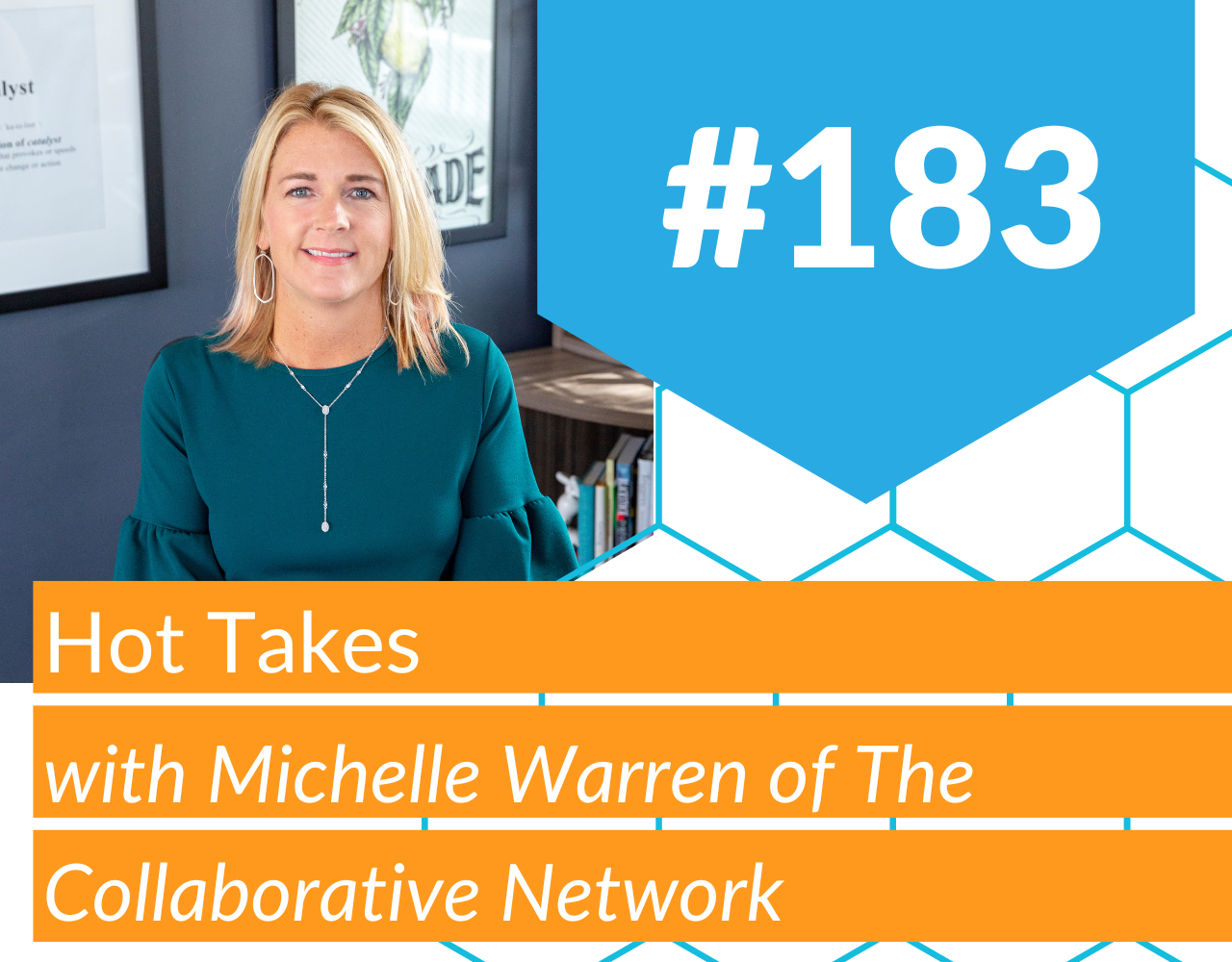
Hot Takes with Michelle Warren of The Collaborative Network
SPEAKERS
Sid Meadows, Michelle Warren
Intro:
Have you ever wanted to pick the brains of an industry leader, an influencer, or someone who's shaping the future of our industry? Or maybe someone who's been in the trenches for a while and has real thoughts and opinions? Well, today we're going to do just that.
Sponsor:
We'd like to thank our presenting sponsors, Avonto, services and software that streamline how you operate and the collaborative network, a platform where leaders in the contract interiors industry unite.
Sid:
Welcome back or welcome to the Trend Report, your inside look at the people, products, and ideas shaping the future of workplace design. I'm your host, Sid Meadows, and I'm glad that you've tuned in for another hot takes episode where I'm joined by a co-host, we spin the wheel of topics and share our unscripted hot takes in real time. Please join me in welcoming back to the show my longtime colleague, business partner, and friend, Michelle Warren. Hey Michelle, how are you?
Michelle:
I am doing well. How are you? I'm doing great.
Sid:
I'm so glad you're here. So, Michelle, for people that maybe don't know you, which I think that's going to be really a short list, please tell us who you are and what you do.
Michelle:
Yeah. So I, gosh, I do a couple different things. So I am co-founder of the Collaborative Network with Mr. Sid Meadows, our host, which is relatively new, less than a year old. I own Hadless Consulting Group, which is a public sector-focused consulting company that just turned five in January. And I do a lot of other fun stuff. You know, I like to start groups. I'm a big women's empowerment. So we started a women's empowerment group in our industry and, you know, other stuff on the side as I see fit.
Sid:
Michelle does not let grass grow under her feet, right?
Michelle:
I would like to.
Sid:
I would like to try it, but well, I'm glad that you're here for hot takes. You, like several of my other guests, have no problem sharing your opinions, and that's what I love. Trust me, she shares her opinions with me on a regular basis. So are you ready to dive in, Michelle? Let's see how many times we can spin this wheel.
Michelle:
Alrighty, let's do it.
Should Manufacturers Sell Direct
Sid:
Okay. Alrighty. So here we go. Question number one. Hopefully it's going to be a good question. All right. So our question is. So should manufacturers sell direct? Michelle just like grabbed her chest, like, oh no, I can't believe I've got to answer this question. So take it away. Should manufacturers sell direct, Michelle?
Michelle:
I would like, I think everyone expects like a yes or no answer, but because I come from public sector, it's harder than that, right? So I think in general, no. You know, that's why we have the industry set up the way it's set up with the dealers and they obviously expand your sales force and go direct to the end user for you. Having said that, on the federal side specifically, the manufacturer holds the contract and it is their contract. And so I do see instances where they would hold the paper, not necessarily cut out a dealer, but there are opportunities on the federal side where they would need to be the holder of the PO. So it might look like they're going direct. But I think there are also instances where the GSA end user might buy from the manufacturer directly. And unless the manufacturer is extremely generous, there was no dealer involvement. There was nothing. Like it was done through, let's say, GSA Advantage. And I don't know that, you know, you should force a manufacturer to throw a dealer in there on those types of opportunities.
Is The Open Office Dead
Sid:
Yeah, I think there's certainly a difference between selling direct and invoicing, right? Or carrying the paper. There's definitely a difference there. But, you know, I would say I'm going to answer this out of both sides of my mouth. Historically, I do not believe that manufacturers should sell direct. We have a really powerful dealer community, whether they're aligned or unaligned, that will do a great job in getting the project across the finish line, making sure everything is done on time and it's installed correctly and all that kind of stuff. So, you know, that's the historically the way we work. But what I would say to smaller brands or new or younger brands in our industry, absolutely, I think you should sell direct until the market notices you. Until people start to pay attention to who you are and what you're doing. You don't want to let your success be stalled because a dealer or rep for that matter is not necessarily willing to embrace your brand just yet. So smaller and newer brands, go for it. Sell direct. My two cents. Okay. Well, that was pretty good. Let's hide this and go to the next one. All right, next question is Okay. I gotta quit laughing and then start reading the question out loud just before I start laughing at the question. Because the people listening don't have the benefit of seeing the question. So this question comes to you. Uh the question is, is the open office dead? So, Michelle, before you answer that, what's your definition of the open office?
Michelle:
See, I was just gonna ask you. It's not fair that you have the mic and spin the wheel.
Sid:
Okay, I'll try to answer it first. So I think the open office is you know what you and I used to sell a lot of back in the day. The open office full of workstations. And I remember, you may not remember this, before you forced me, recruited me, twisted my arm to come work at AIS. I think I called you and said, Michelle, I miss selling panels. Like I've had something wrong with me. So to me, the open office is a floor full of panels and workstations. To me, that's how I define open office. How would you define it?
Michelle:
I was thinking more of like the open floor plan, you know, right prior to COVID, that everything was low and open, no high panel, like open you could see everything, which we know COVID went crazy because you didn't want to see and feel and touch everybody.
Sid:
Yep.
Michelle:
But that's kind of where I was leaning. I think either one's a fair I agree.
Sid:
Either one's a fair assessment. Yes. All right. So take it away then. Is the open office dead?
Michelle:
I don't think that it's dead in concept for specific functions. I think it's dead as, you know, I I you well, and then I'll go back to the cover and tell you now. But I think it's dead from a concept of, you know, every office is cookie cutter and every office should just have all these, whether it's high panels, low panels, the same stuff, right? And I, you know, I think it's interesting, even on the federal side, COVID, you know, if nothing else, a good thing that came out of COVID was that we learned how to better design floor plants, right? Like everything that we see today that's standard, a lot of that came out of COVID. Right? It was the opportunity, and then it pushed GSA that way too. Like, you know, GSA is usually five to ten years behind everything else, but because of COVID, it pushed um GSA to think, you know, more like commercial offices do.
Sid:
Okay, that's a good answer. That answer is acceptable. Acceptable. Okay. The pressure is ring or so I'm not gonna say the open office is dead, but I do think it's dying. And I think people always need a place to do work, computer work, you know, heads-down work, if you will. They're always, you know, they need a place to go call their own for a few hours, maybe for a few days at a time. But I just think it's dying because I think the workplace is evolving to people want choice where they work. Like right now, I may want to work in a cubicle, maybe whether it's with a high panel or with a low panel, whatever. And I've got some work I need to do, got some Teams calls I need to be on, but then I need to go do something creative. I want to go sit in the coffee shop and I want to sit in the lounge area, or I want to go to a meeting. And I think that's the important thing that I'm hearing workplace strategists really talk about is the power of giving the employee the choice of where they want to work. So to a degree, I think that means that the open office is dying a little bit.
Michelle:
Well, and I'll tag on to that with as you were talking, I was just thinking, you know, if the true future of work is a hybrid of working from home and working in the office, why would you go to the office to work privately? That's what you should be doing at home. When you go to the office, it should be more of the collaborative work.
Sponsor Break And Reset
Dealers As Partners Or Order Takers
Sid:
Yep. Being around community, the accidental conversations that happen in the hallway or the water cooler or the cafe or whatever. And that's a really valid point. If you really got to do focused work in your hybrid, do it at home. Where you can hopefully close the door and do hybrid work. Okay. I think, you know, the one thing I think we both know for sure is that the office is evolving and will continue to evolve.
Sponsor:
We'd like to thank our supporting Silver sponsors, KISP, who helps furniture brands visualize and sell products before specification. Navitas Credit Corp. Nevidus makes great workspaces affordable, turning furniture projects into easy monthly payments. Web Configurator Services, the leader in AI-powered online product configuration and quoting.
KiSP Ad:
Selling contract furniture is getting harder. You're dealing with complex products, disconnected tools, and buyers who make decisions before you ever get to spec. KISP helps fix that with clean product data, visual sales tools, and expert visualization services built for the way furniture actually gets sold. Backed by 30 years of experience, KISP helps dealers and manufacturers visualize, configure, and get chosen early before specification ever starts. To learn more, visit www.KISP.com.
Sid:
All right, let's get this thing another spin and see what we get this time. I'm doing a better job at reading the question straight away. Okay. So this question is Are dealers today more strategic partners or order takers? So are the dealer community are they more strategic partners or are they order takers? Michelle?
Michelle:
I have different answers depending on the audio you're selling to. Anyway, so yeah, I would say strategic partners for sure. But I don't think like when I worked at the dealer in the beginning, I think we were a strategic partner for our main line. And that was a long time ago. 20 um plus years.
Sid:
Yep.
Michelle:
And having said that, you know, I think that there is an opportunity for, especially on again the federal side, to just accept orders too. It's a valid role that, you know, dealers play in that. But I I would definitely hope that manufacturers see dealers more as strategic partners than order takers because they add more value.
Sid:
So one of the things I like about all these questions is that there's a lot of gray area there, a lot of room for interpretation. And I hope for you that's listening today that you're kind of thinking about your own answers to these questions. And uh if you want to share your answer to any of these questions, be sure you head over to the website and hit that little red box on the side of every page that says ask us a question and hit that speakpipe button and leave us your thoughts on any of these questions. I'd love to hear from you.
Michelle:
And if you disagree dramatically, I can be reached at Sid Meadows.
Sid:
Notice how she just pushed that off of Sid Meadows. Good screen. So I think I have a two-part answer to this question. I think that the way the industry has evolved and the way sales has evolved, especially with the Fortune 500 customer, I believe the major brands do a lot of the selling to those projects. Whether it's, you know, whatever Apple or Microsoft or, you know, JP Morgan Chase or whatever, I believe the brands with their national account, strategic account teams, do a lot of selling to those end users. And in that case, the dealer is more of an integrated and they manage the complexity. They take the order, but I'm not going to call them order takers. But to the other business that happens out there in the world, that is, you know, your local law firm or accounting firm or, you know, a new customer taking over two floors of a building, I absolutely believe that the dealer is a strategic partner to all of the brands in our industry because they do so much and they bring so much value to the process to make sure that the project is completed on time. And I think it's incumbent upon every brand to build strategic relationships with the right dealers in the right markets to position their products. So I think that they're not order takers, but the major brands have evolved to really selling projects and then bringing the dealer in when they see the appropriate time. That's my hot take.
Michelle:
Yeah, I agree. I think there's still in that process, like it's just the dealers are such a such an integral part. And a lot of times it should be a strategic part of the end user's decision. Yes. Is the local dealer that's going to be servicing that project, you know, post-war.
Sid:
Yep. I had an answer to a previous episode to a question about what's one thing you could remove from our industry, what would it be? And I said the bidding process because I think the bidding process is outdated and it doesn't provide any real purpose. And so if you're not going to do bidding, then you need to start interviewing and finding the right partner. And where do you start with that? You start with the dealer because the dealer is the front line. So all right, Michelle, we got time for one more question. So let's spin this wheel one more time. Let's see what we do.
Michelle:
I'm listening to tell everyone listening. Like, this is not staged. I asked for my own questions, and you wouldn't let me down.
Are Trade Shows Worth It
Sid:
You're not the only person that has asked for their own set of questions, and you're not getting them. This is literally as random as they get. So here's the next one. This one's kind of appropriate because this is pre-neocon. It says, Are industry trade shows worth the investment? Michelle, do you need me to define what a trade show is?
Michelle:
No, I do know what a trade show is. Like I'm in the public sector world. Come on, we got more than anybody gonna Yeah, I think that trade shows are worth the investment if you are strategically picking the trade shows that are appropriate for your offering and your target market. But most importantly, if you have a strategy behind how you're working the show and your follow-up to the show. I think if you're just going to a trade show to be at a trade show, they are not worth the investment. It's a waste of your time and money.
Sid:
Oh, that's really, really good. And I'm gonna agree with you in most cases to this because what do trade shows provide? They provide visibility, they provide the opportunity for discovery, especially for smaller brands or niche brands that maybe only sell a certain type of product, like outdoor product, for example. You go to an outdoor show, then hey, you've got a chance to be discovered by people who specify outdoor furniture. But I do believe the trade show industry is just so expensive. Yeah, it's very I mean, it's so expensive. And you know, the organizations that put them on and all the charges and the back charges and the drainages and so I think you've got to be really strategic about what trade shows you're going to. Do they align with what your strategy is as a brand? And then you said something really, really key, which is what's your follow-up? Like, what is your follow-up strategy? I think you have to have two important strategies when you're doing a trade show. A, how you getting people in the door? Like, what is it, especially you think about events like Neocon where you got people walking down hallways? How are you gonna get people from the hallway into your showroom? What are you doing? You got to do an old school term here, but you got to do some kind of guerrilla marketing or something to get people to want to come into your showroom. And then what is your follow-up after the show is done? Are you gonna send a thank you email two days after Neocon, like every other brand is sending to the 40,000 people that showed up at that event? Be different. Do something different, right? So really think about the strategy.
Michelle:
I would add on to that, track your success, right? Like if you're not measuring your success, then so many times we have conversations and they're like, well, we saw a lot of people, but did you get any business out of it? Part of, like you said, just visibility, but there's also a sales part to it. So if you're only concerned, I guess identify what your goal is to start, right? Is your goal just visibility and brand awareness? Or is your goal to get sales from it? And if your goal is to get sales from it, then you need a tangible way to track where you are or were you not successful with it?
Sid:
Well, the last thing I'll add to this is if you're looking at a trade show strategy, I would look at some of the smaller, more regional trade shows. Like a lot of the local IADA chapters have a post-neocon event where you get a hyper-focused local market into a space. I know they do it in Birmingham, Alabama, they do it in Buffalo, New York. I know they do it in LA, I think they do one here in Dallas. So look at some of those as maybe making your dollars stretch further because then you're getting a much more focused audience and more time to have conversations, right? One-on-one conversation people are coming through.
Michelle:
Yeah, can I add one more thing?
Sid:
Yes, please.
Michelle:
And I don't know that this is necessarily an industry trade show, but like public sector trade shows where it's you know N I G P or N A E P or any of those acronyms, like I think there's a strategy for the people in the booth. Like you said, how do you get them in? What's your goal tracking the sales to the end users? But there's also a strategy because if you're at a non-industry or it's not all furniture, everyone that has a booth is a potential customer for you. So what is your strategy to network with them? And then I'd also say on like federal, especially federal, a lot of times there are the agencies have booths. So if you're just sending one person and they're just working the trade show, you're just getting a piece of it. Right. So that you have to think of like what's your strategy for your company in the booth for brand awareness and selling to the people that come to your booth, but what's your strategy to work the other booths, especially if there's a reverse trade show aspect to it where an end user has a booth and how are you working that and how do you man your booth to do it successfully?
How To Connect And Closing
Sid:
That's great. So I think the general consensus here is we both agree that trade shows are worth the investment as long as they're the right trade shows for you and your business, whether you're a dealer, a manufacturer, or even an independent rep, as long as the trade show is right for you and your business. Well, Michelle, I can't thank you enough for joining me today. How did you uh how'd you feel about the hot takes?
Michelle:
So much better than I thought it was going to be. I saw like I you he doesn't even give you options of what the questions might be. You just see this wheel of death is what I'm gonna call it. And you don't know what it's gonna land on. And especially with a niche in the public sector, I was like, I don't even know if I can answer some of these questions for you. But I do usually have an opinion on everything.
Sid:
Shocker has said that in the beginning. So, Michelle, if our community would like to get in touch with you, what is the best way for them to do that?
Michelle:
They can find me on LinkedIn, of course, or uh they can just reach out to me on email, Michelle@strategic-catalyst.com.
Sid:
We'll drop all that down in the show notes for you. If you want to reach out to Michelle, please do. She is the public sector queen, there is no doubt, and she's building a pretty powerful network of empowered women leaders. If you are a woman leader in our industry, reach out to Michelle about that organization as well.
Sponsor:
We'd like to thank our community bronze sponsors, Catalyst Consulting Group, RESEAT, and Staffing Plus.
Outro:
And thank you for joining today for another Hot Takes and being part of the Trend Report, your inside look at the people, products, and ideas shaping the future of workplace design. Go out there and make today great, and we will see you again in the next episode. Take care, everyone.