The Trend Report Podcast
CEO Chat with Chris Hanes of Officeworks
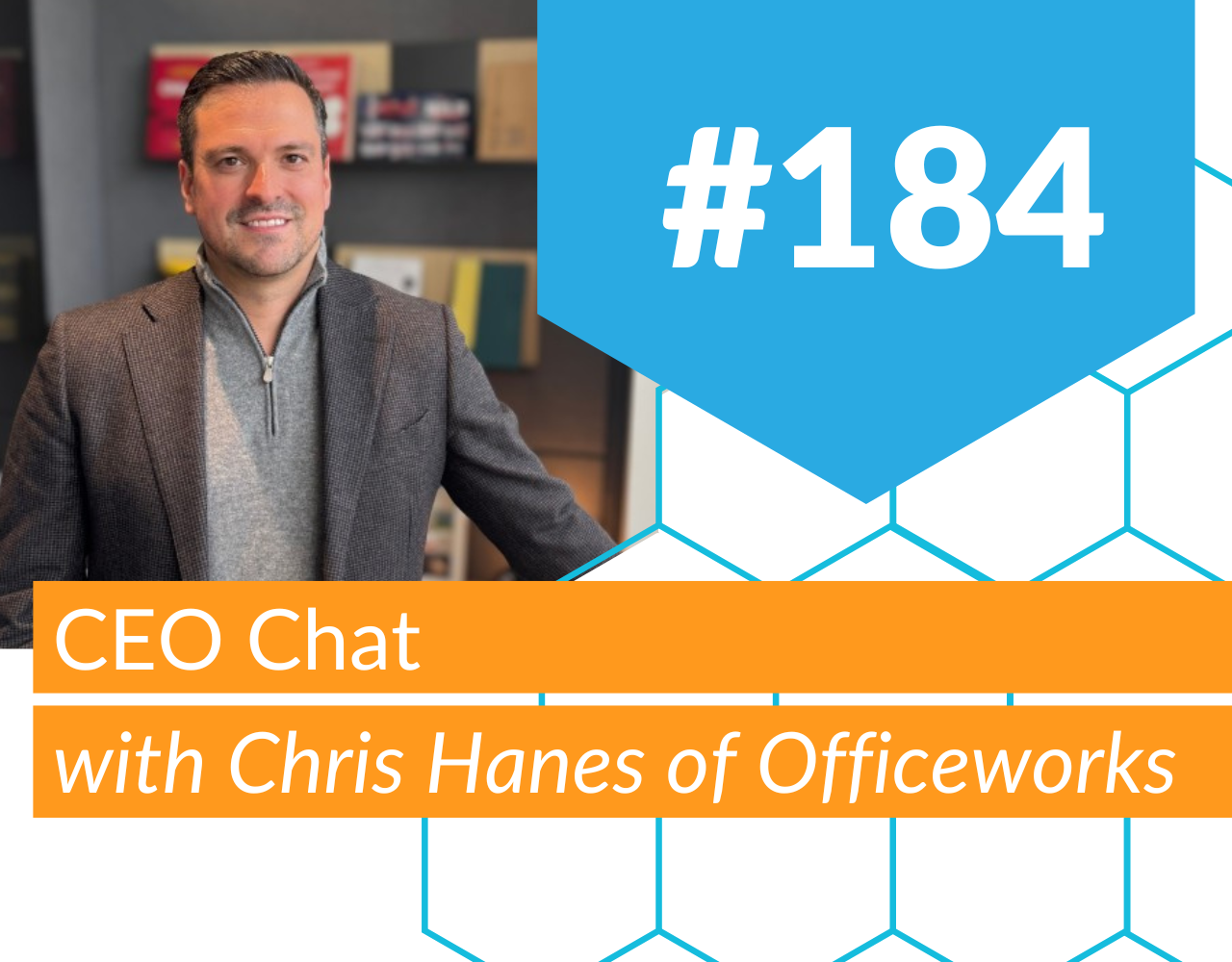
SPEAKERS
Sid Meadows, Chris Hanes
Intro:
We talk a lot in this industry about growth, consolidation, and change. But what does it actually look like to lead through it in real time? And what happens when you step into a bigger role while the industry itself is shifting around you? And how should leaders be thinking about partnerships, scale, and the future of the dealer model? In today's conversation, we'll cover these topics and more.
Sponsor:
We'd like to thank our presenting sponsors, Avanto, services and software that streamline how you operate and the collaborative network, a platform where leaders in the contract interiors industry unite.
The Collaborative Network Ad:
If you're leading sales, marketing, or growth in the contract interiors industry, you already know this work can feel isolating. So that's why we built the Collaborative Network. It's a peer-driven community for manufacturers and leaders who want real conversations, real accountability, and practical insight, not generic advice. No posturing, no sales pitches, just experienced people working through real challenges together. If you're ready to grow smarter, check us out at www.thecollaborative.network.
Sid:
Welcome back or welcome to the Trend Report, your inside look at the people, products, and ideas shaping the future of workplace design. I'm your host, Sid Meadows. I'm glad that you've joined me today for another installment of our CEO chat series. Today I'm joined by Chris Hanes, the CEO of Officeworks. Hey Chris, how are you today?
Chris:
Hey, Sid, I'm doing great. How are you doing?
Sid:
I'm doing great. Thank you, sir. Really glad to have you on the show today. You and I met several years ago at Neocon, I believe. And so I'm excited to have you on today to talk about all things dealer and Officeworks and that kind of stuff. So, Chris, get us started and please just take a brief moment and introduce yourself.
Chris:
Yeah, absolutely. So I'm Chris Hanes. I'm the CEO at Officeworks. We are a commercial furniture and interior products and services provider with locations from Boston down to Atlanta. I have lived in the DC metro area for 15 years now. So today that's where I'm working out of, and that's where uh we're recording from.
Sid:
Well, Chris, I'm glad to have you. And one of the things we like to do with all of our guests, especially our CEOs, is get to know them a little bit. So, Chris, let's start with how did you get into the furniture industry? Because this is not a career that's talked about on college career day. So, how did you actually get here?
Chris:
Sure. So I uh I actually grew up just outside of Grand Rapids, Michigan. So the furniture industry has been a part of my entire life. That being said, I did not originally plan on coming into the furniture industry. I went to Grand Valley State University there in Grand Rapids. I'm a proud Laker. And I was getting ready to graduate. I was really interested in alternative energy, marketing of natural gas vehicles. I had an internship. I would have softfered a position. The economy did not do good things. And about a month before I was set to graduate, my position was no longer going to be available for me. So I had to pivot. I went onto Grand Valley's Job Board and there was a position there for a really neat company called Venerum Stelter. They were a K through 12 uh small design and manufacturing company there in Grand Rapids. Okay. So that's how I got my start working there.
Sid:
So right out of college with a small K through 12 company. So what other jobs have you had in the industry before getting to Officeworks?
Chris:
Yeah. So from Stelter, I had an incredible time there, got a ton of really good experience, uh, made some connections at Steelcase and ultimately ended up out here in Washington, D.C. with Steelcase. There I had a number of jobs, went over to Technion, ran the Mid-Atlantic region for them for a little bit, had the opportunity to run a Steel Case dealership, Arby Associates, for about six years. Uh we sold Arby and then I came to Officeworks. I, of course, through my time at Technion, had gotten to know the owner of Officeworks, Mark Laughlin. So we had stayed in touch for a long time. Mark Park's just a great guy. And it was a great opportunity when we sold Arby for uh me to join the organization.
Sid:
Well, that's great. So two majors, Steelcase and Technion, then back to a dealer and ran a dealer, and then was part of the leadership when that dealer was sold. Of the roles that you've had, Chris, like which one do you feel like has had the most impact on you and your growth?
Chris:
Well, I would say coming right uh into Steelcase, I took a role called the dealer business manager. And that role was really focused on the dealers, uh helping with training, product launches, showroom training, uh, but also working on pricing, helping develop pricing with the dealers, helping the dealers go out and sell to a variety of markets, and working with the AD and real estate community. So it was a really kind of a catch-all role. I learned so much there. That gave me the opportunity to see how our entire ecosystem of the industry works. And I think, you know, being able to do that right out of the gate at such a young age was really important and impactful for me.
Mentors Coaching And Learning To Listen
Sid:
Well, certainly one of the things the majors do really, really well is train their people. And I think back to my time at Hayworth. First time I'd ever worked for a major corporation because my first job was also at it, well, I was at a dealership. And then I went to a, I was at a Hayworth dealership, and then I went to a Miller and old or what then was called Millcare, it's the Millcare Healthcare dealership. And then I made my way to Hayworth, and it was like just like the doors opened wide open of all the things that I didn't know that I got to learn and the training ground that the majors provide, I think is just phenomenal. So uh when you think about your journey, Chris, has there been a mentor or somebody that's really influenced you and your leadership path and in style for that matter?
Chris:
Yeah. So I think overall, a variety of people. I've been really lucky. I've had incredible bosses across the board, across my career, people that have really taken an interest in me, supported me, uh, taken the time to understand, you know, where I wanted to grow and helped me with that. So I've had some incredible bosses. I've been very lucky in that way. I've also learned a ton and I count as mentors, clients, and our partners in the A and D and the real estate community. Those folks have taught me a lot along the way. And as I said, I have a lot of people that have become really close friends and mentors uh in that way as well. I would say overall, though, in terms of leadership style, starting right out of the gate working at Venarum Stelter, Jim Stelter was uh the president and CEO of the organization. And Jim is just an incredibly dynamic person. And he really taught me how to work hard, play hard, be accountable. And the fact that you can do all of those things, right? You can have all of that. You can have a good time doing what you do, you can be really team-oriented and team focused, and you can be highly performance-driven and results-oriented. Um, so I would say working for him right out of college really influenced me as a professional, but also has been a big part of who I am as a leader even today.
Sid:
Yeah, that's great. And I think that, you know, when we're younger, we're a lot more impressionable, I believe. And having really good leaders early in our careers can have a profound impact on us later in our careers. But I also think, because all of us have likely experienced somewhere along our path the bad leader. And it's easy to talk about the bad leader and say they did this, they did this, and blah, blah, blah, that's why I don't work anymore. There's so much to learn from the bad leader that you can look and go, that's not who I want to be. That's not how I want to lead. I I want to do it differently. So I think there's as much to learn from a great leader and a mentor as there is from somebody that we might perceive individually to be a bad leader.
Chris:
Yeah, absolutely. Uh, completely agree. And I think, you know, another piece of really significant influence and impact uh for me, and you and I have talked about this in the past, is uh executive coaching. So when uh when the pandemic hit in 2020, I wasn't exactly sure, you know, where the world was was going. Uh, I needed to, outside of what we were doing day to day to try to figure out what this meant for the business and how we were going to respond to it, needed to put my energy towards something at night. So I signed up for an executive coaching class. It was the most impactful thing that I've done. That's great. I think to date for myself as a person and a professional, I'm obviously not an executive coach, but through it, I've got some really incredible executive coaches that I work with and that now our leaders in our organization work with. And I just can't speak enough uh for anybody how impactful and how helpful that is.
Sid:
That's great. Thank you for championing the coaching industry. I appreciate that. But I want to ask you a question. Did you go enroll in a coaching training program or did you go into a group coaching program where you were somebody being coached?
Chris:
I went into a training program. So I did get certified as an executive coach through American University.
Sid:
Okay, that's great. I don't remember us talking about that, but that's great. And that's okay, though. But knowing that you did that, how is going through a coach certification program? Because mine was a year long, and we met every quarter in person for three days. And then in between, we had peer coaching where I would coach somebody and then somebody would coach me. And then we had a mentor that was on staff that would help us through some of the workbooks and some of the different modalities, if you will. How has getting a coach certification actually impacted you as a leader?
Chris:
In a number of ways, but I would say the biggest that you know, what what they really teach you to do is listen. And not just listen with your ears, but listen with your eyes as well. So I would say just generally, I've become um a much better listener. And that sounds like such a simple thing. And that gets talked about a lot in the world of business and psychology and you know, working with other humans. But when you actually hear and and you hear with your ears and your eyes, it's amazing how you're able to connect to what you're able to do.
Sid:
Because there is a ton of communication that actually happens in a conversation with somebody that is nonverbal.
Chris:
Absolutely.
Sid:
Facial expressions, body languages, arm postures, and closing their, you know, putting their folding their arms. I mean, it's so much communication that happens. And listening is, in my opinion, the most underdeveloped skill for a professional, especially salespeople.
Chris:
Yes, absolutely. And as we know, a lot of what isn't being said is some of the most important uh conversations that are happening in the room.
Sid:
Absolutely. But you also, this is where courage comes in. You you have to have the courage to say to somebody, hey, Chris, did I say something that hit a nerve with you? Because your facial expression really reacted negatively to what I just said. I mean, you've got to have the courage to be able to ask that type of follow-up question, which really indicates that you are truly listening.
Chris:
Yeah, and that that's a good point. And that is a big part of what coaching school teaches you, right? How to do that, how to have uh conversations that uh feel like they could be uh or create conflict, be able to do that in a way that you can approach it uh with empathy, right? And uh without reacting in a way that is uh just not helpful.
Stepping Into The CEO Seat
Sid:
What is the saying? We're gonna get off this topic because I could stay here for a while, Chris. Sure. But what is what is the saying? Listen to respond rather than listen. No, listen to understand rather than listening to respond. And as as salespeople, I believe I was taught to respond. I was never taught to listen to understand, because I remember many cases I'd be sitting with a client and they'd be talking, and my mind is like formulating the next follow-up question to make sure that I'm getting all the information. And that's really the wrong way to teach people. You got to teach let's teach them to understand what the customer is saying, which is more than what they're verbalizing. Absolutely. Yeah. So, Chris, let's go to Officeworks. How did you so you told us how you got to Office Works? You RB was sold, and then you came to work at Officeworks. And when you joined, you were the vice president of strategic partnerships, if I remember correctly. Is that right?
Chris:
Yeah, that's correct. Yeah, okay.
Sid:
So you were working with manufacturers and those brands that outside of Technion that you guys wanted to partner with as an as an overall company. How did you get to the CEO C? And it honestly that happened relatively quickly for you. I mean, only a few years, right?
Chris:
Yeah, yeah. So I guess my title was VP of uh strategic initiatives and strategy, corporate strategy. So it was everything from our partnerships with uh manufacturers and service providers to on the corporate strategy side, a lot of what I was doing, frankly, was helping assist with our expansion goals.
Sid:
Okay. So how long have you been there? A year, not even a year in the COC? Not a year. It's been so it was official in in January.
Chris:
Okay.
Sid:
Uh not even six months. Wow. Sorry. My calendar brain is not working right. Okay, great. And how's it been for you, Chris? It's been fantastic.
Chris:
I'm very fortunate. Very fortunate. I have great ownership, I have a credible foundation here, great organization to step into, great culture, great people.
Sid:
So well, I think a lot of people in the furniture main, especially the manufacturing world, know who Mark is. And so tell us the role that Mark is playing in the business today.
Chris:
Yeah, so now Mark is Mark's doing the things he loves. Uh he's still involved up in the Boston area and some other areas with some clients uh that he's just worked with for a very long time. Obviously, he works, him and I work very closely together on the vision for the company, the strategy, high-level financial aspects and things like that. And then outside of that, Mark has a real passion for and is very good at building out our showrooms. Uh, so he's still involved in that. But the rest of the day to day, uh, he really leaves to and empowers and supports uh me and our executive team. Uh great.
Sid:
That's great. You know, designing a deal or showroom has to be one of the biggest challenges that a dealer faces, right? Like you got to show product, but whose product do you want to show? And how much of it do you want to show? And you want it to do this, and you want it to do that. And I did it one time when I was leading, actually, ironically, a technology dealer years ago. And it was one of the most painful experiences I ever went through.
Chris:
Yeah, he loves it. So and he is really good at it. So I'm happy to let him handle that. He now at this point, we've got a 11 buildings. Uh, so there's there's plenty to do there, and there's always a new space coming up.
Sid:
So 11 buildings, does that mean 11 locations?
Chris:
We're in 10 markets. 10 markets outside in our Philadelphia area. We have two locations. We've got one downtown Philly, and then we have a space in Plymouth Meeting in the suburbs.
Sid:
So Boston all the way down to Nashville, right? So predominantly just on the East Coast.
Chris:
Atlanta. Oh, yeah.
Sid:
Atlanta. So yeah, Atlanta and then Nashville. So predominantly on the East Coast. And you guys have grown a lot through acquisitions, correct?
Chris:
Yeah, we have. So our growth track has been both sort of startup going into a market and also acquisitions.
Sid:
Which one do you enjoy the most? The acquisition or the going in brand new starting up?
Chris:
You know, we get that all we get that all the time. Honestly, I and honestly, I'll say I like them both. They're both uh they're very different. So, you know, it's from the acquisition front, it's it's nice because there's a lot that's already built. There's some you get some really good people right out of the gate. You usually have clients as well right out of the gate. So there's a bank of business there, right? Yeah. Yes, yeah. But it's also great to go in and and start something completely new and build something from the ground up.
Consolidation Scale And Local Market Needs
Sid:
Very kind of exciting, yeah. Risky. Exciting, but it's total different. Both of them have risk, but it's a total different, you know. Um, but let's talk about, I mean, because there are a lot of acquisitions happening both at the dealer level and at the manufacturing level. First off, Chris, why do you believe there's consolidation happening in our industry?
Chris:
I think that there's a variety of reasons. I can share from our perspective some of the reasons why we've chosen to go down this path. One, in some cases, our clients have brought us there, right? There has just been a need from a client standpoint where, yeah, we could service them remotely, so to speak. Uh, but it makes sense for us to be in that local, to have a local presence. Outside of that, obviously we're able to build a pretty resilient organization as we diversify in a number of ways. Diversification in terms of the markets that we play in, the geographies that we're in, uh, just being a larger scale business uh allows us to weather some things and and be much more uh resilient as an organization. And I think today our clients just continue to need more from us. The market continues to need more from us. And as a larger organization, we're able to provide that for a variety of reasons.
Sid:
So, Chris, you say larger organization without revealing confidential information. Can you share information like how many employees do you have? You already said 10 locations, 11 building or 11 showrooms. How many employees do you have?
Chris:
Yeah. So as of today, we have 222 employees at Officeworks, and then we work with a variety of uh of consultants as well. So we've got uh we've got a big family, which is great. That's great.
Sid:
Do you get around to the 11 locations very often?
Chris:
I do. I try to get to all of them as much as possible. I I spend a lot of time uh on Amtrak or American Airlines or whatever airline's the best one to get to where I need to get to. Yeah. Luckily, and it wasn't necessarily it wasn't planned this way, but being in DC uh is is a good geography. I can get to any of our locations. I think the longest flight I have is an hour and 20 minutes down to Atlanta. Wow. Although most of them are within an hour.
Sid:
That's great. And I love the fact you can get on a train. Like living in the south for the majority of my life, and now in Texas, I wish we had trains. Like I wish we could get on a train and go somewhere and be there in an hour. So much easier than the trek around the airport and how many hours early you got to get there. It's just so much people don't understand, it's so stressful, right?
Chris:
It really, yeah. It's I love the train. I it's it's it's great. I wish that there were more places that we could take it. Still feel very lucky that, you know, from Boston down to DC, that's an option.
Sid:
Yeah, that's great. So, Chris, we talked about your acquisition strategy a little bit. What do you believe that the the this consolidation, what's the what do you think the impact has been on our industry?
Chris:
Uh overall, I mean, I I think that there's been a lot, right? And I think that we're still sort of seeing how uh all of that's playing out, especially on on the manufacturer side of things. My hope is that through, like I said earlier, right? Through us getting bigger, through organizations getting bigger and consolidating, we've got greater capabilities, more resilience. We're able to better serve our clients, we're able to provide more uh support to our employees as well. But, you know, I think we're sort of still seeing how this is going to play out. I I want to make sure, or I hope that we make sure that in all of this we don't limit choice for clients and for the A and D community. Well, overall, right now, I I think that there's there's a tremendous amount of uh benefit to this. I know for us as well, uh, as we get bigger and and take more of a national front print, one thing that we're trying to be really cognizant of and and that we see as important is making sure that we don't lose sight of the unique local needs. Every city is different, it has a different way that it works that's unique to it, has a different culture. So I think it's important that we don't lose that as bigger organizations span across locations and geographies.
Sid:
I mean, I think that's actually really important because you just pick on your Atlanta location for a minute. That's a deep south and Nashville too, a deep south location. You can't necessarily bring a New England accented leader who's used to doing things with unions and whatever up in Boston and implant them into Atlanta or Nashville without them understanding the culture that exists there because it is a lot slower. And not that it's bad, it's just we do things differently down here.
Chris:
Yes, it's completely different. It's completely different. And that's something that we learned very quickly. You know, it was not for us to go in anywhere, right? Whether we're going south or or we're going west. Yeah. It's not for us to come in and say, okay, well, we've been successful, and so here's what you need to do now. Uh, we've got to start by listening, understanding what's worked, seeing where we can help optimize, maybe and support. But obviously, what's really important in this is we've got to have the right leaders. We've been very fortunate. We've found some incredible people in all of our markets uh to bring on board that have that. Local knowledge and understanding and we listen to them and let them tell us what the what the market needs.
Sid:
That's great. So I want to ask you a question about something you said just a minute ago, which was limit choice to the A and D and A users. What do you mean by making sure that you're not limiting the choices that they have?
Chris:
Yeah, I think in general, we want to make sure, just like whether it's our industry or outside of our industry, that uh competition is a good thing. It creates innovation. There's pricing aspects to it, all of that. So just making sure that there's plenty of choice out there. I think most people would probably listen and say there's plenty of choice in furniture, Chris. And I there is, right? But it's always something that you that you want to make sure that you're you're looking at as you see consolidation really accelerating even in the past year here.
Sponsor:
We'd like to thank our supporting silver sponsors, KISP, who helps furniture brands visualize and sell products before specification. Navitas Credit Corp. Navitas makes great workspaces affordable, turning furniture projects into easy monthly payments. Web Configurator Services, the leader in AI-powered online product configuration and quoting.
KiSP Ad:
Selling contract furniture is getting harder. You're dealing with complex products, disconnected tools, and buyers who make decisions before you ever get to spec. KISP helps fix that with clean product data, visual sales tools, and expert visualization services built for the way furniture actually gets sold. Backed by 30 years of experience, KISP helps dealers and manufacturers visualize, configure, and get chosen early before specification ever starts. To learn more, visit KISP.com.
WCS Ad:
Let's be honest, selling contract furniture has gotten complicated. Between product options, pricing rules, and back and forth emails, quoting can slow everything down. And when quoting slows down, deals slow down. That's where WCS comes in. They offer web-based CPQ configurators that combine visualization, real pricing logic, and instant quote generation so your team, customers, and sales reps can configure correctly and quote immediately. If you're a manufacturer looking to simplify how you sell, check out webconfigurator.net and request a free demo.
Sid:
You know, when you were talking about that, one of the things that came to my mind was a multi-dealer market for a single alignment. That the impact, that does certainly create choice for the end users in that marketplace. And I think this really started to, I'm not going to say, to show itself, if you will, when the Miller-Noll acquisition happened. And then as they decided to do their integration, you had once was a knoll dealer and once was a Miller dealer. Now both that they already were competing against each other. Now both of them in the same market are a Miller-Noll dealer with access to all of the product lines, going head to head with things. And that to me, because then they're not just competing against each other, they're also competing against Technion and Hayworth and Steelcase or whoever else might be out there involved in the project. That's a race to the bottom. Like that is a margin-only, in my opinion, type of opportunity. And I think, you know, what I struggle to get my arms around is how does a dealer maintain profitability when everything is, especially the larger projects, are a race to the bottom. And not just how do you maintain your margin or profitability, how do you distinguish yourself? Like how do you stand out when you got all these people selling almost the same product, but some of it, some of it exactly the same, but others of it with just a different label on it.
Chris:
Yeah, absolutely. I agree. You know, I will say in terms of how do you distinguish yourself. I mean, this always has been a people business, and there's a lot, and I think we'll get into the discussion around AI and automation here. But I think this will continue to be a people business. So the product side of it, you know, you talked about some of the things that can come from that in terms of pricing and and a race to the bottom and it looking the same. But an area where you you really can rise above all that is in the attraction and retention game.
Sid:
Yep. And that's so important, like maintaining and keeping your people, especially if you've got really, really good people. And that's a separate strategy all itself. And it is more than just compensation that will help to attract uh help to attract people to you and retain them. That that to me is the biggest challenge is the retention.
Chris:
Keep yes. Yes, absolutely, keeping them. And and like you said, it's it's more than compensation and it's evolving as the world around us evolves. You know, everything from training and development, the opportunities for growth is not that linear sort of growth means I get the manager title and then I get the VP title and then I get an executive title. Growth means a lot to a lot of different people today. So, you know, being able to keep track of that and focus on that is really important.
Sid:
How many different generations are working at Officeworks, Chris?
Chris:
Uh, right now, four.
Sid:
Okay. Okay. You're you're that's okay to double check because there's actually like five, I think, in the workforce, right? Yeah.
Chris:
We do our employee surveys every fall. Okay. I'm just trying to go back and remember what was in there. And I'm pretty sure I'm right about the four. But honestly, since the fall, that may have changed because we've added a lot of people once them.
Sid:
Well, but each one of them, each one of those generations defines success differently, right? They define quality of life differently, and they define what I'm going to frame as work-life integration differently, because I don't believe, and the listeners have heard me say this before, I don't believe there's such a thing as work-life balance. Because the term balance means both things are equal. And I don't think that anybody listening can say that their life and that their business or their job have ever been equal. One always takes precedent over the other. So work-like, and but the different generations all have different sets of values and different things that they want. And honestly, they define success differently. So it sounds like you're doing your best to meet them where they are to provide those growth opportunities. Because to a Gen Xer like me, growth meant climbing the ladder. Go to this job, and then you get this job, and you get this job. But to my daughter, who is a a she's not millennial. What's the one? She's a she's a what's the one below millennial? Oh my gosh.
Chris:
Oh, the Gen Z?
Sid:
She's a Gen Z, thank you. Both my kids are Gen Z. Climbing the corporate ladder, that doesn't mean anything to her. What she's really after is that work-life integration. I've heard her talk about it before. And being able to do and go and do the things she wants to do and create the success she wants, but also feel like she's being supported by the people that she's working for. So it's just so different to have to manage all that.
Chris:
Absolutely. Absolutely. But it's incredibly important.
Sid:
Right.
What A Dealer Really Does Today
Chris:
Yeah, it is.
Sid:
So, Chris, the term dealer, like when I came around, meant we sold office furniture. And we worked with designers and architects, and maybe back then a little bit of corporate real estate, and we furnished spaces. We put furniture in spaces. The dealer model has evolved a lot. And I heard somebody say a long time ago, and it just really stuck with me that the dealer, this was probably five years ago, is the dealer is really there to manage the complexity of the projects that exist. How would you tell somebody that maybe doesn't is not in the industry what exactly an office furniture dealer does? What do you do today? Um, so smiling. Question you've gotten before, I think.
Chris:
Yes, yes, absolutely. I mean, overall, you're absolutely right. I mean, we talk a lot about the fact that, you know, what is the value that we're bringing to our clients? It's in a couple areas, but one of the one of the first ones being around curation and facilitation of the process and risk mitigation. So there is a lot in that. And that means that there's a lot that we have to do. I look at that as a good thing because it means we can be a real partner and we can provide a lot of value to clients. But what that means is that we've got to be really good at helping and support them. And we talked about the fact that there right now there is a lot of choice from a product standpoint that's out there. So helping them be able to curate what are the main things that they need to be looking at based off from their unique requirements, helping facilitate the process. There's a lot of stakeholders, there's a lot of folks involved in this process. So really being there to not be a challenge to the group, but really be kind of a guide to all the stakeholders involved in these projects and minimize risk. You know, furniture and our interior products is becoming more and more a part of what's being built out in these spaces. Clients are needing more flexibility than ever. The world is more predictable than ever. And there's a lot of costs involved in this uh and a lot that can go wrong. So ensuring that we're looking ahead of the curve for our clients and helping them mitigate these risks that that could potentially be there.
Sid:
So mitigating the risk, certainly very important because there's risk on all sides, right? And I love what you said about being the guide and helping to guide the client through the process. But again, I'll go back to when I started, we sold furniture. The term architectural products was foreign to us. Anything like acoustic, baffling, and the ceiling, foreign to us, right? Because that's not, but today you've got all these different categories that fall into the dealer bucket, including services. So can you tell us a little bit about some of the buckets that you guys focus on?
Chris:
Yeah, absolutely. So, you know, as you're saying, the there's the new products uh side of things, which has been uh how Office works, a lot of dealers, most dealers probably got their start and a big part of what we do every day on the services side of things. It's everything from decommissioning spaces, helping clients with moves, ads, changes, asset management, even helping, you know, assess and keep track of sustainability goals uh and things like that. So it's it's really broad ranging at this time. And I know there are a lot of dealers out there that are going even beyond this and and getting outside of the walls and the furniture and the signage and lighting and flooring and and all these other pieces.
Sid:
So well, I was I had an interview with uh Ed Eisaman. Do you know Ed?
Chris:
No.
Sid:
He's with uh Eisaman contract Pittsburgh based independent rep. And he talked about this very thing about you know looking at the office and when you turn it upside down and shake it, like what doesn't fall out is what we should be selling, right? Right. And he specifically talked about signage, like dealers should not miss out on the opportunity to sell signage because it's additional revenue, it's additional profit, and it's also something as a dealer, you don't have to touch very much because the signage companies take care of that for you. But I do think it's interesting how the industry continues to evolve and where the dealer is going. So, Chris, in your view, what do you think is the future of the dealer?
Chris:
You know, that's a good question. And I get asked that a lot. I also get asked that by our own employees quite often. I think any reader is being asked, sir, what is the future generally and for their industry and for their organization? For us, you know, I I think that like we just talked about, we'll continue to do more. I'm seeing more and more that clients and their stakeholders are wanting to have a trusted partner. And if there is somebody that they really trust that they can work with for as much of the things that they have to get done as possible, they want to do that. So, you know, overall, I think it's it's hard to predict the future. Uh, but I think in terms of the value that we can bring and where we may be pulled into, it's gonna be in continuing to do when you look at an interior space. Anything that goes, I like adds analogy, uh, anything that goes in that space that doesn't fall out uh when you turn it over is probably what we're gonna be providing. And I think, you know, some dealers are are way ahead of the curve on that. Others are are just getting started on it. But I think the really good partners that have great people and a great process and really can help a client through this process are probably gonna continue to take on more and more of those interior products and services.
Sid:
Well, it's important to pay attention because our customer, we talked about the very beginning, listening, right? I believe that our customers are telling us what they want from us next. I believe they're guiding us to what's the next service, what's the next product, what's the next innovation that we should be looking at bringing to market. And so I think it's important that you talk to them, you pay attention to them, and you understand what they're asking you for, because if one's asking you for something, very shortly somebody else is gonna ask you for it too. And as a leader, especially one that likes to focus on strategy, if you just let that go by, I think you're missing an opportunity to take what is a perceived challenge and actually turn it into an opportunity because they're gonna tell you what their challenges are, and you should be thinking about well, how can Office works? How can my dealership help solve this problem? But in order to hear those problems, you've got to ask the right questions, you've got to be listening.
Chris:
That's right. Yep, absolutely.
AI Readiness Without Losing Relationships
Sid:
Well, I love talking about the future, and so let's um let's talk a little bit about this future world, but really real world, AI. So, how are you guys using AI? This comes up every day. Somebody is asking you about AI, whether formally or informally. And it's something I'm very interested in. I call myself an enthusiast, but tell us how you guys are using. Are you using AI? And if so, how are you using it?
Chris:
Yeah, we are using AI uh right now. We're using it in a lot of business processes, accounting, finance, that side of things. Uh, we're involved in engagement right now. We're doing a complete AI readiness assessment. Oh, great. Um, so we're looking at other processes where uh where we can leverage it. Um so that that is a huge initiative right now. And I think probably in in 12 months, if you're asking me the same question, I'll have probably be talking about some different things and and a lot more. Overall, though, you know, the way that we're thinking about this, I said this previously, we expect in this can to continue to be a people business. So we're trying to leverage AI to make us more efficient and so that we can bring more value to our clients, quite frankly. So we're looking at certain things as it relates to um outside of the business process, efficiency side of things, visualization, design, our sales process. Sure. Uh we just want to be able to work faster and bring more to our clients.
Sid:
Well, there is a lot of logic to you can get things done quicker, you can get to the close of the sale quicker, right? Yeah. And when you think about our sales cycle, it is really long and it's got a lot of steps in it. And how can we shorten that sales cycle using tools like AI that allow you to get to the get to the customer faster and easier and more accurate with more accurate information? So it's fascinating to see where and how this is going to impact us. But I do totally agree with you. We are a people industry. We can't lose that. And we're a relationship industry, and we just can't let that go away. And I think businesses have to understand there always has to be a human in the middle. Somewhere along the way, there's got to be a human in the middle. So, what prompted you guys, Chris, to go down the path of doing an AI readiness assessment? I think it's brilliant. So, what was it that said, okay, we need to like take three steps back? Yeah, everybody's using Chat GPT or using something to write better emails or what, because they are using it, right? But what made you take a step back and say, let's do an AI readiness assessment before we jump into the deep end of the pool without a life vest?
Chris:
Well, first of all, all of the information that's out there and the tools that are available surrounding AI is overwhelming. And I'm sure listening to this, right? And I get multiple emails a day from consultants and different companies that are sharing something that seems like it could be really beneficial and really helpful, but it needed some help kind of cutting through that noise. The other side of it is that, you know, a big part of being able to leverage AI centers around how all of your data and your organization is organized. Yep. So before we started adding all of these plugins and using AI over here and there and there with different organizations and tools, we thought, you know, we better bring somebody in that's just going to look at this and help us from the baseline foundation, say, okay, here's kind of where you want to start and build from there.
Sid:
That's great. So you don't have to answer this question, but could you share the firm you're working with for your readiness assessment?
Chris:
Yes. Uh, we're working with Avanto.
Sid:
Okay. Okay. So Avanto happens. I did not know that. I did not know that. So, but thank you for plugging one of our gold sponsors. I appreciate that. So, what's interesting is I did that interview with Matt and Leo a couple of weeks ago. And um, I have probably gotten a dozen, at least a dozen pitches from people that want to come on my show to talk about AI. Really? Nothing to do with furniture because I also interviewed Hunter Jensen with the Barefoot Solutions back um the very beginning of the season and had a couple other people on to talk about AI. But yes, at least in the last since that episode launched, what, two weeks ago from today, yeah, at least a dozen people wanted to request to be on my show. And I'm like, okay, well, first off, do a better job in writing the email because it's so clear to me that the email was written by AI.
Chris:
Oh, wow. Yeah.
Partnerships Innovation And Industry Opportunities
Sid:
And if you know anything about my show, you know one thing about my show is I talk to the people that manufacture, sell, and distribute office furniture. If you're pitching a guest to me or you're pitching yourself to be a guest on my show and you don't have anything to do with office furniture, really not interested in talking to you. That's right. Do your homework. That's right. Your homework. Well, good for you. So Avanto got an extra plug there. So exactly. That's great. So, Chris, I want to go back to something that I kind of skipped and then we'll we'll wrap up. You talked about uh partnerships and creating great partnerships. So what makes a when when you think about your manufacture partnerships outside of Technion, what is it that you're looking for in a manufacture partnership?
Chris:
Yeah, so it's a couple of things. One, whether it's Technion or otherwise, I think any relationship, any partnership comes down to trust and respect. So let's, yep, let's start there. But outside of that, uh, we're looking for a couple of things. One, you know, do you have something that really fits a need that we're not filling currently? Do you know clearly uh what that need is and what your identity as an organization and a product is, is a second piece of this. And while being really rooted in knowing what your lane is, where you bring value, what you're providing, do you have an eye in the future towards innovation? Right. So I would say those are the main kind of three key areas that we look at uh when we look at partnering with a manufacturer or anybody, a service provider as well. I love the eye to the future.
Sid:
But I often ask myself, and I've actually had this conversation on the show before, do we need any more product innovation? We have a lot of products, and do we need any more?
Chris:
Well, you know, I I think that's a really good question. And uh I guess the evidence around the number of products and kind of the overwhelming uh options to choose from uh would suggest that we don't. But at the same time, with all of these products that we have available, we still have clients that are asking us uh for something that they're not seeing, right? So I would say that that uh kind of answers the question as well. And I think, you know, the world is moving very fast, it's changing very fast right now. So it's just you never know what's around the corner. You never know what the need is going to be around the corner for businesses and for work. So it's just important, I think, that uh when those big changes do occur and come around the corner, we've got partners and we are in a position to where we can provide that for our clients.
Sid:
So looking to the future is good. Paying attention, listening to your customer is really good. And, you know, understanding, and you said this, the very first thing you said about this was knowing why we need your solution. Like what is it your solution does for us, which is I'm gonna reframe it to say know the problem that your product solves for the customer, and you can, in your case, the dealer or the end user. What problem does it solve? What gap does it fill? Because the last thing anybody needs is another $99 black cash chair. That's just got enough. I love all you chair manufacturers, but we don't need another $99 black task chair, please.
Chris:
Yeah, yeah, we're good there.
Sid:
I should be taking, I'll do a shout out to the listeners. I'm not gonna name the brand of the chair that I sit in, but it is it's awful. It is a major branded chair, and I hate it. So if you got any task chair recommendations for somebody who sits probably six hours a day, hit me up and tell me which task gear I need to uh go get because this one I'm about to roll to the curb, which I'm not gonna do. I'm not gonna put it in the landfills, I'm gonna recycle it, give it to somebody. So don't anybody come at me for saying I'm gonna roll it to the street. Good. Chris, one last question for you. What do you think is the biggest opportunity in our industry right now?
Chris:
I think right now, uh frankly, I I would say I'm looking at it from two aspects. We've talked about both of them already. One being automation and AI, how we can leverage that to get better and and provide. More to both our clients and our employees in the communities where we serve and operate. And the other side of it is just talent development. We talked, we touched on this. There's uh multiple generations in the workplace right now. Our people are our greatest asset. We talked, you and I talked a lot about how this will continue to be a human and a people business. And right now there are a lot of challenges, I think, that are out there. So I think our industry rallying around how we uh bring really talented folks in. Uh, we train them well and we retain them is going to be really beneficial to us, uh to our clients, to the industry as a whole.
How To Connect With Chris
Sid:
So I'm gonna I'm gonna reframe what I just heard you say. Technology and the advances in technology and paying attention to how AI can impact us while investing in our people. Yes. The talk about those two topics, typically, especially in the media right now, is the technology is gonna replace the people. And you're not, you're talking about leveraging technology to grow your business and investing in your people to grow your business so that the two work hand in hand. And that is opposite what we hear in the media and what we see happening with companies like Microsoft laying off 30,000 people with only 13% of their workforce because of AI, right? You're saying let's invest in both, and that's what we should. Really the biggest opportunity in our industry right now. Absolutely. I love it. Chris, what a pleasure it has been to sit here with you today, have this amazing conversation. I really appreciate you joining me and sharing your insights with our listeners. If our community would like to get in touch with you, Chris, what is the best way for them to do that?
Chris:
Uh, you can find me on LinkedIn and then also uh send me an email.
Sid:
Perfect. We'll be sure to drop his LinkedIn profile, Officeworks website, as well as his email address in the show notes for you. Just remember, if you do reach out to Chris, please let him know you heard him here on the trend report, and that's why you're reaching out.
Sponsor:
We'd like to thank our community bronze sponsors, Catalyst Consulting Group, RESEAT, and Staffing Plus.
Catalyst Ad:
Public sector sales don't happen by accident. They happen by strategy. At Catalyst Consulting, we help small business manufacturers break into and grow within federal, sled, and cooperative contract markets. With over 100 years of combined experience selling to the public sector in the commercial furniture industry, we know what it takes to compete and win. We help you align with the right contracts, the right partners, and the right opportunities. Government sales are complex. Your strategy shouldn't be. Visit strategic-catalyst.com and take our Pathfinder assessment to see where you are on your public sector path.
Outro:
Thank you for listening and for joining us on the Trend Report today. Your inside look at the people, products, and ideas shaping the future of workplace design. Go out there and make today great, and we will see you in the next episode. Take care, everyone.