The Trend Report Podcast
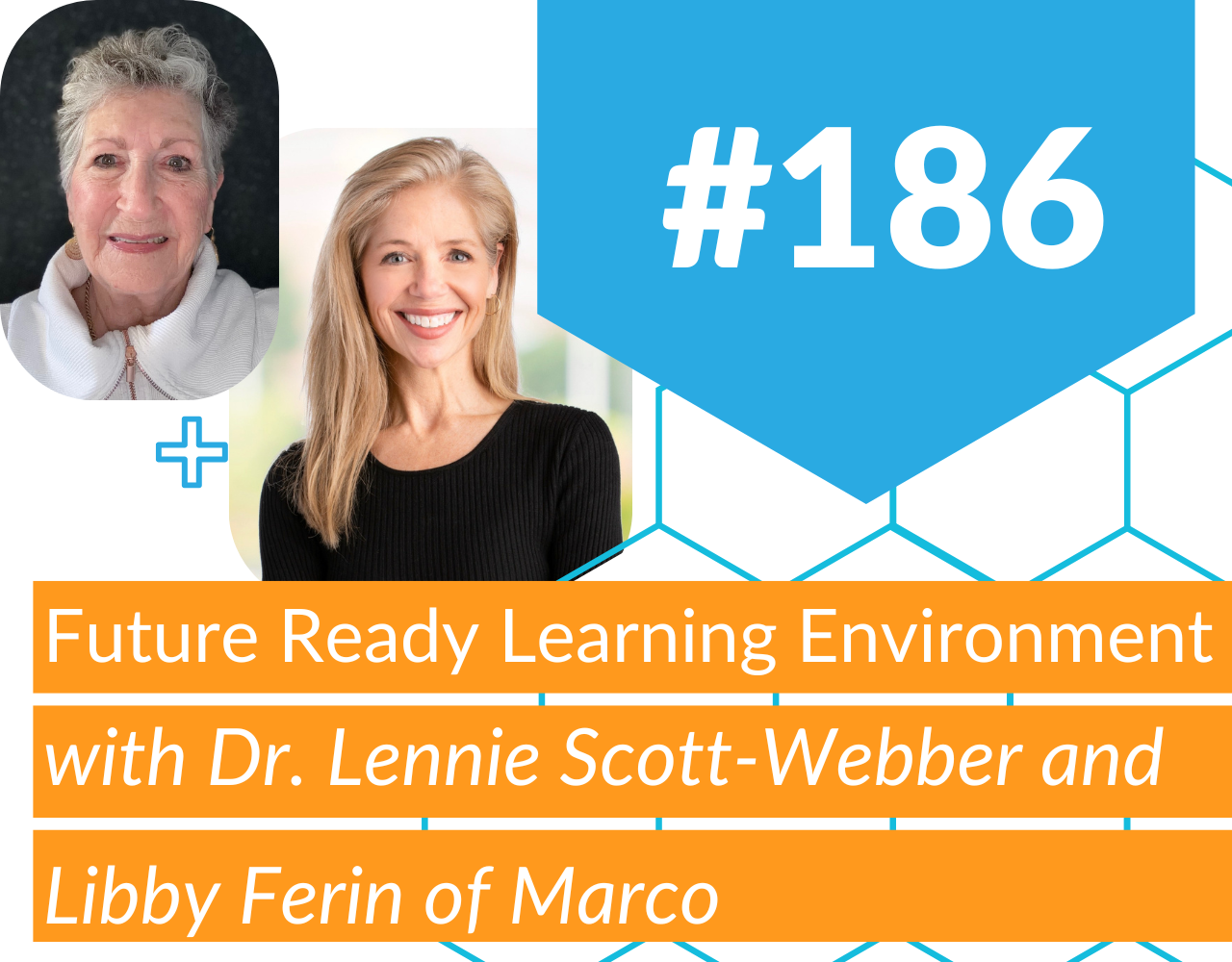
Future Ready Learning Environment with Dr. Lennie Scott-Webber and Libby Ferin of Marco
SPEAKERS
Sid Meadows, Dr. Lennie Scott-Webber, Libby Ferin
Intro:
We talk a lot in this industry about the future of work, but there's a parallel conversation happening that doesn't get nearly enough attention, and that's the future of learning. Because the learning in the environments where people learn, especially early in life, shape how they think, how they collaborate, and how they show up in the workplace later on. So what happens when we start to design those environments with intention? What if space isn't just a backdrop, but an active participant in learning outcomes? That's what today's conversation is all about.
Sponsor:
We'd like to thank our presenting sponsors, Avanto, services and software that streamline how you operate and the collaborative network, a platform where leaders in the contract interiors industry unite.
The Collaborative Network Ad:
If you're leading sales, marketing, or growth in the contract interiors industry, you already know this work can feel isolating. So that's why we built the Collaborative Network. It's a peer-driven community for manufacturers and leaders who want real conversations, real accountability, and practical insight, not generic advice. No posturing, no sales pitches, just experienced people working through real challenges together. If you're ready to grow smarter, check us out at thecollaborative.network.
Sid:
Welcome back or welcome to the Trend Report, your inside look at the people, products, and ideas shaping the future of workplace design. I'm your host, Sid Meadows, and I'm excited that you join me today for this conversation with my two guests, Libby Ferin of Marco and Dr. Lennie Scott-Weber. Welcome, Libby and Dr. Lennie. How are you guys today?
Dr. Lennie:
Great. Thanks.
Sid:
Well, I'm really glad to have you guys here, and I would love it. Libby, we'll start with you. If you could take a brief moment and introduce yourself, tell us who you are and what you do.
Libby:
Yeah, so I'm Libby Ferin. I lead marketing for Marco, and Marco is really about, you know, helping schools create better learning environments. We're a family-owned American-made manufacturer right in the heart of Missouri, and we build the products that support the spaces, like classrooms, band rooms, all of that. And what I'm really excited about is where we're headed, which is even bigger than products, which is about learning environments and shaping the behavior, connection, and outcomes for students. And that's what we're doing with Dr. Lennie. So very excited about that.
Sid:
Thank you for that, Libby. Dr. Lennie, take a moment, please, to introduce yourself and tell us who you are and what you're doing today.
Dr. Weber’s Path Into Education Design
Dr. Lennie:
Well, Sid, thank you so much for having me. I'm uh Dr. Lennie Scott- Webber. I'm a researcher. I call myself a recovering academic and uh designer of education environments. And I still care deeply about the fact that we are not thinking through fully with all of the research that we know and designing for change and designing for the future for learning environments. So I'm sort of the soapbox queen. I'm on any kind of soapbox that will challenge our status quo and help the design industry and other industries see that we have a lot of data to support the need for change.
Sid:
Dr. Lennie, you have a long history in our industry. Tell us a little bit about your journey in our industry.
Dr. Lennie:
Well, I'm a longtime sailor, so I said I sort of tacked to the wind. I think I've done just about every kind of job in our industry, except probably a dealer salesperson. I went back to grad school as a mature student. I think I got my epiphany for moving from healthcare design, which was my early focus, to education when I became first professor at Virginia Tech. And the provost there asked me to co-chair a project that she was doing about doing performance design standards for all instructional spaces on campus. That project, I mean, uh obviously when you go back to grad school, you've had your hiney in a seat for quite some time, but I hadn't looked at it that way. As a designer, you're privileged, I think, by having the best kind of a learning experience. You have a four-hour studio, it's all project-based, problem-based. So it's the best way, really, that we know how to learn. And I went through some of Virginia Tech is a beautiful campus, but I said to the provost Maseros at the time, I said, some places aren't for human consumption. Yep. Yeah, don't ask me my opinion if you don't want to hear it. So that process that we did is still in effect, actually, today affects more than 35,000 students and probably close to five to seven thousand educators. And that changed my life. It changed the way I think about place. And learning is, to your point earlier, Sid, learning is a workplace. That's where educators go to work every day. And students work their way through whatever that system is, whether you're K-12 or in higher education or even in corporate learning, it's still a working place, and we don't think about it that way. So I've done that, and then I failed at retirement three times because I was the chair of two different design schools, and then the research that I was doing on education and the design of education brought me actually to Steelcase, and I became one of their founding directors for what's now Steelcase Learning, and that sort of created a whole different trajectory, more of a global perspective.
Sid:
Well, it's amazing the journeys that we all take in this industry and kind of where we go, what we do. But I gotta tell you, if I failed once, even twice, much less three times at retirement, I might be single because I think my wife would kick me out. So I'm not there yet, but you know, I just can't imagine failing at retirement three times.
Dr. Lennie:
Well, if you're gonna fail at something for me, at least I I that's a good failure.
Libby’s Shift From Products To Outcomes
Sid:
Yeah, that's right. I love that. All right. So, Libby, tell us a little bit about your journey in the industry and like how did you get involved in education and with Marco? And then I'd like to explore a little bit about the partnership that you guys have together. But start with your journey first.
Libby:
So, I mean, same, well, not at all is the same as Dr. Lennie, but I've been in the furniture manufacturing industry. I live in Grand Rapids, Michigan, so you can't, you know, chuck a stone without hitting someone in the industry here. But I've had the privilege of working with the global manufacturers here. And I also started one of my journeys of building brands, and that's what I love to do is you know, connect emotively connected brands with our users. So the privilege of starting the healthcare brand for Steel Case way back when. And that's where I met Dr. Lenny when we were together there. That's where that connection happened. And then we kind of went over to the city.
Dr. Lennie:
Literally side by side, side by side. Yeah.
Libby:
Healthcare here, learning here. Right there and right there. And, you know, nothing gave me, honestly, in my entire journey of furniture manufacturing, sure, you know, contract office furniture is super cool. But when we talk about healthcare and real impacts and then transitioning that into education, I don't know if there to be anything more important, honestly, from a healthcare perspective and really understanding how to connect environments and supporting environments in that environment. And now we're I'm like looking at education, it's like this is the best because we have the opportunity to help shape outcomes and not just put, you know, butts and seats in classrooms. And it's it's such important work, and I think it's so overlooked. So that's why I'm here now, and that's why this is such a cool journey that we're taking together.
Building The Shaping Spaces CEU
Sid:
Well, we're gonna talk about the CEU and the research that you guys did, but it does seem from my seat that you guys are pushing a rock uphill with trying to change the way people think about the learning environments. Because you just said something, Libya, that I think is what most people think about is just putting butts in seat. How many chairs are there and tables are there in a classroom? And it's really, and what you're gonna talk about today, it's really much more than that. And the learning environment has such a huge impact. And we'll get there in just a second, but when you said something about a stone's throw, you could hit somebody in the furniture industry in Grand Rapids. I remember when I moved there with Hayworth, my boss at the time, said, Hey, you really can't be talking about business when you guys go out to eat dinner. And I looked at him like, why? And he goes, Because there could be somebody from Irma Miller sitting at the table next to you and hear everything that you're talking about. So no business talk at the dinner table when you're out to eat. And I thought, okay, that's kind of funny, but I understand the point because there are so many people saturated in that small geography that work in our industry, right? Yeah, 100%. Yep. That's good stuff. Let's talk about what was the so you guys created a CEU together and it's titled, where did I lose the title? Oh my gosh. Oh, shaping spaces, uh shaping minds, right?
Dr. Lennie:
Actually, Libby created that.
Libby:
Okay. I wanted to go there for that one. So, but here's how this kind of all went down. So I created the Shaping Space to Shaping Mind CEU for Marco, and it was this journey about the psychology of shape and learning spaces. And it was actually my own personal tutorial and self-discovery about this. This is what made me so I think over the moon about what's going on with education. And then when we started talking about validating the content within shaping spaces, shaping minds, our CEO, Richard Davidson, was like, you know, we we can't just talk about this without actually having validation behind everything that we're saying. Yes, we have cited, you know, research and everything within the document and within the CEU, but I wanted to think of who I knew in the industry from an educational perspective that could speak to this and I could share this work with and say, hey, what do you think? And Dr. Lenny is the first person I thought of actually and said, hmm, I wonder if I reached out to her. And I literally reached out to her on LinkedIn and said, Hey, you know, would you be willing to take a look at this? And I passed off the CEU to Dr. Lenny and said, What do you think? Does this have, you know, legs to stand on? And that's where we are right now. I mean, it the work I think really spoke to her. And we're now building upon that. And it's great for Marco, but it's even more powerful, I think, to start sharing that message and that that information. So Dr. Lenny, did you want to say anything about that?
Dr. Lennie:
So the work that I've done is trying to help architects understand that we cue behavior by the shapes that we create. And it's no different wherever that is. Also, if you if you look at how the place makes a difference in human performance, it doesn't matter whether it's healthcare or learning place or residential place or whatever that place is. So when Libby shared that with me, I thought, well, this is just, I mean, this is my language, this is what I speak every day. I mean, this is my belief system. So yeah. And here's some extra things that you can add in there. So if you want a bibliography, I've got one. But it was exciting for me.
From Validation To A Public Partnership
Sid:
Thank you both for elaborating further on that. What is the partnership that you're working on? What are you doing together? You got the CEU, then you went to Dr. Linnie for validation. So, what's the work you're doing together?
Libby:
Lots. Yeah. I mean, okay. It's you know what? It's can I can I take that really quick for that? Sure, please. Yeah. So for so there's a couple different things, right? I mean, I don't ever want to just be a furniture manufacturer or just say, I work for a furniture guide. That's not what I'm interested in doing.
Sid:
Right.
Libby:
And I don't think Marco is either. And I think that what we're helping our team do, at least at Marco, is help their customers, our customers, our designers, our architects understand that it's not like what I said before, it's not just about the chairs and the tables and the blah, blah, blah, and whatever. It's asking the questions. And what I love that Dr. Lenny is helping me and our team with, right? Our whole team, and hopefully the industry, is start with better questions. Why? Don't just ask the question of like how many do you need? Because that is totally not the right questions to be asking. So helping train our team and really enlightening, you know, our industry and saying, look, we can actually boost engagement, we can boost a student's focus and academic performance through the shape of space. It's not just the shape of a desk, it's not just the shape of this, it's how everything, it's you know, it's an ecosystem to Dr. Lenny's word, which I absolutely love. It's the whole thing. So, how can we be better stewards in creating that space with you to help our educators, to help our students with those better outcomes? So that's what I'm excited about.
Sid:
So, Dr. Lennie, I'm gonna come to you in just a moment for your explanation of the partnership. But Lydia, you just hit on something that I think is a real challenge in our industry. How many do you need? What color do you need them in? When do you need them by, and how much do you want to pay? Are historical questions that we ask on a regular basis. Yep. And when you ask salespeople and sales leaders in our industry, sorry if you're listening, don't be mad at me, but this is just to help tell me my side of the story here. We do not know much less understand the problem that our product solves for the spaces that we're providing. And what you just described is you are educating the Marco team, designers and architects, specifiers about the problems that exist in learning spaces and how to solve them and how furniture helps solve those problems. And that is very much leading in an initiative that I think more people need to be doing in our industry because we don't talk enough about the problems that we solve. So I applaud you guys for doing this and helping us understand these problems.
Dr. Lennie:
Very much.
Libby:
Yeah, we need to think beyond the products, man. I mean, we we really do. We have to think about it as a as a partnership. And and schools basically they need more than a catalog. And this is another thing that Dr. Lennie is helping. You know, it's like they need support in thinking how spaces should function, why they need to function that way, how they need to flex, how they need to evolve. I mean, even this lens and thinking is helping me and my marketing team actually, how we're doing planning ideas. I was just talking with Dr. Lennie yesterday. I'm like, oh, we got to do it this way. Even though that some of these tools are already, you know, embedded in Dr. Lennie, you know, for whatever, maybe not in the manufacturer or not how we necessarily don't like even the word sell. It's more about how to present the solutions. Yeah.
Sid:
So we have to think differently, especially in today's time. So, Dr. Lennie, let's come to you. Tell us about your thoughts about this partnership and how you've come together.
Dr. Lennie:
Well, uh, first of all, we had a personal respect. So that's always helpful. We knew each other and that was fun. And then when uh Libby shared the CEU with me, I thought, well, this is this is a group that at least speaks my language, and I feel like I can have a conversation. The way I approached it though is I need to know more. So we are going through a strategic planning session to sort of help me understand where are you, where are the gaps, where the holes, how can how might I help really be strategic in that way? We've also decided to do two things that are sort of immediate to the public, if you will. And I'm doing a series of white papers for Marco called Perspectives. They take the cueing of space and spatial shapes and the psychology of shape. And we're we're working through, there'll be one uh published that was the first one that was published in February, the next one will be published in April. So every other month there'll be a perspective. And uh that's really fun for me because I'm digging in and I'm sharing things from my bibliography and my graduate work, actually, that probably hasn't seen the light of day for some people for a long time, but it's important work that should still stay at the forefront, in my view. And then we have an Ask Dr. Lennie. So there's a component on their website that I get to sort of respond to people's questions, so that's fun. And uh yeah, we're doing uh a complete workshop for the entire team coming up next week, actually. And Libby and I have been working through what does that look like, what does that feel like? So for me, it's it's I think I'm I feel very grateful to be, I think we're becoming a team also, which is really fun to see a terrific firm that is so grounded in and belief in what they do and the the promise of what they have. And maybe I hope in some way we can elevate that to another layer and and maybe some of the work that I've done might help that.
Sid:
That's great. I'm really excited about learning more about this and what you guys are doing. White papers. I'm loving the Ask Dr. Lenny bot on the website. I think that's kind of cool. And so that's great stuff.
Dr. Lennie:
We'll see. It's just beginning, so we'll see.
Sid:
All right. So is it live? Like you're really answering the you get the question and they I mean, they send it to me and then I respond. But it's right, right, right. So it's not, it's not you didn't clone like with AI, you didn't clone Dr. Lenny. No. Okay.
Libby:
No, these are real legit. I mean, we send this out. I I put it out on social. I've done you know different e-blasts, and people are like, oh, and it was so funny how many we got right-away questions, you know, just different conundrums that people had from a design perspective. And don't think for a second that I and this is what I've also learned from Dr. Lenny that the designers have all the answers. They are ongoing, you know, learners as well. So that's why, you know, with the CEO I'm thinking, oh, this is going to be so elementary. Everyone knows all about this. I'm gonna look like a stooge because I'm putting this out there. And it really, no, it's not. You know, we all have a lot to learn. And even if you've heard it before, hear it, hear it three times, hear it ten times because it needs to change. Yeah. I think.
The Real Problem With “Butts In Seats”
Sid:
So let's dive in just a little bit here. What was the big challenge that you were trying? Because the topic of today's conversation is future-ready learning environments. So what was the challenge you were trying to address head on with this, Libby, when you started down this path?
Libby:
Well, I think the challenge is, you know, and you you mentioned this before, the butts and seat comment. And I've said this throughout my own career, and Steelcase taught me this. You can put a chair and a chair and a chair and a chair and a chair next to each other. We're all black. What are you gonna pick, right? What is your, you know, and they're gonna be like, well, what's the cheapest? What's the most whatever? So there's gotta be, there's, there's always a story and there's always something more in my in in my head. And that's where I think that the shaping space is shaping minds. There's a psychology behind why we pick what we pick or why should we pick what we pick when it comes to environments, any products, anything. So there's gotta be intentionality behind it. There has to be a reason or insights or something, and that's what's the sticky story with things. It's not just, it's not BS, it's actually understanding this can help that. And when I started to learn about shapes, not just shapes in space. I mean, it started back in evolution, right? Jagged rocks were danger, danger, and soft biomorphic rivers and clouds, those are the softening things. So if we're adding those things to classrooms, why aren't those um elements evoking the same type of feeling or behavior? And can they help with you know, students calming themselves or less agitated or whatever it is? So I know that Dr. Linnie's like, yeah, yeah, yeah. But I mean, that journey helps me and bring Marco to a point where it's not about a chair is a chair is a chair is a chair. Get rid of that idea. Don't talk about it like that because that is just weird sales people playing though. And we don't want that. Yeah. And that's not what's exciting. So for us to be more, and I don't want to even say consultative, but it is more of a consultative resource, right? So if I'm a design, a designer saying, you know, how can I make a better impact? What I want to do for this classroom is X, or what we're looking to do is Y. We can start talking about what types of shapes or spaces or things that we have to help evoke that type of behavior better.
Funding Pressures And Why Place Still Wins
Sid:
So thank you for that explanation, by the way. And when you think about what's really happening, you picked a category that can be a hot button. Schools, publicly funded school boards, the local, state government, federal government, everybody seems to be involved in schools. How is that shaping the future of learning environments, Dr. Lenny? Because there's so much stuff going on and noise about we're gonna defund this, we're gonna fund this, we're not gonna do this, we're not gonna do that, and every school is needing more money for this, and teachers are underpaid. I mean, there's so many things around education.
Dr. Lennie:
You're absolutely correct. It's not just noise, it's real.
Sid:
Yeah.
Dr. Lennie:
And the and the hurt and the and the fallout is real. So I don't want to minimize that at all. But I will say that knowing what we know across the different domains, from healthcare to education to workplace, whatever place, there's a lot of research, there's a ton of research internationally that will say that the environment impacts human performance. Period. So when you think about that, when you think about particularly, let's talk about K 12, that's the biggest leverage that any education leader can pull to really get the environment to work for them, not against them. And yet, because they're not taught, so I hope that colleges. Education won't come down on me, but they're not taught that the design is a tool.
Sid:
Right.
Dr. Lennie:
And so they come in and become a principal and still don't know that. They go become a superintendent, they still don't know that. So they have a hole in their bucket and it carries through. And they go to the architectural teams and say, Will you do that? When in essence, at least my perspective from being an educator as well as a designer and being with you know some major architectural firms on those visioning sessions, I said, No, you have to design to your edges. You have a culture in your community, in your classrooms, in your way of doing, way of being, that has to have that stewardship that takes you from here through that design process, but you continue with your voice. And if you lose that, and the challenge is every two and a half to three years, there's a new superintendent. So, you know, what is that legacy? What is that value that's added? And if I could turn one thing on, it would be to say, you can't build a future if you don't think about place.
Sid:
Oh, that's really good.
Dr. Lennie:
Okay. I'm glad that's the first time I've seen that.
Sid:
That's really good. Like that's like you can't build a future if you don't think about place because we spend so much time in the place, right? And that's where so much learning is.
Dr. Lennie:
That there's a but there's an experience that happens there.
Sid:
Yep.
Dr. Lennie:
I loved an article that came out, and I'm gonna forget who the author was, but they said AI is here, but the brain's physiology and and biology of the way we learn doesn't change.
Sid:
Okay, I need to go find that article.
Dr. Lennie:
And I will I will find that author for him. Sorry, I made it.
Sid:
No, please send it to me because we'll drop it down in the show notes too later.
Dr. Lennie:
I will, I will, for sure. I send it on my LinkedIn page. Yeah.
Sid:
Okay. Well, the the question that's coming up as I'm listening to both of you is how do you get the schools involved? It sounds like to me that you've got to get the school and the school district and the boards of education involved in this to understand this concept in order to buy into it to have the impact that you're talking about. So, how do you get the schools involved?
Dr. Lennie:
You stand on soapboxes for your whole life and you just keep working at it. I mean, there are many that do, and we have some really good examples around our country where, and I think so. But if they go and see or have a conversation with an organization that's trying new things or they've had that path and it's been very successful, we can also share the data that's there because it shows that. But the more that you can sort of build that network of trust between those that are early advocates and those that are, well, maybe I'd like to try that, the better. But I feel like there's such a huge sense of urgency, losing so many kids. I mean, every 23 seconds, this somebody in this country drops out of high school, we lost something like, I don't know, hundreds of thousands of educators last year alone. Part of it is if you look at our country and particularly at K-12, what people go to learn in is abysmal. It's it's fourth world, never mind third world. We have 70% of our kids are on free and reduced lunch, and a hungry child cannot learn. You have to regulate before you can educate, before you can create. So if that system here isn't working at whatever level you are at in your learning path, it's not gonna work.
Sid:
It's a shocking statistic that every 34 seconds someone drops out of school. It's a shocking statistic, especially at K-12 school. You said high school, right? But that's still a shocking statistic. That many people are dropping out of school, right? And we need to embrace, we need to do this better. I think we all have a responsibility to help education do better and to help education perform better because that's our kids we're talking about. It's our kids' future that we're talking about.
Dr. Lennie:
So the thing that I think I get so upstight about or upset about is the fact that we we don't raise the the level of importance for educators. The teachers of K-12 are the only discipline that touches every other discipline, period.
Libby:
Yep.
Dr. Lennie:
I mean, I was never in their trenches and I just value them every day. I was lucky enough to be a professor at higher education, which has its own challenges. But K-12 is just everything comes down on you from every direction. And you may be trained from one of the best colleges of education on the planet, expected to understand how to use technology. You're never expected to understand that the design of the affordances within that place is also another tool that you can leverage. And that tool and that environment, whether it's the color psychology, whether it's lighting psychology, whether it's biophilic that you're adding, which is the the study of how nature supports us, all of those pieces of the puzzle are important as a decision maker. And it doesn't have to cost an arm and a leg. Design is never about being expensive, it's about being thoughtful.
Sid:
I love that. Go ahead, Libby. You were gonna ask you. Sorry, my teacher finger started going if you're watching a video, she's pointing at the shaking that finger. It's great.
Libby:
No, I was gonna say, and it was to the question about you know what schools, you know, what what we're doing in our communities too. And what I'm seeing, because we have visibility of different bonds and different areas, right? Like where the dollars are going, it shows you very quickly different communities uh and where the dollars are being supported, right? Yeah, but every it doesn't matter where you're going, privileged or otherwise, every school system is being asked to do more with less.
Sid:
Yeah.
Libby:
Period. And I think that one of those things is if you're then that means that you have to be so intentional and tied to the outcome. I mean, you have to have that flexibility. You have to be able to share with that educator or the administration like, look, if you're gonna have to have one space to do multiple things because you can't afford to do everything, you got to be smart about it. Yeah. And let's help you. So it really, again, it's that insight-led understanding that, and you've mentioned this before too, Dr. Lennie, that you know, teachers are fantastic at what they do, but they're not designers. And so they don't necessarily always think about, oh, this is how the space needs to be in order for me to help evoke this type of behavior or whatever. That's not what necessarily they were trained to do. So we can help with that if given the opportunity.
Sid:
I think a lot of cases that teachers, I mean, I'm talking for them, I'm not one of them. I think they understand to a degree about how their students learn and what they actually need because they see it. And the longer they're a teacher, the more they, I think, begin to understand it.
What Future-Ready Learning Really Means
Sponsor:
We'd like to thank our supporting Silver sponsors, KISP, who helps furniture brands visualize and sell products before specification. Navitas Credit Corp. Navitas makes great workspaces affordable, turning furniture projects into easy monthly payments. Web Configurator Services, the leader in AI-powered online product configuration and quoting.
KiSP Ad:
Selling contract furniture is getting harder. You're dealing with complex products, disconnected tools, and buyers who make decisions before you ever get to spec. KISP helps fix that with clean product data, visual sales tools, and expert visualization services built for the way furniture actually gets sold. Backed by 30 years of experience, KISP helps dealers and manufacturers visualize, configure, and get chosen early before specification ever starts. To learn more, visit KISP.com.
WCS Ad:
Let's be honest, selling contract furniture has gotten complicated. Between product options, pricing rules, and back and forth emails, quoting can slow everything down. And when quoting slows down, deals slow down. That's where WCS comes in. They offer web-based CPQ configurators that combine visualization, real pricing logic, and instant quote generation so your team, customers, and sales reps can configure correctly and quote immediately. If you're a manufacturer looking to simplify how you sell, check out webconfigurator.net and request a free demo.
Sid:
I want to talk about what is future ready learning environment. What does that mean? And give us an example. But before I let one of you answer that question, I saw this video, because I'm a huge consumer of short form video, and um, I saw this video of this teacher. It just pop popped up on my for you page, and she was talking about her space in her classroom and how she got rid of all the desk and chairs and with her own money went out and bought sofas, bean bags, lounge chairs, and she did a video like around the space. And, you know, when we think about classroom, we think everything's in a row and everybody's facing front. And she said, I needed to create spaces where the students could learn their best for who they are. I'm not changing what I'm teaching them, but I'm changing the environment. So if they want to sit crisscross on a sofa, they can. That's how they're gonna learn better than sitting in a chair facing the front. And I just thought that was fascinating. That's kind of what you're talking about.
Libby:
There's a statistic out there too that shape flexible classrooms lead to 12% higher test scores and more student engagement.
Sid:
Wow.
Libby:
And that's exactly what you just said. You know, if you've kind of have choice and control as a student of how you want to posture throughout your day, just because I don't want to be stuck behind a desk looking forward. Think about what that can do.
Sid:
Yeah.
Libby:
I think it's a cool stat.
Sid:
So, Dr. Lennie, what is a future ready learning environment?
Dr. Lennie:
Well, let's back up and say, what is it not?
Sid:
Oh, okay.
Dr. Lennie:
We have an 18th-century mindset with row by column seating, double-loaded corridors, one classroom, one student. It's still institutionalized cells and belts. You do anything other than that, and it's going to kick you into some kind of future.
Sid:
Yep.
Dr. Lennie:
But it's very personal for the educator, and particularly in K-12 as well, we don't have that luxury in higher ed. There's no, I don't own anything. But when you territorialize something, this is mine, you know, it becomes very personal. So even with the principal looking at things and what some of the research that I've done when I've worked in in pods or communities of groups, the teachers actually are feel much more supportive with themselves. So if we could get rid of, I'm not saying we go fully to open classrooms, but if we could start to look at communities of classes, of communities of areas so that the children and the educators start to feel like a sense of belonging, like a sense of family. And there's not one classroom that one person owns. I think our generation and generations behind us have survived our educational system. But kids today are not willing to go down that path. They are quitting because it's it's too boring. I mean, they're not allowed to learn the way we need to learn. And the more we understand about the challenges of the neurodiversity and the physiological diversity, the more we recognize we have to have, we have to be able to think about the human, not just the bums that are bums and seeds that are there. So that's the way we've always done it, is a word that needs, is a phrase that needs to go away. That's quick sand for change.
Sid:
So somewhere on my little board over here, I have an applause button. And I, if I knew which one it was, I would pin it because like that's like a that's uh like an applause. Like just because we've done it this way doesn't mean we have to keep doing it. And we we need to rethink that in so many aspects of our industry. Well, we're doing it just because that we've always done it. We've always put children in rows, right? Facing front at a chalkboard or a whiteboard, right? We didn't it just that doesn't mean we have to keep doing it.
Dr. Lennie:
Simple, yeah, simple little thing said if you just flip the room from what I call portrait to landscape. So if you think about a piece of paper, you know, the short side being the portrait and long side being the landscape, you're actually closer to your students.
Sid:
Yep.
Dr. Lennie:
There's less behavioral challenge, even if they're still in a row by column. And if you curve that column a little bit, then they start to see one another. When you can see people, you can start to begin to feel have a sense of belonging. And that's the one thing at Virginia Tech when we were doing this, we changed everything that we could to just do landscape versus portrait.
Sid:
One thing. Simple thing that has a big impact. It's not difficult. Libby, you're gonna add into that.
Libby:
You know, I was just gonna kind of add on to the fact that just think in the time that any of us went to school, right? The immense change in learning. I mean, just the way we learn, way our kids learn, everything else, it's so not static. We're expected to design spaces that feel so static still. It's evolving, it's changing, it's dynamic. And our spaces need to accommodate that ability to change and flex and provide choice, I think more than ever. And I think that that's what a future-ready environment in my head looks like is something that is just organic. And let it let the space be organic as much as you can.
Dr. Lennie:
So I had the privilege of working with some folks from the Salk Institute, uh cognitive neuroscientists. And really it's about decluttering. That's one of the one of the biggest things uh for off-task behavior, believe it or not, and being able, as Libby said, we know too much about how we learn. Like we could we can process this with all these gizmos that goes on people's heads and everything else. We can really see how we learn. So if we know that, then how can we not process that and say, okay, we need to change our perspective on what that learning process, those learning practices should be in order to allow this differentiation of humans because a factory model is not a human model. It's just not.
Sid:
Yep.
Dr. Lennie:
Right.
Sid:
So there's so many parallels here to what I've heard words that you both have said to the conversations that are happening in the office. Choice, flexibility, right? Choice and control. I mean, yeah, it's just that they're very parallel, and the Gen Xers learned differently than the Gen Alpha, which is the upcoming up now, right? And whatever the new name is of the one below them, come in, they learn differently.
Dr. Lennie:
It's alpha is the next one.
What Designers Must Do First
Sid:
Alpha is the next. Okay. But we haven't, in my opinion, I don't think we've really adopted the environment because it's basically the same setup as when I was in the fifth grade, that what fifth graders see today, and that's a problem. And that's part of the problem that we see happening in the workplace because we didn't evolve the workplace either until we were forced to start evolving the workplace. And we see those changes now being really talked about and implemented. So we have to make a move in changing this. So, with that, let me ask you a question. What is it that interior designers need to know or understand when they're designing a learning environment so that it can be future ready, it can meet the client, in this case, the student, where they are to facilitate the learning, to make it fun again so that they don't drop out? Libby, would you like to go first?
Libby:
I would say start with behavior, not the blueprint. I mean, don't look at the space first. Look at what you're trying to. I mean, that's one thing that I've learned from Dr. Lenny too, is that we just need to ask what the space needs to help people do and not just automatically look at a plan and say, okay, 24 kids, teacher desk, done.
Sid:
Whiteboard, here we go, chalkboard, whatever, here we go.
Libby:
Right. Is it collaboration? Is it focus? Is it creation? Is it whatever it is? But I think that those are the questions that we need to ask. We need to we need to start with the behavior and the questions before we need to look at the plan.
Sid:
Dr. Linnie, what are your thoughts on that question?
Dr. Lennie:
Yes, I'm gonna build on that because I think what Libby is sharing is absolutely true. But it's every single place is this I said this before, has a culture. As a designer, you need to understand what makes that culture tick. Why are they there? Why do what do they care about? And and that expands into the community. Whenever you're doing design, you're although sometimes the interiors folks are at the at the end of the train, which is unfortunate because they should be at the beginning of the train. That's another story. We can have another conversation on that one. I think it's it's going in and not trying to find the solution, going in to really understand what is happening here, what is that workplace, what are their dreams of the future, because they're they're doing something new. So they must have an idea, a plan, and how can you, with the expertise that you have, because design matters, at the end of the day, it matters to all of us. So if we have that in mind, that uh I'm the expert, I'm the designer going in, but I'm an expert also in listening. I'm an expert in understanding how to make that what I hear translate into what can be. That's fantastic. Just taking that pause, if you will, and saying, what can we do with this? But listening and knowing, like when you're a designer and you're listening to what's going on, you're already seeing. You can't help it. You know, it's sort of you can't help but see the solutions. But if you allow it to be play-based and have it so it doesn't look so formalized when you come from a Revit model that the educators, like, oh my gosh, it's done. I can't play with that. If you have a sandbox way for them to sort of start to play in it, to feel it, to understand it, to help them understand how their practice will fit into this puzzle because it's new, it's a new visual for them. You can be part of a trusted partnership. And that trusted partnership will last your lifetime.
Sid:
So one of the underlying things, uh, themes I'm hearing from both of you is courage, that the design community, the manufacturing community, the dealer community, we need to have the courage to show new and different ideas to the customer and help them understand why this is something they should consider, why this is something because it's easy to fall into the same old practice of the desk in the row, right? We have to have the courage to bring a new thoughtful idea and explain why we think this is impactful. And we need to be able to back it up in this case. It can be backed up with research and information that can show to the customer, in this case, a school, why they want to do this.
Dr. Lennie:
I think there's something else in there. I love the word courage. And so what I would say is I would encourage everyone when someone says, I want four of this and five of that, to have the courage to say why.
Sid:
Yeah.
Libby:
Because there is any CE symbol for why to put in your planning box. You've got to be able to, and it goes beyond aesthetics, right? I mean, you can't just have a pretty room anymore. That doesn't, that doesn't cut it. You can't.
Sid:
You know, there's some research around, and I forget where I heard this, but there's because I read a lot and I listen a lot. So I don't always remember, but but the message sticks with me, right? Ask why five times. Ask why, and then they give you a follow-up, ask why again, and then the follow-up, ask why again. Because the more times you ask why, and about the fifth time, you actually get to the core of why they really want to do something. So ask the and and typically the first why is very superficial. And the more that you ask why, the deeper that the answer becomes, and the more real that the response is going to be.
Dr. Lennie:
So probably comes from Simon Sinek.
How Dealers Can Enter K-12
Sid:
I was thinking the same thing, Dr. Lennie. He's one of my favorites. I listened to a lot of his stuff. Yeah. So Libby, I want to come to you for a second. This all sounds fascinating. I am fascinated by this conversation. I think the listeners listening are their minds are spinning about okay, what can I do? How can I get involved? You know, how can I help impact this? Because education, especially K-through education, affects all of us at some point in our life and our career, because eventually those young people that are in school are going to be working for us, right, at some point in time. But in our traditional model that exists today, the typical office, historical office furniture dealer does not get involved in a lot of K through 12 business. Most of that is set aside for specialist dealers or specialty dealers that are K through 12 focused. How can that non-K through 12 focused dealer start to better understand this category and get involved with this groundbreaking work that you're doing?
Libby:
Well, that's really interesting because my, like I said before, my career has been mostly within contract office and those dealers that are focused on higher ed. And so this is my first time in my journey within exactly who you're talking about. And what's the difference? I mean, in my opinion, it's like I feel like there's an obligation for me to have that sense of education for this group. It's not just catalog business. I mean, honestly, you're talking about some really exceptional companies out there that are providing products for K through 12, right? And those dealers too. They deserve to have as much information and they're working with the same designers and so on and so forth, architectural firms. They have to have the same type of information and insights and understanding as anyone else does. In fact, I think it's more important. Start from the bottom up. It's foundational. So I do think that we have to be better stewards for our dealers in K through 12 from not just designing these spaces to designing experiences, really. And it's hard, it's a shift. Because if you haven't been focused on this, I mean, so much research has happened in that higher education, from my experience of being in the eye.
Sid:
Yeah, yeah, you're right. I agree. Yes. Yep.
Libby:
Is don't throw this away. Don't throw the opportunity away to make the K through 12 and right. Because this is you're not going to be in higher ed if you can't get the K through 12 right.
Sid:
Yep. Well, a lot of dealers will tell you when they when you talk about vertical markets and you get to education, they'll say, Yeah, we do uh college and university.
Libby:
Yeah, why?
Sid:
We don't do we don't do K through 12. And it's a great question. Like, why don't you do it? And I think the core is we don't understand it. We don't understand it enough. And I think what both of you have talked about today is a way to understand it, a way to understand it differently, a way to really think about it, deep knowledge in the education space with Dr. Lenny, you know, Marco, and the products that you guys have, and Libby, what you've done with your CEU. You're opening the door and saying to the traditional office furniture dealer, this is a path. Come understand this, come learn this, because this is an opportunity, a way for you to grow your market in a vertical category that most stay away from. So I think it's fantastic.
Dr. Lennie:
And Sid, I'm gonna I'm gonna add the same challenge to the design community. I was the only design educator that taught an educational studio in North America. And it's one of the largest verticals our educational teams go into. Where did they learn it? They have to learn it on the job.
Sid:
We've really neglected this category, haven't we? Yeah, we have really neglected this category. As an industry, collectively, we've neglected this category, which is sad because it's so important and so impactful.
Dr. Lennie:
It's it's so critical. Yeah.
Sid:
Wow.
Dr. Lennie:
I'm thrilled that I was that somebody pointed me in a direction that changed my life.
Final Takeaways From Each Guest
Sid:
And uh be forever grateful. I love that. This has been a fascinating conversation. I mean, my brain is spinning with ideas and just like where we've missed the boat here, what the opportunity that exists. And I applaud you both for leading the way in change and showing us doing things differently, why it's important. So I'd like to ask you as we start to wrap up today, and Dr. Lennie, we'll start with you. What's one idea or one perspective that you hope that the person listening today walks away from this conversation with?
Dr. Lennie:
That's a tough one. That it's definitely possible. Your dreams can be realized. I would just say, be fearless. Just say, no, we're not gonna do this same crap as we've been doing. We need to get over it. So dream big and push hard.
Sid:
I love that. Libby, what about you?
Libby:
So I'm gonna I'm gonna close with I think my favorite quote. And you know which one I'm gonna use, Dr. Lonnie? It's from it's it's part of the universal design for learning, which when I was exploring this uh this journey, it's when a flower doesn't bloom, you fix the environment in which it grows, not the flower. So when you think about all of our kiddos as petunias and tulips and everything else, right? If they're fading, hmm. We need new dirt, we need new dirt, we need sunshine. So think about it a little bit differently because I think that there's an opportunity within that quote that can make everything better. I really do.
Sid:
So well, there's so many parallels, as I said a minute ago, between the office space and then the educational space. When you really just listen to what you guys have said today, or you ladies have said today, you start to see them. And we need to lean into this because we can fix these problems, we can solve these problems. And if we can stand up and talk about them, we can use our voice, we can create things like you guys have created with your CEU and the partnership with Dr. Lenny. This is how movements happen, and I'm super excited about what you guys are doing and where you're headed. Libby, I should know the answer to this question and forgive me if that I don't. Do you guys have a space in Chicago? Will you be president for Design Days or Neocon at all?
Libby:
We're not at the Mart currently. I mean, it's something that we're looking, and in fact, I'll give Byron over at the MART a little bit of props there because I know that they're trying to create a community for education actually on one of the floors. Yeah. So we're taking a look at that and hopefully we'll be part of that community soon.
Where To Connect And Ask Questions
Sid:
Okay, great. So if our community wants to get in touch with you and learn more about you, Dr. Lenny, where should they go?
Dr. Lennie:
Well, they can catch me on LinkedIn. I have a presence there, I'm pretty active there. That's the easiest part. They can message me and if they want anything else and I'll connect. Happy to. Or they can go ask Dr. Lennie. Oh, they can go ask Dr. Lennie on Marco's site.
Sid:
So, Libby, you need to go over to my website. And I I'm on the right-hand side of my website, there's a button that says leave me a voice message. Okay. And you can click that button and literally record a message to me. And so if you put something like that on your website, in addition to the texting version, they can actually Dr. Lenny can hear them asking the question because sometimes the way we ask them. Oh, that's a good idea. Oh, that's a great idea. Yeah. I use this and just call it up with all the cool ideas. Well, it's it's it's it's tick but typically for podcasters, but it's called Speak Pipe, and it's free, and you just put it on your website. And whenever somebody leaves a voice message, then um it sends you an email with the audio link and you can listen to it.
Libby:
Okay. That's super cool. All right.
Sid:
So that's my my encouragement to the listener today that if you have a question for Dr. Lenny or Libby, head over to the website, click that red box, and leave a message, and I'll be sure that they get it. So, Libby, with that, where can we learn more about Marco and how can we connect with you?
Libby: Yeah, for sure. MadebyMarco.net is our website. I'm on there. You can ask, like I said, ask Dr. Lenny. There's places for comments if you have questions. I too am on LinkedIn. So just get a hold of me. Happy to chat.
Sid:
We'll be sure that your LinkedIn profiles as well as the website are all dropped down into the show notes if somebody would like to get in touch with you. I just say to you, the listener, hey, if you do reach out to them, let them know you heard them here on the trend report. That's why you're reaching out. And again, I can't thank you ladies enough for this conversation. Totally fascinating. I know if my head's spinning with ideas that a listener is as well. And uh it's been a fascinating conversation. So thank you both very much for being here today.
Dr. Lennie:
Oh, thank you. Thank you, Sid. And maybe it needs a follow-up. Maybe it's a good thing.
Closing Thanks And Sign-Off
Sid:
I think we could talk for another 30, 45 minutes. For sure.
Sponsor:
We'd like to thank our community bronze sponsors, Catalyst Consulting Group, Reese, and Staffing Plus.
Catalyst Consulting Ad:
Public sector sales don't happen by accident, they happen by strategy. At Catalyst Consulting, we help small business manufacturers break into and grow within federal, sled, and cooperative contract markets. With over 100 years of combined experience selling to the public sector in the commercial furniture industry, we know what it takes to compete and win. We help you align with the right contracts, the right partners, and the right opportunities. Government sales are complex. Your strategy shouldn't be. Visit strategic-catalyst.com and take our Pathfinder assessment to see where you are on your public sector path.
Outro:
And to those of you listening today, thank you for joining us here on the Trend Report, your inside look at the people, products, and ideas shaping the future of workplace design. Go out there and make today great, and we will see you right back here in the next episode. Take care, everyone.