The Trend Report Podcast
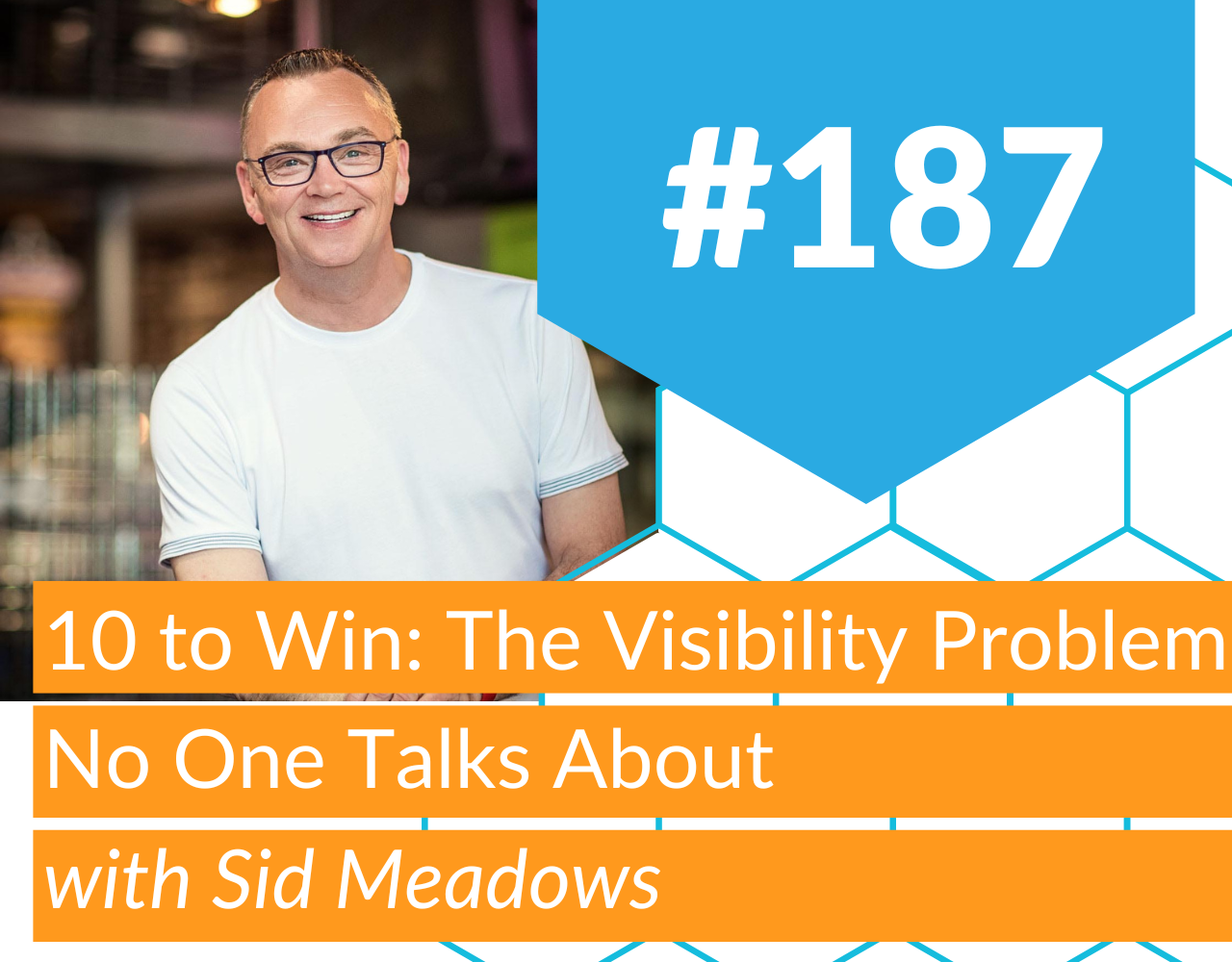
10 to Win: The Visibility Problem No One Talks About
SPEAKERS
Sid Meadows
Intro:
What does it really mean to add value? Not just say something, but actually help someone to create content that doesn't just fill space, but makes an impact on someone's business or even their life. Because here's the truth. Most of us are posting for the sake of posting. Very few of us are being remembered. And it all comes back to one question I heard last week that hasn't left me since. And that's what we're diving into in today's 10 to Win.
Sponsor:
We'd like to thank our presenting sponsors, Avanto, services and software that streamline how you operate and the collaborative network, a platform where leaders in the contract interiors industry unite.
The Collaborative Network Ad:
If you're leading sales, marketing, or growth in the contract interiors industry, you already know this work can feel isolating. So that's why we built the Collaborative Network. It's a peer-driven community for manufacturers and leaders who want real conversations, real accountability, and practical insight, not generic advice. No posturing, no sales pitches, just experienced people working through real challenges together. If you're ready to grow smarter, check us out at thecollaborative.network.
What Valuable Content Really Does
Why AI Makes Average Content Useless
Sid:
Welcome back or welcome to the Trend Report, your inside look at the people, products, and ideas shaping the future of workplace design. I'm your host, Sid Meadows, and I'm glad that you've joined me for another conversation with just me and you.
You know, a few weeks ago, I had the opportunity to attend the Uprising, a small invite-only conference with 40 people in the room. We spent a couple of days really deep diving intensively into marketing AI and what's changing in how we show up and communicate. And there was one question that stopped me in my tracks. If your content disappeared, would your customers notice? And I gotta be honest with you, my first reaction wasn't about anyone else. It was about me. Am I actually adding value or am I just talking at people? Am I sharing things that help? Or just promoting my podcast, my work, and my ideas? That question stuck with me, and I think it's a question more of us need to sit with.
That's not wrong. Products matter because that's what we sell. But if it's all we're posting and all we're talking about, then you're not building a connection or a relationship. You're not building trust. You're just adding to the noise. And over time, your audience becomes tone-deaf to all of it. They scroll right past you. Do a test on your content, especially if you're a brand. Go to LinkedIn and look at your analytics. Look at who liked it, who shared it, who, if anyone, commented on it. I think the results will be eye-opening for you. So this question made me take a step back and ask, what does valuable content actually look like? And for me, it's pretty simple. Valuable content helps someone. It helps them think differently. It helps them make a decision. Maybe it challenges them. It helps them grow both personally and or professionally. And it helps grow their business. It's not random information. It's not just an activity. It's useful. And maybe the simplest way to think about it is this. Is this helping them or is it helping me? So the next time you go to post a piece of content, ask that question. Is this helping them or is it helping me?
Now here's where it gets even more interesting. I'm currently reading a book called Theater of the Mind by Melanie Borden, who was at the conference, by the way. And she has a quote in her book that is a stat about LinkedIn that I wanted to share with you today. As of 2025, out of the 1.2 billion members on LinkedIn, it's been reported that only 1% post consistently. That means that a majority and the vast majority of people are watching, scrolling, and lurking. Is that what you're doing? Are you a lurker? And in our industry, I honestly think that that number 1% is actually smaller in our industry. People aren't showing up. And we need new voices in a really big way. They're not sharing ideas, they're not offering perspectives, and they're not stepping into thought leadership. And you know, if you've listened to the show for a while, I talk a lot about thought leadership. And when I talk about this with people, I hear the same things over and over again. Oh, I'm not a thought leader. No one wants to hear from me. My boss might not like it. I might get in trouble. I don't have time. These are all the things that I hear. But those same people will post about their products all day long. And friend, that's the disconnect. Here's the reality. We are moving into a different world, especially with AI, where content is everywhere and most of it fully written by AI. But AI is raising the floor. Average content is easy now.
So the question becomes what actually stands out? And I believe it's this the future won't belong to the most qualified. It's going to belong to the most visible, valuable, and clear. People who have a point of view, people who have an opinion, people who show up consistently, people who are willing to say something that actually matters, and people who are willing to start conversations. That's where trust is built, friend. And trust is what drives everything in our industry. Now I know some of you might be thinking, hey Sid, I can't create and post content, but I believe you can. Just like anything else, you just have to make time for it. So the next time you find yourself scrolling on socials, stop, open up your notes app on your phone or wherever you take notes, write out some ideas that you have about content that you could create. One of the first places to start is just actually thinking about and writing down the content that you want to create. Now, if you're sitting there thinking, okay, I get it. I need to do something.
Three Practical Ways To Start
Sponsor:
We'd like to thank our supporting Silver sponsors, KISP, who helps furniture brands visualize and sell products before specification. Navitas Credit Corp. Navitas makes great workspaces affordable, turning furniture projects into easy monthly payments. Web Configurator Services, the leader in AI-powered online product configuration and quoting.
KiSP Ad:
Selling contract furniture is getting harder. You're dealing with complex products, disconnected tools, and buyers who make decisions before you ever get to spec. KISP helps fix that with clean product data, visual sales tools, and expert visualization services built for the way furniture actually gets sold. Backed by 30 years of experience, KISP helps dealers and manufacturers visualize, configure, and get chosen early before specification ever starts. To learn more, visit KISP.com.
WCS Ad:
Let's be honest, selling contract furniture has gotten complicated. Between product options, pricing rules, and back and forth emails, quoting can slow everything down. And when quoting slows down, deals slow down. That's where WCS comes in. They offer web-based CPQ configurators that combine visualization, real pricing logic, and instant quote generation so your team, customers, and sales reps can configure correctly and quote immediately. If you're a manufacturer looking to simplify how you sell, check out webconfigurator.net and request a free demo.
Share More Of You To Build Trust
Sid:
I want to give you three very simple places that you can start to get you on this journey. First, start in the comments. You don't have to create a post today or tomorrow, but you can engage. When you see something from a designer, a manufacturer, a customer, or just someone in the industry, leave a thoughtful comment, maybe add a perspective. My rule of thumb is a minimum of seven words. On LinkedIn, comments carry weight. They actually create visibility, and LinkedIn tells you so in your notifications. They'll tell you how many people viewed your comment. They'll even tell you if your comment drove profile views or connection requests. So comments are a really easy way to start. You don't have to create anything, you don't have to do any pictures, no carousels, no video, just add comments.
Now, the second one, something I want you to think about, which is tell better stories. Tell customer stories. Start with the challenge that your customer may have had. What problem were they facing? What was at stake? What changed because of the solution that you provided? Be sure to remember to make the customer the hero. You're the guy. So I know we like to post pictures of our installs, which is great, but tell the story around it. It doesn't have to be a long paragraph. You can tell it actually really short and concise. Next one is tell product stories. Don't just show me your products and tell me how great it is and how many colors it comes in. Tell me the story behind it. Who designed it? What's the problem that this product is solving for your customers? What's its sustainability story? How is it manufactured? How is it going to help my customer? Tell us the story behind the product. I like to call this sell me the product without selling the product, right? So tell us about the product. The next one is behind the scenes. People absolutely love a look inside your business. Tell the story of the factory worker who's retiring after 30 years of working in your factory. Show me how the product is made with images or a short video. How is the NEAR applied? Or how do you make seat covers? Not all of your dealers or customers will have the opportunity to visit your factory, but they can discover who you are and what you do when you tell them a story and you show them the behind-the-scenes content. So you get to bring them to your factory in your social content with your videos or other types of images you want to place. Remember, people connect with stories. So stop keeping them a secret. Share your story.
Now, the third one, share more of you. We are in a relationship business. Everybody that I talk to says that almost that exact phrase. People do business with people. So let the people see you. Let them see your journey. Let them hear your perspective, even the personal side of your life. One of my best performing LinkedIn posts ever was made just after my daughter tore her left ACL in the last spring game of her college season of that year. It ended up being her last collegiate soccer game ever. I shared a picture of her in a brace on a training table inside the locker room. And I shared what I learned from her and the adversity she was facing in that moment. It was raw and it was real, still fills me with emotions as I think about it. And it resonated with so many of you. I wrote it in my notes app as I was waiting for the trainers to move her to the car so that we could go to the hospital. That is what builds connection, real connection. And connections, you know this, build trust.
So here's a quick recap. Start in the comments. It's easy and it's very little work and stress for you. Tell better stories. People will remember the story you told them. They won't remember the pretty picture you posted of your product. Share more of you. We are in a relationship business, and when you share more of you, you will connect with more people. So I'll leave you with this question, the same one that I walked away with last week. If your content disappeared tomorrow, would anyone notice? And maybe more importantly, are you showing up in a way that actually is worth noticing? Because in the next era that where we're headed, it's not about who knows the most. It's about who shows up, who adds value, and who earns the attention of the lurkers on social media platforms.
Final Challenge And Closing
Sponsor:
We'd like to thank our community bronze sponsors, Catalyst Consulting Group, RESEAT, and Staffing Plus.
Catalyst Consulting Ad:
Public sector sales don't happen by accident. They happen by strategy. At Catalyst Consulting, we help small business manufacturers break into and grow within federal, sled, and cooperative contract markets. With over 100 years of combined experience selling to the public sector in the commercial furniture industry, we know what it takes to compete and win. We help you align with the right contracts the right partners, and the right opportunities. Government sales are complex. Your strategy shouldn't be. Visit strategic-catalyst.com and take our Pathfinder assessment to see where you are on your public sector path.
Outro:
Hey friend, if you found this episode helpful or insightful, I would love it if you would share it with someone in the industry who needs to hear this message. And as always, thank you for listening and joining me on the Trend Report Today, your inside look at the people, products, and ideas shaping the future of workplace design. Go out there and make today great, and we will see you in the next episode. Take care, everyone.