The Trend Report Podcast
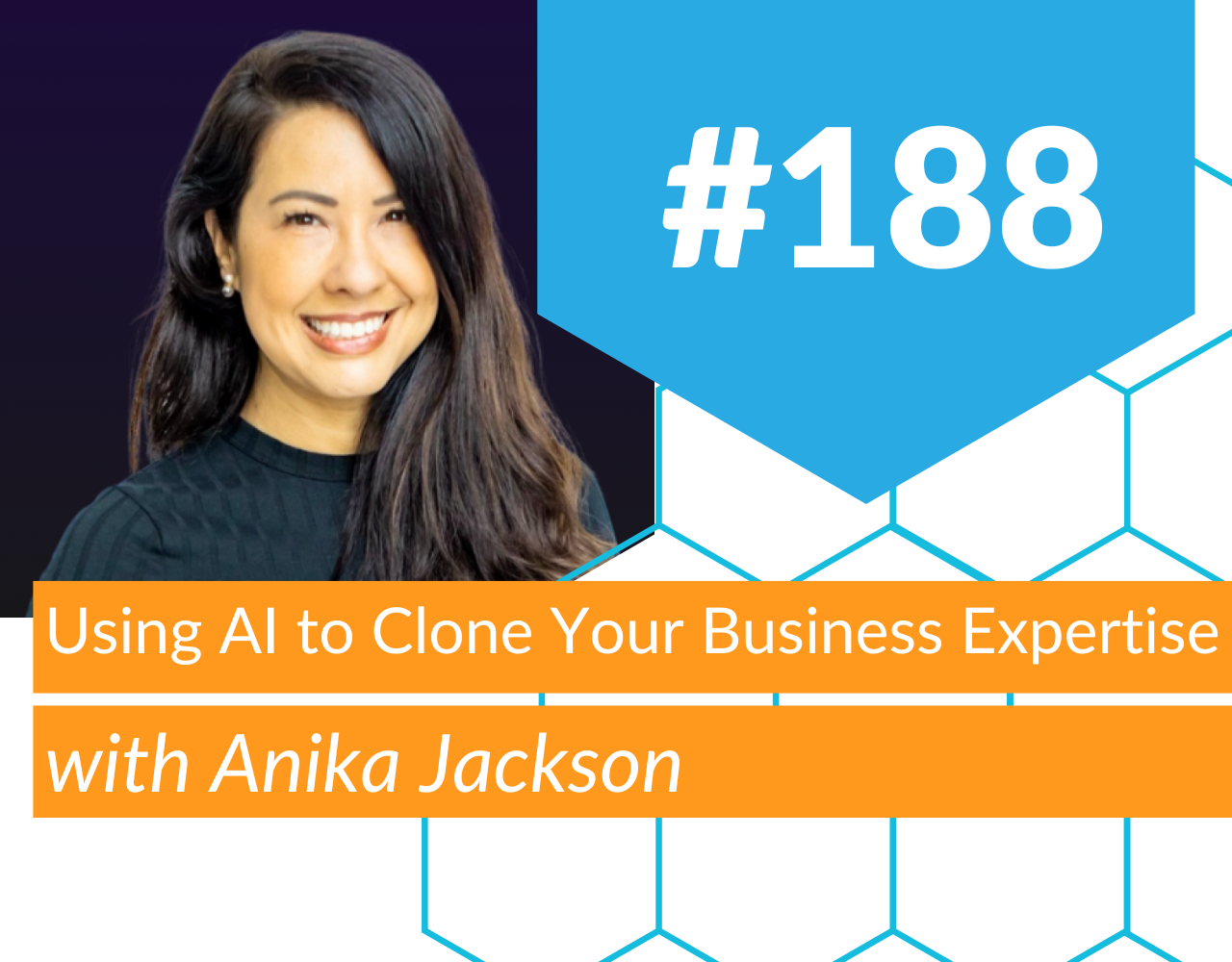
Using AI to Clone Your Business Expertise
SPEAKERS
Sid Meadows, Anika Jackson
Can AI Clone Your Expertise
Intro:
We talk a lot about AI in business, automation, efficiency, content at scale. But what happens when you don't just use AI to write faster or create faster? What happens when you use it to replicate your thinking? What if you could clone your voice, your expertise, your product information, and a lot more and make it available 24-7? Today's conversation is about that and what it actually looks like in real life practice.
Sponsor:
We'd like to thank our presenting sponsors, Avanto, services and software that streamline how you operate and the collaborative network, a platform where leaders in the contract interiors industry unite.
The Collaborative Network Ad:
If you're leading sales, marketing, or growth in the contract interiors industry, you already know this work can feel isolating. So that's why we built the Collaborative Network. It's a peer-driven community for manufacturers and leaders who want real conversations, real accountability, and practical insight, not generic advice. No posturing, no sales pitches, just experienced people working through real challenges together. If you're ready to grow smarter, check us out at thecollaborative.network.
Sid:
Welcome to the Trend Report, your inside look at the people, products, and ideas shaping the future of workplace design. I'm your host, Sid Meadows, and I'm glad you've joined me for today's conversation. And my guest, Anika Jackson, a fellow podcaster, brand, strategist, entrepreneur, educator, and AI innovator. And we're diving into how she uses Delphi to essentially clone herself, not in a science fiction kind of way, but in a strategic, operational, and scalable way. So let's get into it. Hey Anika, how are you today?
Anika:
I'm so good. I always love seeing you, Sid. So really appreciate being here.
Time Blocking To Protect Sanity
Sid:
Well, thank you very much. We actually got together a couple of weeks ago. I was a guest on your podcast, uh, Your Brand Amplified. We'll be sure to drop a link down in the show notes for anybody that'd like to uh to uh listen and check it out. So you're an experienced podcaster, and so that you make my job a lot easier in bringing you on as a guest because you kind of know what to expect. But, you know, Anika, let's talk about you for just a minute. Because I mentioned some of the things that you do. You're an entrepreneur at heart, you juggle a lot of things, including teaching digital media at USC and Annenberg.
Anika:
Yeah, the Annenberg School for Communications and Journalism. Yeah.
Sid:
Okay, Annenberg School of Communication and Journalism at USC. So you're a professor, you're an award-winning podcaster, you own a podcast production company, you're a mom, you're, I mean, you have all the marketing agency. Like, how do you balance all of that?
Anika:
Oh, that's a really good question. Um, I'm still fine-tuning that process because I feel like things are ever evolving, whether it's the classes I'm teaching, what days I'm teaching, making sure that I have enough podcast episodes. If I, you know, my daughter is in her senior year of high school. So we're doing final round of college visits to see, okay, you got in here, do you really want to go? So all of that. And I think the best thing we can do is block time. I think you're probably really good at this, right? Figuring out what day we're doing most of our meetings, what day we're doing um most of our recording, whether we're on somebody's episodes or we're doing our own episodes. Uh so it's it's always a fine-tuning process.
Sid:
That protecting that calendar. Yes. Like that is so very important to protect your calendar. And I shouldn't say this out loud, but like I block off early morning. So like you can't schedule a call with me before nine o'clock in the morning, and I typically block off after four o'clock in the afternoon. Nice. And then I um block off Friday. That's really good. And it's just that's Friday. Sometimes it's just like, hey, I want to just take the day off and wander and do whatever. Sometimes I'm working on a special project or something, I have this idea about something, and I'm spending a lot of time working. And this past Friday, I didn't get out of my chair. I swear my back hurts so bad. I can get out of my chair for hours. But I mean, so it's it's so important to protect your calendar. And that helps to protect your sanity. You know, and every I would say to anybody listening, you should do the same thing. Try to protect your calendar. Because when you open up your calendar and it's just stacked full after meeting after meeting after meeting, the first thing you probably think of is, how am I gonna get my work done? I got all these meetings. 100%. How do I get my work done? Because we got work to do too, right?
Anika:
So Yes, we do. And that's it falls, you know, by the wayside if you have too many meetings. And so I I usually teach until about 9 p.m. on Mondays. So I try to take Tuesdays as my lighter day when I can get personal things done, any follow-up. And then I teach Wednesday nights. So I have to do a little bit of prep. Sometimes students want to have meetings. So it is a very much a balancing act between what you need to we need to do for our clients, right? And what we need to do for ourselves and for our own businesses.
Building A Career Through Community
Sid:
Well, listening to you say that, I understand I'm getting a better picture now of like why you decided to clone yourself, which we're gonna get into that in just a minute. So that makes a lot of sense hearing you talk about this just a little bit. But, you know, you've built your career around helping people amplify their brands, and you're doing it now and with helping them with podcasting. And you teach digital media, as we mentioned already. What actually drew you to the space?
Anika:
Ooh, that's a big question. I think I was always drawn to bringing people together and also to creating communities. And that's what we have in podcasting, right? A huge welcoming community. For me, it started out with club promoting, promoting DJs, throwing events, live events. Okay. Started doing that when I was in high school, and then through most of my 20s, actually, whether it was for my own business, for a company I was working for, a marketing firm, or even a magazine. And so it parlayed from clubs to N DJs to KVA marketing in Chicago, to then moving to LA, promoting in Hollywood, working for KBA, doing experiential marketing, and working for a magazine publisher, throwing a lot of their events and meeting with advertisers. So making those connections. And so that's always been a big part of who I am. The methods have sometimes changed, right? So now it's a lot more virtual speaking. I'm obviously in the classroom. We have this wonderful medium that we're on today for the trend report, podcasting. So there are new ways to bring people into the fold to help them get information that they can use and to make them feel invited into the conversation.
Sid:
Yeah, that's a great point, bringing inviting them into the conversation. Which is, you know, what we do every time that we open the mic and we hit the record button is invite people in to be part of this conversation. Did you know that from the early days that marketing was where you wanted to go down that path?
Anika:
The funny thing is I always had this push-pull. I didn't know if I was going to go into social work or some kind of work for charities or into business.
Sid:
Okay.
Anika:
Marketing is something I was just always drawn to and had some organic skill set.
Sid:
Sure.
Anika:
But when I look at my university degree, my undergrad was in public administration. So something very different, service-oriented. And I've gone back and forth in my life between working in in companies, handling marketing, launch marketing for magazines when they were still in their glory days of being published, to doing events and marketing for through PR and for different brands and helping them put together their entire brand plans, you know, to having podcasts on this topic. So it just kind of parlayed. And I did have stops and starts where I took time out to be a stay-at-home mom and to get more into the philanthropy side of things and bring communities together in that way. But it's always just been innate.
How Podcasting Led To Teaching
Sid:
So the nice thing about our journeys is that they follow their own path. And if we pay attention, it'll take us exactly where we want to go, doing exactly what we should be doing. But how did you get into teaching? Because you teach digital media, you teach an advanced level course, if I'm correctly. So graduate level courses. Is that right? Yes. So how'd you get into teaching?
Anika:
My father was a professor and my grandmother on my Thai side owned a private school in Thailand. Oh, so my mom was supposed to come to the US, get her teaching degree, and then go back and run my grandmother's school, my Kunyai school. Instead, she met my dad and, you know, stayed in the United States until she retired. Then she moved back to Thailand. So teaching has always been something in our blood, as well as entrepreneurship, as well as philanthropy. So I kind of kind of intersect all of those things. What happened is during the pandemic, I was headhunted by a major university on the East Coast. They were looking to diversify geography because a lot of their current employees and faculty were from the Northeast to, you know, other areas of diversity. And at that point, it was a cold outreach on LinkedIn. I didn't even know I could become a professor because I'd been out of the workforce for a while, gone back in the workforce. I didn't have a master's. I'd started one, and then I had to stop that program to focus on my career. And so I went through the process a little bit, but I didn't know what I didn't know. I didn't know what questions they were going to ask, and I didn't know how to answer them. And after the interview, of course, now I know. In the meantime, I had a mentor at USC, University of Southern California, for those of you who might confuse it with South Carolina. And my mentor, it was still that time when people were doing more remote teaching, even at the university level. So he had me guest lecture and he liked what he saw and what he heard and how I interacted with the students and said, okay, we need to get you in here to teach a class and helped me identify a class that was open and needed somebody to new to come in as an adjunct. That was the easiest interview I've ever had because I had his support. And he's sure, you know, Freddie Naker, very highly regarded. And props to you, Freddie, for everything you've helped me do. So I I basically had the interview because I had a podcast, that really helped. I think that was one of the big differentiating factors. Yes, I had practical experience that from the very early days, pre-internet, early days of the internet. And now, right, in the last six, seven, eight years, running businesses and having to really understand digital media for my own business. So that brought me to the classroom on the PR side, graduate level as well, teaching PR and branding. I'd already started your brand amplified podcast. And then the communications side said, hey, you're on the journalism PR side, but you're really living in the digital space. So we want you to start teaching on our side. And that's parlayed into me teaching other graduate level classes. I've been teaching since uh 2022. It's one of my absolute favorite things to do. I love it so much. And now I'm getting to create courses, such as I think the one you were alluding to, the podcasting for brand building elective for the master's in digital social media.
Sid:
Wow, that is so cool. Just like one invitation to come and speak to a group of students led to a whole like vertical career for you teaching, influencing, and now creating. I mean, it's amazing what can happen when you say yes to things.
Why Annika Built A Delphi Clone
Anika:
It's all about being being willing to say yes, but also being willing to think a little bit harder on things that don't completely align with what you want to do or who you are, right? And being able to say no and step away from those things as well if they're not in alignment. But teaching is very much an alignment. I've always loved public speaking. I've always loved helping people understand who they are, what their place is in the world, and how they can propel that forward and share who they are.
Sid:
Well, and that's actually how we met. I heard you speaking at a podcasting event in September of 2025 or the Empowered Podcasting Conference in Charlotte, North Carolina. It's coming up again this time in August of 2026. But we met there, heard you talk about this crazy software called Delphi, and you literally explained how you cloned yourself. And I'm like, what the heck do you mean you cloned yourself? So let's dive in because that's really what this episode's about. And let's start with why. So, what was the problem that you were trying to solve when you went out and explored cloning yourself that landed you with Delphi? What was the problem you were trying to solve?
Anika:
That issue of time that we all seem to have. You only have, you know, so much time on your calendar to fit in everything you need to do to run your business, to run your podcast, to be a guest and be, you know, shown and visible to other potential audiences. But then you also have to have time to do the work. You also have to have time to have meetings with potential clients and even students for me. So I actually went to a conference called AI Mavericks in Los Angeles, learned about Delphi. I'd been I'd heard about it a little bit, but I hadn't seen it demonstrated. And that is when I said, Oh, I need to really look at this thing. So, what I love about it is every episode of my podcast is linked directly into my Delphi.
Sid:
Oh, wow.
Anika:
I also uploaded several folders of information. I also activated my voice. I uploaded a photo, it has my bio. And so it created a way for people to reach out to me. They'll hear my voice. They can actually text rather than email. Yes, text chat, or they can also call a number and speak to my clone. And it is a clone, she won't know a lot of personal things. She'll know whatever I've talked about in interviews. I've uploaded all the presentations I've done, workshops I've given, the classes I teach, all of the information I've synthesized, including information from some of my guests. And so she's able to have conversations with people and answer questions that might be, you know, maybe somebody's on a different time zone. They're around the world, but they have a question and they think I'm uniquely suited to answer it. Maybe they heard about me on a podcast. Maybe they're a student and they just don't want to reach out to me at 10 o'clock at night when they were supposed to have already turned in their assignments, but they have some questions. Whatever the case may be, this gives everybody the opportunity to speak 24-7 to the virtual version of me and in any language as well.
Sid:
Wow. So basically, you were trying to make your knowledge, your information more accessible, predominantly to your students when they were working on things and needed a question about something, and which is great, right? You you made yourself available 24-7, which I think is great because that you don't have to be, you personally don't have to be available 24-7, but you're cloned actually. But were you skeptical about this at first? Like I'm gonna clone myself and put all my knowledge out here for anybody to have access to. Because in my mind, there's a lot of skepticism coming up, but that's just me.
Anika:
Yeah. Well, the interesting thing is so the product had already been being utilized a lot for instead of having an impersonal chat bot, for instance, doing frequently asked questions or customer service, a lot of entrepreneurs have their Delphi clone on their websites. And so it's it makes it more personal for your brand.
Sid:
Yep.
Anika:
It made it, I I feel, easier for people to get a furth further understanding of who I am, how I operate, what I do know, to see if they wanted to then set up time to schedule a call and to work with me. Right. And there are a lot of also um bigger name people who use them and have courses created where their clone is giving the course or the coaching. So there's a lot of different use cases out there. And I understand your skepticism. I mean, I've put my voice clone into other tools as well, and it doesn't always sound like you and it doesn't always give the right information back. So I have it set up so that it'll even reference where in my files it pulled the information so people can see it is actually information from me. It's not just looks like me, but it's a wrapper over an LLM.
Sid:
So I actually have used it a couple of times. Okay. And the first time I used it, I was we had a scheduled uh interview earlier, but we had to move the dates around. But I had gone out to use it, and I'm just like, let me ask it, how do you market a podcast? And it gave me some really good information, and I noticed the numbers by the certain sentences, like one, two, four, whatever. I didn't click on them, but I assume if I clicked on them, it would pull up the reference of where that came from. Yes. Okay, that's great. And then a couple of days later, I got in that chat, I got a message from you like, oh, hey, Sid, I saw I saw you popped in to check things out. What was your experience like? Because I had to put my email address in. Yes. So I'm talking to the brands out there that might be thinking about using this. It's an email capture, it's a way to get that precious email of a potential client. And so when you were going down this path, Annika, what made you decide? I mean, most of the stuff that you put out there is marketing related. Like, how did you decide which content you wanted to make available into the Delphi clone?
Anika:
I wanted it to have access to everything I've spoken about publicly or in a classroom, right? Yep. Or in a workshop for a private group. Because I think that information from person to person that we've experienced ourselves is very important in this day and age. You can look up anything, you can YouTube anything, and you're gonna get 10 pieces of advice. So if you think that you might trust me and you want to get advice from me and see where I fit on the scale of other things you've researched, I think it's a good test. So that's one thing. I another area is and the reason for the email capture, because I didn't used to have that on. I let people do like three free tries. And then, well, first it was unlimited, and then I was like, wait a minute, I don't even know who's coming on. Some people are using me as an LLM instead of using chat or Claude or any other tool. And there is some one person who still does that and has had hundreds of messages with me. I didn't want to charge for the advice because I really do believe in sharing what we can. Because as we all know, there's a lot of information out there, but not everybody's gonna take a chance and go through the steps with that information. Sometimes they'll still want somebody to help them. So for me, I was like, let me get the emails, and then I know sometimes it won't be able to answer a question in a certain way. Or somebody may want to then meet with me. So that way I can go back and I don't do it very often, maybe once a month. I go in and review and see do I think their questions are answered? Is this a student? Is this a somebody that I want to follow up with or need to follow up with? Is it somebody trying to? I mean, I've had people go on who want to sell me things.
Sid:
Sure.
Anika:
Right. Uh and tried that as another way to get in touch with me. So it's a good experiment for me too. Yeah. So they're like, I tried your LinkedIn uh DMs and now I'm going to your clone.
Guardrails For Privacy And Accuracy
Sid:
What cracks me up is I had a chat bought it once on my website and uh had my picture on it. And anytime that somebody would go to chat, it would ping me on my phone, on an app on my phone, and I would go and answer live. And after a while, uh I don't know, maybe it was probably a year that it was really inactive. And so I just took it off. Like, okay, people aren't using it. I was paying for it. That company had been purchased, and I'm like, I'm not missing it necessarily. People have a lot of ways to get in touch with me. But I the only thing that's on my website right now is an email capture where you can go and join my newsletter or request information from me. And at least once a week, I get somebody wanting to write a blog for me about our furry friends. I love furry friends, but my blog is not about furry friends. Or the this is the best one. Like, if you do any research about me at all, you know I work from home. I'm very public about the fact that I work from home, and I have for, I don't know, 15 years. Yep. I get these cleaning service messages. Hey, we're gonna be in your area. We'd like to give you a quote for cleaning services of your office. And I'm like, uh, we already have a cleaning service that comes cleans our house, but it just cracks me up because now people will use any way possible to just try to get something in front of you. So I appreciate that it's happening, it's gonna happen everywhere. But let's go back to the content for a minute. Yeah. What type of guardrails did you have to put on there in order to ensure that it was your content and it didn't go out and search the web and provide what do they call it, uh AI hallucinations? Like how did you protect the integrity of your content?
Anika:
The wonderful thing is you can choose all of your settings within the Delphi system. Okay. So you can choose, hey, if I don't have enough information about this topic, do I want it to be able to search the internet or not? Right. So you set up those guardrails. Do you want it to be able to talk about personal information? No, I mean, my partner's also he tried it when I was out of town. It was actually on a plane flying to him. And the funny thing is, he is having the conversation. He's like, guess what? I am your boyfriend. And she's like, Oh, well, if I'm on a plane to you, I hope I have a window seat and I'm reading a good book or listening to a great podcast. That is me. And that means, oh, I must have shared that in an interview or on my podcast before. But when he asked about favorite foods and things like that, it couldn't Bring up it was completely so I was I love that he tested it because then I'm like, yeah, so I do talk about my daughter, so you might hear a few things, but I don't talk about sure a lot of detail. I talk about going to college and things like that.
Sid:
Sure.
Anika:
So there's parts of my life that I'm sure anybody could find anyway, but that I don't think is necessary in the business context. And so you know, I try to keep those things out.
Sid:
Sure. So speaking of the business context, how has this impacted your business? Not just your professor being a professor, but how has it impacted your business having the clone?
Anika:
It's been I I can go in and see who's asking what kind of questions.
Sid:
Okay.
Anika:
Then, right, even if they haven't reached out to me, that could be a future podcast episode, that could be a blog post, that could be a LinkedIn newsletter or something in my own newsletter. So it helps me determine what people are really looking for. Recently, when somebody spoke to me in Tagalog, I don't speak that language, but I do have people in the Philippines that I work with. And I was able to say, This clone is now available in any language that you speak. So you can speak to me and I will answer. And I made sure I looked it all up and it was a really great translation on both sides.
Sid:
And did he give it, did he give the transcript to you in your language, Delphi?
Anika:
Actually, no.
Sid:
Okay, okay. So it's not.
Anika:
But so yeah, so I did a further level of thing. I I'm sure it could. I sure I certainly am not using all of the capabilities. Right. I'm just using using what I think I need right now.
Sid:
So you can always go in and add more content. You can take content away. I would assume that if there was something where you publicly said, you know, boom, boom, boom, you could go and delete it out or, you know, redra redact it, if you will, so that the AI doesn't actually see it and can't use that. So you're controlling the input. Yes.
Practical Brand Uses In Contract Interiors
Sponsor:
We'd like to thank our supporting Silver sponsors, KISP, who helps furniture brands visualize and sell products before specification. Navitas Credit Corp. Navitas makes great workspaces affordable, turning furniture projects into easy monthly payments. Web Configurator Services, the leader in AI-powered online product configuration and quoting.
WCS Ad:
Let's be honest, selling contract furniture has gotten complicated. Between product options, pricing rules, and back and forth emails, quoting can slow everything down. And when quoting slows down, deals slow down. That's where WCS comes in. They offer web-based CPQ configurators that combine visualization, real pricing logic, and instant quote generation so your team, customers, and sales reps can configure correctly and quote immediately. If you're a manufacturer looking to simplify how you sell, check out webconfigurator.net and request a free demo.
Sid:
Let's talk about other business cases. Because I actually have shown your product to lots of people. And you probably saw me, I was on there the other day with my marketing coordinator that helps me with the podcast. And I was showing her, like I was asking you a question. I don't even remember what the question was. I have to go pull it up to see. But she was like, wow, that's amazing, all the things it can do. And I like to be very practical. I want to give my listeners not just theory, but I want to give them practical use cases. So let's talk a little more practicality here about how a brand, whatever kind of business they have, could use it. And so you're using it to help your customers as lead capture, maybe people, because there's a whole like a whole lead strategy there that you could follow up with somebody. I loved how you talked about informing content decisions. You see people asking questions, and you're like, oh, okay, I haven't really done anything on that. I could write a blog about that. I could do a podcast episode about that. I could reach out to this person and say, hey, thanks for your question. I wrote a blog about this because you asked the question, and now you're starting the foundations of building a relationship. So there are lots of really good things there. But in your perspective, what's a one way that you think a brand, any type of brand, and I can bring it into the furniture world, do you think a brand could use it?
Anika:
I've seen it used a lot for frequently asked questions. So for instance, if you have a special offer coming out, it's a certain holiday to promote the episode that.
Sid:
Yep.
Anika:
You know, running a holiday promotion or something.
Sid:
Yep. Yep.
Anika:
Yeah. If you if you're wanting to promote it for a couple of months, you could have your Delphi on your website answering questions about the promotion and even sending links perhaps to what furniture is available in that promotion. Sure. For other cases, I've seen people use it for live events as the same thing. They're going to get the same questions over and over for live events. Hey, go to our Delphi and you can have a list of suggested questions and answers. And again, it's helping broaden the audience because you can either type it out or you can say, okay, I want to switch this to a phone call. And if you have put your email address in, in theory, whatever you've been speaking about via text is where she, I will pick up on the phone call.
Sid:
Pick up right where you left off in the text.
Anika:
Yes, exactly.
Sid:
So basically you could populate it. We've all seen this with pre-suggested questions. Yes. When you go to help desk, I use Kajabi for my website and I went to Kajabi's help to find out how to do something, and they had some of those questions up there. And I was able to kind of walk through getting some of the things that I needed. So there's that as an option, or you can just type any random question in and it's going to give you the best possible answer that it knows. Does it at any point in time say, hey, this is outside of my knowledge base? I suggest you reach out to Anika at this or do tell me about that. What do you call it? A safe, a safe gap, or I think Yeah.
Anika:
I can't remember off the top of my head what the question was, but my clone did say you should reach out and schedule time. Here's a link to schedule time.
Sid:
Oh, so it even has your scheduler. Okay, great.
Anika:
It does. That instance particularly gave the wrong link. A link that I'm like, this link does not work. But I do get emails that ping me with what people are asking. Um, and especially if there's something that needs to be followed up on. And I and then I'm able to go back into the the back end of the system and say, this is the correct link if they want to schedule a meeting, right? So then it'll be corrected forward.
Sid:
That's great. So you updated it and then you could go reach out to the person and say, Hey, I gave you the wrong link. So a brand, any type of brand, could use this internally for their resources for their team, or they could use it externally the way that you're using it. So from an external perspective, one of the things you might be thinking about doing, and hopefully, maybe if you're listening, your mind's already spinning with ideas. But one of the things you might be able to do is upload your price book, upload your technical specification guide, upload your product warranties, upload your installation guides of those types of things. And so you could go out there and I could say, What are the COM requirements? Which means customer-owned material for Anika, which means you're gonna put your the customer's gonna put their own fabric on it rather than use the fabric that's graded into the factory's brand or factory's offering. So you could go out there and say, What are the COM requirements for XYZ chair? And within just a couple of seconds, it's gonna populate it and tell it to you. Because you've uploaded your information. So rather than having to search through the price book and find the chair, find the COM requirements, go back to the back to make sure you got all the repeat information and everything. And the listeners know exactly what I'm talking about because they've done this all. But then the clone can tell it to you immediately. And so you could technically clone your customer service team.
Anika:
Absolutely. And that's an amazing use case that you just brought up.
Sid:
Okay. So I'm always trying to think about like what are the practical ways we could use it, because the thing that we have to remember is a customer for us has experienced our brand up to seven times before they ever contact us. And where does that experience live? On the World Wide Web. They live on the internet. Maybe they found our website and they went to our website to see things. Maybe they found us on Instagram or LinkedIn or YouTube or wherever it might be, but they've had some experience with our brand. And so if an interior designer, if you're a furniture manufacturer, if you have an interior designer that lands on your website, you have three clicks. You've heard this research before. I've talked about this research before. You have three clicks before you lose them, before they bounce. And those clicks can happen in less than 10 seconds. And if they can't find what they're looking for, they're on to the next one, right? They're going to the next website to see if they can find the information they're looking for. Imagine having a 24-7 customer support that's offering an amazing experience to that person on your website. They get the answer to the question, they capture it, and they're on to doing and they've they now know what is possible with your brand. Those are the things that I think will help to move the needle. Especially, and I'm on my soapbox here, the specifier in our industry, the average age, according to Think Lab data, the average age of the specifier in the interior design community is 27 years old. They are not going to call you, leave a message, or email you, leave a message, wait for you know very long for you to get back to them, and then you email them or you call them back. They're not interested in this game of tag. They are interested in accessing information now because that's how they grew up. Everything was at their fingertips. And so I think we have to think about meeting our customers where they are and giving them the information that they need when they need it, not when it's convenient for us to provide it.
Anika:
And how nice is it for them to be able to see a face that is associated with the company, with the brand, rather than just a generic chatbot or a generic, you know, AI image that's created.
Sid:
I mean, anybody you could put your, if you have a vice president of customer experience and that person is known, but put their face there. I would encourage you to use an internal employee as the face of that brand and the voice of that brand because you can record, and it's just like sampling recording of your voice, right? Probably read a few sentences and then it's off to the races.
Anika:
Yeah, the typical record um a few paragraphs, upload it, test it. Sometimes when I go on and test it, because I do like to go back and test my product, uh, I will go, oh, that's important. It is. I'll say that one sentence didn't quite sound like me, but by the third sentence, it was my vote, my tone, my voice. So sometimes it gets a little rusty, right?
Sid:
But that's important to always have a human in the middle. Every AI conversation I talked about this season on the podcast is about a human in the middle. You should never write an article using a large language model like ChatGPT or Gemini without your input and without you reading it. Don't just copy what they pay what they give you and paste it and go on down the road. You have to read it. So the same thing would apply with reading this. You've got to read it to make sure it's messaging in your company's tone, your company's voice, and is really putting out the content that you would want representing your brand.
Anika:
100%.
Ethics Copyright And Lead Follow Up
Sid:
There's no question. So I love this idea. I'm thinking about ways that I can use it. I have a couple ideas already. I've created a new program. I'll give a sneak peek. It's a private podcast that is an educational program that uh called Core Foundations, and it'll be out soon. And it teaches new and young people coming into our industry about the industry. It doesn't teach them about specific products or specific companies. It teaches them about the industry and the ecosystem that that you've come to work in. And so it really educates them because there aren't really training programs for that. So I'm thinking about how I could use it to answer questions around the industry by uploading the episodes as well, this transcript as well as other content that I have around that. So I'm always thinking about it. And I love that you said you uploaded your podcast to it, like the relevant ones. Like that's a pretty cool idea. Transcripts for that. But what are the risks here? Like, what is I mean, I want to talk for a minute about risk and ethics. What are the risks here to a brand or an individual like me going down this path?
Anika:
I mean, I don't see that many risks personally. Okay. But I do think it depends on if you're monitoring the content that's going in.
Sid:
Right.
Anika:
Right.
Sid:
Okay, so make sure you're paying attention to. So basically, we've all heard this before: garbage in, garbage out. Make sure you're putting in clean information, clean data, as other people on the show have talked about earlier in the season. Make sure that your data is current and clean.
Anika:
Yes, and that you don't accidentally upload a file that is not that is not part of your business work or that represents you in a different light.
Sid:
Okay, so let's let's let's ask about that for a second. So could I, I'm a coach and I love talking about leadership, right? And I love, so could I upload an overview that I did not write about one of my favorite books on leadership? To my could I do that?
Anika:
That's a really good question. I if it's that's an ethnic thing, maybe ethics. Yeah, that if it's public knowledge already, but it became from proprietary because you were a member of this coaching program and it was only available to this cohort, that is a no-no.
Sid:
But if I like one of my favorite leaderships books is called Trust and Inspire. It's by Stephen R.R. Covey, and who's the son of Stephen Covey. But I could technically go out to Google and I could type in book review of uh this particular book, and I could find and download for free a book review about that book. Technically, I could then upload that into my Delphi. And if it asked a leadership related question, it would use that as my content, but it might reference that it came from this document, right?
Anika:
100%. And I would maybe put in some language about this is one of my personal favorite books on leadership. Here's what I get out of it. Here's some other information that I've found, you know, from other people's reviews as well.
Sid:
Okay. But using something that you paid like my coach training manuals, where I paid all this money to be a certified professional coach, I can't upload those in there and use them as a coaching skills to answer coaching questions for people. That's a great distinction.
Anika:
Yeah. Yeah. I mean, you can, but you might find yourself in a lawsuit. There's a lot of these, you know, these issues right now with AI. And there's a lot of things going through the court system in terms of copyrights. And so I would say if if it's not yours, like I will, of course, upload um, and I have the RSS feed go into my Delphi clone on the back end. So she's picking up things that my guests are sharing too, and the questions I'm asking them and the conversations we're having. Sure. But that is stuff that guests are sharing on my podcast.
Sid:
It's not proprietary. We're sharing it publicly. Yeah, we're sharing it publicly. So it's free game. If you say it publicly in a platform, then it's basically free game people to use.
Anika:
100%. Yeah. And to that point, if they're looking up something and they see that I had this great conversation with Sid Meadows. And by the way, there's somebody who's in your industry or adjacent, but they haven't met you before, but now they realize they want to work with you, that can come up too. It's not just going to give me credit for everything.
Sid:
You just helped me be discovered, basically. I got discovered by people that were that listen to your podcast that don't know me. And then now I'm inside of your Delphi clone. And so I have the potential to be discovered there. So which is great. I mean, we all want visibility and to be discovered by people. So I want to go back to the brands for a minute because I think there's a ton of use cases for brands who think about how to get information to your customer. So we've been talking for a few minutes on because there anything else that you can think of that might be a good use case for a brand that's not going to expose confidential information. I'm not going to put my pricing structure out there. This is how you discount it. I might put my list pricing out there because that's pretty much public information everywhere and my product details.
Anika:
I honestly think that you really hit the nail on the head. You came up with some of the best use cases. Obviously, your industry is very different than what I do. So I'm not going to have that level of detail. But things like that, where you want people to easily find the information quickly that it is still showing up as your brand. Like you said, part of those touch points that we know customers go through, whether it's three on the website, whether it's seven, whether it's more than that many. You know, I mean, I've had brands that I've followed on social, looked at their website repeatedly for and gotten their emails for a year before I finally pulled the trigger. And then once I get items and I'm like, yeah, this is exactly what I thought it would be, or even better, then I become a really consistent customer. So we have to think about that. And so we want to make sure we're all showing up consistently, that we're giving them the right information. Um, and that this it is brand cohesive. It's not just you're using it and you have it. Oh, and that's part of what you can choose in the back end as well. You can choose the conversational style. Is it going to be more formal? Is it going to be more casual? How much do you want to share with people before they have to take another action?
Sid:
So you've how long have you had it set up and been an active use for people?
Anika:
Oh gosh. Um, it's been honestly not that long, probably a little over a year.
Sid:
Okay. What's been the impact to you? Like what have you seen as the result of using it?
Anika:
I well, I'm also a person who loves to make things and try them out and see what happens. I wasn't necessarily expecting it to be a whole lead gen tool at first. But just like when I started podcasting, I wasn't that expecting my podcast to be lead gen. I think all roads lead to those relationship builders, right? Um, and so it has helped me see what questions do students need more of in the classroom setting? What else can I do there to prepare them so that they don't have to go? And obviously sometimes students can't make it to class or whatever. Sure. Same thing with other people. How is this person using it and why are they choosing to use it? Why, why is this easier than them going into chat or cloud or Gemini or perplexity to come to me to get wording even for a new campaign they're doing? But most of the questions are about how do I create my brand? How do I start a podcast? What are the stepping stones? What order should they be in?
Sid:
Right.
Anika:
And it'll give the basic information so that they can, and sometimes it'll give more comprehensive. Um, and so for me, it has been maybe not everybody's gonna be a perfect fit, but enough people will be that I can then reach out to and create a more personal relationship.
Sid:
So the furniture industry is definitely a relationship-first industry. Yeah. And sometimes getting to certain groups inside our industry can be really difficult. And I love the lead capture for this because it's not a form. It's not tell me your name, your phone number, your address, your birth date, all that kind of nonsense. It's literally enter your email address. Yep. And hopefully they, and you could probably set the setting where it had to, if they didn't put their name in their email, you had to put their name, at least their first name, so you could reach out to them. But I love the lead capture idea because you have an interior designer. Think about this for just a second, you have an interior designer that landed on your website, and they got there through Pinterest and they saw this really cool, beautiful table that they want to put on a project. And they saw your chat bot and they asked it a few questions, and before the chat would give it an answer, they had to put in their email address. Now you just got a that is a warm lead. You know who the person is, you know what they were looking for. It was super easy to enter the information, and they got what they needed instantaneously, and now you have a follow-up point. You have a way to go and make a connection with this person, send them a handwritten note, pick up the phone and call them without being pesty. Maybe, you know, reach out and say, Hey, I saw you download it or got the information about this table. Would you like for me to send you the finishes that this table is available in? I mean, there's so many great touch points here that open the door, but you got to have a system and a process for how you're gonna follow up. It can't be haphazard. Don't let the relationship end because your follow-up is bad. They had a great experience on the front end with the product. They got the information they needed. They gave you what they wanted or you're wanted, which is their name and email. Don't let the ball drop there. Don't ruin the experience by not having the right process and systems in place to be sure that it's an effective follow-up.
Connect On LinkedIn Final Takeaways
Anika:
Absolutely. I mean, you said it all, but really just getting their email address, understanding what their pain point is and how you can solve it, that's gold.
Sid:
I love it. I think it's great. I am fascinated by all the things AI, which is why we've had so many episodes in the first half of this season already. But the community asked for that. When we did our interviews of our listeners, every one of them said, Can you talk more about AI? And again, I like to bring it back to practical applications. Absolutely. And so I hope that for you listening, that today's conversation was filled with practical ideas, but also got your head spinning about ideas that you could go and see what you could do with it. Because remember, you can always go test it. It and if it doesn't work, you can take it down. And you don't have to make it public. You can do it private at first and have your internal team test it. And see, I think about educational seminars, your CEUs. There's so many things you could put up there that would help to enlighten and inform our customers. So, Anika, I cannot thank you enough for being here today, for joining me. I love this conversation. So please share if our community would like to get in touch with you. What is the best way for them to do that?
Anika:
I lead people to LinkedIn. I love LinkedIn. And that is an easy one. If you just put my name into it, you'll find me. And in my featured section, I have my LinkedIn newsletter. It's been on a hiatus, but I'm bringing it back and it's future forward. So it's about AI tools and how I've tested them and used them and education and what does it mean to be human in this future AI world? Uh it has my Delphi clone so people can click or go directly to her. It also has a way to set up to listen to my podcast episodes and or to reach out to me and schedule time. And I love doing free consultations for anybody on brand strategy, business strategy, PR, marketing, podcasting, any of those areas.
Sid:
I think it's great. So we're going to be sure that your LinkedIn profile is in the show notes along with your website. We'll link to your Delphi clone there as well and your other contact information. Anika, thank you so much for being here. I really, really appreciate it.
Sponsor:
We'd like to thank our community bronze sponsors, Catalyst Consulting Group, RESEAT, and Staffing Plus.
Outro:
For you listening, I hope that this was a great episode for you. You got a lot of inspiration. I really appreciate you joining us on the Turn Report today. Your inside look at the people, products, and ideas shaping the future of workplace design. Go out there and make today great. And we'll see you right here back in the next episode. Take care, everyone.