The Trend Report Podcast
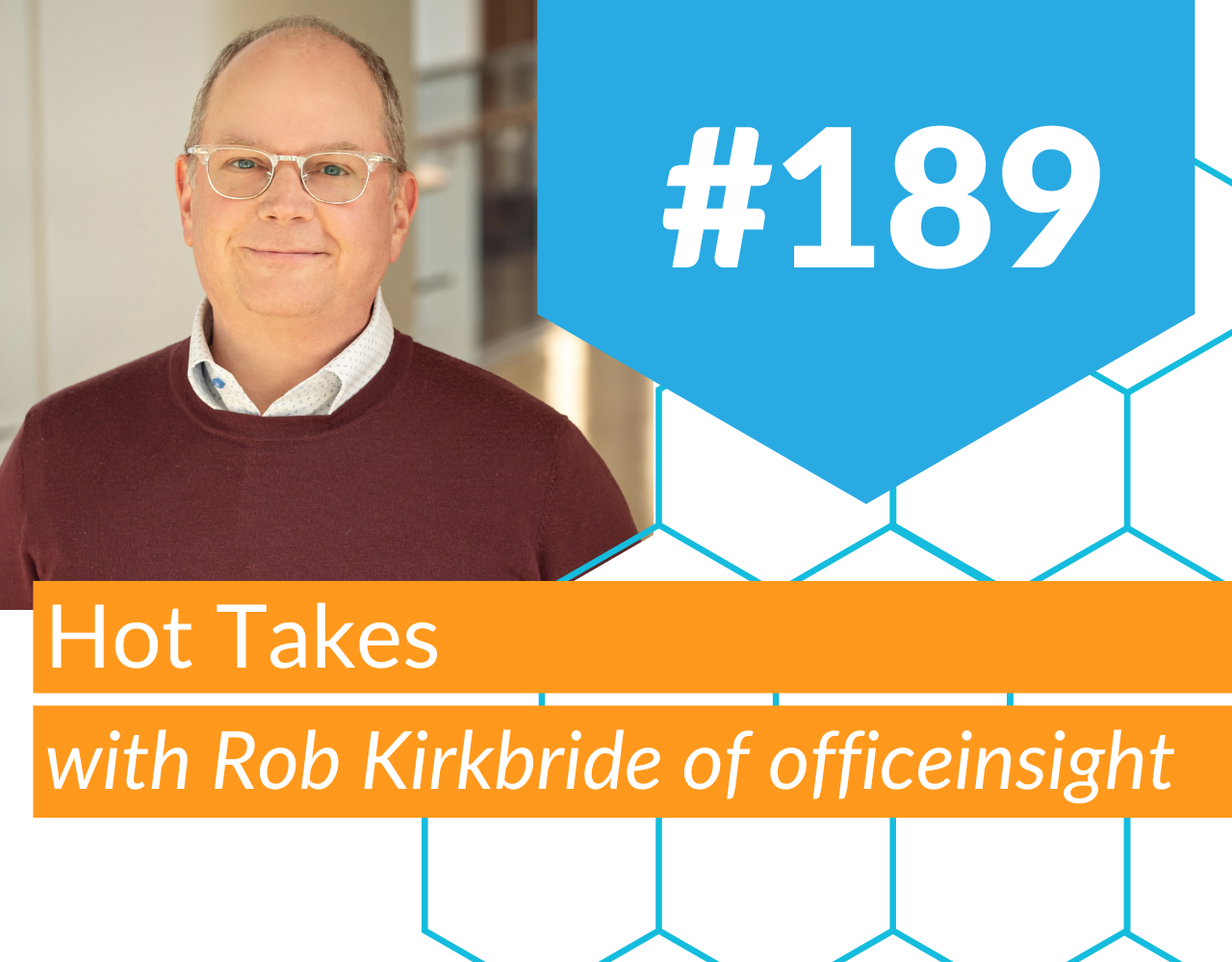
Hot Takes with Rob Kirkbride of officeinsight
SPEAKERS
Sid Meadows, Rob Kirkbride
Have you ever wanted to pick the brains of an industry leader, an influencer, or someone who's shaping the future of our industry? Or maybe someone who's been in the trenches for a while and has real thoughts and opinions? Well, today we're going to do just that.
Sponsor:We'd like to thank our presenting sponsors, Avanto, services and software that streamline how you operate and the collaborative network, a platform where leaders in the contract interiors industry unite.
The Collaborative Network Ad:If you're leading sales, marketing, or growth in the contract interiors industry, you already know this work can feel isolating. So that's why we built the Collaborative Network. It's a peer-driven community for manufacturers and leaders who want real conversations, real accountability, and practical insight, not generic advice. No posturing, no sales pitches, just experienced people working through real challenges together. If you're ready to grow smarter, check us out at www.thecollaborative.network.
What Rob Is Building Next
Sid:Welcome back or welcome to the Trend Report, your inside look at the people, products, and ideas shaping the future of workplace design. I'm your host, Sid Meadows, and I'm glad that you've tuned in for another hot takes episode where I'm joined by a co-host, We Spin the Wheel of Topics, and share our unscripted hot takes in real time. So please join me in welcoming back to the show Rob Kirkbride with Office Insights.
Rob:I didn't like a subject that I know nothing about. Okay, you know.
Sid:No, no, I haven't a promise that all the questions are related to the industry. I did update the wheel last night with about 10 new questions. I took off some of the questions that have been asked a couple of times before because I want it to be fresh and new. So hopefully we'll get to some of those new questions. But Rob, before we jump into that, if I'm not mistaken, I think this is your third time on the show. So welcome back. And uh tell us just briefly, what have you been up to? What do you got going on at Office Insights?
Rob:Oh man, so much. Sid. We've got tons of stuff happening relating to Chicago Design Week, including our, you know, we do a big preview issue on the Friday before, which we're working hard on. But probably the most exciting news is our new Learning Insight magazine, uh, which is our look at educational design. And we're working with two real rock stars in the industry, uh, Dr. Lennie Scott Webber and Jolene Levin. We're gonna drive the editorial content for that. So we're super excited. That's July 22nd. You'll you'll be able to see the first issue of that.
Sid:Okay. We will drop a link in the show notes for people to go and subscribe. It's free to subscribe, correct?
Rob:It is.
Sid:Yeah, we'll drop the links for people to subscribe to that. It's a very, very important topic. Those of you that listen on a regular basis will know that just a couple of weeks ago, Dr. Lenny Scott Weber was here on the podcast with Libby from Marco talking about the future of learning environments. So great tie-in uh to what you're doing, Rob, and it's a really important conversation to be having about learning environments and honestly the role that I believe manufacturers and dealers, product manufacturers and dealers can play in a really important market segment, the K 12 for sure.
Rob:Yeah. There's a lot of really interesting things happening in that market. Um, I think it's it's one that is very easy for our industry to get into. I mean, relatively speaking. And another part of our industry where great companies can make a big impact on things like learning, uh, which is what you know, what's more important than that.
Should Dealers Specialize By Vertical
Sid:So true. Well, I know you might be a little apprehensive, but are you ready to spin the wheel? I'm ready. Okay, let's go. Our goal is to get to four questions, and uh we're gonna start straight away and see what happens. First question coming up, Rob. I hope we're gonna get a good one, maybe get one of the new ones. Rob, what do you think? All right, today's question should reps and dealers be more specialized by vertical market, or is that limiting long-term growth? So basically, should reps and dealers in our industry specialize into a vertical market?
Rob:No, uh I don't think they should specialize. I think it would be smart to have specialized groups under that dealership, perhaps, but no. Uh why would you limit yourself to one vertical market when there's others that are so closely adjacent that they could be involved in and and uh you know do well, potentially do well? And I think you know, if you're smart and you're good at say the office vertical, what would prevent you from getting involved in education or healthcare or hospitality? I I don't see why you would limit yourself. I mean, I understand the thinking, you know, be be an expert in one area. I don't know. Okay, if if my local car dealer just sold sedans, they they probably wouldn't get very far. So sell the SUV, sell the pickup truck, sell the fleet vehicle along with it.
Social Media Selling And AI Slop
Sid:That's a funny analogy coming from a guy who drives a mini. So and knows how to drive a mini for sure. I've been in the passenger seat a couple of times before. So okay. I'm gonna so I'm gonna kind of disagree with you because I think we're already doing this. We already have healthcare experts inside of dealerships. We already have architectural product specialists, whether it's a demantable wall or race flooring or lighting, acoustics, things like that. That's already kind of a specialty. However, I do believe, and something that you said, is I believe that we should all be a student of the industry. And the listeners have heard me say this over and over again, which means we should continue to learn not just about our products and our processes, but learn about the industry, learn what's happening in the industry and what's around the industry, because I think it informs, it helps make you a better expert. Because you need to be, meaning a seller, you need to be the expert, not on your products, but on our industry, so that you can be an amazing valuable resource to your customers and the A and D community about what we do, which is manufacture, distribute, and sell office furniture. But I do believe there is power in being specialized, maybe not total the expert, but specialized in one particular, because healthcare is different. And if you don't understand the terminology in healthcare, and you try to go sell into healthcare and you start like you don't know what a crash card is or how a crash card is used, if you don't know what an IV poll is and how the IV poll is used and why it needs to be on a recliner or what Trend Trendellenberg is, then you're not making yourself look very good. So I think even that that could apply for hospitality, K through 12, higher education. I mean, so I think there's benefit to specializing to being the expert in that category. I think as long as you stay informed about what happening what's happening in our industry. Yeah, but you don't have to, I mean, uh here's how I think of it. And it kind of relates to what I do as a reporter in this industry. You know, I don't have to be an expert in healthcare design, for example. But I need to know who is an expert in healthcare design so I can call them and say, hey, I'm hearing about this. What do you think about it? I don't have to be an expert in everything I cover, but I need to know the experts in everything I cover. So I think the same could be true for the dealer and rep world. Okay. I mean, connect yourself with people who are experts in those areas and and I I think it might work. Okay. Well, there's no right or wrong answer here. We're simply sharing opinions, right? So we're now gonna spin the wheel for question number two. So I think well, that was one of the first times I've actually had a disagreement with somebody. I was on the opposite side of the fence. So maybe you get a gold star. All right, so next question. What impact has social media had on how we sell?
Rob:Oh, don't get me sturdy on social media, shit. I I got rid of personally got rid of Facebook about three, four years ago. I got rid of Instagram last year. I I I just I think here's a hot take. I think social media is a cancer on our society, and I think we need to do less with social media, not more. I don't know what impact it has on selling, and that's the problem. It's like what what works and what doesn't. You know, the one social media that I've continued on is LinkedIn, and I'm almost ready to dump that too, because all I see are post after post of AI created content, and I frankly didn't connect with someone to have AI write their their LinkedIn post for them. I mean, if you can't be bothered to spend five minutes writing your own LinkedIn post, I I mean, I don't know what to even say about that. That being said, again, I think there's if if we could kind of turn social media from this self-aggrandizing platform to something that is about storytelling, like true storytelling, then it would have an impact. I mean, I see so many posts that are just just junk. And it it's really frustrating, and it's gotten worse on LinkedIn. Um, again, the one place I still am active, it's like, yep, I I don't know what people are doing or why they think that's maybe there's a algorithm or something that they're trying to match, but what impact has social media had on how we sell? Uh I think it has diluted it. I think it's filled our, you know, our already busy brains with thousands of posts that we can't possibly filter. So, you know, if you're spending a lot of time and effort on social media selling, you know, good luck. But I I don't know how your brain works, but I can't process thousands of messages a day that were mainly written by AI. And that certainly doesn't drive any of my buying decisions.
Sid:Yeah, I totally get it. I totally get it. Certainly, I think social media has had a huge impact on our society as a whole. I mean, you know, my uh my daughter can't not look at it. She's a Gen Z. Yeah, she's a Gen Z. My son, also a Gen Z, has removed most of them. He's a YouTube guy. So, like he doesn't he has Instagram, but he never there. And he took TikTok off because he said it was a rabbit hole of misinformation, blah, blah, blah, right? So for me, I mean, I'm an active consumer, but I limit my consumption. But I'm also an active content creator. I create a lot of content, predominantly for LinkedIn. I do sometimes float that over to Instagram. But episode 187, I talk a little bit about, uh, which is two episodes ago, I talk a little bit about social media and how to put your brand out there a little bit more and some steps of things that you could do. I do believe it can do good. I believe you can do good with it, right? I'm not a fan of the AI slop. I used AI in my content creation with helped me with um idea generation, you know, looking at something that I wrote and making it better, catching my spelling and my punctuation mistakes and things like that. But there always has to be a human in the middle where AI is concerned. And I never am going to let an AI take my voice away. So my voice is always going to be in everything and anything that I write. My voice is in it because I am talking to it. It's asking me questions and I'm talking to it, right? And giving it my thoughts. But I do think it's had an impact on how we sell. And I think it's almost, I'm gonna say, a bad impact. Because all we do is post products. We don't tell stories to your point. That was one of my points in 187 is just post the product, post the product, post, and they feel good, and they're clapping and raising their hand. We did the product, my manufacturer's gonna be proud of me. I posted the product, and you know, the executives in manufacturing are looking at how many products did you post this year, what the we this week, and how much leads do we get out of a well, no leads out of it, because you people become tone-deaf when your product is not engaging and not as and not boring. And so I think it's had an impact that way because I think you're you're making your audience go tone-deaf to you and your brand and your content because you're posting the same thing over and over again. Or every post is about trying to get a sale. Every post is op into this, do this, buy this, get 10% off, drop this comment, blah, blah, blah. And that that to me, that's the wrong way to do it. And that's the wrong way to do it. So I wish more people would lean into authentic, real, human content. To your point, yeah, I think it would be better. You would enjoy LinkedIn more, and we could have a whole conversation about LinkedIn, their algorithm, stupidity, and the stuff that they're doing. And oh my gosh, I just I can't get I get so bored with it because there's like this post was three weeks ago, this post was four weeks ago. Like, I want to see content of the people that I follow, but here's a problem. This is also in 1870 2.1 billion consumers are on LinkedIn. An average of 1% of them actually create content. And I think in our industry, it's less than that. So that's why you're getting fed all this other stuff that you don't want to see that's AI related because AI raised the floor. It's super easy, right? So it's had an impact for sure. And we as an industry, we as consumers and create content creators, you as a journalist, we could change that by putting out real content.
Rob:Yeah, and here's what I've seen change. This is really interesting in being in this industry from the start of social media to now, right? So when social media started, marketing and public relations folks really embraced that. And they kind of purposefully moved away from industry magazines. You know, they purposefully kind of said we're gonna put more effort into the social media side, which I understood at the time. Interestingly, they're coming back now because they're not seeing the real benefit that they thought they they would. You know, part of it was the the narrative was we're gonna control the narrative. You know, we don't need the media to control our narrative anymore. We have an outlet to do it on our own. And what I think they're finding is it's such a vast audience, and it's so hard to find that niche audience, especially for our industry, right, that they're like, we need to go come back to the magazines because they have the audience that's captive and wants to read about things happening in the industry. So it's kind of come full circle.
Sid:Uh that's actually nice to hear, especially from a journalistic perspective. I mean, your advertisers are coming back, which is really good for you, right? But there's this concept of owned land versus rented land. Social media is rented land. Podcasting newsletters where they give you your email address, that's owned land. And there's a big difference there because you cannot curate the algorithm to only target this ideal customer persona. You can't do that, right? It's just if you can try to target and hashtags don't work anymore. So you can do some targeting, but it's really not going to work as effectively as a very specific niche magazine like yours is targeting the ideal customer of the brands. So, I mean, and then you know, when you get the email address, you own that. That's about building a community, you own that and how you protect that, how you talk. And I think we won't go into this, but you could do a lot better job at email marketing too. So, anyway, we kind of agree on that one.
Sponsor:We'd like to thank our supporting silver sponsors, KISP, who helps furniture brands visualize and sell products before specification. Navitas Credit Corp. Navitas makes great workspaces affordable, turning furniture projects into easy monthly payments. Web Configurator Services, the leader in AI-powered online product configuration and quoting.
WCS Ad:Let's be honest, selling contract furniture has gotten complicated. Between product options, pricing rules, and back and forth emails, quoting can slow everything down. And when quoting slows down, deals slow down. That's where WCS comes in. They offer web-based CPQ configurators that combine visualization, real pricing logic, and instant quote generation so your team, customers, and sales reps can configure correctly and quote immediately. If you're a manufacturer looking to simplify how you sell, check out webconfigurator.net and request a free demo.
Dealer Loyalty And Manufacturer Mistrust
Sid:Let's uh let's spin the wheel again, Rob. This is question number three. Let's see what we get. How often do manufacturers say they want dealer loyalty while simultaneously creating dealer mistrust?
Rob:How often do manufacturers say they want dealers? Um I tell me more about this question because I I want to I I I think I know where you're going, but well, I have no direction.
Sid:Like part of this was to create spicy questions that like really made us think about and maybe have some more debates on them. So I'll I'll go first, Rob, and then you can think about your answer. I think that manufacturers say they want dealer loyalty all the time. We want to improve our distribution network. We want to improve our distribution strategy, and they target a certain type of dealer, whether it's an unaligned or aligned dealer, and you know, they're looking at different sizes, maybe different footprints of how big are they? Are they just one market or are they multi-market, right? But dealer loyalty, I mean, is really important to a manufacturer. They need that. They want the dealer coming back over and over and over again. Where they create mistrust, in my opinion, is by not doing the right thing. Like when something goes wrong, they tell the dealer, ah, sorry, that's just part of the process. We'll send you the part, but everything else is on you, or you're two hours and 35 minutes outside of the window to file a freight claim. So that's on you. Here's the link to the website. That creates mistrust, right? And I think that creates a friction point. And I understand the economics. I get it. I've been on both sides, the manufacturing side and on the dealer side. So I understand the economics of this. But if you want dealer loyalty, you have to be a better partner. They are your customer. And so I would say to the brand, think about this for a minute. How do you get treated when you're the customer? How do your suppliers treat you? And how do you respond? And what do you do? Because the dealer is the front line of our industry. They are the feet on the street every day of the week. And if you really want loyalty with them, you got to stop creating the mistrust and the dissent with them and treat them like a partner. That's my opinion.
Rob:Yeah, I think yeah, I see where you're going. And I I think you're absolutely right. I'm 100% in agreement with you on that. One thing I hear from dealers that they get frustrated with, especially when they're aligned, is you know, they'll have a project where their aligned manufacturer will not have the right product for that project, period. At that point, the manufacturer Needs to back off and not say, you need to buy our product for that. They need to have a good enough relationship with that dealer that the dealer can say to them, look, we love your product, but in this case, it's not the best fit for our customer. We're going to go with somebody else, and you've got to accept that. And, you know, there's so much pressure on the aligned dealer to sell the aligned product, which I get. You know, they're invested in each other in that situation. I think you're you're spot on, Rob. You're spot on. And you hear that a lot where, you know, it's it should be about serving the customer. You know, what's the best product for the customer? Yes. That's it right there. What's the best solution? Yeah. You know, don't get me started on SPFs.
Sid:Yeah.
Rob:That's it.
What Designers Miss About Furniture
Sid:There's actually a question out here about SPIFS, and hopefully we won't get to it. But anyways, we got one more question to get to, so let's get to it real quick. All right. Last question. This has been really good. You've done a great job, Rob. All right. So our last question is. Oh, what's one thing you wish designers better understood about furniture?
Rob:I think this is a really good question and a great one to end with. Designers need to put in the work to understand what's available to them. I often hear from designers, you know, they don't, you know, this manufacturer doesn't have what I need, or they don't have what I need. They probably do. But again, drinking from the fire hose that designers have to drink from, you know, they probably just don't know about it. Our industry, we're caught in this like vicious circle where manufacturers really want to get in front of designers and explain their products. Designers are too busy to learn about that. You know, even the lunch and learn kind of stuff is such a firewall now to get in front of them. Where are designers learning about products, right? I mean, that's where we need to think about where are they actually learning about products? And I think the problem we have, and it kind of goes to these some of these other questions we've talked about. I mean, they're they're ingesting all this, you know, collecting all this information, and it's so much that it becomes you don't know anything because everything's coming at you. And I wish it were a better way for our industry to tell the story of the product that we have. And I think selfishly, I think that's through through magazines like ours. At least I hope if if we're doing our job, that's what it should be. Um, to answer that question, I think designers need to take the time to learn about products. I think it's a cop-out in some ways to say, I'm so busy I can't do it. Yep. It's like that's your job. Your job is to understand what products are available to you and specify the best one for your customer.
Sid:And there are more products available to you than what you realize because you probably only focus on the big six, and there's not that you need to know all 3,000, but there's 3,000 plus manufacturers in our industry who have a lot of really cool and unique products that are going to fit what your need is. But, you know, from a perspective, you know, your magazine, Office Insights, talks to them. I mean, your target demographic is the A and D community. And I know the articles are very heavily towards design-related topics, right? And it's a great place for brands to try to get their products in front of them. But to your point, they have to be open. The design community needs to be open. This is something I have talked about for a couple of years now. I had uh Kyrstal Lucero come on the show at the beginning of this season and talk about how we do a better job working with the A and D. How do we break that wall, right? Because there is a wall there. Whether people want to admit it or not, there is a barrier that is preventing, specifically, in my opinion, furniture brands from getting in front of this really, really important influencer within our industry. But what I wish that the designers better understood about furniture is we really are and can be a valuable strategic partner in helping to service your customer. You treat us like we are the redheaded stepchild. That's how we feel treated, right? Because we are the last in the project, the last in. It's always from the design community and likely driven by the customer. There's always some enormous bidding process that honestly costs companies more money to do in some cases than you actually get in profitability out of the project. So there's definitely improvements in the bidding process that need to happen here. But we're also the first budget that's cut. We're the last in, and our budget's cut first. Bring us in sooner because we are the experts in what we do. We can make product recommendations to you. We can talk to you and help you design a furniture layout that actually is going to accomplish what your customer wants or needs. So treat us more as a strategic partner because that's what we really are. That's what we can be if you will open the door for us to be part of that process. So I wish they understood that part better.
Rob:Yeah, I 100% agree with that too.
Closing Thoughts And Where To Connect
Sid:Well, Rob, that was a great question. How did you enjoy uh your hot takes episode?
Rob:I think it was fun. I could if you want hot takes from me, I'm I'm always your guy for I I'm too old to shy away from being controversial. Me too. I'm raising my hand to that one for sure. In my old life, I used to be a daily business reporter. And one of the one of the companies I covered was was Amway here in Grand Rapids. And Rich Devoss, who was one of the founders of Amway, was always the greatest interview because he was too old and rich to care about what he said. You know, nobody was gonna challenge a billionaire. That's right. And I've kind of taken a page from that. I'm like, I'm too old to if somebody somebody's feathers get ruffled by what uh what I say, it's you know, too bad.
Sid:Hey, it is what it is. Rob, thank you so much for being here today. I thoroughly enjoy this. I'm gonna drop all your contact contact information down in the show notes. Not that people need a way to get in touch with you, but I think if you don't know Rob Kirkbride, you're definitely missing out. Been a longtime voice in our industry. And so, Rob, thank you for being here today.
Sponsor:We'd like to thank our community bronze sponsors, Catalyst Consulting Group,RESEAT, and Staffing Plus.
Outro:
Thank you for listening in to the hot takes. I hope you enjoyed this fun banter with me and Rob. And uh we look forward to seeing you right back here in the next episode. Take care, everyone.