The Trend Report Podcast
What is Real Sustainability? with Jon Strassner
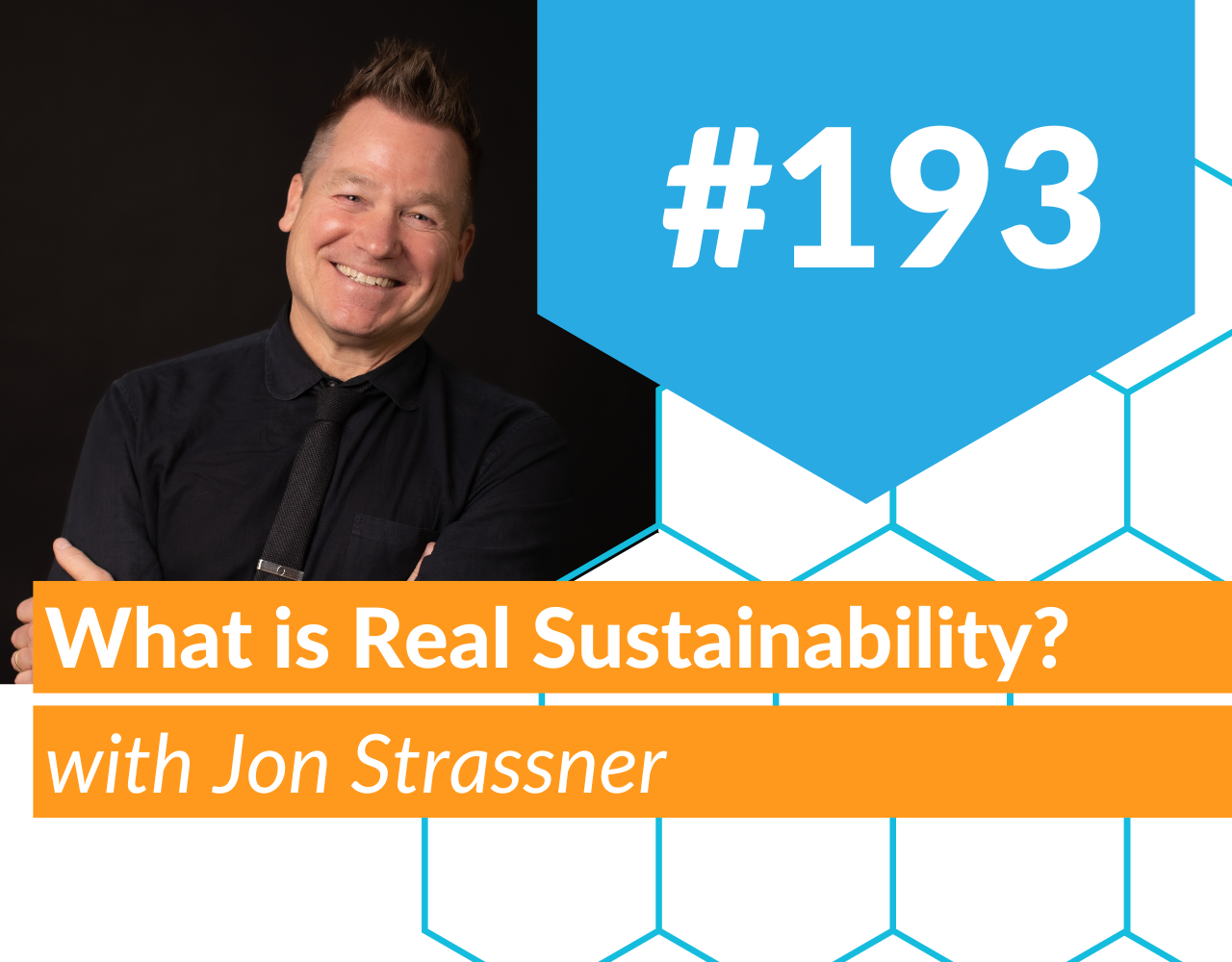
SPEAKERS
Sid Meadows, Jon Strassner
Over the last several years, I've had countless conversations with manufacturers, dealers, designers, and independent reps about sustainability. And one thing I've noticed is that most people genuinely want to do the right thing, but we don't always agree on what that means. The reality is that sustainability has become one of the most talked about topics in our industry. And yet, for many people, it is also one of the most misunderstood. So today, we're asking a simple question. If sustainability is bigger than certifications and checkboxes, what does real sustainability actually look like?
Sponsor:We'd like to thank our presenting sponsors, Avanto, services and software that streamline how you operate and the collaborative network, a platform where leaders in the contract interiors industry unite.
The Collaborative Network Ad:If you're leading sales, marketing, or growth in the contract interiors industry, you already know this work can feel isolating. So that's why we built the Collaborative Network. It's a peer-driven community for manufacturers and leaders who want real conversations, real accountability, and practical insight, not generic advice. No posturing, no sales pitches, just experienced people working through real challenges together. If you're ready to grow smarter, check us out at thecollaborative.network.
Sid:Welcome back, or welcome to the Trend Report, your inside look at the people, products, and ideas shaping the future of workplace design. I'm your host, Sid Meadows, and today we're tackling this topic that touches every part of our industry, sustainability. Joining me is someone I've known and respected for quite some time. And when people ask me for recommendations on sustainability experts, he's at the top of my list of people that I mention. He's a consultant, educator, writer, speaker, and host of the podcast Once Upon a Planet. Please join me in welcoming John Strassner to the show today.
World Cup Banter And Stadium Branding
Sid:Hey John, how are you?
Jon:Good, Sid. I I thought today's episode we were going to be talking about World Cup soccer. I oh we can do that.
Sid:We could do that. I love me some World Cup soccer. Oh my goodness. We're deep in the heart of it here, man. Yeah, we are. All over the U.S. we're deep in it. Like there's so many uh places that are doing hosting the World Cup. But did you notice something about the World Cup?
Jon:Well, I've noticed a lot about it, but I think what I'm really getting drawn into is the way that these countries, their fan base is coming into an American city and just like taking over. And our cities are opening their arms and loving it. You know, the stories. I was in Boston last Friday, and the Scottish fans, yeah, who they call they referred to them as the Tartan Army, they were all just kind of getting into Boston because the game was on Saturday against Haiti. And the first couple of people I saw, first couple of guys I saw wearing Scottish uh game jerseys and kilts, I was like, well, what's going on here? Like, why is this guy wearing a kilt? And then I then it slowly dawned on me. I was like, okay, I see what's happening here.
Sid:And then after that, everywhere I looked, well, and you know I've noticed that couple of bars there, they uh ran out of beer and whiskey because the Scots had been drinking chocolate. But the other thing, because we got to go to the game in Dallas to see uh Japan and the Netherlands play, and uh it was amazing. Yeah, got to see the orange bus. If you know anything about football, you understand the Netherlands and the Orange Bus, so we got to see the orange bus. But um, every branding element of the stadium has been covered up. So ATT Stadium in DFW is just now for the World Cup referred to as the Dallas Stadium. And it's all changed. Google has changed it. The map on Apple has actually changed the name from ATT Stadium to Dallas Stadium, and they highlight where the stadium is on the map. You actually see a 3D of it, and like, well man, this is serious business. Yeah, everything covered up.
Jon:Everything, yeah. I mean, Gillette Stadium is now Boston Stadium, so it's flappy. It's hard to get used to. I know, I get it. So we could probably sit here and ramble about this nonsense. Well, we do, usually. Yeah, we do. We talk about a lot of nonsense. So full disclosure, John's a good friend.
Sid:We talk a lot at times a lot. And uh, you know, this topic, he's again, like I said, the first person that I think about.
John’s Work And Storytelling Approach
Sid:But before we dive into all things sustainability, John, let's talk a little bit about you. So, you know, I met you when you were at ASID years ago, and then we tried to do some work together, I think. But tell us a little bit about what it is you do today.
Jon:I do. I mean, you touched on it a little bit there in the quick intro. I, you know, I just started a brand. I've been podcasting for a while now, originally uh with Break Some Dishes with my podcast partner, Verta Alexander. We looked for storylines outside the industry, we looked for innovators, we looked for rebels, we looked for outlaws, people that were doing whatever the situation called on them to do, and they became sort of climate heroes by accident. And we looked for those people and we told their stories and we tried to bring them back to the industry for inspiration. We did that for like six years, and it was wonderful, and then recently put that on the shelf and decided to go in different directions, and I decided to start a new podcast called Once Upon the Planet. And the the premise to my new podcast is you know, we don't have to dump data on people, we don't have to talk like scientists. Really, data informs, but storytelling transforms. And so, you know, we're trying to create a movement when it comes to climate and the planet. And so scaring people and forcing them out of the room doesn't create a movement, it you know, it separates and divides. And so the point of this new podcast is to get really normal people to dig into these issues a little bit and kick them around. And so that's what we've been doing, which is a lot of fun. On top of that, I I do um a little bit of writing. Uh, I have a substack called Why Am I So Hot? And that gives me an outlet to he's not talking about himself, by the way.
Sid:He's not talking about himself, he's talking about the planet.
Jon:Yeah, man, why is the planet making me so hot? I just didn't have room in the title for that.
Sid:That's great. I love the title, but when I first saw it come up on my subtitle, I'm like, what the heck, John? But then it took me a minute to get it. So I love it.
Jon:Yeah. I should, you know, I meant to say, why is the planet making me so hot? But I I just did a really shorthand version. And then I I work with manufacturers in our industry to really understand their impact on planet health and incorporate some operational efficiencies and optimizations that can reduce their footprint, lessen their impact. You know, every company wants to do better. You know, you're not always going to be perfect right out of the gates, but companies do have opportunities to improve and be a little bit better today than they were yesterday. So I help I help companies do that with my consulting work.
Sid:Well, I hope we're going to dive into a little bit of that today. But before we do, John, I want to go way back to your humble beginnings in West Virginia. And because I heard you tell the story of your beginnings on your podcast when Doug Shapiro stole the mic from you and started interviewing you on your show. So, but let's go back and uh tell me, uh, I really like to learn how people got in the industry. So, how did you get into this ecosystem of design and furniture?
Jon:Well, I mean, yeah, I did, I did grow up in in West Virginia and Ohio, and my time in West Virginia was really in this very uh Appalachian, very rural part of West Virginia. Uh, we lived in a little town called Center Point, and it was everything that you would expect. You know, my mother was single, raising two kids. She was trying to go back to school to get a degree so she could make money to support us. And we were living with my grandmother at the time. I had an uncle, Uncle Arby, who was sort of the patriarch of the family, and he took us under his wing. And and so I, you know, I have uh an encyclopedia of West Virginia stories that uh a card table and a case of beer, and you know, we can go on and on. But uh I really got into this industry kind of accidentally back in the late 90s. I was working for Rubbermaid. I thought I had a career in consumer products, but I was at a trade show in Las Vegas and I met Bob King, who was just starting Human Scale, but under a different name. He was calling it Safview Computer Products, and uh he was selling glare screens for those big hideous CRT monitors. And and so I got to know him a little bit at this trade show, and then after the trade show, he said, Hey, come into New York City and meet with me. And and I did that, and I really just fell in love with Bob King. I fell in love with his vision, his spirit. And, you know, I came home after spending some time with him, and I told my wife, I said, I think I'm gonna go to work for this guy. And she was like, You're gonna leave Rubbermaid, like where you have all these benefits and the company car and all these great things, and it's a big company, and nothing bad will ever happen to it. And you're gonna work for this guy that's just starting out something crazy. And I said, you know what? I don't know where it's gonna go, but I think it's gonna be a pretty interesting ride. And so that's kind of got me into it. So I we started working for Bob and uh they started the division Neutral by Design, which was a division of his company that was created to call on office furniture dealerships, and that was back in like '96, '97. Wow. And you know, I covered like the Northeast for uh for neutral by design, and that was back pre-internet. So I remember like driving to New Jersey, I lived in Connecticut, driving to New Jersey, checking into like a days in, going up to the room, and then opening up the yellow pages and looking up office furniture dealerships. And then I would call them and like make appointments for the next couple of days. But like that was how we did it. And like we would go in and and meet with these office furniture dealerships, and we had a keyboard arm that we were selling, and we would be like, Hey, we want to talk about your keyboard arms. And they were they were their reaction was very was really confused because they never thought about their keyboard arms. And we said, No, we want to talk about the keyboard arms that go on the desks, and they were all like, Well, we sell the keyboard arms, but we kind of give them away with the desks, you know, like we don't pay much attention to them. And we said, Well, we think this is something you should start paying attention to, and that kind of really is how I got started in this business.
Sid:So the original Road Warrior, basically, driving around everywhere. So when they came into uh popularity, did you have a pager? No. You didn't.
Jon:No, I never had a pager, and I always wanted one, but I never worked for a company that that were that was given amount. I always had the one 800 voice mail number, and you had a mailbox, and you'd have to go to a rest area and find like that bank of payphones. And like sometimes they were payphones that were at door window heights. You could just pull up in your car and roll your window down, and you call that 800 number with your little day timer, and you would just check all your voice messages and you'd write them all down, and you'd sit there for like an hour taking all your messages and then returning phone calls. Yes, you had to make sure. Leaving other people voice messages, and yeah.
Sid:You had to make sure you had a uh stash of quarters in your car because it cost a quarter to make a phone call. And I have a visual remember of that. That um on my my second job out of college, I was selling healthcare, millcare, which is a product by Herman Miller, and uh my territory was North Alabama, and so I would follow the blue signs and go through North Alabama, and I figured out where the payphones were that had the really long cords on the phone so that you could bring the phone inside the car, roll the window up so you didn't have all the street noise, and I would sit there for about an hour checking voicemails, returning. I had to always make sure I had quarters because they didn't take uh credit cards back then and always planned my route to where I was gonna stop and check my voice mails.
Jon:Or you knew where the hotel was back in the lobby, had the big bank of payphones, and you know, there'd be like seven or eight salespeople there standing up there checking in the good old days. What not? Yeah, the good old days.
Sid:So let's go back to the conversation though, because I think it's fun to travel down memory
From LEED To Workplace Health
Sid:lane. At what point in time did you realize that sustainability was something that you really wanted to lean into and become an expert in? Because I classify you as an expert in this category.
Jon:Well, I would say back it was when I was with human scale, the uh, you know, the particular point in time well, human scale was starting to get Bob King was very proactive with World Wildlife Foundation, and you know, he was doing a lot in terms of animal conservation, you know. And so it was kind of on my radar through that. But it wasn't until I was working on a project with U.S. Green Building Council back in 2000, uh sometime in the early 2000s. Um, I want to say maybe like 2007 or something like that. I was working on a project with Linda Sorrento at U.S. Green Building Council, and they were putting in a new office in Washington, D.C. And I started working with them. They were looking for product, uh, they were looking for uh companies that wanted to donate product uh to the office. And so Human Scale was involved in some conversations and and I got to looking at LEED, and I realized that LEED was really operational at that time. It was all about uh energy management and and you know the operations of a building. And I was curious why there was no attention paid to the building inhabitants, like the people within these buildings. Why are we not worried about our human resources or paying any attention to them? At the time, human scale was all about human factors and and workplace comfort and health and safety. And I was like, why are we not addressing any of this in what we call a healthy building? And so I actually worked with our corporate ergonomist at the time, and we wrote a credit, um, and we wrote the the ergonomics credit, which at the time was a was called uh um an innovations credit because that's what you could do. You could write an innovations credit if it wasn't something that was already in the standard there. And so we wrote the innovations credit. Um, US Green Building Council used it uh in their lead documentation for that new office. And that was like the start of me really understanding lead and then understanding our industry's impact and and what the industry wants to do about climate change. So that really got me started. And then as Human Scale began to really push the envelope, I had the opportunity to sort of be um in charge of workplace strategy. And my job really was to take the work that Jane Abernathy was doing, who was the chief sustainability officer, to take the work that she was doing and distill it into modules and nuggets that the industry could understand and appreciate.
Sid:Right.
Jon:And so I started doing that. And, you know, initially people at HumanScale were concerned because I wasn't an environmental scientist, I wasn't an environmental engineer. They were concerned that, you know, John's talking about sustainability, but you know, does John have the pedigree to talk about sustainability? And my point was anybody should be able to talk about sustainability as long as you're not spreading lies. I mean, as long as the information that you're sharing is good, credible, accurate information, anybody should be able to talk about it, you know? I agree with that. So that was my yeah, that was sort of my first that's when I kind of crossed the threshold and understood that well, maybe this movement is having a problem leading too heavily into subject matter experts and not encouraging the everyday person to get behind the movement.
Sid:Well, everyday people can become subject matter experts, let's be clear. You do that by learning, right? By researching, by reading, you can become a subject matter expert. But let's I want to, John, what what are we really talking
Planet Health And Shared Language
Sid:about here? Because sustainability is bigger than most people realize. And it's one of those words that people use all the time, but not everybody defines it the same way. So when you hear the word sustainability, what does it mean to you?
Jon:I've never liked that word, uh sustainability. I you know, I I don't think it's a compliment, right? If you're sustaining something, uh you know, if somebody were to say to me, Hey, John, how's your family? And my response was, hey, they're doing great. I mean, I'm sustaining them all, right? Or they're sustaining themselves. I that's not really a compliment. So you know, but but I get it. We started using it because we were saying, you know, we're trying to sustain the ecosystems, we're trying to sustain climate, things like that. But it's not the right word. But when I would use what words would you use? It listen, it's a big topic. It is a huge topic. You know, a lot of people say we're stuck with sustainability now because we've been using it for so long. It wouldn't be right to change it. If you changed it, a lot of people wouldn't know what you were talking about because I don't believe that. You know, I think sustainability is the wrong word. I I don't think it depicts what we're trying to do. I think what we're really talking about is planet health. And so that's what I like to lean into. Sure. So rather than say, hey, let's talk about or let's talk to an expert in sustainability, I would like to say, let's talk to an expert in planet health. And I think our industry struggles because we've never established a common language around planet health. And so when I say, yeah, when I say sustainability to you, you may think operational sustainability. You may be you may be thinking, how can I put solar panels on the roof of my factory so that I'm not using so much you know energy that's generated from a coal-fired power plant or something like that. But if you say sustainability to me, I may think about social health and equity because that's also a part of sustainability. I may be thinking about fence line communities, you know, how I grew up. And so you and I both have different interpretations of sustainability. And so the lack of that common language has really debilitated the movement, especially within our industry.
Sid:So no common language means there's no common definition to the word, right? Exactly. So that's why I think people get confused about this
Certifications Help But Can Mislead
Sid:topic. Because the next question would be, because it kind of feeds right into this is why do so many people, brands and designers and others, immediately think sustainability is associated with certifications?
Jon:That's a really good question, Sid. And it's a subject that I'll you know we've been talking about for a long time. But listen, here's what I tell people about certifications. You know, when it's tax time, right, and I get my taxes and stuff organized, do I take it to a certified public accountant? Or maybe I can save money and take it to a certifiable public accountant, right? So the great thing about a certification is if you understand the standard upon which that certification is based, right? You get a better understanding of what that manufacturer has done to that product or for that product. I think certifications, I think, listen, I think they're a good thing. I think they're a good thing. I just I don't think that they're the only thing. And that's what I think we have to keep in mind. You know, a certification is important for a building because like there's so many things that a building owner has done in the building and development of a complex or a building. It's like, you know, that building owner can't just tell a prospective tenant, hey, yeah, this is uh it's a really energy efficient building and good windows and uh strong floors, and you know, we port it with a lot of good concrete. I mean, that just doesn't work.
Sid:Right.
Jon:But if the building owner can say, hey, this building is lead, platinum, then the tenant can look at that standard and understand the work that went into that building. So it does make the building more marketable, it makes it uh easier to understand the quality of what you're moving into. But I think when it comes to product, certifications are tough because they can be expensive and uh time consuming, right? And there's a lot of small companies out there, small manufacturers that are doing a lot of really good things, yes, and they just don't have the certification work yet. Yes. So, you know, the label or the certification, it's I mean, I guess it's kind of an easy button, but you know who put it in perspective for me not too long ago? Tell me. I had Ren Detorney from Cradle to Cradle Certifications on my podcast uh a couple of weeks ago. And Ren said to me, She said, Listen, certifications are great, they're very helpful, but If you think you can use them as an easy button, you're probably gonna get replaced by AI, because that's what AI can do. And I think that what I would love to see is an industry that can take, and I know this, I know that this can sound like I'm in my ivory tower preaching down on everybody, and I don't mean for it to sound that way, but you know, rather than leaning too hard on labels and certifications, maybe we can just tap the brakes a little bit and understand what a manufacturer is doing, you know. So you may be evaluating a product from a manufacturer, and it that product doesn't have a declare label, or that product is not level certified, but that manufacturer may be really, really active in their community, right? They may only use local sources, so they may be supporting a lot of local economies within a hundred mile radius of their factory, and they may have solar panels that generate 70% of the power that they use, and they may have a water conservation program that's really top of the line, and they may have all of these programs that they're involved in, but they haven't collected, curated, certified, verified. They just haven't, they just haven't done it. But if we can take the time to understand the partners that we're working with, to me, that's that's almost more valuable than a label or a certification.
Sid:But I think you just hit the nail on the head. So there's a lot of confusion around this topic because there is no standard established for sustainability. There's no common language, there's no true definition, and there's no real standard like we have for the quality of products. Like we have testing, and then that's a BIFMA is a standard for that. And I know they're working on sustainability, but so are 10 other people. There's no industry standard, which then creates confusion. And in order to do what you just said, which is take time to learn, it means that the specifying community, the dealer community, the rep community have to lean in to understand what the manufacturer is doing and then interpret that and then share that out. And the design community just is not going to take the time. And when a customer says, we want a sustainable project, and I'm simplifying it, then the design firm, and this I think is one of the more inherent problems, opens up their spec document and they get to the sustainability section and they see all these checkboxes and they check Bifma level three certification. All products must meet this. You've just eliminated 80 to 90 percent of the brands that can compete on that project because you've checked a box you don't understand. And when you ask them to explain level three, they can't. I can barely tell you what level three is, right? Shame on me for not fully understanding it. But, you know, that I think is one of the inherent problems, taking the time to understand what the what the manufacturer is doing, what the dealer is doing for that matter. And then checking a box that says we have to have a certain certification that may be out of reach price point-wise, because it's not, I mean, it's so complicated to get all of it, right?
Jon:Yeah. Uh listen, I'm a huge advocate of the ANSI Bifma level standard. I think it's I think it's a great standard. Well, here's what I love about level. Let me tell you, so we're at the 20, we're we're now using level, the E3 2024 standard. And that doesn't go level one, level two, level three anymore. That goes, there's tier one, there's two, tier, there's tier two, there's tier three, and there's tier four. That's the new level. And what makes the new level so cool is every tier is based upon a particular milestone in product certification. So before it was just level one is, you know, 30 points, level two is more than 30 points, level three is more than more points than you got in level two, right? So it was all points-based. And so a manufacturer could chase points and not necessarily accomplish very much. So the new level is is awesome. And what I like about it is that you can decide not to spend the money to get the certification, but you can take that E3 standard and you can follow it. And you can you can say, this is a roadmap that we think we want to follow, and we're gonna go from point A to point B, and we think point B is a pretty cool spot. And when we get to point B, then we can kind of regroup and collect ourselves and decide if we want to continue on to the next point, right? Sure. And so it it allows for progression and growth and optimization without necessarily the financial obligation of a certification and everything that comes with that.
Sid:So I love that. And it gives the brand the opportunity to look inside their organization and follow a process, and it's going to improve, and it takes small improvements from all of us, right? To make the planet healthier.
Sponsor:We'd like to thank our supporting Silver sponsors, KISP, who helps furniture brands visualize and sell products before specification. Navitas Credit Corp. Navitas makes great workspaces affordable, turning furniture projects into easy monthly payments. Web Configurator Services, the leader in AI-powered online product configuration and quoting.
Sid:I'm a brand and I say we have we meet all of the requirements for BIFMA E3 level three or tier three. But then the designer says, but you don't have the certifications.
Jon:Yeah, I mean, that's the the double-edged sword of certification work, right? And and you know, another really good example of that is I think that there are designers that are asking for certifications that don't necessarily understand the cost of these certifications. And so, you know, you'll have a salesperson having lunch with a designer, and the designer says, Well, we really need to see ED, we want to see you know EPDs on this product, which is an environmental product declaration. It is a readable life cycle assessment. So first you do a life cycle assessment on the product, and then you take that life cycle assessment and you drop it into an environmental product declaration, which is more manageable and easier to read and comprehend. And so the challenge with that is an EPD could take you nine to 12 months and could cost your your company $25,000 to $30,000. And so that's by product, mind you. By product. That's by product. Well, they'll they'll typically, you know, they'll typically a lifecycle assessor will will typically do like a family.
Sid:So collection of products, yeah.
Jon:A collection, yeah, yeah. And so there's a little bit of dollar cost averaging that goes on when you when you do more than one product, which makes it more affordable or more reasonable to do more than one product at a time. But yeah, that's that's the challenge is is the financial implications of you know of getting that kind of a certification.
Sid:So how do we educate the design community on this? Like how do we educate them on understanding what the certifications are, what each one means, right? And then how do we educate them on the investment that is required by the brand in order to be able to check a box that says we have this certification? How do I mean and whose responsibility is it, by the way? Is it the furniture responsibility? Is it the design firm's responsibility? Like, how do we do it and who's responsible?
Jon:You know, I I know this is probably not a popular perspective, but I'm okay with that. Uh, you know, I think I think we have uh we should have a design association that steps into this ring and says, hey, listen, you know, we're gonna look we're we're looking at all these certifications, and you know, we're gonna give you guys some guidance on this. I think uh Mindful Materials has done an amazing job creating what they call the Common Materials Framework, which is a language that we can all fall back on and understand. You know, Mindful Materials has been out there for a while pushing the Common Materials Framework, and I love what it is. I wish that it was more, you know, throughout, I wish that we we found it more throughout our industry.
Sid:I had uh Mindful Materials on a a year or so ago. We'll drop that link down in the show notes with Jen. She does their their marketing and uh public relations writing and stuff. But I guarantee you, if I asked, if I surveyed 10 office furniture dealers and asked them to explain mindful materials, it would be the 80-20 rule. 80-20, only 20% would know about it, and the other 80% would say, What are you talking about? So that's another education opportunity, right? Like how do we educate the dealer community? We're talking about the specifier community, but how do we educate the dealer community about and the manufacturing community for that matter, about these programs? I love common framework, I love what mindful materials is doing, but we got to go both ways with it. We gotta make sure the design community understands, we gotta make sure the other side of the fence understands it.
Jon:I here's the problem. Here's the problem. What the and and don't get me wrong, I am a fanboy of mindful materials. Yep. And I believe wholeheartedly in what they're what they're doing. But mindful materials goes to Greenbuild and really get involved in the content at Green Build. Your contract furniture dealers that you talk uh you're talking about, they're not going to Greenbuild. And so the challenge is that this is the problem with this movement. The movement really talks to itself. And that's the problem you have when you're leaning on subject matter experts to create a movement. Subject matter experts are not necessarily leaders, they don't necessarily have the draw, the charisma, the voice to move people. And so when we go into an echo chamber like Greenbuild and we we talk, the missionaries all get together and they talk to the missionaries. That's great. Like the choir needs to get together and give itself a slap on the back every so often. But then, you know, those same people go to the Living Future conference, and then those same people go to the Well Conference, and it's the same choir. And and then you go to something like Neocon, which is where they should be.
Sid:I think they were there, but they were buried in the back of Material Bank, I believe, something or interior design are buried in the back somewhere.
Jon:Yeah, that's my point is that it should not be a separate conversation. It should be a part of our industry conversation. So you should never talk about interior design without also talking about green design and climate impact. You should never give a design award unless climate health is incorporated into that award. You shouldn't have, well, these are all of our awards, and hey, here's our sustainability award given to the firm that actually paid attention to sustainability. Every award, if you're not taking climate health into consideration, then you shouldn't be considered for any award, period, right? So we're not mainstreaming the conversation. We're not mainstreaming it, we're giving it its own room. And the problem is that the same people go into that room every time, right?
Sid:That is such an interesting perspective. And you know, I'm thinking as I'm listening to you talk about this, is there's so much ambiguity around this, there's so many questions around this, and honestly, I'm not sure there's a lot of real answers around
Responsibility Take Back And Progress
Sid:this. So I want to shift just a little bit, John, and let's talk about responsibility. And as an industry, we utilize a lot of the world's natural resources in the manufacturing and production of our product of our products, right? And I think in general, our manufacturers are doing a really good job at being green, if you will, and thinking about planet health and the power that they're using and the lighting and lights going off automatically, and automatic sensors for faucets and things of that. That's are all things that contribute to this. But I also think that as much as they're doing a good job with it, I hear this well, this product is made of a hundred percent recycled material or eighty percent recycled material. And then I hear, and I heard this at Clerkenwell almost every showroom that I went into 100% of this product can be recycled at the end of its life. And I ask the question, what are you doing to ensure that that happens? And I give blank stares because I think as an industry, we think our job is done when we say it's made of recycled material or has a certain percentage of recycled content, and then it can be done at the end of its life, then it's up to the it's up to somebody else to take it from there, right? That's just one example of responsibility, but let's narrow that responsibility further down. Like, what's the role that you and I play in this?
Jon:In a perfect world, we wouldn't own anything. We wouldn't own anything, right? Whoever makes it is responsible for it. We just rent it. Yeah, so when that when that podcast microphone finally stops working, it's not your responsibility anymore. You you send it back to shore, right? And then that concept opens up a whole new can of worms.
Sid:Yeah, because the average consumer is not gonna take this microphone as your example and break it apart and put it in separate bins or bags and take it to a recycle center so that the steel pieces of this can be recycled and plastic pieces. That's the consumer's not gonna do that.
Jon:No, but if but if Shure owns it at the end of its life cycle, Shure's gonna send you a self-addressed box and say, send this thing back to us and we're gonna dismantle it and recycle it and do whatever has to be done. I mean, it's a I get it, man. It's a lot easier to say that than it is to do it. The industry has struggled with take back programs. Even, you know, even when you talk to companies that uh, you know, I I remember talking with Jane Abernathy at Human Scale about their take back program with their Freedom Chair. And one of the challenges that she said they faced pretty early on was, you know, people were sending them chairs that weren't even human scale chairs. You know? And it's like, okay, well, you know, this isn't exactly you know what we had in mind. So it is you when you're dealing with a take back program, there's just so many moving, it's complicated for sure. So again, I don't want to sit up here in an ivory tower and and talk down on everybody who's not hitting it out of the park. I think you know, one of the things we need to get used to is don't let perfect stand in the way of good. It's you know, embrace your hypocritical. I say that all the time. Don't be afraid to be hypocrites. A lot of people are afraid to step into this river because they're not perfect. You don't have to be perfect, right? I'm not perfect. I I you know I do stuff all the time that's probably stupid, but but that doesn't keep me from talking about, you know, wanting to do the right thing, you know, and the more the more you talk about it, the more you understand it. The more you talk about it, you know, people are gonna correct you and say, hey, you know, you you said this and that was kind of stupid. Now you go, oh, you know what? You're right, you're right, it was stupid. All right, so now I I learned something. But but if you're afraid to talk about it, you know.
Sid:But to that point, I think it's also how much you listen. How much are you listening to what people are saying about this topic and how much are you absorbing it, right? Because the end of the day, we all have a responsibility. It's a shared responsibility for sustainability, for our future. That's what it is. And it starts at home, I think. And what are you doing at home? What can you do at home? What is happening in the workplace? And, you know, when what's happening not just inside the workplace, but what's happening inside the factories, what's happening with the materials that we use? I mean, there's so many areas here. But let me ask you this, John, because I want to be sure that there's some takeaways for our brands and our partners listening to this. What questions should leaders be asking themselves and their organization about sustainability and doing better or improving? What should what questions should they be asking?
Jon:Uh, I think leaders should be asking themselves, you know, are we are we trying to make this product the right way, or are we trying to make this product as inexpensively as possible? I think the biggest challenge sustainability faces is everything always comes back to the dollar. You know, it's always about the money. Yep. And even when you look at when LEED got started, LEED really struggled until companies realized that when they paid attention to operational efficiencies, they spent less money on their energy bill. Boom. Now all of a sudden there was a lever. And so I think that leaders need to look at climate impact, climate health, and they need to ask themselves, what kind of impact is our factory, is our company having on the planet? And can we be better than that? Just start with that. Can we can we do better? I think that's probably the critical question. Let's look at our impact, let's understand our impact, and let's just ask if we can be better. And I love that question.
Sid:Yeah. I love that question. Bring a people, bring your people in around the table and ask the question can we be better? Could we be better? And I think there's a lot of things happening out there that we see like IDAs, local chapters sponsoring the zero landfill events, which is great because it's taking samples and people can come in and everything is free, whether you're an art teacher or just a home homemaker that likes to do crafts, you can go get all this free stuff, and that's keeping things out of the landfill. That's a that's an initiative that somebody else could do, right? But what does the future
Circularity And Material Health Basics
Sid:look like? If you think about the next five or ten years, what is real sustainability gonna look like? Or climate health, sorry.
Jon:I think it's gonna look at, I think it's gonna have big part of it, it is going to be circularity, right? Can we can we keep product, can we keep things out of the landfill? Can we can we see a cultural shift where all of a sudden uh product reuse and repurpose is cool and it's something that we can manage? That to me is probably a really big thing. But I also think that we are deep into the conversation of material health. And so we're gonna start looking a lot more closely at the materials that we're using to make product because there's a lot of a lot of really nasty materials, and and you know, we weren't worried about it because we're you know, we typically we don't eat our furniture, so you know it's it's not like the FDA, right? But the EPA just doesn't have the capacity to regulate chemical industries the way the FDA can regulate big pharma.
Sid:All right, so I have two questions for you. Describe material health. What is that?
Jon:Material health is is how good for people, animals, and planet. How good is your products' contents? How good are those contents for people, animals, and planet? Do you have toxins? Are you making product with poisonous chemicals? Poisonous chemicals that affect people at their extraction, uh, where they get processed, where they get utilized to make some to make a part, where that part goes into a piece of furniture, and then where that furniture gets installed, and then later at the end of life, when that furniture gets deinstalled or that furnishing, right? So there's multiple exposure points when you're using a toxin. It's not just somebody who's using the product, it's all the people that were involved in the manufacture and installation and deinstallation of the product.
Sid:So the most common example, or I think the most talked-about example that I can think of at this moment is formaldehyde in the use of the production of particle board. That's considered a bad chemical. No disrespect to anybody using particle board that's got formaldehyde in it. It's been an industry standard for a long time. There are steps to reduce the amount of formaldehyde and come up with alternatives for the compression of the chipped wood, right? To make particle board. So that's a common example of what you're talking about, material health. Like what is used in making, and I loved how you talked about even at the source, where did it come from? And then all the way to the end, which actually is gonna lead me to my second question. Simplistically, like I'm a five-year-old, okay? Because this is talked about a lot.
Jon:Perfect, because that's exactly the way I think. So finally we're at the same level.
Sid:I've come up to your level.
Jon:Welcome. Welcome, good five-year-old.
Sid:Glad to be here.
Jon:I'm glad to be here.
Sid:Please explain circularity. It is one of the most talked-about topics. I hear almost so many people mention it. What exactly does circularity mean?
Jon:Just don't throw it away. I mean, we're we're currently, you know, in a linear, working off of a linear economy, right? So a linear economy means that somewhere there's an extractive economy that's taking something valuable and processing it into a product. That product is being Sold and installed and used, and then at the end of its life cycle, that product gets thrown into a landfill. Because that's the easiest way to get rid of it. Sure. I'm looking at this thing like uh it's a microphone that doesn't work anymore. I have no idea what to do with it, but you know what? It goes into my garbage can super easy, out of sight, out of mind. That's that's linear. So circular just means that all those things happen, but they happen with it's informed differently. So if I know that I don't want to throw this microphone away at the end of its life cycle, I'm going to look at design a little bit differently. I'm going to make it, perhaps I'm going to make it easier to disassemble. Perhaps I'm going to make it easier to service in the field. Perhaps I'm going to create some recycle content to it that's going to incentivize a recycler to take the time to take it apart and put the parts and pieces where they need to be sorted in order to be recycled, right? And maybe I'm going to use some biomaterials so that in case it doesn't get recycled and it gets thrown away, it's not going to leach toxins into our groundwater or get into the ocean. So the mentality of the circular economy is that knowing that you don't intend to ever throw this product into a landfill, you design it a little bit differently as well.
Sid:Understood. Thank you for that simple explanation. Now I have another question about this, and we're running out of time, so I want to be mindful. So I love when I hear the story of oh, we've taken ocean bound plastics and we've turned it into mesh and we've made a chair out of ocean bound plastics. And when I was in London visiting my daughter, I saw a statue in um in Clerkenwell, not Clerkenwell, sorry, in uh Canary Wharf where she lives. And um the statue is a whale coming out of the water, and it's a huge whale. And that whale, the artist Well, whales are big.
Jon:Yeah, whales are big.
Sid:They are. But this whale, the artist that made this whale, every bit of it was made from plastics recovered from the ocean. It's really, really cool. And I love hearing this story, right? But the other day somebody said to me, it is a great story to say we've taken ocean bound plastic and we've made something of it. But are we defeating the purpose with the cost and everything associated with getting the ocean-bound plastic from where it was recovered to the factory that's on the other side of the world?
Jon:Oh God. Oh my God. Don't gatekeep it. Don't gatekeep it. You know what? Celebrate it. Yeah, celebrate it. Somebody, somebody is taking some plastic out of the ocean that would have decomposed into microplastics and probably been ingested by fish and then would in turn have been eaten by us, which is why we have microplastics, you know, everywhere. They're everywhere.
Sid:Yeah.
Jon:Paint, right? If you don't dispose of paint the right way, you pour it down your toilet or you let it go down your sink, right? It ends up in the ocean. And the microplastics in paint are very damaging. So don't gatekeep it. I, you know, I think that's part of the problem with the movement, is that you know, somebody tries to do something that they think was pretty cool, and there's always somebody rubbing their chin, going, ah, but what about what about, oh, you had to ship it all the way back to a factory, or what about the energy that you use to recycle that plastic? It's like, you know what? It's better than leaving it in the ocean. Yeah, you know.
Sid:So basically, what you're saying is let's celebrate the good that people are doing. Let's celebrate the good that people are doing.
Jon:Yeah, because yeah, because the the goal shouldn't be to be perfect. The goal should just be as good as you can be. Yeah, just do as well as you can do, you know, and then celebrate other people that are trying to do it. Because as soon as we start to browbeat people who aren't doing it exactly the way we would do it, or they're not following our standard, as soon as we start to do that, then people are going to they're gonna step out of it. They're gonna get off the field.
Sid:They're gonna stop doing it. Yeah, they're gonna stop doing it. All they do is get criticized for trying to do good. Yeah.
Jon:Yeah.
Stop Gatekeeping Start Doing
Sid:So, John, this has been a fascinating conversation. And I've learned so much from you, but it has underscored for me this is a really big topic. And this topic has so many tentacles that could go in so many different directions and very impactful for our industry to continue having these conversations, to continue to think about what could we do better? Was the question that these said the leaders should be asking. But to the listener, the one person that's you know driving home from work listening to this, what would you tell them that they should think about or what they should do? Like, what's the one takeaway you want the listener to have?
Jon:I would say don't be overwhelmed by the enormity of the problem. Like we have this thing called a bystander effect, which means basically when there's so many people in the room looking at the problem, we all assume that there's somebody more qualified than we are to solve it. And so, I mean, I think it was Margaret Mead that said something along the lines of every great movement started with one person, right? And so, you know, it's easy to say, oh my God, like, you know, I'm watching the news and we're in such bad shape. How can I, you know, whether or not I recycle this metal container is not going to save the planet. And you know what? You're probably right. That one metal container is not going to sink the ship or save the ship. But your effort and awareness uh of taking that step is going to have an impact because other people will do it, you'll talk about it, you'll expound on it, you'll do more of it, you'll teach other people to do it, you'll advocate for it. So, yeah, I would say don't be overwhelmed by the enormity of the problem and don't underestimate the power of a single act.
Sid:I love that. Don't be a bystander. Take a single action because if you're taking it, likely somebody else is taking it, and it has a compounding effect. So we all have a responsibility here to do our part. So, John, I can't thank you enough. It just again underscores for me how big this topic is and how much more we need to be talking about it. And if our community would like to get in touch with you to keep this conversation going or learn more about what you do, what is the best way for them to do that?
Jon:Oh, they can they can message me on LinkedIn, they can DM me on Instagram, they can call me, they can email me. Yeah, we'll put me on email.
Sid:Yeah, we will put your LinkedIn profile, your email, all that down in the show notes for my that wants to talk to you. And I would just encourage you, hey, if you want to know why John's so hot, go check out his Substack, okay?
Jon:That's right.
Sid:Fight off of yourself.
Jon:It might make you want to.
Sid:John, thank you so much for being here, friend. I really appreciate it.
Sponsor:We'd like to thank our community bronze sponsors, Catalyst Consulting Group, RESEAT, and Staffing Plus.
Closing Thanks And Share Request
Outro:Those of you listening today, if today's conversation resonated with you in any way, hit that share button and share it with someone. And I'd also encourage you to continue this discussion inside of your own organization. Ask questions, challenge assumptions, look beyond the checklist, because real sustainability isn't something that happens to our industry. It's something that we help all create. Thanks for joining me today on the Trend Report, your inside look at the people, products, and ideas shaping the future of workplace design. Go out there and make today great, and we will see you in the next episode. Take care, everyone.