The Trend Report Podcast
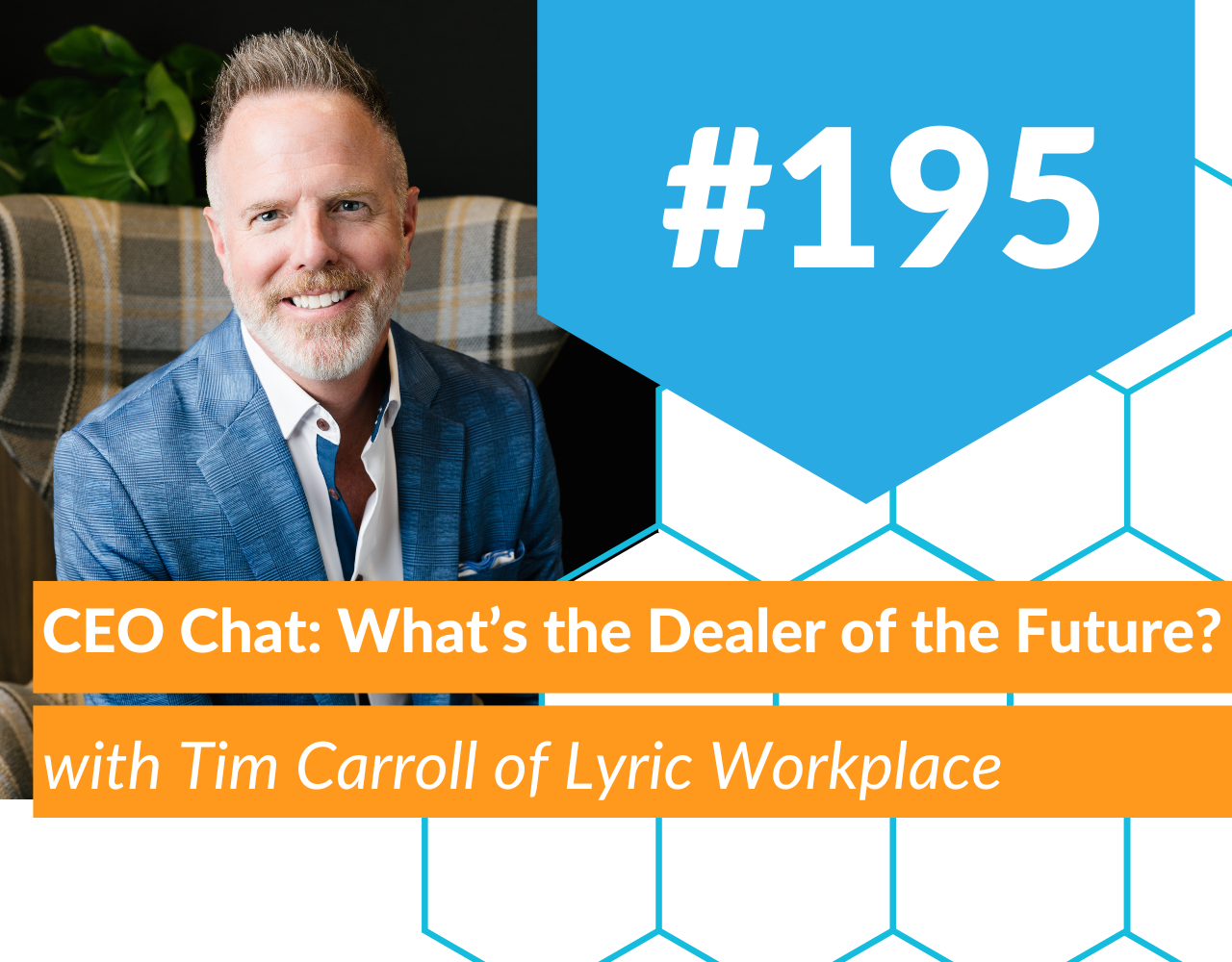
CEO Chat: What's the Dealer of the Future? with Tim Carroll of Lyric Workplace
SPEAKERS
Sid Meadows, Tim Carroll
A few years ago, if you ask most people what made a great office furniture dealer, the answer was pretty predictable. Strong manufacturer relationships, great salespeople, excellent project management, reliable installation teams. Those things still matter. But what if they're no longer enough? What if the next generation of successful dealers looks fundamentally different than the dealer model we've known for decades? My guest today believes we are entering one of the most significant periods of transformation our industry has ever seen. A transformation driven by technology, AI, changing customer expectations, and the growing need for dealers to create value beyond simply moving product. The question isn't whether the industry is changing, the real question is whether we're changing with it. And that's what today's conversation is all about.
Sponsor:We'd like to thank our presenting sponsors, Avanto, services and software that streamline how you operate and the collaborative network, a platform where leaders in the contract interiors industry unite.
The Collaborative Network Ad:If you're leading sales, marketing, or growth in the contract interiors industry, you already know this work can feel isolating. So that's why we built the Collaborative Network. It's a peer-driven community for manufacturers and leaders who want real conversations, real accountability, and practical insight, not generic advice. No posturing, no sales pitches, just experienced people working through real challenges together. If you're ready to grow smarter, check us out at thecollaborative.network.
Sid:Welcome back or
Sponsors And What The Show Is
Sid:welcome to the Trend Report, your inside look at the people, products, and ideas shaping the future of workplace design. I'm your host, Sid Meadows, and thanks for joining me today for another CEO chat with my guest, Tim Carroll, the CEO of Lyric Workplace in Nashville, Tennessee. Hey Tim, how are you? Welcome to the show.
Tim:I am fantastic. Thank you for having me on.
Sid:Well, I'm excited about this conversation. I always love uh talking to CEOs. My audience loves uh listening to you guys share your insights as well. And you
Tim Carroll’s Broadway To CEO Path
Sid:know, one of the things I like to always do before we dive in deep into the conversation is get to know you just a little bit. So, how did you get into the furniture business, Tim?
Tim:Well, it was a uh it was a crooked path. It just kind of went all over the place. But I actually started in theater. I was uh on Broadway in New York. Uh I did a handful of Broadway shows up there. That was another life ago. That was in my my 20s. I did the tours and I did did the uh the shows up in New York and came back back to Nashville. I'm born and raised. I'm one of the one of the few in the proud here in Nashville that are actually not uh transplants. And I came back and long story short, there ended up in corporate America, uh, was uh doing uh working for Fortune 500 companies, but then ultimately had a recruiter say, Hey, have you ever thought about furniture? And I said, Well, when I sit on it, yeah, I think about it. Uh I wanted to be there. And anyway, ultimately got into the business and as they say, never got out. It uh it has grabbed a hold of me. So it's been a it's been a wild run to get here. A lot of people go, how in the world did you get from from Broadway to to furniture? But to me, it it it seemed a pretty pretty easy path.
Sid:So I didn't know about the Broadway thing. You didn't tell me that before. And I absolutely love that because that's likely one of the most unique stories I've ever heard from Broadway to furniture. So I want to ask you a question about that experience because I think it's fascinating. What it explains a lot actually about what I see you doing today, but um what's one like lesson that you learned in your time on Broadway and doing shows, performing and traveling that you still carry with you today and leading a company?
Tim:Well, I mean, I think there's a lot of things, honestly, a lot of transferable uh skills. I say a lot of times it's you know, I didn't realize I was in sales back then, but I most certainly was. I was selling of quite honestly a very difficult product, which was me. And once I started realizing that, I have used a lot of things from that time. One, just from a sales perspective, I never wanted to go into an audition without having a friend call a friend who was a casting director that was gonna be in the room. I never wanted a cold introduction. I always wanted a warm introduction. I wanted them to know I was coming, be expecting me at the audition. And I still do that to this day. I don't do cold calls really. Yeah. If I'm gonna try to reach out to someone, I'm gonna get somebody who knows somebody to introduce me. So there's a warm handoff. So that's that's a big thing. But from a leadership and and a sales perspective, confidence and passion will win the day.
Sid:Sure.
Tim:And I think if you can align confidence, passion, and vision, uh, I think you could pretty much, for the most part, uh get anybody to to to follow you in into wherever you want to go.
Sid:So you have to have a lot of passion for being in the theater, right? And for acting and singing. You have to have a ton of confidence slash courage to stand on a stage in front of hundreds of people and perform, right? Thousands. I mean, yeah, thousands, right? I mean, that's scary in and of itself. I did theater when I was in college, but uh never took it beyond that. And then the other one was vision, I think you said, and like having a vision for what you want to do and where you want to go. All very important lessons learned early on in your 20s that you're still using today, which I think is great. So I love that story. It's not one I'm gonna ever forget, Tim. Broadway to furniture.
Tim:It's it is my uh easy answer when you have one of those uh beginning
Warm Introductions And Real Confidence
Tim:icebreakers, and they're like, tell us something interesting about your past. And uh that's that usually is my go-to.
Sid:So I'm just curious, is your team ask you to sing and dance or perform at times? Like, do they try to put you on stage today?
Tim:Yeah, I I end up somehow finding a way to do that. Uh, you know, look, I used to be a reluctant participant and things like that, but as I've gotten older, I kind of think, you know, use what you got until what you got is gone. In the past, I've I've put out uh Christmas cards that were, you know, singing Christmas cards. I probably will try to continue to do that over the years. But uh, you know, do so if you got something that others don't, then use it, right?
Sid:It's certainly a way to connect people to you, right? And yeah, you said something about sales that I think is really, really interesting, and then we're gonna jump into the really cut the real conversation today, which is warm introductions and having the path paved just a little bit or the door opened or cracked open for you. And I've said for a long time that I believe traditional cold calling is dead. There are a lot of people that want to argue with me, but it is certainly a lot better for somebody to make an introduction for you or on your behalf. What you do with it is up to you, right? But it's really it's so much easier if the door is at least cracked open a little bit. So I appreciate that you're doing that.
Tim:Yeah, I mean, look, cold calling is a barrier for entry for some people and some really good salespeople. Yep, it just they don't want to do it. I'm one of them. I'm not a huge fan of of cold calling. I worked back at Pitney Bowes back in the day, and you went into a door and you had to you had to pull the door on the right and the left everywhere you went. You had to call, you had to go to the right and left, and they they tracked it and and all that stuff. And yeah, you can do that, and you can maybe have some success doing that. I got it, but I'd rather work smarter, not harder. I'd I always uh say I'd rather be, you know, uh a sniper instead of just you know, buckshot. I really want to go and be very strategic with who I'm meeting with, how I'm beating them, and am I showing them value? And if I can do all those things, uh I I think I can have some success. But the cold call, yeah, you're missing out on some really good salespeople that can't do that. I've I know those people that can do that. And I think they're special individuals. It takes a special kind of crazy to be good at cold calling, I think.
Sid:I would agree. I would agree with that. Special kind of crazy to be good at cold calling or dialing for dollars, I say. Yes. So, Tim, tell us about the recent decision to focus on Nashville and to start a dealership there.
Tim:Well, speaking of a special kind of crazy, I think uh that would apply here too.
Building A Nashville Focused Dealership
Tim:I think anybody starting a dealership today, I know I have a lot of friends in this business and a lot of friends that have been in this business and own dealerships, and I think they look at me like I'm crazy for sure. But it is a passion. It was about a year ago, I heard a statistic that really changed my life. And it was uh I I have two teenage boys, and I heard the statistic that by the time your kids are 18, you will have spent 90% of the total time you will ever spend with them in their lives. Wow. And true or not, right? I mean, I think we can all agree that's probably more true than not. I can't even tell you where I heard the the statistic. All I know is it resonated with me. And I was traveling three weeks a month, and so I decided that uh for me, I didn't want to spend the remaining percentages of time I have in that 90% on Southwest Airlines. And so that began the push to just focus on Nashville. And again, I didn't plan on passion to be the theme of this thing, but I do have a passion for Nashville. Again, being born and raised here, I've seen the evolution. And for anybody that has recently been to Nashville or you know, have seen has seen some of the changes, it's unbelievable, like really, truly unbelievable transformation of a city. And uh I I love it. I'm one of the people that love the the changes that have happened in Nashville. I think progress is is a wonderful, beautiful thing. And I I want to be a part of that, and I wanted to just focus on that. But it had to do with spending time with my family and being able to be home for them.
Sid:Yeah, it's so important. And the statistic certainly is very powerful because, you know, as a parent myself, we only get one shot at this. That's right. And we're gonna make mistakes. That's just part of being a parent because they really don't come with an instruction book. Like they just don't. Yeah, and you can read a lot about parenting skills, but you only get really one shot at it. But you've spoken about being more present for your boys. How is that perspective and that desire to be present for your boys, how has that affected or changed how you lead an organization?
Tim:Well, you know what's funny, Sid, is that I've always encouraged and led people to be there for their families. Like I'm I'm not the nights and weekends email kind of guy. I don't, I don't want it. I encourage everyone to run during the business hours and then unplug and spend time with those that matter most so you can recharge and come back ready to go after it. But I believe I preached it more than I lived it.
Sid:Yeah.
Tim:I do as I say, not as I do. I'm gonna go and and run around and and be all over the place and try to be all things to all people. But you know, you gotta you gotta take care of yourself, you gotta take care of your family before you can take care of the company and put your own mask on first before you take care of the. And so um I I kind of came to that realization that I was telling people to do things that I wasn't doing myself. Sure.
Sid:Well, you talk about this in your book about your employees, and there's a phrase, I think, that from the book, and I can't remember it exactly, that your employees will say to you about this very thing about working on the weekend. Do you recall what it is?
Tim:I don't remember the phrase at all. I can't find it in the book right now, but you talk about it in the book, so yeah. I mean, it's it's important, and I'm what I do always say is is you know, unplug, spend time with those that matter most and come back, run during the money hours. I I do believe in those things. And and like I said, I think that I have been good at doing at leading people towards that in their lives, but I wasn't necessarily doing it in my own.
Sid:It can be sometimes can be really hard to walk the walk, right? But I think you're you're certainly doing it now. And so, you know, as a CEO, a lot of times we hear conversations from CEOs around growth. I know I hear it. How do we grow? How do we do this? How do we do that? And when you think about what you're doing and starting a dealership, how do you define success today compared to maybe how you defined it five or ten years ago? What's your definition today of success?
Tim:Well, I mean,
Success Through Growing Other People
Tim:look, I I again I take a different, a little bit of a different approach to success and to growth. I don't necessarily look, I we're all in this for revenue, right? I mean, I'm not kidding myself in that.
Sid:You have to have it. That is a must in order to successfully.
Tim:That is a must. But I believe any success that I've had in my life and in my career rather, it's been because I've focused on the growth of others. And when that happens, I believe um uh a rising tide will lift all ships. The success comes. And I have the approach where that growth is not just necessarily within my own company, but I'm taking it upon myself with Lyric Workplace to really focus on the growth of the industry. And in Nashville, the leadership. I think there's a leadership deficit in this industry. I think there's not enough leadership training that happens in this industry industry. And uh we're gonna focus on doing some of that, taking that on ourselves to help our A D uh partners, our broker partners, GC partners. And we we offer leadership training to those individuals that we bring in and we we will do leadership training with them. And it's a way to get back, it's a way to show value, it's a way to focus on the growth. And I believe, and it's proven out that they will in turn help us grow our revenue. Sure.
Sid:You're adding value, you're giving. I love the fact that you're you're offering. I assume you're teaching it or you're presenting it to the leadership. Yeah.
Tim:Yeah. Well, I'm I'm a John Maxwell uh certified team member, so I use a lot of that that content. It's just such great, yeah, already done content. I facilitate that, and it's it, there's and it's a wealth of content. So it's really great to be able to offer that to the folks in our in our industry.
Sid:Yeah, I'm a big fan of John Maxwell. I have almost I think almost every one of his books. So I've read I've read almost all of them too. So I love that you talked about the growth of your people and focusing on the growth of your people because when you invest in them, they'll invest back in you. And when you invest in them and they see that you truly care about them, then they believe in what you're building and they're gonna want to build it with you. They're gonna want to come along for this. And you just said one of my favorite quotes, which is a rising tide lifts all ships. And to me, that is just I had somebody send me that one time in an email that uh said, a rising tide lifts all ships, and and today you are my tide. And I was like, man, and that that quote has stuck with me ever since this was like five years ago I got that email. It stuck with me, which is so very important, right? To lift up those around you because when you do, everything changes.
Tim:If we're all focusing on being better today than we were yesterday, and we all get
Lessons Over Failure And Safer Teams
Tim:you get a collection of individuals that truly believe that and are trying to accomplish that, yeah, there's nowhere to go but up. That's right. That's right. And if you and if you provide them the avenue to do that, and by the way, part of that avenue has to be allowing people to fail. Because if you're not failing, you're not trying. If you're not trying, you're not growing. And it's an endless cycle. So I think all too often in this industry, I've seen name and blame. Name, blame, and shame. Yep. Something goes wrong. Let's stop everything. Whose fault was it? Let that let's let that be the first question. Whose fault was it? And that's a bad, bad, bad way to start. You know, it's really let's yes, we need to get to how do we learn from this, but first let's let's fix the problem and let that individual, whoever it is, know that you got their back and and that you're safe to attempt, try, and fail. Yeah.
Sid:I mean, I certainly resonate with the name and blame, right? I've been there, I've been on the side where I'm blaming, and I've been on the side where I've been blamed, right? And that's not good for anybody, doesn't help anybody. But I'm gonna slightly disagree with you about the use of the word failure. So if you're a longtime listener to the show, you've heard me say this before. And isn't it John Maxwell that wrote the book about failing forward? Yeah, failing forward, yeah. And the concepts are really good and I really appreciate it. But what I don't like, I do not like the word failure. The word, yeah. Because it has so much negative connotation to it that I'm a failure, I'm not capable, I didn't try, right? So I talk to my clients and I talk a lot publicly about this word. And so rather than say the word failure, let's reframe the thought around this, which is for me, I will say I don't believe in failure. I believe you either got the result that you wanted or the lesson that you needed. What's important is that you're paying attention to what the lesson is. Because failure says I didn't try, but you did try. Maybe you didn't get the exact result that your business wanted or that you wanted, but look how far you came from where you were. And I think that's mentally, if we can shift that to a positive, everybody will feel better about taking risk and trying new things and stepping out on the limb, right? Which is to me a very much a leadership quality.
Tim:I love it. Uh and those lessons are the ones that are the most impactful. 100%.
Sid:But you've got to be willing to to lean into the lesson and to recognize it. Because if you just ignore it, then the experience that you went through is of no value
Disruptor Thinking And Change Management
Sid:to you trying to move forward, right? You get and again, that's a leadership thing. So that's where I want to go next. I want to talk about leadership.
Tim:Yeah.
Sid:Because what I really appreciate the short time that I've known you, and I do follow you on all the socials, you're very much willing to challenge conventional thinking. And in fact, you've kind of described yourself as the disruptor. What does that mean to you, being a disruptor?
Tim:Well, not accepting the way things always have been. I mean, all too often over the years. And I have a unique perspective. I've had the pleasure and honor to work at different dealerships around the country. And I do hear a lot. Well, this is how we've always done it. Oh. And gosh, I'm not a huge fan of that. No, me either. And it almost blindly makes me want to change it just because uh I hear those words. So I think I I believe over the years as I've been around this business, I do look at things a little bit differently. I do believe that I I look at things a little bit more forward uh thinking. I definitely am a little, you know, I'm not technology adverse, which I think there are a number of people in this industry that that are just hesitant to do that.
Sid:Yeah.
Tim:And uh and so I find myself and my perspective to be a little bit disrupting, and therefore it's a challenge for some people. Yep. And that's okay. I'm not everybody's cup of tea, I'm mostly people's shot of whiskey.
Sid:That makes two of us, and I understand that, right? But I appreciate you challenging the status quo. I really appreciate you thinking about things differently because for those kinds of conversations and those thoughts from a multitude of different people, to me, is one of the things that will help to move our industry forward. I think we're stuck in a lot of different places. And being an innovator, being a disruptor, challenging the thought processes, bringing up new ideas is exactly what's going to help every business in our industry move forward.
Tim:You know, I will tell you though, those those thoughts, while I think I've had forward-thinking thoughts uh uh over the years, I've learned the lesson that you got to figure out the right way to implement them. Yep. And if you do it wrong or you do it too fast, you scare everybody. Yep. And doesn't mean that the idea was wrong. You just didn't execute it right.
Sid:Correct.
Tim:And so I think I've I've started to learn more and more over the years the way to roll things out that it will scare people the least that get easily scared, and it will make those that really want to run fast just happy enough because they'd love it to go faster, but at least there's forward movement happening.
Sid:Yeah.
Tim:So see forward progress. Yeah. It's that sweet spot right in the middle where. You're making everybody just as unhappy and just as happy.
Sid:I had a boss tell me one time, uh, we were in a very intense negotiation with a large company, and um he was there with me. I was a global account manager, he was there with me. And he said to me, because we had a break in this session, and the people sitting on the other side of the table from us were not happy. And we were outside contemplating what was next and what was kind of the afternoon session, kind of the negotiation session was gonna be like. And he said, Sid, if everybody gets up and leaves the table a little bit unhappy, that's a successful negotiation. A good one. That's right. Like that's success. If every because that means nobody got one side didn't get everything they want, and one side didn't lose, if you will, right? Everybody's a little unhappy.
Tim:Negotiation's not a zero-sum game. And I think all too often those that are inexperienced in negotiation uh believe there's a winner and a loser in a negotiation, and it doesn't need to be that. Yeah, it shouldn't be that, really. A good negotiation shouldn't be that. But but those that go in with a zero-sum mentality typically are not looking at it the right way.
Sid:So why do you think that so many businesses today in our industry struggle
Why Innovation Stalls In This Industry
Sid:to innovate? Is it because of this buy-in from their team and one group wants to go slow, one group gets scared, one group wants to go really fast? Why do we struggle to innovate?
Tim:Ooh, well, uh I have opinions. Please share them. They are they I think we do have uh an industry that is led by people of a certain age. Now, understand I'm not too far off from that, so I'm not throwing stones, but you can start to, if we can agree there. We do agree there, by the way. We can start to peel the onion back on the whys behind that. Why innovate if I am a year or two away from just bailing out of this thing? Why innovate if this is how it's always worked? We we got really successful doing this. Why would I innovate?
Sid:Yep.
Tim:And so I think there's a number of reasons why, um, but it typically is the aging population in our industry. And it just is gonna take those of us that are are um technology fans to really kind of push the the envelope and be the early adopters, like AI. I mean, I think we're lyric Wordplace, we're early adopters as it relates to that. I mean, it's we are taking the place of one whole role, the majority of probably 90% of that role is being replaced by AI. That's great. Can you share which role? Project coordinators, okay. And you know, it's not completely going
AI For Project Work And Faster Quotes
Tim:away, but the majority of that function is going to be rolled into AI. And I mean, it's already is, and you know, acknowledgments and and looking through those, that's all being done by AI now and kicking out anything, any discrepancies, and sure and budgeting in in design. You know, we're using tools that will get you a budget and a really good output of good, better, best, and some ideas in seconds, not days. Or weeks in some cases.
Sid:Weeks, yeah.
Tim:I mean, install, getting getting quotes, using AI faster. I mean, all of speed to market is where I think, in you know, not to give all the secrets out, but I think that that speed to market is the new size. Everybody used to say, oh my gosh, they're we're big, we can take advantage of our size. And I've been there, right? But I think that comes with some issues and challenges to get things through fast. Yep. And speed to market is what is going to be the difference maker, and AI is going to help with that. And that's what we've leaned into at Lyric. That I believe we're we're on the front end of what it's going to look like to be a dealer in the future.
Sid:And I think it's great that you're leaning into, you're discovering, you're looking at technology, you're looking how to streamline things, you're looking how to get at ways to get to market faster, you're looking at ways to enhance the overall productivity of your organization. Those are all really, really important.
Sponsor:We'd like to thank our supporting silver sponsors, KISP, who helps furniture brands visualize and sell products before specification. Navitas Credit Corp. Nevidus makes great workspaces affordable, turning furniture projects into easy monthly payments. Web Configurator Services, the leader in AI-powered online product configuration and quoting.
Navitas Ad:Let's talk about what's really driving business decisions today: affordability and cash flow. Now here's the win for you. Close faster and get paid 100% up front. Because how many cash clients do you actually have? Bring financing in early and clients stop shopping and start saying yes, because financing isn't a life preserver, it's a closing tool. Contact Janine Waddell at Navitas Credit Corp at 609-206-4513, and she can help you with total project financing, including furniture, AV, sound masking, delivery, design, all in one single payment. You're a technology fan, you're obviously an AI fan, so you're leaning into it. So with those two things in mind, what are you seeing in the market today that you think other people are overlooking besides technology slash AI? What are other people overlooking that you're seeing in the market?
Tim:Well, I mean, I think, and this isn't new, it's been this, but that we're an industry that sells furniture. I don't agree with that. It's a byproduct of what we do.
Financing Message And Sponsor Break
Tim:We have to bring more to the table. Okay. We have to bring insights, we have to bring strategy, we have to bring things uh more to the table. People are joining the uh buying cycle much later. They're doing their own research way before coming to you. So what are you bringing? We should be curators of information to our clients. And so hence the book, Workplace, Reclaiming In-Person Work in a Remote Obsessed World. You can get it anywhere. And I, you know, coming with a with some insights like that, where you're bringing something more to the table, we can all sell the same things. 99% of what we all
Selling Strategy Not Just Furniture
Tim:sell has the same daggone tags on the bottom of it. Yeah. So what makes you different? Well, it's it's not the furniture. And and I know there are a lot of furniture people on here that want to that would like to slap me across the face and say, yeah, but my table's better. My chair is better. I I get you believe that. But the client doesn't, and they don't have enough runway to be educated enough on why that's better than that. They need to know that the dealer that they're working with is bringing something else to the table.
Sid:Yeah.
Tim:That's not just the furniture.
Sid:So adding more value, less selling, adding more value to our clients and what they're going through, understanding their problems, and really coming, whether it's insights or research or other things that can help them in their business. And I had somebody tell me yesterday in a conversation, we were talking about a lot of different things, and she mentioned that she wished that our industry could migrate away from saying things like we sell office furniture or the commercial interiors industry or to the contract interiors industry to the built environment industry. And I thought, well, that's actually really fascinating because that's really what we do.
Tim:Yeah, and that's coming from, you know, like we we sell walls as well, demountable walls, and that's coming from that world. They they talk a lot about built environment, and I think we should absolutely adopt it. Do you know? I prescribe a lot to Simon Sinek start with why, and and that, you know, it's not about what you do. I think there's no quicker way to end a conversation than to say I sell office furniture. That's the end of the conversation.
Sid:Yep.
Tim:But if you talk about your why, and it your answer is more along the lines of we create and inspire organizational culture and employee engage engagement through architecture, furniture, and technology. Well, now you've got somebody wanting to know a little bit more about, okay, what is it you do? How do you do that? We need help with our culture. We need help, you know, getting people engaged. How do you do that? And so it's it's less about furniture. This is so good.
Sid:I won't be able to find them, but I have a couple of episodes where I talked about that very thing. And how do you introduce yourself or how do you tell people what it is you do? And we're 190 something episodes in. I can't remember which one. And Kayla, my editor, is no way she's gonna go find them. So, but it's really, really important to think about reframing something like that to really create intrigue where people want to lean in and they want to learn more, right?
Tim:Well, and I've done I've done a start with why workshop at every every company I've been in. So good. And find me online, I can do it for for anybody that wants wants that. And it's a few hours, and it is a great way to really explore everybody's individual why, and then also create your tribal why as a company. And those things are as important as knowing and understanding your your core values. Yeah, if you haven't defined those, you should define those out. Those things really do set a course for the success of your company. 100%.
Sid:You know, Tim, we're very aligned on a lot of things, and which I really, really appreciate. We haven't had this in-depth of a conversation before, so like I think I can keep going. And I want to get to
Mentorship And The Case For Offices
Sid:the future of the dealer, but I also want to say, you know, you have written a book. You mentioned earlier, Workplace. I have it right here. I'm about halfway through it. I will tell you the part one does a really, really great job at building the business case for why you want to be back, why you want to be back in the office. Like, and my favorite part of part one, everybody will have a different favorite part, but my favorite part about part one is the mentorship and the missing, what's missing when you're not in an office and that ability to have mentors. I mean, you can have a virtual mentor, but it's something about being in person. So I really appreciate the book. So congratulations on it.
Tim:Thank you very much. I'm I'm very proud of it. Uh, and I thank you for getting it. That mentorship thing is really tough because I've yet to hear anybody tell me the silver bullet of how you can mentor someone successfully virtually. Yep. I mean, you can have meetings like this, you can do a Zoom or whatever, and that's fine. But more is caught than taught. So those younger, more inexperienced people need to hear you get on the phone with a client and talk through a difficult situation. They need to see how you have prepped for a presentation, not the presentation itself. You don't need to see the production. You need to see the rehearsal. You need to see all that it took to get to that that place. And without that, it's very difficult for us to have anybody waiting in the wings when there's succession planning conversations because they just aren't ready.
Sid:Yep, I totally agree with you. And the phrase there, the quote, more is caught than taught is so very important because you do catch a lot of things just by watching and observing. And it's such a great way to learn. So thank you for saying that.
Leading In Public On TikTok
Sid:Now I want to get to my real question about this, which we will drop a link into the show notes for the book if anybody would like to go get it. So, Tim, you're very public. Like you are leading in public. And I appreciate that because I'm also a very public person. I live my life out loud. Sometimes to my family's chagrin, I live my life out loud. But we don't see many people in your seat being very public. We don't see many people like you as CEOs creating short form videos and posting them on Instagram, TikTok, and LinkedIn, right? And I really appreciate that. So, first off, how did you get to the place that, hey, this is I'm gonna I'm gonna be out loud about this? And then do you think that more leaders need to step into this role and do things like this?
Tim:I don't know. This is such an interesting question because I am a reluctant participant in all of this. Oh my goodness. You can go back in my videos and start looking at when I started. Yeah, and it was the last second that I could have held out that my marketing company kept trying trying to tell me to get out there so you can sell some books. Yeah, that's why I did it. I know I've got this background of being a performer, but I also have this sense of who really cares what I have to say. But this book, I do feel so strongly about the book that I that it really, if you go back and look at these videos, it's it's all they're all content coming from the book. Yes, um, and and so that's really what I'm I'm out there doing. But what's really interesting from it, and especially on TikTok, never in my life would I would I have thought that I'd be doing videos on TikTok. I think I've passed the age of ability to do this long ago. I it's weird to even say that I'm on TikTok, but I'm engaging with people of a certain age that I don't think I'd be engaging with otherwise. And the conversation is a lot more robust. Oh, yeah, it is. I've read some of the comments. It's been dynamite, and I get a chance to interact with some people that I don't think I normally would, and they are sharing deep issues, like I just got let go, I was doing all of these things, I thought that that I was doing the right thing, and I don't know what to do. You know, I was doing what you're telling me to do, and I ultimately got let go. So I mean, it's really interesting conversations that I get to have. If you are interested in having those kind of conversations, yes, if you're interested in connecting, look, I'm I'm not going around to AD firms and connecting with 20 and 30 year olds. I'm just not, but I am getting to interact and connect with them on TikTok.
Sid:Yep, I love it. So I appreciate the fact that you're reluctant participants in all this, and somebody twisted your arm. But as a consumer and somebody that is an avid reader and someone that is a you know a student of our industry, please don't stop. You're doing a great job. And I really appreciate what you're sharing. And it's important, and it is a way for you to give back, it's a way for you to provide some leadership and some mentorship to the younger generation. So don't stop, okay?
Tim:Well, thank you for that, and that means a lot. I really appreciate that. You know, during COVID, there was nothing more frustrating than to hear all the stuff about the office is dead. And that was frustrating enough because I didn't believe it. I really truly know that there's an ulterior motive in saying that because we sell office furniture, but I really didn't believe the office was dead for all the reasons in the book. And I believed the employees needed to know that they shouldn't believe the office is dead. But nothing got me more frustrated than to hear people within our own industry talking about how much they love work from home. And I'm like, oh, come on, this is an open book test here, folks. This is an IQ test. This is what we do, and you're advocating to just abolish it. And so I put myself out there a little bit during that, and so I think this is really just uh uh an extension of that to try to lead people within our industry to just say, it's okay. Flexibility is great, it's okay to be a fan of flexibility, but we've got to collectively as an industry be on the same page that the office matters.
Sid:And it does, and that's
Brand First Not Manufacturer First
Sid:important. Read the book, guys. It's uh it's really good. So again, we'll drop the link in the show notes. But Tim, do you think that dealers today are still I'm gonna switch into that? I want to go into the future, is where I'm headed. Okay. Okay. So in the in the few minutes that we have left, do you think the dealers today rely too heavily on their manufacturer relationships to be different in the marketplace?
Tim:Well, I sure believe that's been the case. Uh and again, anywhere I've been, I've done everything with Lyric. Branding is a very important part of what we do because I want it to be about our brand, less the manufacturer that we align with. Because we've all seen the the consolidations and we've seen the the this company's been bought out, and this company's been bought out, and this. I mean, we don't have to go into the details, but we all know that that's that that's happened. When that happens, if you've put all your eggs in the basket of a manufacturer, that acquisition cuts deep. But if you make it about your brand and you happen to sell this, when change happens, which it's going to again and again and again, you're still the calm and the storm. All this craziness is happening, but we're still lyric workplace, we're still who we are, uh, and it doesn't matter about, and and as we said, it's a it's a commodity. It's a commodity. So we have to make sure that our brand, and we're showing value to our design partners and our clients above and beyond a product and make it about your brand.
Sid:So I had this discussion a year ago with a dealer principal of a smaller unaligned dealer in South Texas, and um about it's got to be about you as your brand as the dealership, right? And he referenced Sewell. Do you know who Sewell is? I don't think so. So there's a book, and I can't multitask and go to Google and find the book. But the Sewell is an automobile dealership chain in North Texas, right? Right, right. Right? Yep. And they have BMW, Lexus, Mercedes, they have all these different brands. But Sewell customers, including this one I own for Sewells, uh, will tell you that uh we don't own a BMW, I own a Sewell. Yeah. Because I go back and back and back. Yes, I'm a fan of BMWs, but I go back and back and back because of Sewell and because of the experience that I get and that's created for me as a customer of that brand. And if they were selling Ford, I'd probably look at buying a Ford, but more importantly, I'm buying a Sewell, and that's the messaging around it. And it's just so very important that your brand and your identity is first and what you sell is second, because the local marketplace needs to know who Lyric Workplace is, right?
Tim:And it's a great book out. Uh it's been out for many, many years. It's a it's been out a long time, but it's called The Experience Experience Economy. And it says if you're in a commoditized business, the only thing you have to lean on is the experience you provide, not customer service. That's the bare minimum of entry, the experience that you provide your clients. And so I've spent the vast majority of my career in this industry believing that very thing. We're in a commodity business. We're gonna focus on the client experience for our for our clients, and we're gonna focus on providing uh a bespoke, unique, detailed experience that is communication on steroids.
Sid:That is beautiful. It is the most important thing because people remember the experience, they remember how they felt. They're not gonna remember what brand they bought for you, they're gonna remember how you treated them and how they felt during that process. And every business should be focused on creating a dynamic customer experience. That's what they should be focused on.
Tim:We're in an industry that the miracle is that any project goes off without a hitch. I mean, is that not the craziest thing? That's the miracle. I have bonused people on no punch projects over the years, and let me just spoiler alert, it's never broken the bank. Of course not. So, yeah. So it's it's it's one of those things that if you people have a vast capacity for grace
Experience As The Only Differentiator
Tim:if you have given them a great experience and communicated well. But if you don't and you hide things, they will turn upset very fast.
Sid:I think it's also a great way to not only win new business but keep your existing customers is by creating an experience so good they don't want to go anywhere else. It's never an option for them.
Tim:I had a a realtor friend of mine, residential realtor friend of mine, really good at what he does, told me once, he said, I'm I'm always working for the referral. Doesn't matter the size of job I'm working on today, I'm working on the referral. Yeah because that next one may be huge. So I've always had that mentality.
Sid:I love it. Gonna work, always working for the referral. All right. So I think we could stay here, but we're not. We're gonna go to the future. So, Tim, I want you to tell me what what do you think the dealer of the future is? That's a big question, but give us your insights.
Tim:Efficiency. Okay. I think speed to market. The thing that has to change in our industry is speed to market. That's the thing we all are challenged with, the thing we all struggle with, and it's how How fast I I believe the fastest will win. Why is that? Well, because things are moving much faster. I told you people are getting into the the sales cycle a lot later, and so they need it now. So I I I think uh those that can move fast will win. And if you have prided yourself on how big you are, but you're like the Titanic and it takes you a minute to turn around, you may start seeing a change in in your business.
Sid:Right.
Tim:I sure hope so. I'm betting on that. Efficiency is key to me and my my company and what we want to do, speed to market and efficiency. And how do we do that with the least amount of mistakes and the most amount of net profit? My goal is to look back and go, this nonsense. Like if people knew, since we're all from this industry, people knew the average net profit of a furniture dealer, you'd really think I was crazy to start a furniture dealership. It's criminal, the average in this industry. Yes. I think to be as efficient as we can be, I can definitely get that net profit in the double digits, which is rarefied error, I believe, in this in this industry.
Sid:I'm going to agree with you as someone who leads a group of dealers, and I hear this conversation a lot. I I totally agree with you. It is the big focus. And just for clarity's perspective, net profit is the amount of profit that you have left over after all of your bills are paid, after all of your people are paid. It's what's left over, right? That simplified it, right? It's what's left over.
Tim:That's what that's what you take to the back.
Sid:That's what's left over. And it is shocking for people to understand uh actually how low it is. So but I applaud you for focusing on that. So, Tim, let's think for a minute about like how can dealers to it today in the next, let's say, three to five years, how can they add more value or how can they create more value to their customers? How would you create more value to your customer?
Tim:Well, we look, we have uh
The Future Dealer Runs On Efficiency
Tim:an interesting perspective. We deal with clients all the time. We have best practices. Workplace strategy is really where we should be living and uh bringing insights. I mean, look, we've all done the dealer. I mean, manufacturers have helped us provide us research. And I mean, I started in a steel case dealer, and boy, I fell in love with that. I mean, the the research that that really spoke to me, and it it always has. And so anyway, I think that the more we can curate, as I've said before, we can be the curator of information and provide the right information at the right time for the right client. That's what we can do. Taking podcasts like this, or like my new podcast that's coming out, Harmony at Work, that we're we're doing. I've had a podcast in the past, but we're changing name, starting a new one, and and uh and it will be Harmony at Work. And um, but you you take things like that, find the episodes that resonate with that client and give them that. Come on. I mean changer. You're it's a game changer. Now you're you're you're providing something that they could do on their own, but they'd have to cull through a lot of data.
Sid:So, Tim, did you listen to my episode a few weeks ago with Simona Costantini about this very topic? I did not.
Tim:Okay. I listened to the episode, but not that one.
Sid:I think that particular episode we talked about why businesses need a podcast. And one of the examples of how it could be used was exactly what you just described. Sharing an episode about something related to workplace strategy or research with a client that maybe you don't know, maybe somebody you just met, like share it with the design firm. There's so many things that you could do with it. So I I love that. And let's just pause for a hot second here and let me applaud the branding person behind Lyric Workplace. Whether it was you or you've hired a fur. I love it's I love all these connection points. If you look at the logo, you see the logo has uh the guitar, excuse me, the violin on it, right? The swirl. At least I think it's from a violin, but you can still it's music.
Tim:It's a chair. The R as the chair.
Sid:Oh, I thought it was like it looked to me like it was in the in the violin, has the S in it, I think. Yeah, but you can draw all the dots here now. I mean, obviously lyric, you're in Nashville, there's a direct connection there. And now you're starting a podcast. Congratulations. Welcome back to the podcasting world. Harmony at work. If you harmony at work music, you understand the term harmony. I mean, your branding person needs to be applauded for connecting all these dots. I love it.
Tim:Yeah, well, thank you. Yeah, that's our tagline is is um every detail in harmony. And so that's that's hence the harmony at work. But love it. You know, I've I've uh hosted a podcast for a few years and and it had a pretty good pretty good following. But I think this is to rebrand and kind of elevate it just from just not just a subject of culture, but how do we bring harmony
Curating Insight With Podcasts And Media
Tim:into the workplace in all areas? Um, I think that's that's an important conversation.
Sid:So I'm having so much fun with this conversation. Like I want to keep going, but unfortunately, we are out of time. So I'm gonna have one final question for you. We've covered a lot of amazing topics and you've dropped some really cool nuggets here, Tim. But when you think about the future of our industry, what gives you the most optimism or the most hope when you think about the future of our industry?
Tim:Well, I think that that uh the the younger folks that I see coming into the industry give me a lot of hope.
Sid:Yeah.
Tim:Because there was a moment I was a little concerned about who's coming up. What's the bench strength look like coming up behind us? And uh I am I am more encouraged than ever. Uh I'm encouraged at the the innovation, uh, quite honestly, of folks like your one of your sponsors, Avanto. I'm very encouraged by the the innovation that companies like that are bringing to the table uh to really help those of us that run dealerships to be the most efficient that we possibly can be. So I'm I'm encouraged about there's there's good stewards of this of this industry coming up. And I think we're in I think we'll be in good shape.
Sid:That's great to hear. So, Tim, I really appreciate you being here today and sharing your perspective. Again, I wish we could keep going, but if somebody in our community would like to get in touch with you, what is the best way for them to do that?
Tim:Uh, the website, uh lyricworkplace.com, uh, all social media, TikTok and Instagram, it's at the Tim Carroll, uh two R's two L's. And uh and you you'll get more than you can, more than your fair share of me there, I promise.
Sid:Well, we'll be sure to drop all that down in the show notes, along with your email address and good stuff. Or just remember, if you reach out to Tim, please let him know that you heard him here on the trend report, and that's why you're reaching out.
Optimism For New Leaders And Closing
Sid:And please go show him some TikTok love. Follow him on TikTok, engage with his content. He's doing good stuff over there. And Tim, I applaud you for hanging out there. So thank you again. No, thank you again so much for being here.
Sponsor:We'd like to thank our community bronze sponsors, Catalyst Consulting Group, Prioritas, and RESEAT.
Outro:And to you listening today, thank you so much for joining us on the Trend Report. Your inside look at the people, products, and ideas shaping the future of workplace design. Go out there and make today great, and we will see you in the next episode. Take care, everyone.