The Trend Report Podcast
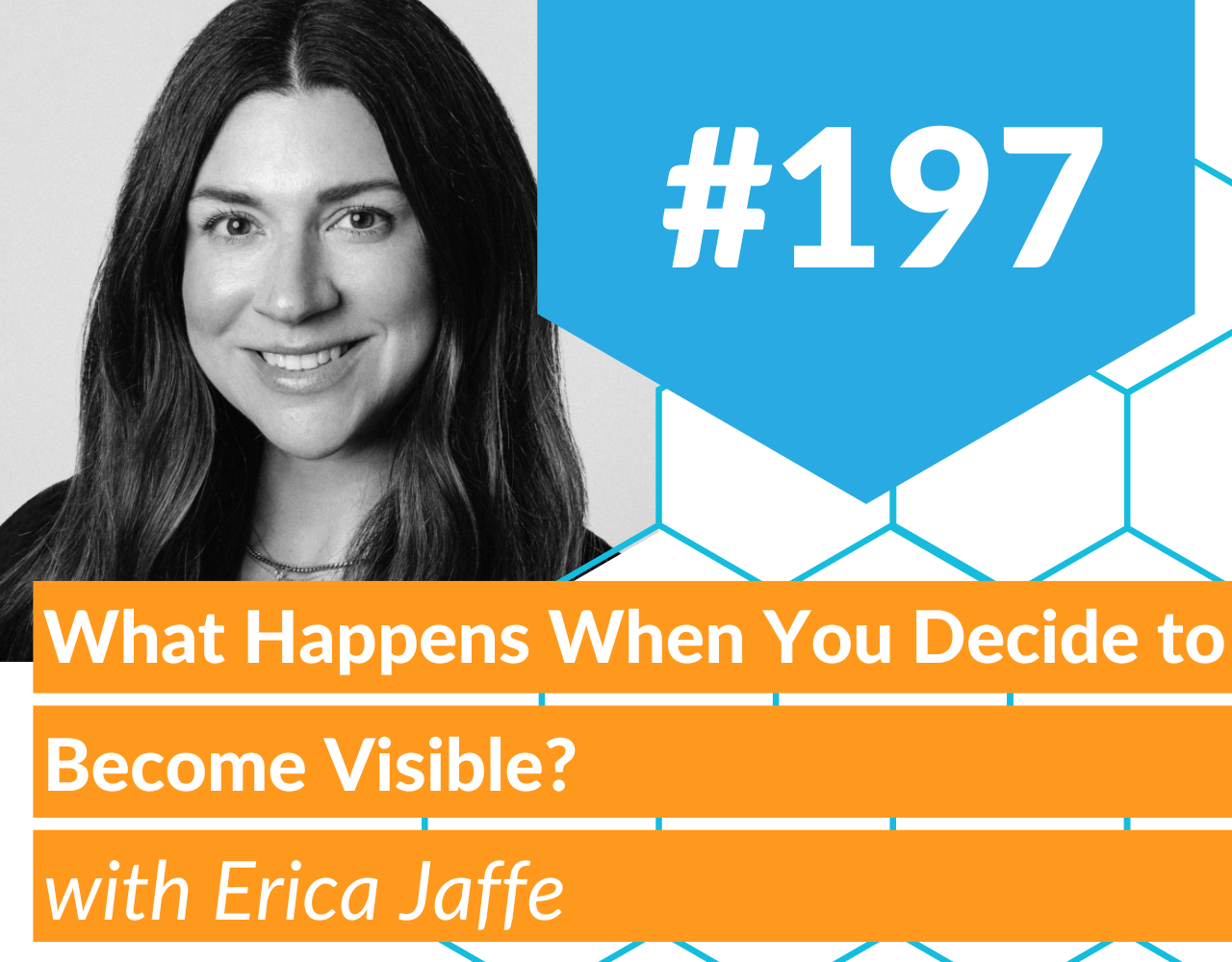
What Happens When You Decide to Become Visible? with Erica Jaffe
SPEAKERS
Sid Meadows, Erica Jaffe
Every day I meet incredibly talented people in our industry. Smart people, creative people, people with decades of experience and insights worth sharing, and yet most of them remain invisible. Not because they lack expertise, not because they don't have something valuable to say, but because putting yourself out there can feel incredibly uncomfortable. But what if visibility isn't about self-promotion? What if it's actually about service? What if it's sharing what you've learned helps someone else solve a problem, see a new perspective, or feel less alone on their journey? My guest today decided to find out. And what started as a creative experiment has become a powerful lesson in the value of showing up, sharing your voice, and building trust along the way before the first conversion ever happens. And that's what we're going to dive into today.
Sponsor:We'd like to thank our presenting sponsors, Avanto, services and software that streamline how you operate and the collaborative network, a platform where leaders in the contract interiors industry unite.
Avanto Ad:This episode is brought to you in part by Avanto, the workflow automation software built exclusively for the commercial furniture industry. Avanto automates the full quote to cash cycle for manufacturers, dealers, rep groups, and installers. Quoting, order entry, AP processing, PDF to CIF conversion, and more without replacing your existing systems. Over 130 companies trust Avanto to run their operations. Learn more at goavonto.com.
Sid:Welcome back or welcome to the Trend Report, your inside look at the people, products, and ideas shaping the future of workplace design. I'm your host, Sid Meadows, and today I am joined by Erica Jaffe, better known to many people online as the Office Furniture Girl. Hey Erica, how are you today?
Erica:Hey, I'm good. How are you?
Sid:I'm doing great. I'm so excited about this conversation. We had to reschedule a couple of different times, but in full disclosure, I listened to you on my friend Alexandra's podcast, The Design Pop, in June of 2025, and you've been on my hit list. Like I've got to get her on.
Erica:He found me.
Sid:I sought you out this random stranger emailing you, hey, will you come on my podcast? And then you said yes gracefully. And then we happened to meet in real life at Neocon accidentally in the Andrew World showroom.
Erica:I know. You never know who you're gonna see behind a corner at Neocon, right? And there you are.
Sid:So true. Yeah, I wasn't lurking in the corner though.
Erica:You were, you know, walking through like a normal person.
Sid:Oh
From Design School To Dealership Sales
Sid:my gosh. So let's jump in here because I want to talk about your career a little bit. So you're an interior designer, and I want to know a little bit about your background. So tell us about that.
Erica:Okay, well, where do we start? I guess this is where I always start. I went to school for interior design. So I knew that I wanted to be an interior designer. That was the plan, that was the path. Went to Michigan State University in their accredited interiors program, and I knew very quickly that I wanted to be in the big city. So I had my site set on Chicago, which I moved to Chicago right after I graduated. I pretty much had my dream job at a design firm in Chicago, and that was, I want to say, 2007, 2008. We kind of all know what happened in 2008, 2009. It wasn't really a time when people were designing office interiors. So unfortunately, I got laid off. I was very, you know, fresh in my career and ready to just, you know, I was excited about the future, and I sort of had to pivot, or you know, I was a little bit stalled. But then I kind of decided, you know what? Now is the time to move to New York. This is this is the time to do it. I just decided I'm gonna pack my bags and move to New York. So this is absolutely. So found my way to way to New York, was dabbling in a couple of things there, and then I ultimately got connected to Design Within Reach, where I started working as, you know, in the store because anybody could walk in and buy furniture for their home. And about two years in, somebody walked in and bought furniture for his home. And he happened to work at a Herman Miller dealer, and he was talking to me about the dealer side, which I had never heard of before or did not was not aware of a furniture dealer. And he said, Have you ever thought of coming to a Herman Miller dealer? And I said, Do I have to work on the weekends? And he said, No. Here's my card. Why don't you come meet with me? And I've been at my dealership ever since. That's it's been 14 years now. I've been at a now Miller Knoll dealer based in New York, and that's sort of where my career has taken me. I think they say once you get into furniture, you never get out. And here I am.
Sid:That's true. Here you are. You're a living example. I'm a living example of that. Working in a retail store because you got laid off and spontaneously moved to New York, and then somebody discovers you, which I think is a great thing because they evidently liked you, liked what they saw, the way you handled customers, things of that nature. I have a very similar story with uh my favorite car dealer salesperson, young guy, and he helped us with my daughter buying her first car. And he works at a BMW dealership, and we bought a few BMWs from him. I won't tell how many because that's just uh I bought too many cars from him. But I said, Josh, how'd you get in the car business? And he said, I was a server at a restaurant and the sales manager at the dealership, they were at my table, and he really liked me and liked what I did and asked me if I'd ever think about being the car dealership, and he's been at that dealership now for probably 10 or 12 years.
Erica:Oh wow.
Sid:That where it can lead. And so it led you to the dark side.
Erica:Well, by the way, I I was an interior designer. So being a salesperson and the thought of being a salesperson, especially in a like, you know, going to a dealer in a more corporate sense, right? I was like, I don't, I'm not a salesperson. So I did not identify as a salesperson. And I sort of, yeah, I you know, just after getting into it, it it sort of you realize that everybody's a salesperson. And I think it's been some pretty cool training on sort of human behavior and psychology and a really good valuable tool to have.
Sid:So there's a lot of psychology to sales, that's for sure. So when they hired you at the at the dealership, it was for a sales position, not a design position.
Erica:Yeah, it was for uh you know, business development and sales. And I was just so I I didn't know anything about that industry. I you know, I was kind of it was sort of set up where I was going to be shadowing and learning the rules of the road and and really starting to you know slowly build my network and my book of business. And I was quite intimidated. But you know what? I think I I really found comfort in that process. Just it was I was a little surprised. I surprised myself in that I really did and I you know what happened having the design background helped, you know, me be able to tell the story and actually help me sell because I knew what I was talking about and I felt confident in the product that wasn't just you know good at sales and and you know, so it did help that.
Sid:I think a lot of leaders will tell you that they believe that interior designers will make the best salespeople. Not all interior designers have the personality or the desire to go into sales because it's not the easiest path you know to do. But uh not that being a designer is either, but uh I mean a lot of leaders will tell you they believe that the best salespeople are interior designers because of what you just mentioned. They get it, they understand the whole picture of it, not just the furniture part.
Erica:So we learn there's a lot that goes into it. So yeah.
What An Ancillary Specialist Really Does
Sid:So you transitioned into becoming an ancillary specialist at some point through your career. So just I think we all know, but from your perspective, Erica, what does an ancillary specialist do? What's the role there?
Erica:So the role is basically to curate and procure all of the furniture that is not the workstations or the private office, you know, the typical desking furniture. It's all the ancillary pieces, sofas, soft seating, conference, all you know, pantry, all of those secondary spaces. Which I feel like it needs a little bit of a rebrand because a lot of those spaces are now the primary spaces. And I feel like honestly, desks and offices are the secondary. So um, yeah, we've kind of started. I think that there was sort of this, especially in New York, I can't speak for every market, but I feel like around 2018, 2019, we sort of started seeing this need in the market where a lot of clients were coming to us without a design from hired, and they were really wanting a sort of a resource to help them curate and procure furnishings that went just above and beyond the typical like desk table chair situation. And so we found sort of this gap and we're like, oh, you know, if we had a dedicated, I think a lot of dealers at the time were like, we need a dedicated ancillary specialist. There's a lot more ancillary coming out on the floor plans and all of that. So I sort of pivoted my role to that because I was also at the same time moving out of New York. I wanted to keep my job. We sort of said, let's make this work remote. That was like three months before COVID happened, and we were like, I don't know if remote work is gonna happen, but we'll see if you could do it.
Sid:And then the story, you know, history unfolds and everyone was remote, so it worked out, but it certainly sounds like uh big pivots in your career seem to coincide with big world events, 2008, 2012. That is so true.
Erica:I know it's like I'm kind of waiting for something to tell me like to guide me into the next thing, but hopefully everything's stable now. Like let's you know.
Sid:Well, whatever it is that guides you to the next thing, we're gonna make a pact, it's gonna be a good thing. Whatever world event happens, it's gonna be a good thing. Yeah, we're putting goodness out into the world. So tell us what it is you do today.
Erica:Oh, I feel like I do a lot. I wear a lot of hats, and that is by choice. I like dabbling in a lot of different things. I I am very um energized by creativity, and I get, you know, I don't want to say I get bored easily, but I I like the motivation of a creative idea. That's like what gets gets me going and you know motivated. So what I do today essentially, you know, we talked about ancillary curation, product curation. I'm working on a lot of lookbooks, on a lot of pitches, you know, kind of selling our services and our department to potential new clients, walking them through the full design process from kickoff to completion, whether or not there's a design firm involved. I'm also a little bit in sort of the marketing sphere and just in terms of, you know, the brand and branding myself and really just kind of thinking about how we can differentiate ourselves as a dealer, how I can differentiate myself as a just a professional in general. So um, yeah, I think I I sort of have a little do a little bit of a lot of things.
Sid:So, what is your favorite part of your role today? Like what's the thing you get the most energized about?
Erica:I think it all comes if I had to kind of give it one bucket, it all comes down to sort of like teaching and and sort of acting as the expert. I like to teach and I like to, you know, be that expert advisor. And I think it comes across, which we can get into soon with the social media. It's all comes down to teaching and and explaining and you know, just telling people about, you know, telling the story. Storytelling, I guess. Teaching and storytelling. You know, a few years back, I don't know, mid 2000 20, let's call it 14, the owner of our company and I, we sort of developed this um CEU, Lunch and Learn, where we would go out to design firms and essentially present what what is the furniture procurement process from the dealer's perspective. And it was geared towards junior designers who were just getting off started off in their career who really didn't know, you know, it was like, okay, we know furniture, but we don't know how the dealer, how the whole procurement process works. So I'd bring them lunch and talk to them about the furniture procurement process. And I think, you know, just educating the industry sort of on how things worked is something that is fun for me. And if I can make it fun and make it engaging, I think that's the exciting part.
Sid:Okay. I love that. We're gonna dive into that now, actually. So
Why She Went All In On Video
Sid:somewhere along the journey, along your way, you made a decision that most people in our industry will never make. You decided to become visible and like really visible in the world of socials. So, where did the idea for the office furniture girl come from?
Erica:I mean, I spend a lot of time online. I'm a very online person. You know, I'm watching influencers. I am a consumer of all things internet on that I see online. So I was like, you know, if I'm engaging in someone else's brand and if I'm convinced to click the link and buy something, why can't I get in on here and talk about what I do? And I'm sure if I sort of copy the model but innovate it a little bit with my own twist, it would be engaging for others. So my first idea was to kind of start it. I wanted to like sort of mock the influencer world. I was gonna be like, I don't know, just make it a little like silly, more of a joke, and then spoof them, you're gonna spoof them a little bit. It was gonna spoof it a little bit. But then I was like, you know, maybe I'll just I have so many topics I could talk about. So I'll just you know what? I was kind of like, put the shame aside, I'm just gonna go for it. If people follow, great. If not, then whatever. But it sort of just kicked off. And I what was the inspiration? I don't know. I think I was just like, if everyone else can do it, why can't I do it? I knew that no one else was really doing that specifically in our very niche industry. So I didn't feel like there was any oversaturation, much less there was literally nobody else doing it. So I was like, I'm gonna step up to the stage, see what I got.
Sid:So what do you feel like over the few years you've been doing this? What have you learned? Like, what's like the top three things you've learned doing this?
Erica:I would say that people just want a sense of community and they want they they whether they want to commiserate with somebody or they want to share joys with somebody, we're kind of all, you know, many of us across the country and the world, we have the same role, right? Like for there's many furniture dealers, many interior. We're sort of all like in the same industry. And we want to see similar things. We want to just be like, oh yeah, that exists for me too. Oh, that's so relatable. Oh, I feel seen, I feel heard, and I feel like no one was really giving a larger voice to our industry in a relatable, humorous with like some levity in that kind of way. Everything felt so serious. Or it was like, oh, like this is the leader's breakfast. We all need to talk about this new furnace, or like even neocon, and everything was so you know, serious about design. And design is fun. It's it should be fun and funny and engaging and and not so I don't know, it just felt a little too like we've been doing it the same way for too long. It felt like it needed a little shakeup.
Sid:Yeah. So our community, what else you would you say you learned?
Erica:What else have I learned? I think I don't know. I I think I've learned that I I don't take myself too seriously through all this. I think that it's made me a lot more confident, honestly, because I feel like I can just get out there and talk about a topic. And you know, sometimes I have to stop and think, wait, I've been doing this for like a long time. This isn't I'm not like new to this industry. I feel like I've, you know, I have a history here and I I'm an expert. I can talk about it with confidence and expertise, and people are listening and people are giving feedback and they're engaging with it. And I feel like I don't know, I'm not saying I'm here doing big time, serious, important things. It's furniture at the end of the day, but I feel like I there's a lot of of topics that I want to talk about, and I feel like I've I've learned that people, other people want to talk about them too, and I feel confident, you know, getting out there and being that voice.
Sid:The the one thing that you said, but you didn't say it was um fun. Yeah. Having fun, right? It's fun. You learned that I'm gonna put words in your mouth, but it sounds like you learned that furniture doesn't always have to be so serious. Yes, we are a big expense when somebody is renovating a space or taking a new space or whatever it might be. We're a big expense. In the scope of things, we're not that big compared to the actual construction necessarily, but we don't always have to be so serious, and everything in our world, whether you agree or disagree, is so curated. There's just something to be said for relaxing and having fun and exposing the inner workings of what we do because this is a really great industry, and it's a really fun industry, but it's like we have to put on this coat and tie every time we go do something online, and we really don't have to do that at all. And you've embraced that.
Erica:Yeah. I like well, thank you. Um yeah, I think yeah, it's been fun, and I I I hope it I hope people are enjoying it, I guess.
Sid:So, well, I thoroughly enjoyed it. I'm sure the people that are listening that if they follow you, they're gonna they enjoy it, and uh hopefully you get a lot of new listeners after after this episode airs. But were you nervous about putting yourself out there? Because video is a big deal. There is you can post a pretty picture and write copy on Instagram, but you went all in on the video and the vertical video with your phone. Were you nervous at all about that?
Erica:Um of course I'm you know a little bit nervous. I was first of all, I was like, I'm gonna stay off LinkedIn for a bit because LinkedIn is like where the professionals go. I'll just like dump this into Instagram, like whatever. Instagram's a silly place. But you know, I ultimately started posting on LinkedIn, but um, yeah, I don't know. I was I've kind of always been like of the my like group of friends. I'm like the like funny one, not to you know, say that that's like not to nominate myself as that. But like, you know, I've done like thing before. This wasn't my first this thing come out of nowhere. It kind of tracks. But so I I do did have a little bit of um, you know, confidence going in. I've taken an improv class before, so I feel like I put really like ripped the band-aid on on the you know, putting yourself out there situations. So of course, you know, the nerves of like a possible cringe factor, you know, you're putting yourself out there and it's gonna get forwarded to somebody with some, you know, they're and sending it to their group chat. What are the people saying? But I started doing and I started getting like really positive feedback right away, and it sort of made me feel okay with like, you know, maybe I'll I'll put this on LinkedIn for all the professionals. And I was getting, I was getting, you know, the likes and the comments, and um, it just made me feel like okay, there this is growing and and people are engaging with this.
Sid:That's good. So you have one child, right?
Erica:I have three.
Sid:Oh, three. Oh gosh, Sid, you should have remembered that. You have three kids. And um so when they're old enough, what do you think they're gonna say? Oh mom, you're Instagram. No, they already know.
Erica:They they already see some of the videos. They're like, oh, are you gonna put that on Instagram? They'll like they'll mock me, and uh it's funny. Like they they think it's funny. But they're not allowed to have a phone until they're in high school, so don't worry about that.
Sid:I get the oh dad. And I'll post something, and I'll maybe something I'll post a reference one of them, and I'll even tag them and I get crickets from them, and then I'll tag them in a story or something, and I get crickets for them. And my son is let's call him antisocial, my daughter is um way too into the socials. Lucy, I love you, but you're way too into the socials. And I'm like, I tagged you on purpose. You were supposed to share that story, and I just get an eye, I get an eye roll.
Erica:Like Well, my girls are still no nobody's above seven yet, so they're they're not as uh jaded yet.
Sid:But that's great. So along the way here, you started building a personal brand.
Personal Brand Without Being Fake
Sid:It doesn't sound like that that was part of the intention behind what you're doing, but certainly putting yourself out there forces you to think about your personal brand. So, what advice would you give to somebody with their thinking about their personal brand?
Erica:Yeah, I mean, I think that it's it's hard because there now that there's so much you can see everything now, right? You go online, you see it all. There's no and everyone's in some way sort of copying what the next person is doing. I think the key is to find what's working, figure out how you can make it work for you, give it a little twist, a little shakeup, change it up a little bit, and then you know, hone it into who you are. I think I had a professor in college once, you know, design related, say, copy first and then innovate. It was like, okay, see what's already working, copy it, but like innovate it a little bit, and like that's your that's the new design, that's design, you know. Like so I was it's kind of like the same thing I feel like with building your personal brand. It's like, okay, you know, I'd follow all the you know, the fashion influencers, the makeup, all these people. I'm like, I like watching them. How can I sort of deliver what I want to say in that same spirit, but like make it more how comfortable for like how I would do it? And I think that's sort of like that was my launch pad. And I feel like I've sort of in the years, two years I've been doing this, I've sort of been able to find my voice. I know what which reels or which memes make sense for me and which I don't stay away from because I'm like, that doesn't feel like me. And so I've kind of been able to sort of figure out sort of who I am and all of that.
Sid:Well, I'm gonna I'll I'll pump your ego up just a little bit. In October, I'm giving a talk to the Oklahoma I IDA Emerging Leaders Group, and I'm talking about personal branding, and I'm gonna use you as an example. So um Oh, well, thank you. I think what you're doing is a great example of how you can build a personal brand.
Sponsor:We'd like to thank our supporting silver sponsors, KiSP, who helps furniture brands visualize and sell products before specification. Navitas Credit Corp. Navitas makes great workspaces affordable, turning furniture projects into easy monthly payments. Web Configurator Services, the leader in AI-powered online product configuration and quoting.
Navitas Ad:Let's talk about what's really driving business decisions today. Affordability and cash flow. Now here's the win for you. Close faster and get paid 100% up front. Because how many cash clients do you actually have? Bring financing in early and clients stop shopping and start saying yes, because financing isn't a life preserver, it's a closing tool. Contact Janine Waddell at Navitas Credit Corp at 609-206-4513, and she can help you with total project financing, including furniture, AV, sound masking, delivery, design, all in one single payment.
Sid:So, what did uh Ben Haar have to say when you said I'm gonna be the office furniture girl and start creating content?
Erica:So I'm just gonna give a little plug to my dealership. So Ben Hart Office Interiors, Mark Ben Haar owns the company. It's a family-owned business. He's you know been at the helm of that since he started the company. His children work there. There are some of my closest friends to this day. Him and I are similar in the way. He's very innovative, very creative. He's you know, he's serious when he needs to be, but he has humor most of the time. I will say he's he kind of like, you're funny, you're creative. At first it was like, create a newsletter, do something. I was like, newsletter feels like I don't know, 2000. We have to like be up with the times. He'll like have a good idea, but then I like bring it into the current 2026. He had my back on it. He was all in. I sent I created the Instagram handle, I sent him a video, and he was dying laughing. I'm like my first video. He was like, This is great, I have to show everybody. And it kind of just like once I knew once I had his buy-in, he's like, This is funny. I'm like, okay, he's got me. We're good.
Sid:That's good. Okay, that's nice to have a supportive leader.
Erica:Yes.
Sid:Because what you're doing is very different in our industry. You're breaking the norm, right? And you're stepping outside the box, which I think is fantastic. There are a lot of ways we can color outside the lines, let's say. And it's great to have somebody that's encouraging you and supporting you and doing it. But when did you realize people were paying attention to the office furniture girl? Was there a moment or something that happened and you're like, oh.
Erica:Well, I mean, I I think I had one. So I was doing the Instagram thing, getting like, you know, the study, like I would get like the 60 likes, and I'm like, okay, we're hovering, and that's the the average. And then I posted something to LinkedIn. It was weird. It something got a lot of traction on LinkedIn that didn't get as much traction on Instagram, which I don't know. I sort of again copied, then innovated. I copied another like a real estate influencers model of some sort of thing she did in her market in wherever else in the United States. And I sort of made it furniture related, and it just like people on LinkedIn loved it. And I was like, oh, okay, this is like a thing. And then honestly, it wasn't, and I I know, I know people are are are following, but then this it wasn't really until this last neocon slash design days where I was getting like stopped on the street and in the mart. Like, I follow you, like I love your content. And I'm like, thank you so much. I don't know, I just I know there's followers, I see them liking, I see it. But when you you know, when you s actually see the human who like takes the time to come up and stop and say, I really like what you're doing, and I I watch it and I'm enjoying it, you know, that feels good and it feels like it's actually resonating with actual humans, yeah, not bots, not just the heart emoji, but like the real people.
Sid:When that first happened to me, I was embarrassed. I was like, oh my gosh. And it happened like three times in the row at Neocon. I was on the seventh floor, literally. And three people walk up to me and like, are you sick? I'm like, yeah. And then they, oh, I really enjoy your podcast, I appreciate your content, blah, blah, blah. And then somebody else did, somebody else did. I was like embarrassed.
Erica:Oh no, I'm like, I'm like, tell me more. Tell me more.
Sid:The next year though, I was totally humbled by it because it and it's always people that I don't know that come up to me, which is great. Of course. If you're a listener, I love hearing from you. If you see me out in the wild, tap me on the shoulder, give me a big hug, I don't care. I love hearing from you guys.
Erica:Yeah.
Sid:Because it really makes it gives a lot of meaning to what we do, right? It gives a lot of meaningful. Sure.
Erica:It feels like you're not just talking it into a screen or a black hole. There's actually people listening on the other side.
Sid:So you said something in um in our pre-call, because uh the listeners know I do a pre-call with everybody, and I think it's really important to highlight was you talked about how visibility, your visibility, is creating opportunities for bin Har.
When Content Starts Creating Business
Sid:So tell us about that for a minute. You're seeing business results because of the office furniture girl.
Erica:Yeah, I mean, there hasn't look, like it's hard to track exact, you know, it's hard to track all of it, right? There's definitely not been a situation where it's like you won this big deal because of you and your Instagram handle and your content. But I think it's it's more just to like, you know, if I'm on a pitch, I sort of like bring that same energy that I would bring to what I do online. And it like that helps it be a little bit more different, like differentiated against maybe what another dealer is doing. And I think, you know, people are starting to, I think between like the manufacturers, the the designers, the competition of our dealers, they're they're no they're taking notice. They're like, you I see what you're doing, I see you. And like I don't know whether, you know, whatever that means, but I think that it's just giving a little bit more um, I don't know, differentiation and creativity to our dealership that in a world where everybody's been doing the same thing for this the same way for so long.
Sid:So are you aware of anybody going, oh, you're with Ben Harr. I follow the office furniture girl. I love her content. Do you know of anybody that's experienced that?
Erica:That says that says it else about me.
Sid:Yeah, no, I could just like uh I could see a salesperson making a call on a designer for something and the designer going, Oh, you're with Ben Harr. I follow the office furniture girl. I love her content. Are you aware that any of that's happened?
Erica:Maybe, but more so like I'll I'll like email a rep for a quote.
Sid:Yep.
Erica:And I don't, you know, I don't know every rep's face to the like I know the names. Like, so like I'll and they're like, oh, here's the here's your by the way, I follow you on in like I love what you're doing. So it's like I'm like, oh, hello. Nice here from you. So yeah, it's it's that's good.
Sid:Yeah. You did a video the other day, and I told a friend of mine to follow you. She and I often talk about content creation and yeah, why our industry isn't leaning into influencer marketing is probably not the right term, but and so she texts me, have you seen the Office Furniture Girls post today? And I went, Yeah, I saw it. Oh, I died laughing. It was the one where you were leaving the office at five o'clock and then you said that you worked for five hours.
Erica:That one, like you know, the caption was was dealer-coded. It was about like a lookbook revision, but the visual was very, you know, there wasn't anything dealer-related, furniture related in the actual visual. That thing is like still getting likes. I don't know, it has like 150,000 views. I'm like, who uh that's one that I feel like isn't even the eyeballs of the furniture people anymore. That's just like a funny, like whatever. But I'm like, internet is weird sometimes.
Sid:I'm packed up, I'm leaving work on Friday at five o'clock and something pings on my computer, and you sit down and work for five more hours. I think pretty much every working professional.
Erica:I think every yeah, every industry that's relatable.
Sid:Yeah, they they've experienced that. So, you know, when you think about impact with this, I think what you're doing, as I mentioned, is is really great and really fun. And and content helps build trust. It helps, in addition to being visible, it helps build trust. What do you think has been the biggest impact to you in doing the content that you've created?
Erica:I guess what's been the biggest impact to me? I just feel like it's made me a little, it's made me like well-rounded. I feel like I it's made me more tapped into you know what's going on in the market. It's made me more observant to industry processes or lack thereof, or you know, looking around at other industries who are really successful in in adopting AI and um just really streamlined processes. And I'm like, okay, if they are doing it this way, is there a way we can sort of take that same model and apply it to our industry? So I think I'm just like way more tapped into just like the a better overall customer experience and worker experience. And so I think that just yeah, be the being online all the time part of it all has just made me very aware of the gaps that are out there or the voids that need to be filled and and what our industry could be doing better, essentially.
Sid:So you're also a really great storyteller and you tell stories in a really funny way, and you make them engaging. And you know, we don't do enough storytelling in our industry, in my opinion. We're so focused on talking about the product and showing pretty pictures of the product that we forget to tell the story behind the product. And you've done a really good job at that. Is it something that you felt kind of naturally, or did you need did you go out and learn about storytelling?
Erica:I don't know. It felt it felt natural. Again, it's like I think about how I want to consume content, and so I'm just trying to put that out there to other people. You know, there's so much storytelling to be told in design too. You have the designers, right?
Sid:Yeah.
Erica:There's the story behind the product, especially mid-century modern that's been around for, you know, however, you know, since the 50s, and there's just that history. There's so much story there. I think in 2026, we are conditioned now to listen to information in 15 seconds, 30 seconds. Like nobody wants to sit and listen to the history of the design of this chair for an hour. You know, it's like the way that we're consuming information as people has changed. And I feel like the content has to sort of match what the what the market is asking for. So yeah, I don't know. I feel like this is furniture. We're actually using the we're sitting in it, we're engaging with it. It's in a space that we're using. Like I want to talk to people about how the bar stool should fit under the bar. Like, I want to be in the space talking about the furniture that we're going to be specifying, curating, using, you know, working in. And there's a lot to that more than just like this bar stool was designed by this designer, and they use the inspiration of a telephone pole to come up with the base of the it's like that's oh, that's cool. But like, but let's like show it in the application of the spaces. Like, I don't know, just talking more about, you know, in real life of it all.
Sid:So obviously, you're a you're a designer. Obviously, you love furniture because you talk a lot about furniture and you're you're working in a in an ancillary role at a dealership. And you post a lot of amazing pictures of furniture in settings. Where do you find all of them? They're really cool.
Erica:The ones that where I'm just doing doing inspirational.
Sid:Yeah, like inspiration and like one day you did one about bar stools, I think, and your something about stools, and I don't remember all of them, but uh but you're just the images. I'm like, where'd she get these? These are really cool.
Erica:I mean, the algorithm feeds me a lot of of furniture food, and I I save it and I like it. So that's great. You know, I'm online, so I get it gets fed to me. I don't have to do a lot of searching on my own.
Sid:Furniture food. I love that.
Erica:It finds me.
Sid:The algorithm is feeding you furniture food. That's great. So let's let's shift to the future for a minute, okay?
Why Furniture Should Own YouTube
Sid:Because I've talked about this before. I'm surprised, not really, but kind of surprised. Why doesn't our industry embrace YouTube?
Erica:Oh, I mean, I don't know. I I don't know. I don't know now. I don't really know. I feel like, of course, you can make like a 15-second YouTube video, I guess. I think that people are just I don't know it's a good question.
Sid:I So I watched a video, I talked about this on an episode a few months ago with somebody that I happened to watch a video that popped up on my YouTube feed, which I I say I'm not on YouTube. I go to YouTube with intention. I'm looking for something. Right. I'm not I don't I'm not a consumer of YouTube.
Erica:Yeah.
Sid:But somehow this showed up something, and I watched this video, and this is uh she's a video influencer, and she was explaining she didn't explain her video that was 20 minutes long, and I watched every blooming minute of it as why Task Chairs have a five-star base and not a four-star base.
Erica:She had images of the Miller what what a niche like niche talk about niche content right there.
Sid:It was so well done. Hundreds of likes, dozens upon dozens of comments, but not from anybody in our industry. It was but it's just like really cool. I mean, she had images of um some product designers that you looked at the image and you know exactly who they are, and she had images of chairs. She talked about the Aeron chair as an example. I mean, she obviously had done her homework on why chairs have a five-star base versus a four. And at this point, I'm waiting for the mistake. Like, I'm like, where is she gonna go wrong here? Like, where is she gonna get bad information? I didn't get anything. She was great. I just think it's interesting that, you know, as I said in that episode, our industry should own that. Why is there a random 20-something video influencer sharing that information? Why aren't we sharing that information? We should own that.
Erica:Yeah. I mean, yeah, it's a good question. I feel again, I feel like there's not that many, I mean, outspoken people like just the the way that our the way that the model of our industry has been for so long, it's like the OG influencers of furniture are the reps, right? The furniture reps, sales reps. They were out there on the feet on the street, literally, influencing the for their furniture so that architects would specify it, clients would buy it. And I feel like not all of them are online putting their voice out there and doing the the video thing.
Sid:So big decisions say I'm gonna become I'm gonna go put videos online or I'll just be online and it's a big decision. And a lot of brands don't support a lot of people. I've talked to several of them, don't get the support that you get from your leadership. You know, they want the video to be more curated, and you miss this point, you need to redo it, and you need to tuck your shirt.
Erica:It's like a brand standard, or it has to be overly like video. Yeah, yeah.
Sid:So staying in the future, there's this new little software platform.
Substack And Building Long-Form Community
Sid:Is this social platform? I'm not sure. Substack. You're on Substack. So tell us about your Substack and what are you what are you learning over there? What are you doing? Because I have a Substack account. I've not posted a thing.
Erica:So Substack, I kind of just wanted another place I could go that was maybe a little bit more like long form content. It wasn't just like the reproduced memes on Instagram or you know, the the video, all that. I wanted to actually have a thought-provoking topic I could maybe write about and express my thoughts around. So I do follow other creators on Substack who have, you know, their essays and articles. So I felt like it was a space I wanted to sort of dabble in. I unfortunately don't have as much time for that. I would wish I had more time to sit and like muse over a topic and write about it. So hopefully, you know, I'll be able to integrate that more. But I do I do like that. I feel like there's a place for a really like thoughtful essay about a topic that you know, if you sit down and you're having your coffee on a Sunday morning, you don't want to just scroll through something in five seconds, you want to actually read. I actually just wrote I just wrote a Substack, if anybody's interested, about the you know, furniture industry and a deal the dealer workload and and how I feel like there's so much changing and I I want to get people like involved, I want to talk about it. I I wanted and I wanted to ultimately start some sort of chat thread within Substack to have a community where people can can talk about this, you know, and talk about furniture in our industry and share ideas. You know, we're again, I said we're doing this all over across the country, the world, like the different markets in different parts parts of the world. Why not all share information? We're in different markets, we're not necessarily competitors, but like let's beat off each other and get better at what we do.
Sid:I love that aspect for sure. And for those people that don't know, I'm gonna I'm gonna say what I think Substack is, and then you give your definition. So Sub, if I could talk Substack, a little tongue twister there today. It is a publishing platform where you publish a long form article, a text. You can put videos out there. I have a friend that posts a morning video out there that's a podcast basically for 20 minutes, but designed to be more long form, not algorithm-based. It's follow-based. Like you see, at least I'm aware of they're not not like Instagram, they're not curating what to show you based on what you read or like, right?
Erica:I think so. You know, I feel like I don't I don't know the inner workings of SubSec too much, but I know that since it started versus where it's at now, it's definitely engineered more of the social media aspects that it did maybe didn't once have. I think there wasn't a place for videos before, like podcast, like all of that. But I think that people still want all the things they can get. You know, they want what they want in one spot. So I think it's evolved a little bit, but I think yeah, I think it's just more of like a curated place for specific content that you want, and following people who are giving you very specific topics versus like, you know, you're just scrolling on Instagram, you're kind of getting, you know, you have your algorithm, but I think it's just it's not as you know so streamlined.
Sid:It's one of those places our industry is not there yet. You're there. My friend John Strossner is there. He has a podcast called Once Upon a Planet. Not many people. And honestly, I have found people to follow in industry by looking at other people, like who's following you and if I know them, but then I go look and they're not really they're not creating content, they're just there. Like me right now, I'm just there. I haven't posted a single thing because I don't have the bandwidth at the moment, but I also haven't figured out what I want to do there. Like I don't I am not going to create work just for the sake of creating work to be done. Right. I don't need that, right? So, but it's just interesting that we're not there. But I think we I think it could be a good platform for us. Who knows? We'll find out. Maybe you and I'll do it together. We will figure out.
Erica:Yeah, we can co-collab on the post or something.
Sid:Uh okay. I don't know. I don't I don't know. I think my daughter is an intern for a fashion company in London, and she's like writing for Substack on the Daily. Like it's all about it's all about fashion. Yeah, so decoding fashion. And so um it's pretty cool to see what she's doing, but I haven't figured it out. So staying on the future before we wrap up, what's next for the office furniture girl?
Erica:Oh my god, I don't know. Good question. Well, I haven't quit my job yet.
Sid:So sorry, Mark Binhardt, that was not leading her to that conversation, by the way.
Erica:I'm not really making I'm not seeing the dollar signs from the content creation. I'm giving you people all free content out there. I don't know. I feel like it'd be cool somehow, some way to like, you know, monetize from all of the content creation. I don't know that it's it's a challenging model because we're not in an industry of like click this link and buy this hundred station desks set up and install it. So um, I don't, you know, it's it's you know, maybe there's a world where brands are you know bringing me in to have more visibility to their specific, you know, their front furniture line or something. I think I think my goals at the end of the day are just to be a voice in our industry, create fun content that's relatable, and just really, you know, keep putting my voice and ideas out there and and just being that thought leader and having a community around me who's who's very engaged. And I'll just you know keep getting inspired to do more of that and see where it goes. I think there's always gonna be more. There's just more. That's the that's the way that they designed all the apps and the internet and the socials. It's there's just more and more and more. So I think that there's, you know, as long as the ideas keep coming to me, there's you'll see more of me.
Sid:Yeah.
What More Voices Would Change
Sid:So before we before we wrap up, I got one final question for you. Okay. So what's one thing that you wish more people in our industry understood about sharing your voice or sharing their voice and putting themselves out there?
Erica:Specifically our industry. I think, like I said in the beginning, everyone's a salesperson, or everyone should be a salesperson, right? Like you know, I think it's not obvious that interior designers are salespeople or you know, project managers are salespeople, but they are, right? You're if you are client facing, if you are in having any sort of dialogue with a client, you should have the ability to. To be able to either you're not even necessarily selling your service or your product, but selling yourself. You gotta show like you said, show up and and have that confidence or be able to just kind of own who you are. And I feel like that's the thing that I think people behind in our industry, a lot of people are behind screens and they're, you know, when they do have to engage with a client, it doesn't come naturally to them. But at the end of the day, we're all sort of in this in this world of like having to sell something, mostly ourselves, to like, you know, get that client relationship and the client trust. So I think it would be really beneficial to anybody in our industry who's feeling a little shy to just kind of come out of their shell and you know, try to try to get those.
Sid:Just try. So I think you're on point. Everybody is a salesperson. And I think the most important salesperson in the process is the installer. Because the installer is the person the installer is the last person to have an engagement with the client typically before the next opportunity for a sale. Think about that.
Erica:I don't know. I would I would disagree. Okay, tell me. If you're a good furniture dealer, the installer is not the last person. The client's gonna see there's you're with them through install, you're showing up day two, yep, hour one of day two, you're there. So I think that a good furniture dealer is is through through the the there's no end. It's just continuation.
Sid:I I'm gonna I'm going to agree with you. I just wonder, we won't debate it, but I wonder how many dealers actually do that, right? I wonder how many dealers are checking in on day two. I wonder how many dealers are checking in on day 365 on how that customer is doing.
Erica:Yeah, I mean, that's the that's one of the differentiators right there, right? Don't give our secrets. That's our secret. We show up for day two. Don't give it away. That's that you know, it's so important. I think even think about the way that in any service you engage in, whether you're at a restaurant, you're at anywhere, that high touch hospitality is what has you going back. It doesn't let's forget our for a second. There, you know, you're not gonna go back to a restaurant and you had bad service. Like those little things, those are the important things that have you going back for you know the next experience customer experience, how you make them feel.
Sid:It's the customer experience, right? How you made them feel. Erica, thank you so much for
How To Find Erica And Wrap
Sid:being here today. It is so fun to have you on and share your story. If our community wants to get in touch with you, what's the best way for them to do that?
Erica:You can slide into my DMs on Instagram. I'm just kidding. Find me on LinkedIn, follow me on Instagram. I think uh one Google search away for my email address. I don't know. You I'm very findable. So just say hi and we can talk.
Sid:So we'll be sure that everything is down in the show notes, the Instagram handle, LinkedIn connections, all that. If you do reach out to her, please let her know you heard her here on the trend report. That's why you reach now. Be sure you give her a follow on Instagram and just be ready to smile and laugh a lot because the content is really good. So, Erica, thank you for being a positive voice in our industry and for sharing what you're doing. It's very welcomed. And I think thank you.
Erica:Thank you so much for giving me the space.
Sponsor:We'd like to thank our community bronze sponsors, Catalyst Consulting Group, Prioritas, and RESEAT.
Outro:Well, and to you listening, thank you for being here today and joining us on the Trend Report, your inside look at the people, products, and ideas that are shaping the future of workplace design. Go out there and make today great, and we will see you in the next episode. Take care, everyone.