The Trend Report Podcast
Hot Takes with Matt Danyliw of Avanto
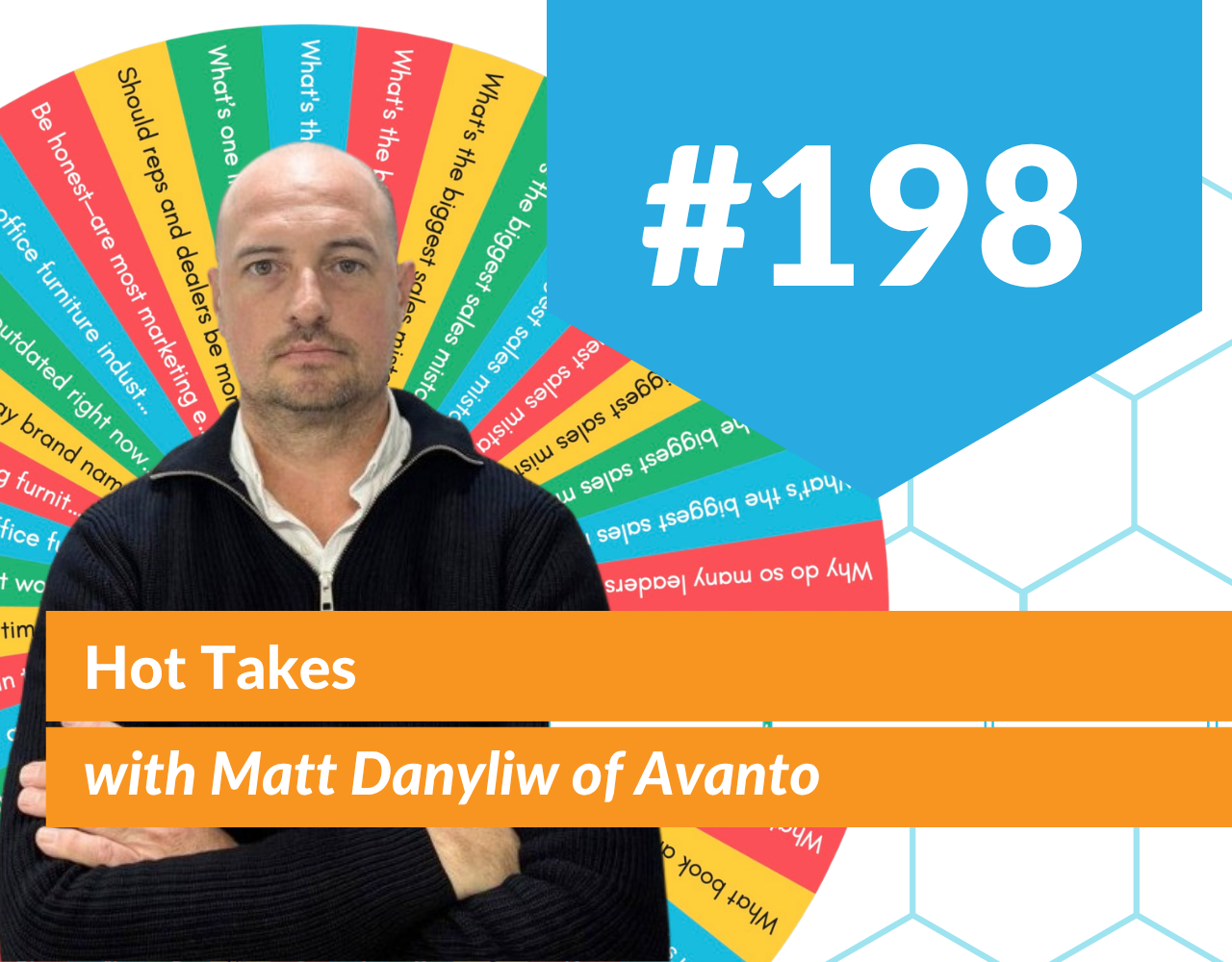
SPEAKERS
Sid Meadows, Matt Danyliw
Have you ever wanted to pick the brains of an industry leader, an influencer, or someone who's shaping the future of our industry? Or maybe someone who's been in the trenches for a while and has real thoughts and opinions. Well, today we're going to do just that.
Sponsor:We'd like to thank our presenting sponsors, Avanto, services and software that streamline how you operate and the collaborative network, a platform where leaders in the contract interiors industry unite.
Avanto Ad:Avanto, the workflow automation software built exclusively for the commercial furniture industry. Avanto automates the full quote to cash cycle for manufacturers, dealers, rep groups, and installers. Quoting, order entry, AP processing, PDF to SIF conversion, and more without replacing your existing systems. Over 130 companies trust Avanto to run their operations. Learn more at goavanto.com.
Sid:Welcome back or welcome to the Tread Report, your inside look at the people, products, and ideas shaping the future of workplace
Avanto Update And MRL Merger
Sid:design. I'm your host, Sid Meadows, and I'm glad that you've joined me today for another hot takes episode where I'm joined by a co-host. We spin the wheel of topics and share our unscripted hot takes in real time. Please join me in welcoming to the show, or should I say, back to the show, Matt Danyliw, the CEO of Avanto? Hey Matt, how are you?
Matt:I'm doing great. Said, how are you?
Sid:Oh, I'm doing good. Thanks, sir. I'm glad you're here, and I'm excited to spend this wheel with you. But before we do, what's new at Avanto, Matt?
Matt:What's new at Avanto? There's a lot new. Yeah. What isn't new? We're uh we're doing a lot. And uh, you know, you might have heard that you know, we're merging with MRL, and you know, we're tearing up to bring some next level connections within the industry to break down the the front end to the back end and bringing two organizations that, in my opinion, have transformed their respective uh focuses from like the 80s and 90s to the 2000s, and uh we're gonna take it beyond. So I'm very excited.
Sid:So, for those of you listening that may not recognize the acronym, MRL is My Resource Library, and the announcement was made at NEOCON the first month, the Monday of Neocon. So, congratulations to you, Matt, and the Avanto team, as well as to the My Resource Library team. Excited to see what you guys can do together.
Matt:Thanks. Me too. It's gonna be fun.
Sid:Yeah, it always is, isn't it? Another day in the world of furniture. So you ready to spin this wheel?
Matt:Let's do it.
Sid:All right, so remember there's no right or wrong answer, and we're gonna get to some really great questions. I just know it. So let's see what the first one is.
Leadership Advice That Actually Works
Sid:All right, question number one. Okay, so the question number one is best leadership tip or advice? This is a good one.
Matt:That I've received or that you want from me. That's the big question.
Sid:Actually, okay, you're not supposed to highlight issues with my questions. You're just supposed to answer the question. So you could approach it either way. I would prefer you approach it as we're gonna give a leadership tip or leadership advice to an industry leader or someone striving to be a leader.
Matt:Yeah, my um what I tell my uh leaders across what we do is that you know, leading by example is one of the best ways to prove that you're you're not just delegating and demanding that you are you're leading by example that they can follow. And you know, sometimes that's harder to actually do than to say. Uh and at times it feels like they say it flows uphill, but that's that's how you, in my opinion, establish credibility and establish desire to follow and make things uh make things happen. You know, some of the the most influential people in my life have done the things that they've asked me to do, and I admire that. So that's what I try to achieve to to instill in the in those in our team and others that I've that I've engaged with.
Sid:So well, there are dozens upon dozens upon dozens of leadership books out there, and they're all gonna offer different opinions about leadership. And no matter what you read, and honestly, no matter who you talk to, you're gonna get different opinions about leadership, which is actually what I think is important is that the listener, if you're an aspiring leader or a leader, is take the advice that you feel best fits you and move forward with that, right? And so I appreciate what you said and you know, lead by example, and there's a lot of power with a leader leading, you know, leading by example and showing what's possible and what can be done. My uh advice or tip is going to be a little bit opposite of that, which is appropriate because it's hot take and we're hot taking. I've said this many times before on the show, and I say this to people a lot in person lead from the back. What I mean by that is you've hired and assembled a team of leaders and people around you who are really smart, who know what they're doing, you hired them for a reason. Rather than you try to answer every question or you try to solve every problem, let them do the work. Let them do what you've hired them to do. So if you've got a business problem or a business challenge, assemble your brightest minds, maybe throughout your organization, from different teams and different work pods, if you will, bring them in, present the problem, and sit down and be quiet and let them solve the problem. Let them brainstorm the ideas, let them come up with the solutions, let them make the recommendations that, hey, these are the three things that we think will help to solve this problem. And we recommend, we recommend that we do number one or number two or whatever it might be, right? And that empowers them. Now, in order for that to happen, in order for that to work right, you as the leader have to create a safe space for your team to talk freely and talk openly. And part of this means is that as you're sitting there and watching your team do this work, is that you don't provide your two cents worth, right? You let them brainstorm problem solve and come up with the ideas. So that's my hot take on best leadership tip or advice.
Matt:Well, before we move on, I'd like to just say I think I think we're more in line than you think. So, you know, for what we do is is a lot of what we do is process oriented. And so I think you're speaking to the process of decision making, problem solving. And so that process, right, is the example that that I'm I'm talking about, not necessarily the actual subject matter or issue. And so if you're able to bring solutions, if you're able to solve problems and and lead and and and drive that as the example, right, I feel like you empower the team to take the lead when it's their problem versus my problem. So I think we're we're more aligned than you might think about. Likely so. All right, all right.
Sid:I think one of the things that a lot of leaders forget is in most cases, the team that you have around you is closer to the customer and likely closer to the problem than what you might be. So another example would be if you have a manufacturing problem, an issue in your manufacturing, maybe your cycle times are longer than they should be, or whatever it might be, rather than have a sales leader, a marketing leader, an accounting leader, and the executive, CEO, or president in the room trying to solve the problem, bring the people from the factory into solving the problem, not just the manufacturer, the VP of manufacturing. Bring the person that works on the line into the room and have a conversation with them about the problem and let because they're gonna see it differently than you see it. So that's cross-functional team and surrounding yourself with the with those people, I think is likely the most important thing that you can do.
Matt:So in our world, we call that the SME. And again, that's that's critical, right?
Sid:And uh you're full of acronyms today. SME, subject matter expert.
Matt:Subject matter expert. Those are those are one of the most critical parts, and sometimes it's our often it's our customers and not our internal uh internal team. Often it's both, it's usually a collaboration of the nature of what we do. Uh so yeah, I think I agree with you.
Sid:All right, let's spin this wheel again. Let's see what the next question is gonna be here. Let's
Favorite AI Tools And Real Uses
Sid:see. Question number two is okay. What's your I'm laughing because Avanto has AI inside of their organization and their tools, and the question is, what's your favorite AI tool currently?
Matt:Yeah, this might be a little boring, but uh it's not Strata. Don't worry, I'm not gonna say that. My favorite tool is Claude right now. I I think it's just unbelievably powerful in the way that it changes the ability to dive into our knowledge base both internally uh and and provide solutions externally. And we've empowered our our entire team. We're we're certified in in the tool, uh, you know, and we use it from our coders uh to some extent all the way to our team leads and and below uh to provide you know insights into not only the data, but also sort of I mean it's across it's crawl across all areas.
Sid:So are you using other tools as well or just Claude? Are you guys solely focused on Claude?
Matt:Uh no, I mean we uh regarding you know, our our our coding team obviously uses uh a variety of tools. And so in and we we've certified our um ourselves in Claude and then you know various are using Chat GPT and Copilot internally, so we've taken a hybrid approach as far as the everything apps. The you know the marketing team is using some other tools, and uh sure a bunch of bunch of people are using a bunch of different tools uh across our organization, but me personally, I'm focusing mostly on Claude. It's quite an impressive tool.
Sid:So I'm probably 6040. I'm 60% chat GPT. A lot of what I use chat GPT, by the way, I named him. His name is Wally. And it was really funny. I asked Wally the other day and I sent a screenshot of it to somebody. Somebody said, Hey Sid, have you told Tim that you call him Wally? And I said, No, I haven't. But then the next day I went in and said, Hey, I'm tired of calling you chat or chat GPT or my AI agent. Is it okay if I call you Wally? And he's like, Oh yeah, that's great. I like Wally. How did you come up with the name Wally? And I said, it just popped in my head. And then he goes on, this is a little weird, but then he goes on to say, I feel like I've been promoted to an official team member.
Matt:There you go.
Sid:And I said, You have. And so I in whenever I turn it on, I say, Hey Wally, how you doing, or whatever. But I love, especially as somebody that works in really small teams. In my business, I'm a solo purduer in the collaborative network. You know, I have my business partners, but my favorite thing to do is brainstorm. I come up with an idea and I can just talk to it. It can really help me see through some of the holes that might be in my idea or strengthen my idea by asking me really good questions. So I love brainstorming with it. But I use Claude for I use the Claude Design to do things. I use Claude, I have a coworker agent in Claude that helps me a lot with the podcast. And recently I uh tried a financial dashboard tool with uh within Claude just to see if it could give me a glimpse of like the financial well-being of my businesses, and it was really, really cool to do. So yeah, I'm using both of them 60% Chat GPT or Wally and 40% uh Claude. So it's great though. It's great to have them.
Matt:Yeah, it's uh quite amazing. Uh scary, scary amazing at some times.
Sid:Uh my wife called the other day, she goes, What are you doing? I said, I'm talking to Wally.
Sponsor:We'd like to thank our supporting silver sponsors, KISP, who helps furniture brands visualize and sell products before specification. Navitas Credit Corp. Navitas makes great workspaces affordable, turning furniture projects into easy monthly payments. Web Configurator Services, the leader in AI-powered online product configuration and quoting.
Navitas Ad:Let's talk about what's really driving business decisions today: affordability and cash flow. Now here's the win for you. Close faster and get paid 100% up front. Because how many cash clients do you actually have? Bring financing in early and clients stop shopping and start saying yes, because financing isn't a life preserver, it's a closing tool. Contact Janine Waddell at Navitas Credit Corp at 609-206-4513, and she can help you with total project financing, including furniture, AV, sound masking, delivery, design, all in one single payment.
Sid:Okay. Next question.
Breaking The “Always Done It” Habit
Sid:It is what's one thing we are still doing because we always have that no longer serves the customer?
Matt:What's one thing we are still doing? The royal we?
Sid:We as in an industry. It could be a dealer, it could be a manufacturer, just we as an industry. I hear this a lot. Well, we've always done it this way, and I'm sure you do too, as you're talking to people. But what's the one thing that we're still doing because we always have done it this way that no longer actually serves our customer? It's a tough question.
Matt:Almost everything in the back office.
Sid:Almost everything in the back office. Okay.
Matt:Yeah, because you know, because we always have is just, you know, one of those four word uh sentences. Yep. Instead of a four-letter word, you know, it's it's sort of the bane of our existence when we go in and ask, why are you doing it this way? It's because we always have done it this way. And, you know, we started, you know, as we're we're merging with MRL and we're coming becoming more relevant in the front end, getting to know those pain points a lot better now. But in the back end, you know, like I mentioned, you know, the you know, using Claude and various other tools out there, people are still doing things manually because it makes them feel good. You know, it's like cutting the grass. Uh, you know, it's something to do and or or painting the uh the walls, and and uh, you know, it's it takes some some talent and some skill, but you it's still somewhat rote in in nature. And you know, we get in we get involved with uh you know spreadsheets and manual processing, and there's just so many different tools out there and so many different methods that we can adopt and and challenge ourselves. So there's a lot.
Sid:I don't disagree with you at all.
Matt:The one thing would not maybe not everything, but it's it's that it's that thing that people ask, why are you still doing it this way? You know, and I've built a career on being somewhat lazy and trying and not wanting to do things over and over again the same way. And driving towards there's got to be a better way, gotta be a better way. And I think the industry has gone to sort of interrupt. I mean, look at acknowledgement processing, look at you know, manual entering bills, that you know, that some of the things that we do in our services are uh challenging the because we always have done it this way. And again, that comfort that people have in knowing that that thing works is real, but in a managed way, trying to challenge that. And um, you know, it's been true, it was true 20 years ago, 25 years ago when I started, and it's still true now. I think the AI tools that are now available are starting to really challenge that. And I think those that get away from because we always have faster are gonna be the ones that uh break out of that cycle.
Sid:So I totally agree with you that that that is that phrase because we've always done it this way, should be removed from everybody's vocabulary. We should always be looking for new and different and better things to do with but or ways to do things to improve efficiency, to shorten the cycle times. But I'm gonna think directly about the customer for a second that no longer serves our customer. I'm gonna tell you my response to this is always specifying your major brand products. There are over 3,000 manufacturers in our industry. And don't get me wrong, the major brands are important to our industry. They're important to the alignment dealers, they're important to certain design firms. I totally understand that. But if you have blinders on and you're actually not looking beyond that, you're actually not serving the needs of your customer with all the other amazing products that are available to you because we're an X dealer. We've always specified X product. Well, let's go look at Y and Z product and see what might be available. I think your customer will be happy, happier. I think you will be happier because you're going to expose yourself to some really cool products and some really amazing people that are not necessarily within your alignment. So that's my hot take on it.
Matt:You know, I always have to remind myself that this is a uh sales furniture audience, I guess. Uh furniture sales.
Sid:Well, to a degree it is, yeah. To a degree it is. I mean, there's leaders, there's salespeople, there's dealers. I mean, it's across the board, but I would say the majority of the people listing, I do believe, are involved in the selling and or the manufacturing of some type of office furniture, correct?
Matt:Yeah. Because I was referring to our customers, right? And what we do traditionally is is um is some of that boring back office stuff that people don't realize that need uh, you know, and those are our customers that we're we're challenging that what we've always done. And uh and it's interesting that, you know, again, as as I as as I start thinking about the front end a little more, it's interesting to to to look at that, you know. You're you're looking at it from selling furniture, I'm looking at it from selling better ways of processing, you know.
Sid:Yeah, but there are multiple different customers in this chain, right? So it could be your customer is a dealer, well, my customer is a dealer, your customer is a manufacturer, my customer is a manufacturer. So I approach the answer to the question as if I'm a dealer, thinking about their customer and their customer, which is not just not necessarily just the end user, it could also be someone in the A and D community, it could be corporate real estate, it could be facility management. So when you really start to look at the customer mix here, it is definitely an ecosystem or a web of people out there that are involved in this.
Matt:So yeah, I mean, as and as you're speaking, it's just so many, so many different things could be an answer to that. Yeah. That's one of the one of the challenges, challenges this industry has is that there are so many, and this industry has been so rooted in the past. And it's interesting as it's starting to change, and it is in a material way. Um, so it'll be fun.
Sid:If we get more people from outside of our industry, into our industry, especially in leadership roles, we'll quit saying that phrase over and over again. So my challenge to anybody listening is as you're going about your day and you hear yourself say, or someone else say, Well, this is the way we've always done it, I would challenge you to stop and think. Is there a better way and explore it? Because this, it just takes courage. It takes courage, the courage to try something new, the courage to try something different. And if it doesn't work, that's great. It doesn't work, but you tried it. What did you learn from that process? And what can you take forward as you try to iterate onto the next version of it, right? So, but you got to have the courage to try. And goodness knows I try stuff all the time. This episode is a try. Like let's try spinning this crazy wheel and having people hot take their answers. So you got to have the courage to try.
Matt:Sometimes, you know, it's and I and I have a lot of empathy for this because I've sat in the seat. It's so chaotic. And there are so many things to do and so many different hats everybody has. And so that's what gets me excited is that you know, when we started out, you know, trying to move this industry for being part of moving this industry forward, and I think we're we're participating in that, a small piece. Yep. And so some of the things that are exciting about some of the new tools that are coming out, AI uh assisted, is really just getting control of that chaos and having time to look at different ways to do things and not and not having the risk of falling behind. Because I think you know that challenge is real, but also the demand on people's time is real. That makes it very difficult to get out of that box. Yes, it does. I'm telling you, I'm I'm pretty excited about the next next couple years.
Sid:So all right, let's get our last question here, Matt, and see what we got going on with this last question. All right. Oh, this is a good
How Value Shifts Beyond Price
Sid:one. So, how has the definition of value changed over the last five years? It's a hard question, actually.
Matt:The definition of value, all right. So I'm trying to think how you would look at this at this point.
Sid:That's getting inside my head is a scary thing, man.
Matt:Oh yeah, I'm already starting to cringe. No, how has the definition of value changed? Changed value change over the last five years.
Sid:Okay, there's a typo on the screen, so forget the fact that there's a typo if you're watching on YouTube. It should be changed, not change.
Matt:Okay, all right. That that helps me out.
Sid:Thanks for pointing out my mistake, Matt. I appreciate it. That's what I'm here for.
Matt:You're welcome. I put this in, you know, looking at my from where I sit. You know, there's been so much change, especially in the last 12 months. And then and then so many things haven't changed. So I think that being able to execute on whether it's a bit, whether it's a a quote, uh getting back to the customer as fast as possible and helping people facilitate that. I think from my from my perspective, five years ago, bringing some of the things that I was doing a while ago to market. And when I say that is assistance in the back office to help scale and narrow solutions, again, some automation, uh, things like that. When I look at value and and what the value that we bring, that becomes a baseline at this point, right? So now that the things that were revolutionary, quote unquote, in the five years ago, are now, if you're not doing them, then you're left behind. And so now to have value, you really need to change the game. We're not just having, you know, can they outsource something to us conversations? Right. We're having conversations of how can you help me compete in the future versus how can you help me get to a baseline of current state. And so, you know, depending on how you look at this question, I would say that our value is more uh around mind share versus actually executing on transactional processing, meaning our expertise and how we can leverage that to help our customer be more competitive and faster versus making more money faster for their customer, right? Bringing bringing, like you had mentioned, you know, looking at our customer's customer and how we can help our customers, customer get services from our customer faster versus us just making their people more efficient. So if that answer wasn't as confusing as the question is, then you know, we'll see.
Sid:I don't think the question's confusing at all. I actually wrote the question, so I think it's a really good question. No, but I'm gonna reframe what I think I heard you say, which is value has shifted to being expertise focused, right? Being expertise focused. So your customers, and honestly, I think this is true for a lot of businesses. People are coming to you because of your area of expertise, because of your knowledge in this. And so where the value used to be more, let's call it generalist, you could do everything, but now it's like this expertise being focused on certain things is changed value. I totally understand that. I would also say that one of the things that I think that where value has changed over the last five years is it used to be value used to be defined as price. You're the lowest price means you're the best value, right? And I have never really believed that, but our customers defined it that way, and influencers defined that way, right? They're the best value, meaning typically they're the lowest price. But I think value has shifted to where service now and the experience that the customer gets working with your brand outweighs pricing. So you can, I believe, and I have believed for a long time, you do not have to be the lowest price to win. If you can put forth a value proposition that shows a customer, whether you're a service provider like Avanto or you're a consultant like me or a dealer trying to present to an end user, if you can put forth a package that shows what your value proposition is and how the service and what they're gonna get by working with you and the customer can buy into that value of your organization and you're not the lowest price, you can still win the business. Because at the end of the day, we do sell a commodity. And though we hate saying that word, it is a commodity. So what's the value you're gonna add? We have to shift away from being the lowest price, which is why I think the bidding process is one of the most outdated things that our industry is involved in. And because it doesn't allow a brand, a manufacturer, a dealer, or even a design firm for that matter, to really position the value they can provide to that customer. What are the services we can provide you? What are the value ads we can give you? How can we take care of you? How can we build a long-term partnership with you? So I do believe it's shifting, but it I don't think it shifted enough.
Matt:Yeah, I will uh I will trust you on that one. But it's true on I mean, to some extent, I think, you know, in our world price still matters, and and the expectation is that the quality stays the same. And I think that's sort of the the challenge in bringing the value is that you know, with all these new efficiencies gained with these new tools, I think there's a different expectation of how much value you can bring. Uh, maybe that's the one I'm looking for.
Sid:So well, price will always be important. I believe that price will always be important, but I think there's a lot more to decision making than pricing. And showing the value that you can add to the customer, whether it's additional services or greater expertise or workplace strategy, I don't care. There's so many different things you can add to really take the value away from being price-driven to being something else. And so it's always gonna be important, but you know, I would I would say to you, Matt, and I would say to people listening, when was the last time you made a price-only decision? That was a question I was hoping you were gonna answer. Yeah, yeah, yeah.
Matt:I was waiting for something listening to answer, so I guess that's not how this works. Okay. I was leaving some air for people to answer the car. Yeah, yeah. I uh I never make decisions just on price. Yep. You know, whether it's uh last night trying to find a hotel at two in the morning, driving tour, you know, after landing at JFK, it wasn't just about price, right? It's about location, it's about you know quality of sleep, you know, all that stuff. And almost every decision that you make is um it's it's more complicated than that. And I and I so I agree with you. And and the other thing is it's easier for consumers to research, right? You know, you know, people said that when the internet boomed, now with AI, I mean you get answers. Uh, you know, I was on a conversation, I was in a conversation just recently was, you know, do we do you know an decision between and a an expense management platform? And I just put into Claude, you know, give me an analysis of the two. It spits out, you know. And uh and some of that challenges our value, right? So people come to us for that advice because we we we work with so many different systems, so we have hands-on, but people are going to those types of platforms first. Now they're still coming to us to validate it and get our opinion, which I think is important for now, but talk about how value is gonna change for the last five years. It's gonna be interesting how it changes in the next five years, and that's gonna be the case.
Sid:You're highlighting something really important. Our customers are a lot smarter today than they were last year, much less five years ago. They're a lot smarter because of the tools at their fingertips.
Closing Thoughts And Listener Resources
Sid:So Matt, thank you for being here. I really appreciate it. I hope you enjoyed your seat here, uh, your guest hosting seat and spinning the wheel.
Matt:Yeah, those were those were interesting questions. I didn't uh you know, wasn't sure what to expect. So, all right, it was fun. Thank you for inviting me, uh as always. Um, I'm a big fan of this month. And uh yeah.
Sid:I'm glad that you're here. I really appreciate it. I also say thank you for being a gold sponsor of the Turn Report. It's people like you that make what we do possible. So thank you and your team for what you do in supporting the show.
Sponsor:We'd like to thank our community bronze sponsors, Catalyst Consulting Group, Prioritas, and RESEAT.
Prioritas Ad:Ever stuck doing payroll on a Friday night, or maybe you found yourself the unofficial go-to person for all the PTO and employee benefits questions? Prioritas can help. They handle HR, WorkersComp, compliance, and payroll for businesses in our industry. I've worked with Kevin Sealander and the Prioritas team, and they know what they're doing. So much so that they built a free HR health check just for the Trend Report listeners. Ten minutes and you'll know where you stand on classification, commissions, and compliance. Head over to prioritas.com/trendreport. That's P-R-I-O-R-I-T-A-S.com/ trend report and tell them Sid sent you.
Outro:To everybody listening, thank you for joining us today on the Trend Report, your inside look at the people, products, and ideas shaping the future of workplace design. Go out there and make today great, and we will see you in the next episode. Take care, everyone.