The Trend Report Podcast
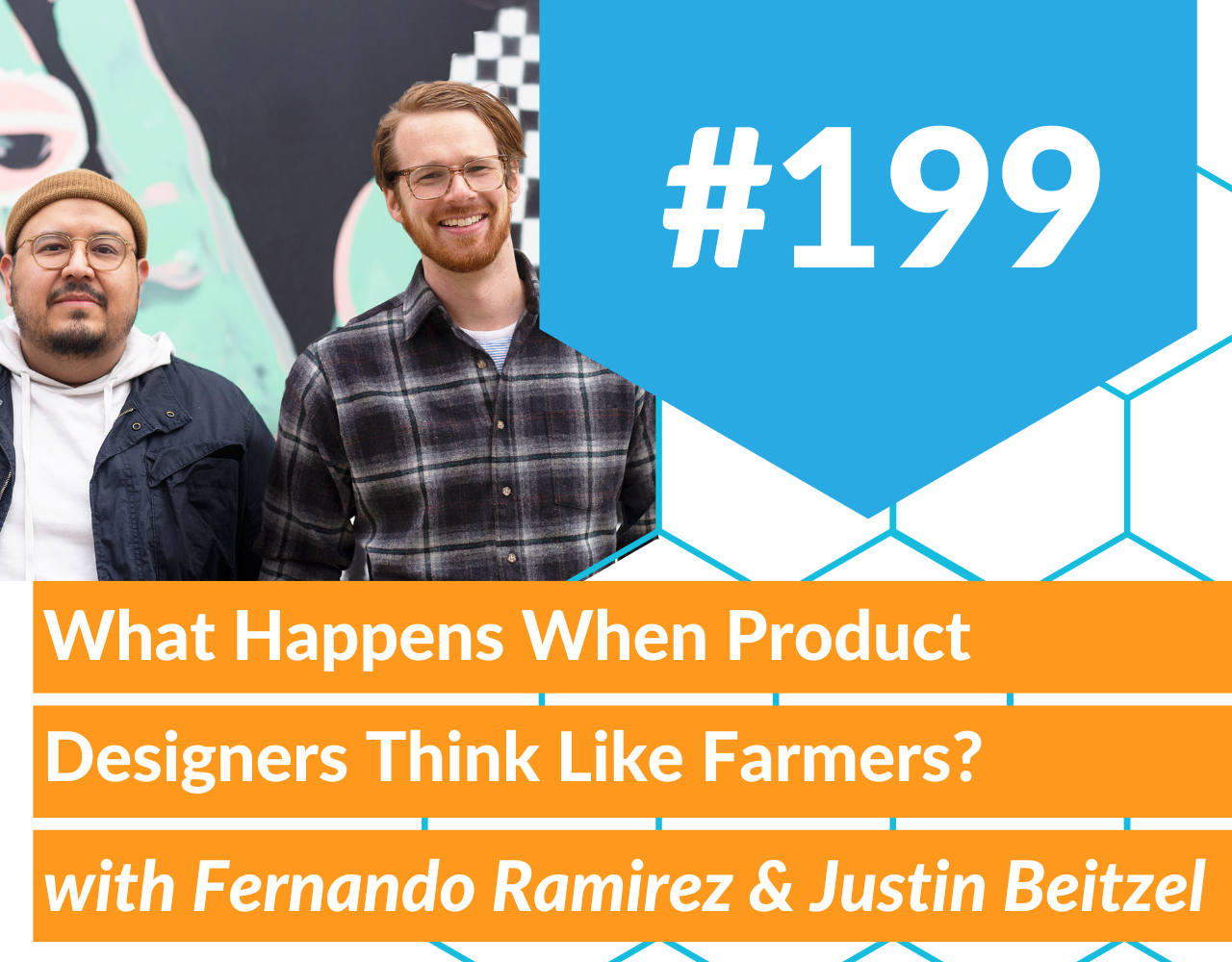
What Happens When Product Designers Think Like Farmers? with Fernando Ramirez & Justin Beitzel
SPEAKERS
Sid Meadows, Fernando Ramirez, Justin Beitzel
Most of us interact with hundreds of products each and every day. We sit on them, we work on them, design them, and sell them. But here's the question. How many of us actually know where the materials inside those products comes from? Not the country of origin, not the specification sheet. I mean the real story. Who grew it, who harvested it, who processed it, and what happens to it when we're done with it. Today we're exploring what happens when you start with the material, the maker, and the story, and then design everything around it.
Sponsor:We'd like to thank our presenting sponsors, Avanto, services and software that streamline how you operate and the collaborative network, a platform where leaders in the contract interiors industry unite.
Avanto Ad:Avanto, the workflow automation software built exclusively for the commercial furniture industry. Avanto automates the full quote to cash cycle for manufacturers, dealers, rep groups, and installers. Quoting, order entry, AP processing, PDF to SIF conversion, and more, without replacing your existing systems. Over 130 companies trust Avanto to run their operations. Learn more at goavanto.com.
Sid:Welcome back, or welcome to the Trend Report, your inside look at the people, products, and ideas shaping the future of workplace design. I'm your host, Ted Meadows, and today I'm joined by Justin Beitzel and Fernando Ramirez, co-founders of Common Object Studios and the creators of Okaterra. Welcome to the show, gentlemen. How are you today?
Justin:Hey, hey, how's it going, Sid?
Fernando:Sid, how you doing?
Sid:I'm doing great. Thank you, sir. I'm excited to be here with the two of you because you have a really unique story of the things that you're creating, the things that you're doing. And I love people breaking the rules and doing new and different things. But before we dive into all of that, I like to start with the
Two Founders One Design Philosophy
Sid:people behind it. So briefly, Justin, tell us what it is that you do, and then we'll go to Fernando. So what is it you do in this combination role of two different companies you guys are having?
Justin:Sure. So Fernando and I, when we met, I don't know, it would have been fifty, maybe 13 years ago, something like that, we were coming from very different parts of design, right? I was coming from more an engineering role. And so when we met, I think, and started talking about starting a studio uh six years ago, we realized, oh, we have very different like backgrounds, very different perspectives, but like really similar values and vision. So I'm definitely more on the in the weeds, you know, on the engineering, more detail-oriented side of things. But then I think we we come together, uh, and as Fernando will tell you to kind of create these objects and these spaces and material studies. Yeah. So I definitely we I work on both sides of the business, you know, from the common object to our Okaterra brand. Yeah, I tend to be kind of in the details.
Sid:So the way I'm going to interpret that is you're the guy that says, Fernando, that won't work. We can't do it. It can't be manufactured. You're the no guy, right? Is that is that resacting?
Justin:I I Fernando, you I I I feel like I um play that role.
Fernando:I think, yeah, he's he's definitely uh has tighter guidelines than me. But that uh that makes me stubborn though, right? Uh then I'm like, oh well, I I think I can do it. Let me push a little harder. It also challenges me.
Sid:So it's I love this. So, Fernando, tell us about your role inside the businesses.
Fernando:Yeah, you know, like Justin mentioned, we we kind of came from, although we're both industrial designers, we came from those different backgrounds. Mine was definitely a lot more space-centered. So I studied environmental design. I worked in that for a bit. More commercial spaces, uh, really enjoyed that, but but you know, wanted to get closer to the product, wanted to get closer to kind of exploring, you know, uh, what are the you know, user-centered design pretty much, and and you know, how can I build off of that? And I think that was, yeah, that that's really kind of where me and Justin really aligned a lot. I think we were in school at the time of like uh where IDO was like everything, right? That that kind of user-centered design. I think although we were really inspired by that, but I think as we came together as a studio, we started to ask, how do you broaden that out? And and now I think we look at it as more like planetary-centered design. So how do you broaden that out, look further back? And I think you know, we both do that well, but definitely I'm probably that part that kind of pushes the idea at the beginning, kind of builds that out. Uh, and you know, we joke, but it's really a dance uh back and forth. There's times where I am like, hey, we gotta get more strict, and Justin will all of a sudden be me for a second and be like, well, hold on, I think let's think more broadly about this. I'm like, what? I'm giving you what you want. It's it's such a funny, it's a really great relationship.
Sid:That's great.
Fernando:That pushes the pulls.
Sid:So, Fernando, I have a business partner at the Collaborative Network that uh I struggle with her and some of those very things, like pushing back, or then she agrees to something I want. I'm like, come on, what like don't make this easy for me, but always a moving target, right? So, where did you guys meet? How did you meet? Go ahead, Justin.
Justin:We met actually at Kendall College of Art and Design in Grand Rapids, Michigan. So we both ended up there after doing college in other places, and then we also then both were interns at Steel Case uh in Grand Rapids as well. And I think that's where we we had a a kid within three weeks of each other. Oh, wow. So our first trial, yeah. So Fernando and I like there's a lot of personal pieces that connect us, but I think there's like a really strong, just like professional design philosophy that really, really linked us together pretty quickly, I would say. Would you say, Fernando?
Fernando:Yeah, and you know, in college, that's the time where you have all these deep philosophical talks about design, right? You're trying to figure out what that all means. And I I think me and Justin are fortunate enough to kind of have those together and then go through corporate and kind of what do we like about it, what don't we like about it, right? Uh and then, like you said, yeah, that then having that friendship to start to to uh build from, you know. Yeah, it it felt very natural talking about like what would happen if we worked together.
Sid:Um who started who who came up with the idea, let's start a studio together. Whose idea was it?
Fernando:It wasn't either of us. I think it was somebody on that.
Justin:Yeah.
Sid:So neither one of you can take credit for it, then no.
Justin:Some we we ended up on we we were both freelancing for a bit after kind of corporate world, and people were naturally pulling us into projects because of our skill sets, right? And I think someone was like, Yeah, why why don't you guys work together more? And we're like, why don't we? We should. Um, but it was really intentional. I think also, honestly, COVID, COVID hit, and we were both like, oh, everybody's going remote. Um, I think we didn't believe I'm in Baltimore, Maryland, Fernando's in Grand Rapids. We didn't think that we could do a remote studio, but all of a sudden, I think the world saw like, you can. It's it's possible. And so that was the moment, and you know, probably about a year of just talking together about design and philosophy of what we saw a studio could be, and eventually we jumped in.
Sid:So your first business that you started is Common Object Studio, and that is your product design business, correct?
Justin:Yep.
Fernando:Yeah.
Sid:So and you design products now for yourself, but you also have designed products for other businesses and had partnerships and other things. So, Fernando, let me ask you this question. You know, having a business partner, which I have a couple, it's a lot like a marriage. So, what convinced you that this partnership would actually work?
Fernando:Yeah. I think one, me and Justin have very different backgrounds, but what's really interesting is the value alignment. I think one, just seeing um what's important to us in design, this idea of if we're gonna start a studio. How does it really show what we are about and what our values are about and how our approach to design can instigate change? Uh so I think first and foremost, it was really like all right, how do we create something that we could be really proud of that is unique to us? I think that was the start, but I guess with that being said, that value alignment really is how I knew that we would be good partners.
Sid:That's a certainly important thing. And Justin, I'm gonna ask you this question. What values are non-negotiable? He talked about values alignment from your perspective. Like, what are the non-negotiable ones? They're both smiling a little bit here when I asked this question.
Justin:So we're always careful with it. That's why. Yeah, yeah. I I guess maybe not non-negotiable, but I think Fernando and I are both like we're pretty playful designers, right? And we always want, and that's like maybe a like a high level where our you you see our kind of design language. But then I think there's like on the maybe the side of like we both are really invested in community. So we're we've always been questioning since we were in college, how does design affect community? And that could be the community that's going into, right? Uh you're designing for. But I think probably what's different maybe from other studios is uh we're so focused on the making of the object and right how that affects community, right? And I think that's often over, at least it was felt kind of overlooked in maybe my early years of design, right? Like that that wasn't really didn't come up as a as a thing to look out for. And then the other side that I think it ties along with community, but we always say it is this sustainability lens that we view the world through. And those two become a lens for us, you know, and it's the lens for creativity, right? It's a we love to constrain ourselves in a way that we believe ends up creating objects that are like unique and wouldn't come out in a a different way. We see it as a an advantage when you can constrain that. And so I think those beliefs and philosophies are like are are core to maybe what makes our products. Sure. So maybe that's the non-negotiable part of it, is that it's how we constrain ourselves.
Sid:I actually really like that. Now, you guys I've I've interviewed a lot of industrial designers or a lot of product designers, and I say a lot of few of them. It's always fascinating to hear the story behind how their philosophy and how they design products, and you know, because there is uh everything has to be designed. But very few of them actually have taken the next step and started their own furniture company. And you guys have started your own furniture company. And I think one of the things that stood out to me when we were talking about this was it's not necessarily simply created about designing product, it was created around these set of beliefs of what design could be and what responsibility designers have in shaping the future, right? In shaping the products. So
OkaTerra And The Farm To Furniture Model
Sid:let's talk about Okaterra. Did I say it correctly? I feel like I just butchered it. I didn't know. Yeah, Okaterra. Okaterra. Oh, you got it. Okay, Okaterra. So, Fernando, what is Okaterra?
Fernando:Yeah, so Okaterra is really embodies what what Justin just laid out, right? We we it started with you know asking that question uh can the act of making give back more than it takes? But essentially, uh what it is is we work directly with farmers to get materials and once specifically uh who farm in a way that's better for the planet. Uh we get those materials, we process them into materials for furniture, and then we actually make the furniture. Then we can uh either work with the company or sell direct. And right now, you know, this, you know, Okaterra's been around uh what are we year three? I think. Um, but you know, a lot of that was setting up these systems. Sure. So it's still kind of a new idea, even though uh we've been playing with it. That's really born, once again, from all those ideas, right? Sure. It's saying how far can we push our ideologies? Yeah. And that's really where Okaterra was born. It's like, oh yeah, can we can we see this into an actual product uh that can scale? And I think common object, that's the side. We we explore things in order to scale them. And I think Okaterra is really a great case study around that.
Sid:Okay, that's awesome. And we're gonna dive into this a little bit deeper. But Justin, where did the idea of Okaterra come from?
Justin:What's funny is I think not from a design place. It was actually as Fernando and I were, you know, we were two, three years into the studio, and we we realized we don't have it's hard to find a client that's willing to like really go all the way on a any kind of journey with you, whatever the purest view that you want to go to, you keep it's hard to do that, you know. So we realized, hey, we need to create a case study that's gonna show what we believe in. And at the time I was really and still am into permaculture and understanding our food systems, regenerative agriculture. And I was we were looking at these different systems and saying, like, that's that's really amazing what they're doing for food and this movement around agriculture. What does that mean for furniture? So it really was just a question kind of from another industry that we wanted to explore within our industry that we actually know, right? And I actually I wanted to start a farm. I was I was out looking at land, sending Fernando videos.
Fernando:Uh and I was like, that's enough, Justin. We need to go back, we need to go back to what we do well, well, right? We're not gonna be farmers. We're not gonna be farmers. Well, it was what was funny is the timeline too. Okaterra was gonna take you know 12 years before we could get a product out because we had to start the part, right? So anyway, we we go back and you know, you know, the conversation we had after that is like, well, let's look, you know, let's do what designers do well. Let's look at the system, let's kind of understand where change can happen, let's understand uh how to commercialize that system so that we could actually scale the product. And we we kind of went, it was nice, we went back to to kind of that design mode, right, and we're able to really start to create frameworks for how this could actually work, which was really that was that was the fun part because we were actually meeting with farmers and having conversations and meeting with different uh people that could produce it. Like we were very limited, right? Because uh, you know, America's production it's limited. So especially from scratch, right? We're not talking about uh, you know, going over and getting some metal bet. Uh we're talking about from soil all the way to product. So it it was a lot of just creating frameworks, though, uh, at first.
Sid:So I appreciate that. It's always interesting to hear how people start a business and what they look at first and the farming thing, let's build a farm. It's kind of funny. But uh I'm glad you decided to build furniture because what you're doing is really good. So most companies start with a product idea, right? And you know, you started by talking to farmers. So explain that for a minute. Why did you say, okay, we've got a couple of products that we want to come to bring to market? Why did you go this directly to farmers first?
Justin:I think we knew that that was going to be the most difficult part of the journey because I guess I grew up in a Mennonite community and really understood, I guess, the pain that a lot of farmers go through with their with their crops, with the way they want to farm, but are kind of forced to farm in a different way. And so we said, like, let's tackle that pain point first and let's reach out to our local ecosystem. I think also, to be fair, uh, we also saw this movement in architecture that there was a demand there, right? We saw that the thing that was missing in a lot of these systems was the transparency the whole way down to the soil. So we're like, well, if we can solve for that, yeah, we can also get certifications, but but we have all the data then. We can we can really dive into it. So I think that there was two parts of it. One was we knew it was going to be difficult to convince and find farmers who were gonna farm in this way, and we knew that that was probably, we believe, the most valuable part of the company.
Sid:So this is a very much a holistic approach to sustainability, like from the very, very beginning, right? So, Fernando, can you explain the process a little bit? Like, I hear go to a farmer and I immediately think about a rancher in Texas, what we call this, my raising cattle. I think about a farmer as somebody with a big, huge garden selling crops, but maybe explain farmer a little bit and then tell us about the process.
Fernando:Yeah, absolutely. Yeah, I mean, I think it I think what's interesting about it when we talk about what we do, it really is just what design does, right? You go out in design, you always go out and talk to stakeholders. And I mean, that's really what we did, it's just we're really further back. I think we like once again, we pulled that lens further back and said, okay, what if we ask bigger questions earlier? But really, it it that early part was investigating what what are some possibilities. We understood it for the food systems. It was really clear, right? It's very linear, but for product, we're like, well, how do we how do we discover uh what are the opportunities for actual products? So going in there, you know, one of the things that really came out of it that we're really focusing heavily on is uh wool, and more specifically, uh the waste wool, the the they call it waste wool. So it has all the same properties, but it's it's the wool you don't want to get your skin, the short fiber. So a lot of our network now is like, oh, how do we how do we take this really valuable material, find a way to process it, give them a premium for their product, stuff that they're either getting, you know, very low return on, um, you know, incentivize them to also uh farm in a way that that's better for the planet. Uh so pretty much setting up that whole ecosystem and kind of understanding what that meant. But really starting starting with that investigation was the first step that to go back to that. That so that is what we did, is we got that, and then going out and just finding the right partners. Okaterra is really about partners. That's really at its core. We look good, but only because our partners make us look good.
Sid:Justin, you want to add to that?
Justin:Yeah, I was gonna say, just as specifics, like we started off with that question. Some some really interesting things we found along the way was the wool that we're really developing now, right? We found a hemp industry that's really starting to try to come up in the U.S. And that ended up being some of the webbing and the rope that's in our product. We found flax farmers who are trying to bring that back to the US uh in a way that's really great for the soil, a grass called Misacanthus, which is just this amazing perennial crop that is growing in West Virginia. And they there's there's this kind of like we started finding these people who are doing amazing things and saying, okay, how do we pull that physical material into the object? Right. It's so that built this palette almost of materials and colors that we could say, okay, now here's here's our options. Like we we know we can design furniture. Sure. But we're gonna make it from this.
Sid:So how much time did you guys spend? Because what I just heard you say was both of you say was we went out and we started talking to farmers. You went to a wool farmer, a sheep farmer, you went to hemp farming, you found flax farmers, you found the special grass. I assumed you talked to tree farmers. And so then what you came back with after you did all this research and you found places that had the same belief and value system that you have as it relates to taking care of the earth, then you said, okay, now we have this palette of raw material. Let's look at this palette and what can we make from this palette, right? Did I explain that?
Justin:I did.
Sid:That's better than we did.
Justin:Yeah, great.
Sid:It's okay. I get it's my job to reframe things, right? So I want to dive in. I'd love, I love the stories behind this. So I want to I want us to talk about Melissa, the cheap farmer.
Building A Material Palette From Waste
Sid:Pennsylvania. When he called her, she's like, who are these crazy people wanting to come see my farm and all this kind of stuff? But tell what tell us the story of Melissa the sheep farmer, please.
Justin:We met Melissa through this really awesome organization called Fiber Shed. Uh, and they basically are trying to bring Fiber's world back to the US. And when I reached out to her, she was really surprised. And I just quickly said, Hey, can you jump on a call with me and Fernando? I was in Grand Rapids. We jumped on a Zoom call. And I think she was like right in the middle of lambing season, and she was like, I don't have a ton of time. But we ended up talking for I think an hour and a half. And what we found was like Melissa was really on the same page as us. You know, we've been, I visited a lot of farms over the time that we've done this. And Melissa, I realized, oh, this is the type of person that we want kind of to be the, I don't know, the prototype to build this prototype company with. And so she has a small flock, about 200 sheep, uh, right outside Philadelphia. And you go to visit, and you can just feel something different about her farm, and you can see it too. Like her goals are to breed uh diversity into her flock because that creates healthy sheep. She doesn't have to use as many antibiotics or any antibiotics. Your fields are healthier because they can graze in a way that's uh that's adding biodiversity to the land. And she just really was open to this different way of farming than has been, I guess, kind of uh pushed over the last um hundred years. And so, and I think that came from her curiosity. She was not a farmer 10 years ago. You know, she was a physical therapist, if I remember right, beforehand, and really had a passion for animals and just has grown her flock to about 200 head of sheep. And it was, it's a really amazing story. And in the time since we've met her, she's gone from being, I would say, an expert on raising sheep to now she has her own fiber mill attached to the farm, which is amazing. We can go from like the literals, the soil, all the way to a fiber on her 30 acres there.
Sid:So we understand the concept from food, farm to table. You guys are really developing farm to furniture concept, like coming all the way from the farm. And so, Fernando, when you went to visit with Melissa, like outside of the way she raises her sheep, what stood out to you as to like this is the kind of business or the kind of person that we want to partner with?
Fernando:I think Melissa, where she was really different, right? And I think where I appreciate her the most is really the education she's she's an educator in a way. Like she's always she's very intelligent, but she's also been so willing to kind of educate us on everything as well. I I think me and Justin, you know, we we could read a lot of things, but unless we're seeing it in practice, it was very different. So I always uh said Melissa's like the third member of Okaterra, like when we first started, because without her, you know, we wouldn't have been able to like really understand the system as deeply as it is. And and I think when you're doing something like this, uh each part of the framework has this depth. And I think with Melissa, she really brought just that that um thoughtfulness and that deep uh knowledge around what she does and what her goals are, so that when we even now, if we have to get anything uh certified, right? Melissa's right on top of that. She really understands what she does, and I think that is really valuable in the partner. And you know, she she made that first step. I don't want to say easy, but definitely much, much easier than it would have been. And I think now we're we're getting to multiple farmers, right? And and how what does the system look like at scale? But we couldn't have got that without uh her approach to her farming and also how she shares with us.
Sid:I think that's great. How lucky was it that you discovered Melissa and that you met her in this and the impact she's having on you and your business? Let's bring this back to the furniture side for a minute. What happens when our customers understand the origin of the material that they're interacting with? Like what's the impact of that, knowing that? Because you obviously could tell us all about every product and where it came from and who the person was that grew the tree and that grew the wool and that kind of stuff. But what happens when a customer actually understands that?
Justin:What we find is there's a little more education that has to happen on that journey, right, with a customer, which makes, I think it's it's maybe why a lot of sustainability is a little bit harder, right? But we've found the I guess like allies or the uh loyalty that we get from people when they do find that is really rewarding, right? Like when you know, oh, this specific wool top for this table, it's slightly varied. There's you know, it's it's because Alyssa has all these different colors of sheep on her farm, right? That story then sticks to it. Or for instance, a lot of our tables, we didn't get into this yet, but our wood is all sourced from the Baltimore area, so fallen lumber that would have ended up in landfill or a chipper. And those also carry like visual markings from it, right? Uh that are maybe not the perfect grain that you would get from a 200-foot tree, right? And so these stories, once we connect, I think they really they're really sticky, if that makes sense.
Sid:Yeah, no, absolutely it does. We love stories. As human beings, we love stories, right? And like I could tell you the story about this picture behind me that is a custom painting. I can tell you the story about our solid, really, really heavy concrete dining table that is in our dining room. And, you know, it took three times to deliver it unbroken. God could tell you all that, but it's really cool to look at, right? But we connect with stories. So how are you telling the story? Are you putting like a QR code on the bottom of the furniture that allows me to scan it and tells me about why the top's discolored or about that the tree isn't harvested, that it's recovered. It's a fallen tree, you're not a harvested tree, which is the difference, right? Are you telling us the stories?
Fernando:We need to hire you for marketing.
Sid:For what? I'm an accidental marketer only because I started a business and I had to figure out how to learn how to do marketing, let's be clear.
Justin:We're we're definitely telling it at a like the higher, the higher level uh at the moment. I think like because we really know you know these areas that it's coming from, we can do that right at the moment. But we're scaling now, and like Fernando mentioned, we have eight farmers signed up for this to be starting to, and the the wood supply is like um right now coming from Baltimore area, but that could, you know, sure that those those pieces, right? As as you scale, we start to learn different things about the sources. So we we are on a journey of how do we communicate all of this transparency that we know to individual things. And I think when you're looking at the contract furniture industry, right, you're communicating to an architect or an interiors firm, right? It's it's maybe you're not necessarily connecting to the individual who's using the furniture. So those we'd love to, though, I think get to that place where an individual in a boardroom or whatever could say, oh, I I can see where this came from, right? With a simple look. But uh Fernando, I don't know, any other answers there?
Fernando:No, um, I mean, we're definitely, you know, we just we just launched our kind of rebranding, the the very beginning of it at Neocon this year. So what was that a few weeks ago? Um we're actually launching into some of these storytelling elements that we're gonna exactly what you said, how do we include that? I think it's also how much we don't want to overwhelm everyone, right? This is a pr it's a pretty rich, deep story. But I want I want people to refocus. And I think one thing is uh just just how do we talk about better materials uh and what better materials actually means, right? Where in these boxes, right, whether it be a home or or an office, uh, how do you have healthier materials, right? How do you have materials that tell the story that you're talking about that
Why Origin Stories Change What We Buy
Fernando:support farmers, right? That support sawyers and and these other uh methods of of creating. And maybe that's the common object in us. I think you know the design side is very much storytelling and specifically about uh better systems, right? So uh but yeah, we're we're integrating that more. Uh we're creating, we're making it a little sharper, I would say. Uh rather than hey, let's tell you the whole Okaterra story. You got 20 minutes.
Sid:You know. I get it, I get it. But I do think there's a huge opportunity there to attract people into your business through a really unique thing that you're doing that nobody else is talking about. Nobody else is talking about necessarily that this table base is made from a fallen tree.
Fernando:Right?
Sid:They talk about you know that it's sustainable, that it's Solywood, that it's this, it's that, right? But they're not talking about the story behind it. And again, I say people connect with stories and we remember stories. You could tell us the specs all day long, but we're gonna remember the story behind it. And I guarantee you the listeners will remember the story, the brief story you told us about Melissa. Right? And how you discovered her and what she's doing, and how you she impacted you guys, but you impacted her. I mean, you impacted her. You took what was waste wool and you turned it into a profit center for her that has allowed her and her business to grow. Now she has her own mill where she's putting creating her own fibers. I mean, so think about that impact, right? So I think it's it's almost like a full circle here.
Sponsor:We'd like to thank our supporting silver sponsors, KISP, who helps furniture brands visualize and sell products before specification. Navitas Credit Corp. Navitas makes great workspaces affordable, turning furniture projects into easy monthly payments. Web Configurator Services, the leader in AI-powered online product configuration and quoting.
Navitas Ad:Let's talk about what's really driving business decisions today: affordability and cash flow. Now here's the win for you. Close faster and get paid 100% up front. Because how many cash clients do you actually have? Bring financing in early and clients stop shopping and start saying yes, because financing isn't a life preserver, it's a closing tool. Contact Janine Waddell at Navitas Credit Corp at 609-206-4513, and she can help you with total project financing, including furniture, AV, sound masking, delivery, design, all in one single payment.
Sid:I want to get into the hot topic of sustainability. A few weeks ago, I know we're not gonna spend a lot of time here, okay? But a few weeks ago, I had John Strassner on the podcast. You guys both know John and are working with him, and we had a long discussion about sustainability, and as he referred to it as planet health, is what he said. He wished we could rename sustainability to planet health. So when you hear the word of sustainability, what do you think that our industry gets right? What are we doing right as an industry? And that may be a loaded question, and I see both of you deep in thought on that question.
Fernando:It's a like careful question.
Sid:Yes, understood.
Justin:Yeah, I would say I don't know if it's our industry. Well, no, it is it is our industry, I think. It's becoming a requirement in some ways, at least to kind of you gotta be making some kind of a step there, it feels like. Which I think that is a big change from before. Yeah, so I I will say, like, yeah, there's a lot of frustrations with what's considered sustainable or not, but but the fact that we're like at least moving in the direction of it has to have some kind of uh journey to that, right? That that feels good because there's a lot of industries that we work in. We're industrial designers, right? We work, we've worked in other industries too, and that is not the case at all in a lot of other industries. So I will say that.
Fernando:And and I I would also say to talk about the industry a little bit, it did inspire a little bit of Okaterra as well, right? We we've seen that if any industry, like Justin just mentioned, was going to take on something like this, uh, it probably would be furniture. And we were like, okay, I think we I think this isn't a solution now, but right, but we we're actively, you know, processing this wool now into product that could supply, you know, other folks if we wanted as well. So we've seen that, like, oh yeah, there's a there's a play there. And that that really is because they have these these lofty goals towards sustainability that they're trying to hit. Yeah. So that was also like, oh yeah, this is this isn't uh just uh an idea. This is something that can actually serve this industry.
Justin:Yeah, and and I do see like a lot of the the big guys, there's a lot of a lot of people are moving towards circularity in the construction of their furniture. Like you can see it every year, there's more and more people focused on design for disassembly. Now, there's not always a real uh way to get that back at the end of life. But we always talk about like we have to give our products a chance. If you don't give them a fighting chance, there's no way they'll get back into kind of circularity. So I I think those stories that are getting told, even the like the closed loop plastic stories that are becoming uh more common in the larger companies, right? That's super exciting to us. And it's happening on maybe like from the outside, it looks small, but I know being on the inside of those companies, that is a huge leap to get over. And it is to be commended. Like I think, yeah, there's some really amazing work happening behind the scenes that doesn't get enough credit, I think.
Sid:Well, not to dive deep into this, but I think as John and I talked about, one small change inside of your business or at home can have a huge impact, right? Overall. But you know, you guys are doing things differently. Like you're going all the way to the farmer and you're looking at everything about the farmer. You're thinking about sustainability, I would say, in a very holistic approach. And everything about the product can be recycled and put back into the earth in some way or another, right? Which I think is it's an admirable approach that you've taken to this. And I wish more companies would do it, but Justin, something you just said, it's really hard to control what happens at the end of the life of the product, right? And we can tell the stories, we can share the information. It doesn't mean that it's going to be taken apart and recycled. It very well could mean somebody puts it on their street and the trash guy picks it up, right? We don't have a control over that. But you're designing from the beginning to the end, which I don't think a lot of people do. They start with the product. You're starting with the source and with the materials, like we talked about. But you're also doing things differently as it relates to manufacturing. You guys are pushing a really big rock up a hill, is what you're doing, right? And I love it. I love people challenging the status quo and doing things differently. And let's be clear, your products are stunning. We'll drop your website down into the show notes so people can go look because it's not a visual show, but your products are stunning. And I know your portfolio is limited at the
Scaling Local Making And Better Systems
Sid:moment, and I'm excited to see where you take it and where where you grow with it. Because you what one of the things you're doing differently is you're focusing on localized manufacturing as much as you possibly can, or regionalized manufacturing. So you want to have a chair made in New England, if you will, from wool from the sheep farmer Melissa in New England, and and wood from the Baltimore area, but then you want to go to Oregon and you want to do the same thing in manufacturing Oregon and pull from a sheep farmer and a tree provider. I think you called them a sawyer. Is that what you called it, Fernando? A sawyer? Yeah. So, I mean, that's not the easiest thing in the world to do. So how is that process evolving for you? You're laughing, Justin. But Fernando, tell us how's that process evolving for you?
Fernando:I'll say this. We start by thinking about the system and creating those frameworks, right? Yep. Finding the partners. We, we, you know, working with fiber shed, things like that. You figure when we first started, we had to figure all that out. Yeah. Now we we kind of understand that framework. And we were able to, when we moved to Michigan now, uh to think about our second spot, what took us maybe a year and a half uh to set up kind of kicked off within, I don't know, just the six, seven months to be able to move so much faster. Because we had that framework, because we understood our partners who to reach out to, it's still difficult, right? Like a farmer, you know, farmers are not, it's a relationship that you have to be careful with because people go in and they're very busy, and you really have to be um considerate of their time. But even with that, right, we because we understood what partners to work with. When we came to Michigan, it's like, okay, what are partners like that that we could work with? So now we have that, and and honestly, we're being asked in other parts of the country, well, you know, I know this person, I know these farmers, I know that, you know, so now the next one probably should be quicker, right? Because we're improving on that framework, we're understanding it, we're actually running it. So yeah, it's interesting to see see it from what the initial kind of exploration, this Okaterra's an idea, and now Okaterra as an actual company. Um, very different, but really, really interesting to work through.
Sid:So I don't know if you just realized it. I realized it, and I'm not sure Justin even picked up on it. You guys just switched roles. You became the uh engineer that's saying, let's check all these boxes, Fernando. Like we do this process, we do this process. You literally just became good home, right? Justin, you heard it too, right? Yeah, yeah.
Justin:Yeah, I know, exactly. His his romanticism rolls uh rubs off on me too. So it's uh it's good.
Sid:That's great, that's great. So, Justin, I'm gonna come to you with this next question. If you could, knowing what all you guys have been through, 12 months to set this one, six months to set this one, if you could redesign one thing about how we manufacture, how we approach manufacturing, what would it be?
Justin:Oh you're saying as like a whole, like as a as a Yeah, just in general, yeah.
Sid:If you could redesign one part of it, how we approach it, or you know, what would you say we should do differently?
Justin:I mean, so I come at it from very like a design-centered approach for sure, right? And so uh what I uh believe is the future of pushing design, of of uh creating impact, I guess, is considering that supply chain exploration as as product design. Like it's it is to to us the exploration of the supply chain should be in the product design perspective, right? It's it's often put as this thing that happens at the end or you're force-fed it from the beginning, right? Yeah, and I think it's less of like we can do all of this stuff. To me, it's more about where in the process you're putting the emphasis on that product creation. I don't know. Does that does that resonate with it?
Sid:It's perfect. I it really resonates. Like, start with the beginning in mind, like start with the raw materials. Because right now, what we do is we come up with the product and then we go to sourcing and say, okay, figure out how to make this, right? Or engineering say, figure out how to make this, figure out where all the raw material are coming from, go to the raw material first, and then let's figure out the product second. I like that.
Justin:Yeah. Well, and I think it it forces you to believe that me as a product designer, uh, as an engineer, as a marketer. You've got to kind of believe, like, hey, I know how to I know how to make compelling product out of anything. Like that's that's what you have to kind of believe in yourself and and say. And I think that that's I think most of us can say that. Like most of us could be creative and kind of work through that in a way uh that makes a really compelling story at the end. Sure.
Fernando:Fernando, how would you just feel very designed, right? And I I would add on to that as well, right? Like I think to go back what what common object kind of does well is we we look at the material palettes of the you know, what's up and coming, and we evaluate them. Uh we always say exploration informs application. And that's like understanding how do these new sustainable materials I'm not I'm talking outside of Okaterra right now, uh, and Okaterra, but Outside of Okaterra, is how do we really understand how they scale? So everything we do is to understand commercialization of new systems, of new ways of making, of new materials to make these products that help take bigger steps towards sustainability. So I think that's you know, really it's about getting that lens once again and pulling it back from where design has been for so long, which is very user-centered, which is very important, but pulling it back a bit more to really understand what is the system around an object and how can we improve on it?
Sid:That's great. What's the system around the object and how can we improve upon it? So when you guys think about the future, where you're headed, like where you're going, product design, what excites you the most?
Justin:Oh man. You caught us right after Neocon, you know. This is the is that good or bad?
Sid:Did Neocon excite you or impress you?
Justin:No, I think I I walked away with a lot of energy this year. That's great.
Sid:Yeah.
Justin:You know, I think that what we get well, I what I get excited about is we're we're being asked by people to do weird, risky things. And that feels good, right? That's like, you know, like that, that's like, oh, we're finding our people who so and it's not it's not always like um who you think it would be, right? I think what we're we get it really excited about people who are willing to rethink the status quo of how we're we're doing this. So I would say on that side, that's exciting to me. And the other side of Okaterra, we're excited to share what we're doing with others. Like we we really think we don't have a huge sales distribution network for Okaterra, right? But other people do, and other people could use this material too, right? And so I think for us, that's super exciting to say, like, okay, as we build this brand, why not share that with others? And that builds all of us, right? It builds uh the farmers we're working with, it makes more robust textile mills, it creates uh demand for it. So I think that's exciting for us on the on the Okaterra side is how as we're building, as we're creating Okaterra, how do we share that material with others?
Sid:I love it. And remember, everybody had a day one. You're on day three, technically, right? You got three years under your belt, you're on day three, right? Everybody had a day one, and everybody's journey is different. And the reps, the dealers on the furniture side that understand what you're doing that resonate you, where it resonates with what you're doing and your message, they will come. You will find the right ones, the ones that are willing to go out there and put in the work to get your message out there. But Fernanda, I'm coming to you. What get what's what exciting you about the future?
Fernando:Man, should I be like, should I be humble or should I be like really uh bragging notion? Whatever you would like. I think what you just what you just said is what I think really excites me, and it touches a little bit on Justin said, and I think it's it's finding these people, whether it be a company that is like-minded and saying, how can we rethink this uh to be more sustainable? Or it's people that are like, hey, I love what you're doing, how can I support you? I think I think it's been really great journey kind of seeing not only who our partners are, but who are the people around us that uh where we find support. Because what we do, right? It it it is, I think for some it it could it could be a little bit outside the box. Uh, but I I think there's also a lot of excitement around it. And and I think to see that grow, to kind of see uh a movement start to to build around certain things. We're not the movement, I'm not saying that, but I'm saying we're part of of this bigger group, right? We're part of these companies that are um you know allowing us to uh to uh push new materials into their their product. Uh we're part of these companies that are like, we have this waste stream, you know, what can we do with it? And and you know, we rethink that and and just to be able to have on a personal level that flexibility, though that clientele, and not only that, the people that we get to run into, uh the people we get to work with, like like John that you mentioned. Uh these people that are experts have been in the industry for a long time, and allowing them all seeing something in us that we're pushing some of these new ideas, uh that really that really is uh rewarding for me, to be honest, and exciting.
Sid:So if you ever decide to do a factory tour at Melissa's farm, be sure you hit me up. I'll I'll show up, okay? I want to go to Melissa's farm. Okay, we've got it. I love it. But you know what? The out-of-the-box crazy idea is how a lot of things in the world have changed and improved. Like, think about this. Just this is a simple one, but a drive-thru window at a fast food restaurant was an out-of-the-box crazy idea when it first came up. Think about it. I mean, there's so many things in our world that came from out-of-the-box ideas. And I applaud you for having the courage to think outside of that box. I applaud you for having the courage to tell your story, to introduce your company and your products and your ideas to our world, because you will have a ripple effect with what you're doing. Because your heart is in the right place, you're thinking about the earth first, you're taking care of the planet and the things that you're doing, and that is so very important than thinking about mass production of a product at the lowest possible price. All things have a place in our world, right? But you guys are doing some really, really good work. And I appreciated learning about it today. I have two final questions for you, and I can't believe I didn't ask this first one at the very beginning. Will one of you please tell me what Okaterra
Okaterra Means Okay Earth
Sid:means? What does it stand for? Because I don't know, and I didn't ask it in the beginning, and I should have.
Fernando:So we we had a ton of names we went through. Uh it was kind of funny when we started just a little tidbit about it. We're like, oh yeah, this is like a case study. We're just gonna go show this to ICFF and see what the feedback was. And it felt like after that it snowballed, but but essentially the one, you know, we were kind of putting together different languages and Spanish, and like me and Justin play around with our heritage as well. It's like, okay, how would if this was Spanish and this is German or this is, you know. But yeah, it means okay earth. Oh, and there was something humble about that. Uh, you know, I think we played around with something that meant good earth, but there was just something so humble and simple about okay earth. And it's like, yeah, that's what we're trying to do, right? It's just we're trying to make the earth okay.
Sid:I love it. A little better. Wow, what a what a great name and what a great meaning. All right, Justin, I'm coming to you with the last question, then I'll let Fernando think about it and then he'll answer it. Okay. What's one idea, belief, perspective that you hope that our listeners take away from today's conversation?
Justin:Hmm. Yeah, I think that for all of us, right? I think that, man, this is a big question, actually. Let me think about it for a second. Okay. While he's thinking this part out, if you want to. It's okay. We'll leave it.
Fernando:Fernando, what how would you answer that question? One idea, belief, or perspective do you hope the listeners take away from today's conversation? Yeah, that is a hard question, but it's a good one. I think one thing is just start to move, maybe, maybe start to understand where you can make change. And, you know, if you're if you're an architect or designer, you know, that may be around the spec. Uh if you're at home, you know, well, can you, you know, put out some plants some natives. I mean, I think, I think me and Justin, it's all through our life, right? It's not, it's work, but it's our values are all through our life. And we we ask those questions all the time, you know, what steps can we take? We're not perfect. You know, we're not we're not living in a cave with no electricity and making sure we harm nothing. But I will say, like, yeah, what are the steps, you know, one step at a time, and I think for these companies as well, we try not to preach too heavily because we want to say, how can we actually help take those steps towards sustainability? But I think to go back to Okaterra, if you create frameworks, if you understand how to do better, but from a framework, then you just it's just steps at that point.
Sid:I love it. Okay, Justin.
Justin:All right. I I thought of it. I I think that for me, the perspective change that has helped me kind of the most here was that sustainability doesn't have to be about less, right? It can be such a rich and rewarding more. And I think that's maybe the just a mind shift that the regenerative agriculture movement helped me with was like, hey, we're we're not here to do less harm in this way. We're trying to find the things that are doing really good in our communities and in our you know agriculture space, and let's push that. So I I think that there's always room for improvements. And I think like from a it's easy to get down on ourselves around the environment, around social pieces of it. But I think what I get by most of my motivation for is those things that I see improving the spaces and the people and uh the earth around me. So like look for look for those things, and I think it really kind of can lead from there.
Sid:So I have thoroughly enjoyed this conversation. I have learned a lot through this process. I love the passion, I love the ideas, I love that you're thinking outside of the box. I said it earlier. I love that you're pushing a rock uphill. I love that you're doing it differently and you're doing it your way. And I'm wishing you guys all the best. I'll be over here cheering you on as I watch your organization grow. We will be sure and drop all of your contact information, website address in the show notes for our listeners to reach out to you. Just say if you do reach out to them, let them know you heard them here on the trend report and how excited you were today to be able to learn about from farm to furniture. What an amazing concept, gentlemen. Thank you for being here. I appreciate it.
Justin:Thanks so much. This was an awesome conversation, and we appreciate you too.
Sid:Yeah, lots of things. Yeah, we could probably keep going for a while, but the listener would probably tune out.
Sponsor:We'd like to thank our community bronze sponsors, Catalyst Consulting Group, Prioritas and RESEAT.
Prioritas Ad:Ever stuck doing payroll on a Friday night, or maybe you found yourself the unofficial go-to person for all the PTO and employee benefits questions? Prioritas can help. They handle HR, workers comp, compliance, and payroll for businesses in our industry. I've worked with Kevin Sealander and the Prioritas team, and they know what they're doing. So much so that they built a free HR health check just for the Trend Report listeners. Ten minutes and you'll know where you stand on classification, commissions, and compliance. Head over to prioritas.com slash trend report. That's P-R-I-O-R-I-T-A-S.com slash trend report and tell them Sid sent you.
Outro:I just want to say to you, the listener, thanks so much for joining me today on the Trend Report. Your inside look at the people, products, and ideas shaping the future of workplace design. Go out there and make today great, and we will see you in the next episode. Take care, everyone.