The Trend Report Podcast
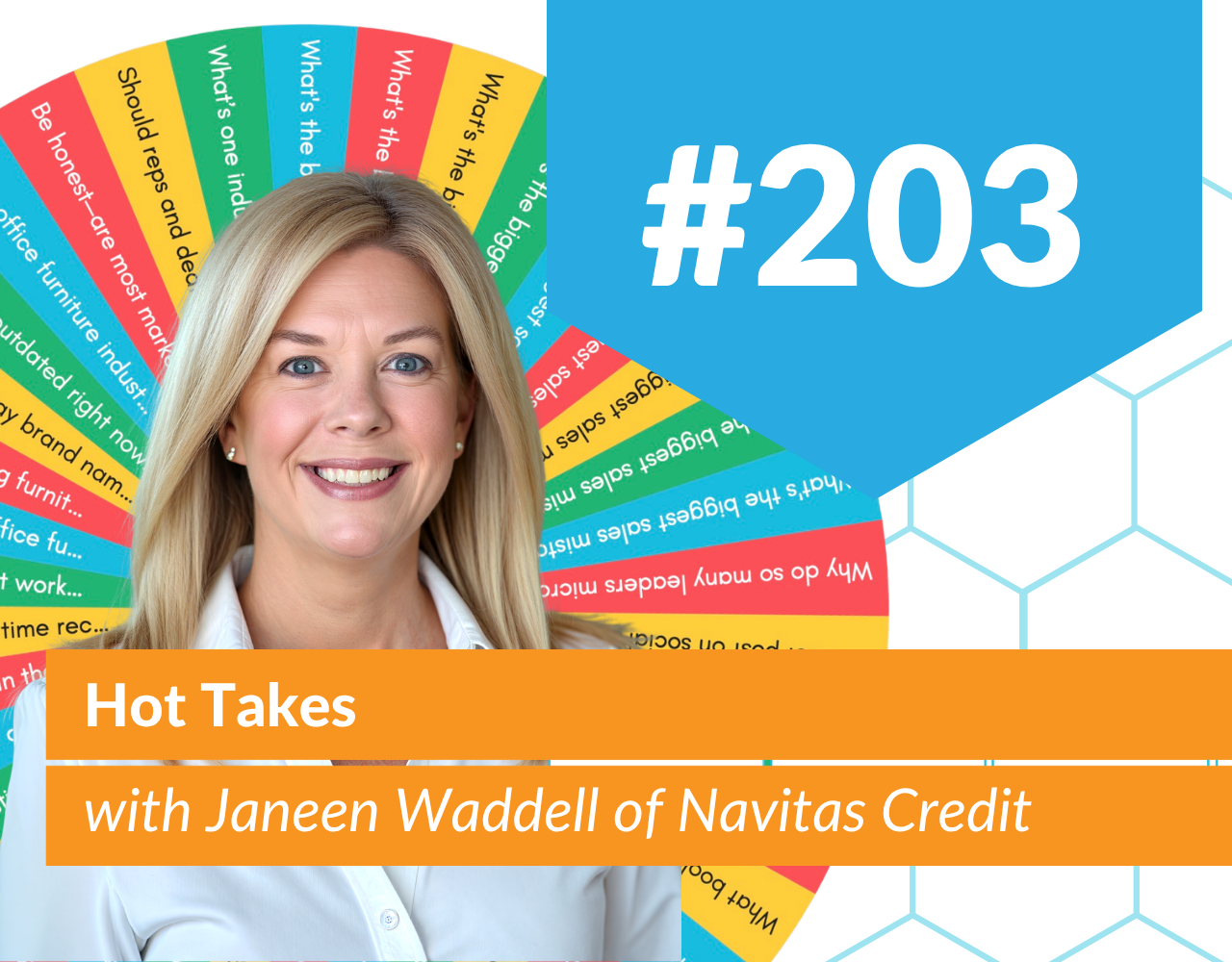
Hot Takes with Janeen Waddell of Navitas Credit.
SPEAKERS
Sid Meadows, Janeen Waddell
Intro:
Have you ever wanted to pick the brains of an industry influencer, a leader, or someone who's shaping the future of our industry? Or maybe someone who's been in the trenches for a while and has real thoughts and opinions? Well, today we're going to do just that.
Sponsor:
We'd like to thank our presenting sponsors, Avanto, services and software that streamline how you operate and the collaborative network, a platform where leaders in the contract interiors industry unite.
Avanto Ad:
This episode is brought to you in part by Avanto, the workflow automation software built exclusively for the commercial furniture industry. Avanto automates the full quote to cash cycle for manufacturers, dealers, rep groups, and installers. Quoting, order entry, AP processing, PDF to SIF conversion, and more without replacing your existing systems. Over 130 companies trust Avanto to run their operations. Learn more at goavanto.com.
The Collaborative Network Ad:
What's one decision that's been keeping you up at night? Before you make it, imagine sitting around the table with five experienced executives who have faced similar challenges and are invested in helping you succeed. That's exactly what happens every month inside the collaborative network. Honest conversations, practical insights, trusted peers. Because leadership isn't about having all the answers. It's about having the right people in your corner. Check us out at thecollaborative.network.
Meet Janeen And Navitas Credit
Sid:
Welcome back or welcome to the Trend Report, your inside look at the people, products, and ideas shaping the future of workplace design. I'm your host, Sid Meadows, and I'm glad you're here today for another hot takes episode where I'm joined by a co-host We Spin the Wheel of Topics and share our unscripted hot takes in real time. Please join me in welcoming to the show today Janeen Waddell with Navitas Credit. Hey Janeen, how are you today?
Janeen:
Hi, good morning. Thanks for having me, Sid.
Sid:
So good to have you here. And we're gonna get to spinning this wheel in just a minute. But Janine, really quickly, give us the elevator pitch of who is Navitas Credit.
Janeen:
So Navitas Credit is a, I guess, a long-standing uh small ticket equipment finance company. And uh they've been around for about 20 years, owned by a Southeast Regional Bank, United Community Bank. And um, you know, I joined Navitas about three years ago after owning my own company uh for about 20 years, and um I owned it with my father, and he wanted to retire, and I decided that you know it would be you know nice to have another avenue to look at, a different uh life experience. So we decided to sell the company, and I worked for that company uh for about five years, and then when my time was done there, I decided to take another step and join Navitas three years ago. Um so we're having a good time there.
Sid:
Well, that's great. And you are not a new face in our industry, you've been around for a long time, walking the halls of Neocon, dialing for dollars with the dealer community and trying to make sure they understand the power of financing. So some people will recognize your name, and if they're watching on YouTube, they may recognize your face. So I'm really glad you're joining us today. Beautiful, beautiful. Yes. And I will also just take a moment and say thank you so much for being one of our silver sponsors of the podcast. It's because of people like you that were able to continue doing all of this amazing work on the Trend Report. So thank you, Janeen, so much for being part of our sponsorship group.
Janeen:
Uh, my pleasure. It was uh something I really was excited about doing. Uh, you are an industry leader and um I love you know learning from all of your guests that you have. Uh so this was a really great experience.
Sid:
Well, now your experience is about to get a whole lot better because we're about to spin this wheel and share unscripted hot takes. So are you ready? I'm ready. Okay, let's see what our first question's gonna be. If I could hit the button that says spin. And while it's spinning here, hopefully we're gonna get a good one. And the first question's coming up.
The Bidding Process That Drags
Sid:
Okay, so this is a good one. So, what's an industry norm that frustrates customers, but no one wants to challenge? That's actually a tough question. So, what's an industry norm that frustrates customers but no one wants to challenge it?
Janeen:
Hmm.
Sid:
That frustrates customers, an industry norm. I'll go while you think about it, okay? Because I think I might have a good answer to this. I might have a couple of good answers to this. So I don't know that this actually frustrates customers, but I will say, and there's a couple that come to mind. An industry norm for me that I don't think it frustrates the customers in the beginning, but I don't think anybody really wants to challenge it. It's the bidding process. I've talked about this before. It's like an antiquated thing that we do. And it's not just our industry, it happens in a lot of industries. And let's put this out to bid and let's get three people to price, and let's allow alternates, and let's allow equals. And then the part that I think customer doesn't realize that frustrates them is when it comes in, they've got all this data and all this stuff and all this product information to have to review. If they're doing one floor or two floors or whatever, I mean, think about a guest chair and three bidders all provided three or five, maybe more than that, different options. And now the customer has to make their way through that, and they're not the furniture experts. We're the furniture experts. So to me, it's very common and very normal in our industry. We expect bids, and I think we need to toss them out the window because I do think it creates frustration for the customer that maybe they don't realize.
Janeen:
I think everybody is expecting, you know, like Amazon speed, and time is everybody's challenge. So I kind of look at how can I make things easier, simpler, quicker. If I had a dollar for every time somebody gave me an opportunity to help their customer and they said to me afterwards, wow, this was so easy. I had no idea. I'm like, why did you think it was so hard? I mean, you know, that's I guess an industry norm that people think that presenting a financial solution to their client is going to be really difficult and it's gonna slow them down or complicate the process when really it expedites the process. You know, once the client, you once your client knows that they're a payment buyer, or you know your dealer, um, whoever's you know selling knows that that's the payment buyer, it actually
Financing As The Shortcut To Yes
Janeen:
expedites the process. The dealers get paid faster. And I kind of look at myself as a financing concierge. You know, my job is simple to me, but I've been doing it for almost 30 years.
Sid:
Sure.
Janeen:
But my job is to make it seem simple to everybody else, too. You know, I think I talk in plain English, simple terms, uh, that you know, we can all relate to.
Sid:
That's important. So you said something that I think is really important, which is everybody is expecting the Amazon effect, which Amazon effect is buy it now or buy it now and pay later, and they get it quickly. And if your Amazon delivery doesn't show up within the day, people are like, Where's my delivery? They're getting text messages about it. And so we have been conditioned, and there's a lot to talk about, speed to market as a business strategy. So that was a really, all in all, a really great addition.
Janeen:
So I think I was listening to, and you'll you'll probably remember who it was. It was one of your um most recent uh guests that you had on, and they were just talking about how their advantage is going to be speed to market. You know, there's AI is a tool that's gonna help us get faster, but customers just expect things faster. And you know, if you look at the old way of doing things with a furniture proposal, it would take a long time to get any bid together.
Sid:
Yep.
Janeen:
And if we can all make this easier and faster for your clients, the faster we can get them to a yes, uh, the more competitive and a chance that you're gonna have to help that client.
Sid:
Right. So that was Tim Carroll, the CEO of Lyric Workplace in uh Nashville, Tennessee. And he talked about that speed is the new competitive advantage. So we'll drop the link to that in the show notes, but let's get this wheel spinning again. Let's see what we got.
Are Trade Shows Still Worth It
Sid:
All right, so next question. Oh, are industry trade shows worth the investment?
Janeen:
Well, I mean, from my perspective, Neocon and design days are, you know, one of my favorite times of year because I work nationally. So, you know, a lot of people are a lot of dealers, architects, you know, they're regional to, you know, their client base. But me, I work throughout the United States and all different regions. And, you know, it's just not really effective for me to travel and meet everybody in person. But I feel like in today's age, it's great because we have video conferences and it's, you know, the pandemic, I think that was one thing that positive that came from it that people really got used to using Teams and Zooms, and you know, so I feel like some people that I don't actually meet in person, I actually know because you know, I'll be connected with them on social media, but I'll also have video conferences and communication that feels like you're in person with somebody. But when I go to Neocon, I'm seeing people from throughout the United States all in one place. So, you know, I do find that valuable because my top clients I've always met in person. You know, nothing replaces an in-person meeting.
Sid:
Yeah. And I think this question has come up before, and I typically try to hide them when they come up so we don't have a repetitive. I think this has come up before, but I'm gonna say there are two answers to this question for me. Yes, I believe industry trade shows are really important. I believe they are worth the investment to a degree, depending on. I mean, going to Chicago for Chicago Design Week, those bases are really expensive. And I honestly think as if you're a smaller man or a smaller manufacturer and you have a limited budget about what it is you can spend your money as it relates to trade shows, I would actually focus on the smaller trade shows. I would look, so if you have healthcare product, then yes, going to Neocon or Design Days might be really beneficial to you, but you're gonna get more impact, more bang for your buck, if you will, if you actually go to healthcare design. The trade show this year it's in New Orleans, you know, last year it was in Kansas City, because that trade show is concentrated with healthcare specifiers from the AD community, healthcare end users, and most of the products there are healthcare related. So, and I've had lots of brands tell me about the impact of having project conversations in a small 10 by 10 or 10 by 20 booth that maybe didn't get to happen at, you know, walking the halls of the merchandise smart or the streets of design days, right? So I would just be really strategic, but I do think this is the second part
Trade Show ROI Comes From Follow Up
Sid:
for me. In order to make sure that you really get your money's worth from a trade show, the deal is made in the follow-up. Like your follow-up is so key. And I'm just gonna say I am anti the email blast follow-up. Thank you for attending. It was great to see you that 300 people get or 50 people get. I'm anti that because everybody that was at the trade show brand or uh vendor is doing exactly the same thing in the exact same span of time that you're doing it. And so the customers, the designers that go to these trade shows, the vendors like you and I, our email boxes get blown up the week after Chicago Design Week. And how do you know which ones to read, which ones not to read, right? So I think the the key to the success of an investment in a trade show lies in the follow-up and how you're following up and the connections that you're making and what the next steps are with that client.
Sponsor:
So we'd like to thank our supporting Silver sponsors, KISP, who helps furniture brands visualize and sell products before specification. Navitas Credit Corp. Navitas makes great workspaces affordable, turning furniture projects into easy monthly payments. Web Configurator Services, the leader in AI-powered online product configuration and quoting.
KiSP Ad:
Selling contract furniture shouldn't require bloated systems or massive investments to stay competitive. The reality is most teams just need tools that work and are easy to adopt and show ROI fast. KiSP helps dealers and manufacturers do exactly that with practical sales tools and services designed for real-world selling. Backed by 30 years of experience, KiSP helps teams visualize, configure, and get chosen early before specification ever starts. To learn more, visit KISP.com.
WCS Ad:
I saw a stat recently that stuck with me. 50% of commercial designers say their biggest challenge is just accessing the right imagery and support files. And pricing delays are still one of their top frustrations. Here's the reality: if designers can't get what they need on your website quickly, they move on. That's not an inconvenience, that's a lost opportunity. WCS addresses that directly with their CPQ platform, which gives instant access to visuals, BIM files, and accurate pricing all in one place. Check out webconfigurator.net and request a free demo.
Sid:
All right, Janeen, we're doing pretty good. Let's spin this wheel again. That was a really good question, too. So this time, maybe we'll get a tough one. We've got a couple of really new ones I've added that have stumped people, so all right. Ooh, this is a good question.
Fear Of Change Versus Real Innovation
Sid:
What is more damaging to our industry right now? Slow innovation or fear of change?
Janeen:
Hmm. I think fear of change. Okay. Yeah, I would I'd definitely go with fear of change. There's so much changing right now, and you have to embrace it. Yeah. Whether it's uh Chat GPT and any of the multitude of ways to use AI. I mean, you know, I hate to even keep talking about AI. It's like almost exhausting that every conversation can lead back to what that can do. But, you know, even from my industry, you know, in the financing, I mean, I could look into, you know, a credit application. We can take our entire uh customer base of people that we've lent to and we put it into a system now, and it can tell us within a percent or two, you know, the likelihood of default. I mean, it's expediting credit decisions within minutes. You know, it could read a financial package that in the past would take uh somebody a day or two to spread out everything and to document everything. Literally in minutes, sure we can have intelligent feedback. It doesn't replace the human. We don't auto-score where you know we 100% trust it because we're still learning to make sure that you know the AI decisions get the same human decisions, you know, and trying to figure out you know where they work.
Sid:
There always has to be a human in the middle with AI. Always has to be. You can't just a human has to review what the output is, right? But you're not wrong. I mean, there's so much happening in our world, and I understand and I talk to a lot of leaders who are fearful of change, or maybe change happening too rapidly. And let's be clear AI is not coming, it is here. And what you do with it is gonna be up to you and how you embrace it in the development and the growth of your organization is gonna be up to the individual leader or leadership teams. And though I agree with you, I'm actually gonna take a little bit of a different position on not change, but innovation. Because I don't think innovation in our industry is slow. I think what's damaging to our industry is that most of the innovation in our industry is about products. Now, AI is gonna force us to innovate processes and procedures, which is really good. We're not doing it like I think we should be. We're just, I talk to a lot of leaders who are not embracing AI. They don't understand it, they don't understand what they can do with it. So that level of innovation, I think, is really hurting us. We are, and you know, I'll make a statement here. And this this is about innovation. Our customers have changed. Has your business changed? Because our customers are changing because of what's happening in the world, because of AI. Our customers are coming in a lot smarter than they ever were before. I mean, research says something around seven to 12 touches that a customer has had with your brand before they ever reach out to you to talk about anything. And if you haven't changed your business or adapted your business or innovated in some way to address that, then you're behind the eight ball. And so I think we are so focused on the proverbial product innovation that we are looking past other places that we should be innovating in our businesses. So that's my two cents worth. That's my hot take. And some people might agree with me, but I'm telling you, if you look around, you will see people fearful of change, like Janine talked about. And if you look around, you will see people that their only innovation is about product. I don't know. Do we need another task chair? I don't know. We got a lot.
Janeen:
When I think about, you know, what my passion is, it's it's not really innovation, but it kind of goes back to, you know, somebody once said to me, anybody can sell a chair. People are buying relationship. And at the end of the day, if you sold a chair, that's great, you know. But it it's a solution. It's um, you know, I I I kind of just took from the innovation that you're mentioning there. But really, it's like we have to build something different. To me, you know, I do lending, financing. Money is money. The first question uh everybody asks me is what's the rate? Okay, you know, and yes, I always have to be competitive, but if it was always just about who has the lowest rate, I mean, I know my rates are competitive. And um, but if I tell you, you know, the rate is 7% in here and 7% there, then what's the difference? You know, what money is money, and people are buying the experience, the innovation, the relationship.
Sid:
Yep. I also think so I'm reading
What Buyers Really Purchase Is Certainty
Sid:
a book right now called The Dealer Dilemma by Scott Harkoff. It's a really interesting book. It's about the office furniture dealer, which you don't find many books about the office furniture dealer. And one of the chapters I just read talked about what your custom your customer's not buying your product. Your customer is buying certainty. They're buying answers to what they fear. The project's gonna be over budget, the project's not gonna be on time, people aren't gonna be happy, all these things. And really, what people are buying is is uh confidence or certainty. Furniture is the product that we're selling, but what they're really buying is the outcome that we deliver. And I think that is so very important. So we'll drop a link to that book in the show notes. Shout out to my buddy James Stroll, your buddy too, for recommending that book. Really enjoying reading it, though he's ghosting me. I called them the other day, Janine, as I spin the wheel, since you know James, if he's listening, so I'm gonna talk about it. I called him the other day, said let's talk about the book. He can call me back like three days later. All right, so last question. Sorry, James, you know, I'm loving it.
Relationships Responsiveness Expertise And Value
Sid:
Uh what's more important? Ooh, relationships, responsiveness, or expertise. Question again. What's more important? Relationships, responsiveness, and or expertise.
Janeen:
Wow. I mean, they all blend into each other, um, but I definitely have to go with relationship. It's the reason that I love what I do, it's not selling financing that's so exciting. Nobody wakes up in the morning, even though I do actually find it interesting and and fun at times, but nobody wakes up in the morning wanting to do financing, whether it's from the customer, the buyer, or the people, you know, it's an industry that doesn't even get taught in college. You know, you were speaking about one of your other guests that, you know, they don't lead our younger generation into this small world. It's a trillion-dollar industry, but into the equipment financing. I mean, people fall into it. Funny quick story is my father, when I got out of college, I worked all through college. I mean, we started working when I was 13. As soon as I could, I was, you know, scooping ice cream, working at, you know, a million different restaurants, worked at a Wawa, but it was always about, you know, relationship. And, you know, I think that's what's made me successful is all those other, maybe let's call them not so fun jobs, but really taught me people skills. I worked in so many different restaurants. But when I got done college, you know, when I was young, they said, you have to pick a major. I picked criminal justice. I mean, I just thought it sounded kind of cool. I had no interest in doing that. But then I was halfway through college and I'm like, well, I'm not gonna change now. So I finished it out. But at the end of the day, I think, you know, the degree didn't matter. It was the fact that I finished college, was successful, got through. But the long and the short of my story was I got done and I said, Dad, I just want a nine to five job. I'm like, I don't want to work in these restaurants anymore. I mean, I've gone to college, I want a nine to five job. And he says, All right, Janine, you can come in, you can answer the phone for me. So I was all happy. I got an office job, you know, and I was the smartest receptionist out there. And um, but then you know, I went from being the receptionist to the I processed the applications, then I moved into doing the documentation aspect of it. And then I realized what I was really passionate about was the relationships. You know, I was building all these relationships with the customers from the credit standpoint or the documentation. But really what I wanted to do was get to the sellers and the end users. And that's where my passion came in was the that relationship building part of it.
Sid:
You wanted to be a salesperson. It's okay to say it out loud, Janine.
Janeen:
I didn't know that I wanted I didn't know I wanted to do that. And it's interesting, you know, when I look at my daughter who's in college now getting going into her sophomore year, and I wonder what she's gonna do when she gets out. And you know, and all I can figure out is that she's definitely gonna be in a people business. She's not gonna be working in an office. I mean, yeah, there'll probably be some office responsibility, but you know, she really her strength is people skills. Sure.
Sid:
I love that.
Janeen:
And then being responsive is just part of building trusted relationships and expertise, you know, comes along with it. People trust me because they know that I have expertise in what I do, and I've been doing it for a long time. Right. So they all fall into that. Why, why do you have trusted relationships?
Sid:
So I'm gonna agree with you that I believe that relationships are really important. And in fact, people in our industry will tell you that we work in a relationship industry, and I do not disagree with that at all. But what I think where we're missing here, or what we're missing here, is not necessarily responsiveness or not necessarily expertise. I'm gonna take those two words and combine them to value. What is the value that you're bringing to this process? What's the value as a seller that you add to the interior design community? What's the value as a seller that you add to the facility manager, the corporate real estate professional? And the value is not selling chairs. The value is your industry knowledge, your knowledge about trends and how you can help people interpret trends. Your value is way beyond the actual product that you sell, but we're so focused on selling the product. And I understand that because that's how we make money is by the sale of products. But what we do is far more important than that. And I think we really have to lean into understanding what is the value that we're bringing to the relationship. And it combines responsiveness and expertise. But at the core of our industry, and to your point, one of the reasons I love it so much is because of the relationships that we've been able to make and build and sustain over time. And I love it when I see somebody's name pop up on my phone that I haven't talked to in six months. I'm like, oh yay, we get to have a catch up. And it's just, you know, so very important. And that those relationships can really last a very, very long time.
Janeen:
So the furniture industry, you know, as a whole, is is a small niche industry. And as many of your listeners know, you know, the same as I've seen some dealer sales reps move from one dealership to another and move from one manufacturer to another, but it's the relationships. They move with them. You know, I had somebody reach out to me yesterday, sent me an email, and I just looked at his email. I'm like, oh, you're now with this dealer. I'm like, great, you know, but you know, he remembered me, the relationship. And, you know, I think that's one of my strengths is that I'm memorable. You know, I've built a lot of relationships over the years. And no matter what company I'm at, I think it was more that people remembered me and they knew, you know, because again, money is money.
Sid:
I'm gonna challenge that for a second. I don't disagree with you, but he remembered you, he remembered the relationship that he had with you. But what he really remembered was the value that you brought to him, how you helped him, right? The problem you helped him solve, which was helping a customer understand financing and helping a customer, helping get that sale across the finish line. He remembered the value you bought as well as the relationship you had built with him. So that's what I mean. The two are intertwined there.
Janeen:
So one other thing, just on that note, there's not a lot of people that really specialize kind of like I do in the office workspace industry as far as the financing. It's not that anybody couldn't finance a furniture project, but where I've really gained some traction is that I've been doing this for 30 years and you have to build relationships. I've seen some people, I guess let's call it doll for dollars, and they'll start calling, let's say, sales reps at a dealership and say, uh, do you do you have any projects I can quote? Is there anything I can help you with? I'm like, they're never gonna help you. They're never gonna give you an opportunity to help one of their clients when you're making a sale like that. It's a relationship sale. And you know, your custom your dealers, you know, had to build the relationship. I've had to build the relationship, build their trust, you know, and get back to there.
Sid:
Well, Janine, a great ad to it. So tell
Wrap Up Thanks And How To Connect
Sid:
me, what did you think about your hot takes episode?
Janeen:
It was fun and it was very exciting. And you know, because I was honest with you up front, that I was so nervous. But you know, then I just had to realize that I was having fun talking to my friend Sid.
Sid:
Yeah, we're just we're just like literally, and that's kind of the point. You did a great job, by the way. And that's kind of the point of these episodes because some of these questions that are on the wheel are questions that come up in real life. They questions that come up on a phone call or a coffee shop visit with somebody, and we're just we hang out and talk about them. And that's what I love about this segment of the podcast is we get to have a little bit of fun and interjection, and people get to share their thoughts and ideas, and hopefully the listeners get to walk away with different perspectives on topics that they're thinking about that might change the course of an action that they're taking. So that's why I love it so much.
Janeen:
Well, it's interesting to have you know unique questions because I get asked the same questions over and over again. And uh, but I I do like my daily day because I never know what when I answer a phone call, I never know what the question's gonna be, you know, and you have to be prepared for anything. And uh exactly for this many years I'm fairly prepared.
Sid:
I'd rather not, I'd rather not have the heads up. I'd rather not, hey, I get the text. Hey Sid, can I ask you a question? Yeah, but what's the question? Just pick up the phone and call me and ask the question, or just text me the question and ask me, and let's let's let's hash it out, right? So but again, Janine, thank you so much for being here. I really appreciate it. We'll drop all your contact information in the show notes. If anybody would like to uh reach out to you, they'll email address, phone number, all that will be down in the show notes for you. But I really appreciate you being here today.
Janeen:
Oh, thanks, Sid. I had a great time. This was wonderful. Thanks for having me.
Sponsor:
We'd like to thank our community bronze sponsors, Catalyst Consulting Group, Prioritas and RESEAT.
Catalyst Consulting Ad:
Public sector sales don't happen by accident. They happen by strategy. At Catalyst Consulting, we help small business manufacturers break into and grow within federal, sled, and cooperative contract markets. With over 100 years of combined experience selling to the public sector in the commercial furniture industry, we know what it takes to compete and win. We help you align with the right contracts, the right partners, and the right opportunities. Government sales are complex. Your strategy shouldn't be. Visit strategic-catalyst.com and take our Pathfinder assessment to see where you are on your public sector path.
Outro:
Thank you for joining me and Janine today on the Trend Report, your inside look at the people, products, and ideas shaping the future of workplace design. Go out there and make today a great friend, and we will see you in the next episode. Take care, everyone.