The Trend Report Podcast
What's A Snapshot Really Worth? with Stephen Searer of Office Snapshots
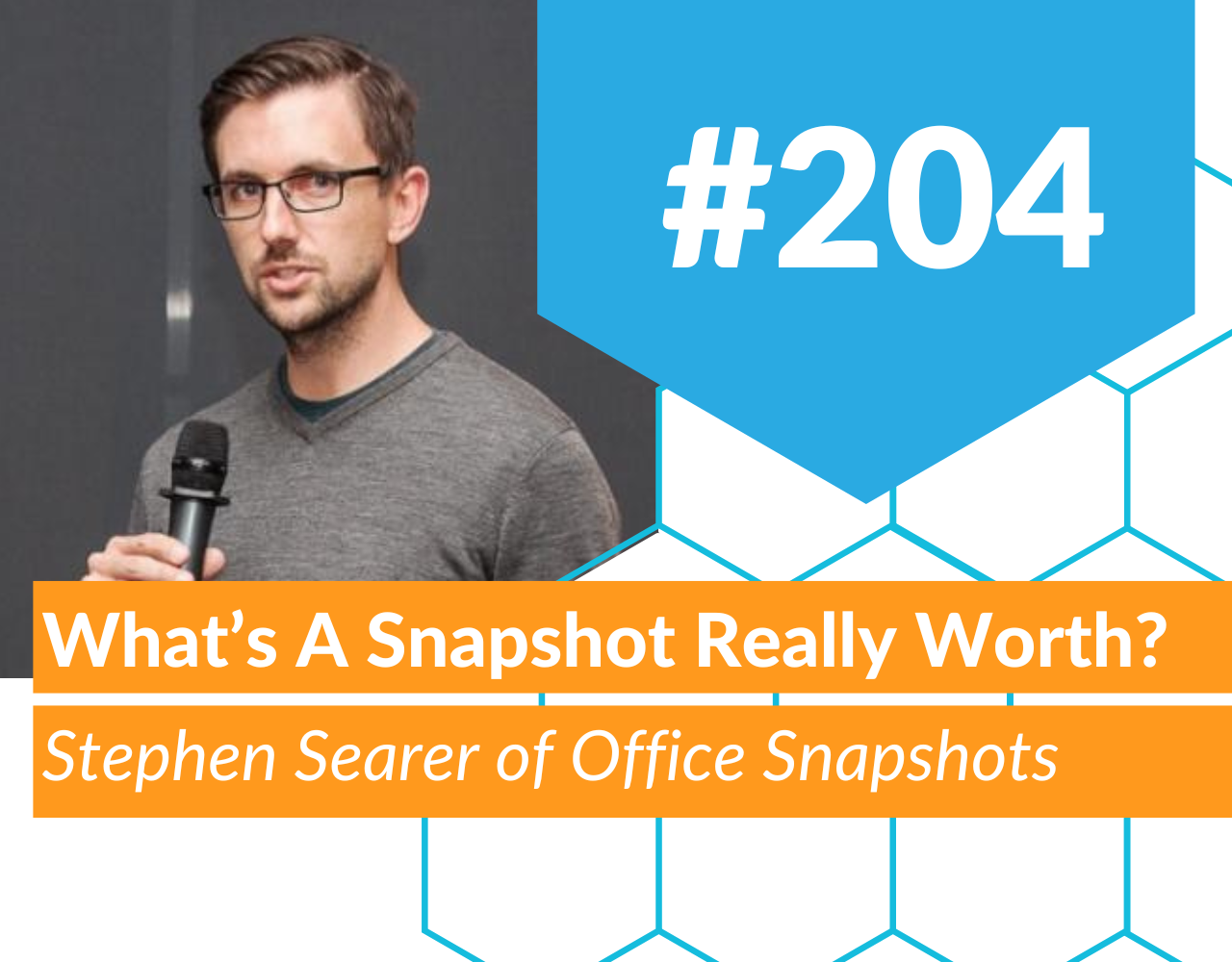
SPEAKERS
Sid Meadows, Stephen Searer
Intro:
Thousands of workplace projects are completed each and every year. But most people only see a handful of them. But today's guest has seen more than a hundred thousand of them. For nearly two decades, Office Snapshots has quietly become one of the most influential resources in our industry. Designers use it for inspiration. Manufacturers hope their products appear on it. Dealers browse it for ideas. Yet very few people know the story behind the platform or what its founder has learned by watching workplace design evolve project after project after project. So today we're going behind the scenes with Stephen Searer, the founder of Office Snapshot.
Sponsor:
We'd like to thank our presenting sponsors, Avanto, services and software that streamline how you operate and the Collaborative Network, a platform where leaders in the contract interiors industry unite.
Avanto Ad:
This episode is brought to you in part by Avanto, the workflow automation software built exclusively for the commercial furniture industry. Avanto automates the full quote to cast cycle for manufacturers, dealers, rep groups, and installers. Quoting, order industry, AP processing, PDF to SIF conversion, and more without replacing your existing systems. Over 130 companies trust Avonto to run their operations. Learn more at goavanto.com.
The Collaborative Network Ad:
What's one decision that's been keeping you up at night? Before you make it, imagine sitting around the table with five experienced executives who have faced similar challenges and are invested in helping you succeed. That's exactly what happens every month inside the collaborative network. Honest conversations, practical insights, trusted peers. Because leadership isn't about having all the answers. It's about having the right people in your corner. Check us out at thecollaborative.network.
Sid:
Welcome back or welcome to the Trend Report, your inside look at the people, products, and ideas shaping the future of workplace design. I'm your Sid Meadows, and I'm glad that you've joined me for today's conversation. And I'd like to welcome to the show, Stephen. How are you today?
Stephen:
I'm doing great. Yeah. Thanks for having me.
Sid:
Well, I appreciate you joining in. You know, I often wonder when I reach out to people that I don't know say, hey, will you come on to the show and talk to me? And you graciously said, sure, I'll talk to this random stranger who's trying to get me on this podcast. So thank you.
Stephen:
Yeah, you're welcome. I'm not anytime uh I get to talk about office design uh and talk to people because I work by myself, it's uh a good day.
Sid:
Yeah, I can identify with every one of those statements. I was telling somebody the other day that I like have to start setting appointments to get out of this house because last week I looked down at lie 360 for something. It's probably spying on one of my kids and it said that I'd been home for five days and 22 minutes or whatever. I'm like, oh that's it, you gotta get out of this house. Do something, go to the coffee shop or do something. So, Steven, I always like to start our conversations with getting to know a little bit about you.
From History Teacher To Founder
Sid:
So tell us a little bit about your journey because you were a history teacher, so that's a kind of a long way from a history teacher to being in our ecosystem. So let's talk about that.
Stephen:
Yeah, so when I yeah, so I went to school to be a history teacher, and I was one for three or four years, and then it's been uh an interesting journey for me because I've always kind of been uh enamored with websites, making websites, doing things online, and kind of like anybody, you just browse around online, you'd you just find things, there's all sorts of interesting things that you can come across. And for me, one of the things that grabbed my attention right around the same time that I that I started teaching was seeing Google's office headquarters up in Mountain View, and they were so amazing. And I had worked in a couple of different office environments throughout college, and uh you know, they were so inspiring for me, and I kind of thought, I wonder if uh there's a website with office designs. That's just kind of where my mind goes, is seeking. I wonder if there's a website for that. And so what I ended up doing was looking around, I didn't find anything, and so what I did was just said, okay, well, I'll just I'll make that. And uh, you know, over the years I just kind of kept doing it. It was kind of a thing on the side of history teaching, but then over time it kind of kept growing and growing. And you know, initially it was me just kind of trying to find interesting office designs and publish them. And then over time, architects and designers started sending their projects, and then now, you know, I think we probably worked with 4,000, 5,000 firms or something like that, kind of from all around the world. And you know, we don't have to do as much hunting, but we still do. And yeah, I mean, I still love it as much as I did then. It's a lot different. Sure. But yeah, I still feel like it's somewhat related to history in a in a way, and that I think that I do enjoy kind of curating it as a resource, kind of like maybe a librarian or museum curator, that sort of a thing, of just kind of showing what's going on in the world of office design.
Sid:
So I think you had the original idea back in 2007, and you just said that you uh started it kind of as a side for you, like you were curating your own office designs. So when was the first call or the first email that somebody said, Hey, we really like what you're doing here? Will you put our project on that?
Stephen:
Well, at first what I when I started doing was I would just kind of find content online and publish it, and then uh, you know, sometimes it would be people who had done a it's hard, it's kind of hard to remember the time then. Now there's just big photos, and it's a very visual, the internet's very visual now. And but at the time, you know, what you would have to do is hunt down every single architecture firm, go to their website, and then the photos were so small, you know, it was so it was kind of hard to find them there. We would often look around and find office kind of tours. Maybe somebody had taken a tour of Apple's headquarters or Google's headquarters and just snapped a few photos. So I'd kind of gather a few images uh kind of from those, put them on there. And you know, the I think one of the first projects though that I remember where I really thought, okay, this is this feels a little bit different, was we had received from uh the firm's name is Evolution Design uh a Google office uh in Switzerland. Oh, and they had sent the project over. And I I remember at that point thinking, okay, something's a little bit different where we're getting really great first-class company projects where I'm not having to go out and do the do the legwork to find it. People are finding the website, they're presenting it. So we had that one, and then I think one of the biggest projects that we ever had kind of early on was Facebook's office by Studio O Plus A. Uh, and this was again probably in 2008 or 2009. Yeah. And so uh, you know, it was kind of a couple of these projects where it was a good intersection of really nice projects, but then also uh people finding them, and then also us not having to, uh, you know, me not having to do the kind of the legwork to find them. Sure.
Sid:
Yeah, your job got a little bit easier. So what started as curiosity, because you were interested in office design because you saw a picture of Google's mountain view location. Thought, wow, this is really cool. Then curiosity kicked in, you started searching around the web, and then you started you built a website. At what point did you realize, okay, this is more than a side hustle, and I need to lean into office snapshots and step away from teaching?
Stephen:
Um, you know, it was it was a little bit a longer journey than you know, than I than I guess I initially thought it would be. Uh so we my wife and I had gotten married and then we moved from where I was living to uh up to Santa Barbara, and I was kind of finding some work to do. I was temping, and you know, I hadn't I had decided I wasn't going to teach anymore, but I wasn't sure what I was going to do uh after that. So I was just temping, finding some different things to kind of work uh work on here in Santa Barbara. And then one of the places that I was working was a it was actually a cremation sales office, which is kind of the most random thing. But as I was working there, kind of optimizing the systems and things like that as the kind of front desk, I wasn't really enjoying the work very much. And then there was just one day where I just was on my way to work, spilled coffee all over myself, uh, you know, my cup of coffee in the morning, and then I just thought, oh, I'm over this. I'm gonna, I'm just gonna, I need to do my own thing. And so I just I I emailed and said, I'm done, I'm not coming into the day. And then at that point, it was kind of the the turning point where I said, Okay, I'm gonna at least give office snapshots a go as being my main thing that I'm doing. And I still had to piece it together, but it's probably been uh, you know, maybe 12 years or something like that that I've been doing it, you know, just as kind of the you know, my primary business.
Sid:
So at the time, and I love hearing the backstory about how things get created, right? And thanks to a spilled cup of coffee, right? Look at what you've been able to do. But did you like ever really envision or imagine that what it would become today?
Stephen:
Uh no. I, you know, it I definitely I would never say that I kind of envisioned what it is at the time. I got I kind of always thought of it as just something that I enjoy doing. You know, it was fun to curate, fun to really look through kind of what what's going on in the world of office design. So it's been something that I'd enjoyed doing. And a lot of the time, a lot of times what I do is I just make the thing that I really want to see exist. So what Office Snapshots is is kind of a reflection of who I am and the and the way that I think and the things that I see and like. And so I've just always kind of approached it like that. And there was never really, oh, you know, let's make this a website that you know we'll we'll have 80% of kind of the interior design top hundred firms or something like that. It was always like it was always let's just kind of keep posting offices, let's just keep publishing, publishing things, making it more increasingly useful. And people seem to come across it, use it as a resource, and you know that, but never really had like a grand vision for anything.
Sid:
I can understand that. A lot of times the vision kind of comes along with you, right? As you're building and growing. So somewhere along this journey of curating images, you had to figure out how to learn about our industry and what office design was. And so how did you go about that?
Stephen:
It's definitely still something that I'm learning. It's one of these things where just looking at photos, you don't really know all of the nitty-gritty and the details that go into actually implementing an office design. You know, it's one thing to kind of say, Oh, you know, these photos look really great, or you know, these are going to be inspiring to people, you know, because they're inspiring to me. But then learning kind of about the process of designing an office is still something that I honestly have a lot of uh questions about still. Like I haven't spent a ton of time you know really pouring over the details in that regard. But one of the things that I do try to be really conscious of is knowing that you know the the offices that we're publishing are kind of more of a jumping off point for people to kind of learn more about what's going on in the industry themselves. Sure. And so, you know, it could be the case that we'll publish an office with a really amazing uh story, it might have a really uh strong set of photography, it might have the best products in there, but then you know, in reality, it could actually be not a great office to work in for the for the employees. Whereas there could be an office which has uh it's a maybe a little bit more lackluster in what it looks like. Maybe the the lighting is not perfect, kind of the details and the materials aren't as high quality, and it might be the best office to work in. And so you know that's something that I really try to think about is I'm trying to give some inspiring images, some interesting uh looks at kind of what's going on in office design, and then kind of let designers do their thing, which is parse through what they're looking for and you know, find areas of inspiration that they can use in their projects, knowing that not everything's going to be exactly what they're looking for.
Sid:
Sure.
A Project First Inspiration Platform
Sid:
So let's talk about the platform for a minute. And honestly, I would admit that I think I probably thought it was like a social media platform, but it's not that at all. It's a curated platform of inspiration images. So tell us a little bit about the experience when you're on the site. What do you see? How does it work, and those kinds of things?
Stephen:
Sure. So by design it is meant to be very much like projects first. So when you are coming to the website, you're not going there and you're hammered with a bunch of products that you're looking at. It's not really a feed of things that is never-ending, kind of like a Pinterest sort of a thing. It's not a social media site where uh, you know, it's not a platform where people can just log in, create content on their own. It's very much, in some ways, a magazine where people are submitting projects to us. We curate the the ones that we want to publish and see and show to our users, and then uh kind of add additional features and things like that uh you know to it. So a good example would be a project comes in, an architecture firm sends it, we say, This project looks really great. In the traditional magazine sense, once the once the project is published in the magazine and it's on your shelf, like there it doesn't, there's no real lasting power to that to that feature. It kind of came, it went, and it it nothing happens with it. But what we do is we add extra data to uh you know each project and each project's images. So, you know, in five years from now, ten years from now, we've identified kind of what the types of spaces that are in the photos, maybe it's meeting rooms, cafeteria spaces, reception areas, and so years into the future, people can still be going through looking for those types of spaces on the website. So it's not only just looking at projects, but you're you can also use kind of some of the rich data that we've added on to browse just by photos. So you could say, you know, give me meeting areas with area rugs, with some glass, kind of like glass walls in the in the office, that sort of thing. Again, just to kind of make it so you can kind of find what you're looking for a little bit faster. So that's kind of uh I guess if I was if I would just say in a short words, that's good, that's kind of exactly what we're trying to do is make it so you can find what you're looking for faster.
Sid:
Well, I love that it's project first, but not product first. And I think that's a really important distinguishing characteristic here. So if I'm a dealer, manufacturer, or a designer, it doesn't matter what your role is, and I'm working on a project for I don't know, Coca-Cola, I could go out to Office Snapshots and I could type in projects at Coca-Cola and anything that's been put out there that has been curated by you guys that was a Coca-Cola facility, I'd be able to see what their facilities look like maybe around the world. You used Google as an example in Switzerland and then Google in Mountain View. So then I get an idea of what they've been buying, what their spaces look like, you know, maybe maybe what they're looking for. So it gives me some really good intellectual insights, I think, into the lens of a customer.
Stephen:
Yeah, and even though the the way that we make money is with, you know, we work with manufacturers and and that sort of a thing, in some ways the platform's fairly product agnostic, where you know, I don't really think, personally speaking, that it really matters one way or the other which task chairs that you select for the office. You know, I think in a grand scheme, maybe you could probably make an argument, but in the fine, you know, in the fine grain details, it probably doesn't matter that much. But yeah, what what I really want to have it be is a resource where people can come on, they can learn. There's so many different ways that people have been able to use the site to learn. You mentioned about kind of finding a particular man uh particular brand that is opening an office, you know, Coca-Cola. That's a great example. Another thing people have done because it's a global website, is they can go, they've come on and said, you know, we're designing an office for a client in India. We're not super familiar with what's going on in terms of design in India. So let's kind of get the basis uh, you know, of uh kind of the state of play in that area, and then they can kind of give us some intelligent insights with a little bit more facts rather than just kind of like hoping that they're hitting it, uh hitting the designs in the right way.
Sid:
I think that's great. And so the design firms submit their projects to you, or architectural firms submit their projects to you, you curate them and put them the ones you want to, put them on the site, the ones that are appropriate you put them on the site. And then you mentioned you add in a data layer to them.
Tagging Spaces And Identifying Products
Sid:
And so that data layer is more about the products, right?
Stephen:
There's uh two separate things. So there's uh the product data, and then there's also the just kind of like rich data about the scene that you're looking at. So there could be uh, you know, we might tag it with lounge chairs or pendant light or reception area. So we add kind of like space specific data, and then we also add product data. Both of them for the most part use like I jokingly uh we call it um it's not artificial intelligence, it's just like organic intelligence. We uh we have people that kind of go through and look at each photo in order to kind of give it appropriate tags. Pretty soon, I imagine that AI will be able to kind of do some of this work, but sure you know, really being able to tell what type of uh lounge chairs in a space isn't something that it can do quite yet. Right. So, yeah, in it like I was saying, in addition to the kind of space data, we also identify products and manufacturers and spaces. So if you're looking at a photo, it's pretty common for a designer or an architect to wonder oh, you know, what's that lounge chair, what's that pendant like, what's that task chair? And so what we try to do is identify all of those products and then for the brands who work with us, show what particular product it is that you're looking at in the photo. And the way that I think about that is it's basically the most relevant banner ad that you've ever seen because you're looking at a photo and you're wondering, like, what is that that I'm looking at? And then it tells you this is Davis Ginkgo Lounge or this is a Herman Miller Aeron chair. It kind of tells you what it is and links you to the appropriate information about it.
Sid:
So, okay, how do you identify the product?
Stephen:
Yeah, good question.
Sid:
Because you're not a product guy. I'm a product guy. I mean, I wouldn't know what the aeron chair looks like, the world knows what that looks like, but the Davis chair, I certainly don't know what that looks like. And if you're a product seller, you always, when you see something really cool, like you want to know who it is and who made that. So, how are you identifying it?
Stephen:
So, I have over the years, I've I've become pretty good at it. And so I, you know, I think over the years, we probably have found of over 500 different manufacturers that we're kind of constantly on the lookout for uh globally. And so, you know, I'm pretty good at it personally. We have three or four people who who we use also who kind of are you know FF and E, you know, interior designers from firms uh or dealers who who tag as well for us, and they they do a great job. They should. They kind of are focusing on North America, but again, each person you kind of have your tastes and things that you're into, so you kind of need a number of people who can who can accurately do it. The manufacturers also will log on and they can tag things on their own. Yeah. But I like to kind of joke that I've probably like forgotten more products than most people know because it's yeah, my my knowledge is pretty good.
Sid:
Maybe you're an accidental product nerd then, without really revealing that you are, right?
Stephen:
Yeah, yeah. I am. Yeah, it's it I mean, it's I've been doing it for 20 years, kind of looking through and and you know, you add a few new new brands, a few new products over the years, and you kind of start to see the things of like, oh, this you know, this manufacturer in North America, they're actually licensing that product from this company in in Europe, and you kind of start to kind of like make all these connections globally.
Sid:
So I'm gonna shout out my friend Diane Morata with Kamiko Designs and Kamiko Green, who's been on the show before. She gave me a hat, Stephen. I'll see if I can get you one. It's uh it says hashtag furniture nerd on it, and I think you're deserving of it today.
Stephen:
Oh yeah, that that that would be amazing. I uh I I am very much a furniture nerd, and uh, you know, it it's one of the things that I love. So much about going to uh trade shows, you know, neocon, Orchitech, those sorts of things, because we actually get to kind of like see and experience the product so that I see in photos. And so, you know, if you're actually a designer, you're probably actually getting to experience the products. But as someone who just looks at photos all day long, I only ever get to see them. And so being a, you know, there's a quality difference across manufacturers. There's a there's you know, a feeling that you get sitting in a chair where you think it might be comfortable but it's not, or you go, I don't like, I don't know if I like that, and you really love it. So yeah, it's really great to see it see things in person.
Sid:
Yeah, that's great.
Sponsor:
We'd like to thank our supporting silver sponsors, KiSP, who helps furniture brands visualize and sell products before specification. Navitas Credit Corp. Navitas makes great workspaces affordable, turning furniture projects into easy monthly payments. Web Configurator Services, the leader in AI-powered online product configuration and quoting.
KiSP Ad:
Selling content furniture shouldn't require bloated systems or massive investments to stay competitive. The reality is, most teams just need tools that work and are easy to adopt and so ROI fast. KiSP helps dealers and manufacturers do exactly that, with practical sales tools and services designed for real-world selling. To learn more, visit KiSP.com.
WCS Ad:
I saw chat recently that stuck with me. 50% of commercial designers say their biggest challenge is just accessing the right imagery and support files. And pricing delays are still one of their top frustrations. Here's the reality: if designers can't get what they need on your website quickly, they move on. That's not an inconvenience, that's a lost opportunity. WCS addresses that directly with their CPQ platform, which gives instant access to visuals, VIM files, and accurate pricing all in one place. Check out Webconfigurator.net and request a free demo.
Sid:
Okay. Let's talk about the manufacturers for a minute.
How Manufacturers Get Discovered
Sid:
So they can pay to be part of your back end, basically, and they get the ability to put brand information up about them and product information up about them as well. And then they can link directly to their website so that once they see something they like, they can click on it, they can actually see the designer or dealer, whoever's on the site, could see the information and then go to the brand's what website to learn more. Is that pretty I simplified it, I think.
Stephen:
Yeah, exactly. So there's the the product database, which you mentioned, it's kind of uh it would basically work like a subscription. So uh different manufacturers have different numbers of products that they've listed. Uh, you know, any from some brands have three or four, others have all of them. And uh, you know, I think now we've we're working with over a hundred manufacturers at this point, you know, and so some are kind of primarily North American, uh kind of the vast majority, but we do have some manufacturers that are in Asia, we have some that are in um Australia, some that are in just you know Europe. And so um, yeah, so they're kind of spread all over.
Sid:
So we talk a lot about, or we have talked a lot this year on the show and in other places, about discovery and how do our products get discovered. Specifically by the interior design community. So your predominant user that's actively using your site is the interior designer. They're also the ones that are actively submitting their projects. And so this is a great discovery tool for products and brands to be discovered by an interior designer. And let's just be clear, they're using the site when they want to use the site. They're not coming to the site to engage with their friends because it's not a social platform. And there's no algorithm that because I looked at a pendant light, all you can do is show me pendant lights for the next, you know, 50 minutes, right? Or whatever. And you have created, uh, whether it's by accident or intentionally, a really great discovery tool for brands.
Stephen:
Yeah, one of the questions that we get from brands regularly is we're not in, if we're not tagged in any projects yet, if we're not tagged, if we haven't been identified in any projects or photos, you know, will we still be seen? And the answer is yes. Uh, you know, I kind of the way that I think about it is if you're not tagged in anything yet, you the way that you get tagged in that is by making sure that the design firms and the architects and the dealers who are you know are the ones working on the projects that we publish, you want them to be uh getting familiar with your product. And so the way that you do that is that you list them on the platform. So you know the vast majority of product interactions come through kind of the database side of things. Sure. And again, when you think about the what the website is, is you we have projects, you can kind of browse it's like a very much a browsing website. You're kind of browsing projects looking for inspiration, you're browsing photos, you're going on and you're saying, Oh, meeting rooms, your reception areas, I'm gonna browse there. And then you also can browse products too when you're in that mood, because sometimes you're thinking, like, you know, I want to I've been using these lounge chairs, you know, we need a little different, different vision for this project. Let's go see what's new. But really, there's millions of products that you could use, and Office Snapshots is kind of like a good curated subset of those, where you know, we've got a huge number of the ones that are at neocon, for instance, a huge number of the manufacturers, and so it's kind of like nice to go there. Yep. Uh, we don't have every single possible option, you know. It's not like browsing on Amazon where you're going like, oh, you know, is this even a brand? You know, I don't know what this is. You know, you're going on, it's like a very nice subset of manufacturers. Uh, and then oftentimes we'll have references where you can say, Oh, you know, I love I actually really like that coffee table. What does it look like in a space? And so you can you know, you can kind of like dive in that way too.
Sid:
So anybody can search, they just go to office snapshots.com and they can search, and but in order to like download the picture without a watermark on it, you have to actually sign up, correct?
Stephen:
Well, it's not really, I wouldn't say that we're like uh download kind of like website. Like you don't really go on and you don't uh you I mean I I I imagine that people do download things, but uh you know, yeah, essentially like you can go on, you can kind of browse, you can save to your Pinterest, you can save to our in-house board systems. But yeah, you for the most part, if you're gonna be using the images for something professionally, you you know, on your sales presentations, and you know, that sort of thing, it's always important to like make sure you check in with the architect and and that sort of thing, especially if you're posting online, if you're posting to your uh Instagram, you're putting it on your website, your sales materials, like all of that sort of thing. You really got to make sure that because we again we've worked with thousands of photographers. Some of them are kind of a little bit more okay with sharing culture, and then other ones you know, you really want to make sure that you're uh yeah, that you're kind of like following the rules for the licenses.
Sid:
Yeah, so the architect and then the photographer likely are wanting some type of attribution that this is their image and this kind of thing. So okay, so there are rules out there to tell you what you can and what you can't do with it, which is great, right? So let's tip gears.
Using AI To Remove Busywork
Sid:
I really enjoy playing around on this site. I think that's really cool, and I love what you're doing and how you're providing inspiration. But our world is always changing. And now we got this little thing called AI. How are you using it or have you thought about how you're going to use it and how it might help the users and the brands on your site?
Stephen:
Yeah, I use AI all the time. So uh, you know, in addition to kind of like curating the website and doing a lot of that, I do most of the development on the website. So we use AI every day for that. And in the same way that like what I do on what with the way that I think about Office Snapshots itself is we're trying to make it so people can come on, they can get inspired, and then we're trying to reduce the amount of time that it takes for them to take action, you know, specify a product, visit the manufacturer's website, just even just uh say, oh, you know, I like the layout of this space. Maybe I can use that layout of a space in a project that I'm working on. So getting inspired to doing something, that's just really the genesis of like what the website is. And so we want to reduce the time for that. I I we kind of use AI to do the same thing for us. So we're not, I would we haven't really used it to automate anything in the sense that you might think. But what we do is we create tools to make it faster. So uh, you know, that because a lot of the things that we do are very process-oriented, sometimes you can get caught up in your business, uh, you're kind of like stuck doing the the process of the work. And so what we try to do is use AI to create tools to simplify the process of things. So, like a good example is when an architect submits a project, the way that we used to have the system work was, you know, we would end up, it would go from the website to like this database site, and then you know, we got to download the images and put them over here, and then select the images and re-upload them. So there's kind of like 10 steps involved. And so you but you end up like downloading and uploading, and you're kind of like moving data around. And so, like that sort of thing that we try to create. We're using AI to create tools to make it so we reduce the steps, it really makes the amount of time it takes to do things a lot less. But then what that gives us more time to do is spend more time thinking about which projects do we want to publish? Do we need to reach out to a firm to get a really nice project that we saw? We might end up getting 50 images from a project. Which 25 should we choose? And so if we're spending all of our time on the process of moving photos around, filling it in a spreadsheet, you know, that's not fun work. It's not fulfilling. But what we want to do is use the AI tools in order to like get rid of that work and do more of the stuff that will make the website better in terms of like getting better projects, curating the selections better, that sort of thing.
Sid:
Because AI can't replace human judgment. So you're using human judgment to figure out which of the 50 pictures you should put on your website, which look the best, which ones have the best angles, the best lighting. AI can't really do that for you. So I love it. You said tools to simplify the process, and you didn't say it quite this way, but you also said to speed up to make things faster. And that's a great use case of AI. And are you thinking about or is there any potential that AI is going to be incorporated into how a user searches? I'm prying now. You don't have to give away your trade secrets, by the way.
Stephen:
I have been kind of trying to think about that. I mean, we do have a lot we had we do have a lot of data, and so you know, people do enjoy kind of using it kind of like the chat style interface, uh, you know, in order to kind of like ask questions. And so I am investigating it. It's one of these things that usually what will happen is I'll kind of start playing around with it. I might work on something similar on a side project without completely disrupting how the user interface works on the website, and then I'll kind of re-integrate that kind of like knowledge back into Office Snapshots. So I do imagine a world in which that is the case, uh, it's kind of one of these things where, yeah, we just need to kind of like play around with it to find the right like magic or secret sauce to make it really valuable. Yeah. But I also really do, I mean, the way that my brain works is I also really like having kind of like the structured layout sort of a thing. But I do think unknowingly, the data and the structure and all of that that makes Office Snapshots what it is now also make will make it very simple for an AI agent to kind of browse and use the website in in interesting ways. And so it weirdly, you know, it wasn't planned, but yeah, I guess I guess like the I think the site's set up nicely for kind of like transitioning to that if that's what people want.
Sid:
Yeah.
Organic Growth And Social Algorithms
Sid:
So let's talk about discovery for a second, but let's talk about discovery of office snapshots. I've seen you mentioned in a couple of places before, and to be honest, because I don't actually sell products anymore, I haven't really paid attention until recently. So, how are people finding you?
Stephen:
I think the main way that people find us is I guess through, you know, oftentimes it'll be through people at their at their firms who are kind of sharing or or you know, sharing projects. Sure. LinkedIn is a very good resource for us because what will happen is um you know, we might work with an architecture firm who publishes uh their project with us. We publish the LinkedIn, they share it, and so there's kind of like a good circular kind of uh process of discovery there where people who are following an architecture firm who didn't know about us will go to the website and go, oh, you know, who knew that there was a website only dedicated to office design, you know? Like who yeah, I wouldn't have guessed that.
Sid:
But what you're describing is it's a very organic approach to marketing.
Stephen:
Yeah. Yeah, I do, you know, it is something that is I have tried to be organic about. We also have like limited resources, so I don't have unlimited time. We don't, and one of the things that's been really interesting is there have been kind of like different startups over the last 10, 15 years that have kind of like tried to enter into the space with a lot more budgets to be able to do things at trade shows and and do that sort of a thing. I've kind of taken the approach that hey, yeah, we have limited resources, so we have to be more creative, but then also I just kind of think it's I guess like the field of dreams approach of like if you build it, they will come. Uh you know? Yeah. So that I I in a little in a little ways I kind of think about it that way.
Sid:
That's great. So, and you got a pretty cool Instagram. I follow you over there. You're always posting really nice pictures, which is great. So, Instagram and LinkedIn, so you're out there on the socials, people can go discover. We'll certainly drop the link.
Stephen:
I will also say one thing that's really tricky about it is um, you know, we with regards to things, something like Instagram, is on those sorts of platforms, you're always fighting against the algorithms, and this is one of the things that is hard uh, you know, as a website owner. Yep. Is you know, for a season, Instagram was amazing for us because we would we would publish and our you know, we were consistently getting more and more followers and people who followed us, you know, would really enjoy our content. But with the switch to kind of like uh much more of an algorithmic feed where you it's just giving you more things that you'll look at longer uh and not necessarily the the accounts that you're following. Yeah. And then also the transition to video, uh, it's kind of both of those things have made Instagram not quite. I mean, it's we can still publish great things, you know, and people still do see the content, but it's not as much of an engine for us in terms of users. Same thing with Pinterest. I mean, basically every platform, you know, wants to kind of like keep all the traffic themselves and not sacrifice uh people leaving the platform. And so it's just one of these things where you j where you don't want to put all your eggs in one social media basket because uh, you know, at some point they're gonna flip the switch and say, you know, we need to make more money uh and and uh you know kind of like keep all the traffic themselves as opposed to sending it out. But Pinterest is the other that's been really good for us, where because again, it's a it's just a way that designers kind of like save and bookmark things.
Sid:
And you have that save to Pinterest as an option, right? And just me personally, I find Pinterest to be the most confusing uh platform out there. And I my wife is on it like non-stop, she's always pinning, I'm saying it correctly, like recipes, and then I'll be like, hey, she's out of town. I'm like, hey, I'm gonna make that whatever. She goes, it's on my Pinterest, which is on the iPad. So I open the iPad and I finally found where she pinned it, and then I want the recipe, and I have to like scroll for 35 minutes to find the Bloomin' recipe. That drives me absolutely crazy. But I not I'm not the ideal user of that platform, so but well, I would I also like that's not for me like the ideal.
Stephen:
I wouldn't use it for that personally. You know, visually it's very nice, but the one of the things we one of the reasons why we added a board system into Office Snapshots itself, which kind of replicates a little bit of the Pinterest board system, is what I describe as Pinterest fatigue, is people go on Pinterest, and you know, literally, I think if you're looking at a screen of pins, it feels like half of them are ads, and you know, uh the ads are very irrelevant oftentimes. Like I'm I'm looking at some landscaping designs recently, doing some upgrades on our backyard, and I'll go on and you know, you'll get ads for like diet plans or you know, whatever, clothes, and I'm like, this is not it's like the opposite of what I want. So, in some ways, I that's influenced the features of office snapshots in that when you're looking at office snapshots, the ads that you are getting are ones that we've sold. We sell advertising, and so when you're looking at pictures of office designs, we're trying to give you relevant ads to the content that you're looking at, not to you as a person. So it's all about targeting the ads and making them relevant. So, anyways, that's like a smart tangent from uh social media, but yeah.
Sid:
All right, so I have two final questions for you.
Two Decades Of Workplace Shifts
Sid:
So you've literally, I mentioned in the in the intro, you've had a front row seat for the last 15, 20 years to the evolution of workplace design. Is there a trend or a style or a design that really sticks out to you of like, oh wow, I've watched this totally transform?
Stephen:
Yeah, that's a good question. There, I sometimes the things that really capture me are when something's I guess a little bit unexpected. So uh, you know, initially, kind of like the yeah, probably 15 years ago, kind of like tech office designs were were the thing. There's been kind of a lot of different transitions. So I guess when I was first 20 years ago was kind of like at least in the United States, was when there was kind of the a trend where things were switching from kind of like a closed uh private offices to kind of like more open plan. That transition had already been taking place in Europe for many years, and so we were we were just a little bit behind there. And so watching that transition from closed private to open, and then now like uh it's been really interesting because there's been such a big reaction to it. And so, you know, if you go to any trade show, how many manufacturers are there that are doing privacy, pods, acoustics? And so that's been something for me that's been really fascinating to watch is kind of these long-term trends, which to me is one of the best things about running the website the way that I do, is that the point is we want a catalog of office design over the years. Yep. And so that's a great trend where if you went on and you just looked at projects that were right now, you wouldn't kind of really get the sense of history of things. And so I think the longer that we do this, the more I guess, value that you'll get out of that kind of like long trajectory. But in terms of uh, you know, I guess like style and design trends and that sort of a thing, usually what will happen is every few years there'll be a new, I guess I guess some new styles or things like that, or places that are kind of like on the map for me. So I remember probably, I don't know, 12 years ago, something along those lines, there was a number of designs in Australia that were kind of like for me, just like peak amazing designs. Like I I love the textures, I love the colors, product selection, the materials, all of that were were really top-notch. And then after there, I think the next one that really caught my eye, there was definitely, you know, you'll see great projects from time to time all through all over the world.
Sid:
Yeah.
Stephen:
But then probably five years ago, six years ago, maybe, uh, we started to see some really amazing projects in Turkey. And so again, it usually comes down to color, texture, layouts, where you start to say, okay, this is something that's new, and I haven't really I don't know, there's like a feeling that you get. I don't know. I look at pictures all day, so usually once if you see if you see photos of the same thing all the time, those kind of all blend together, but then all of a sudden something jumps out at you and you go, Oh, like I I've never seen that's I didn't know, like, wow, I didn't I didn't see it, I never see really seen that color combo before, or you know, glass in that way, or I don't know, just however that it is. And then uh most recently though, in the last I don't know, six months to a year, I've really been having my eye on some designs kind of up in Scandinavia, so Finland. Yeah, there's been some really nice designs that I've been seeing, and so again, it really comes down to kind of like the textures, the colors. Yep. I'm not experiencing them, but you can just feel like okay, I think I know what it would feel like to work in that space. Um, you know, the acoustics feel like that they would be that they would be just right. And and again, it's just it's one of these things where I I don't know, I I have like a really gut feeling when I'm looking at things, where you kind of know, I like that, or that's okay, or no, I don't think our users will really like that. And so it's been interesting to me to see kind of like hot spots around the world. Of things that you go, oh, like that moves me in a really positive way. Like, I love that. And I just need to travel a little bit more to go to actually experience these things in the real world, I think.
Sid:
Well, there's a lot of uh furniture shows you can go travel around the world too, so and see lots of and experience culture and see products firsthand. So all right, last question, Steve, and then we'll wrap
Small Team Craft And Listener Takeaways
Sid:
up. What's one thing that you want people to remember every time they visit Office Snapshots?
Stephen:
Well, I think one thing that is under I I I guess one thing that people don't really know is that we're an incredibly small team. I think sometimes imagine sometimes people imagine that Office Snapshots is kind of uh, you know, maybe uh uh 10, 20 people. I don't know exactly how many people that they think that it is, but in reality, it's basically uh currently we probably have the equivalent of like three or less full-time equivalent. You know, it's me and one other person, and then some uh real part-time people doing some data entry. Yep. And you know, I really want people to know that like I we put a lot of care and craft and try to make it a really great experience. And I care about it a lot. It's I wake up every day and I think I love my job. I love going in there, I you know, I love going to the office and making the website a little bit better every day. And I hope that people can kind of feel that. You know, it feels really bad when we have to decline a project, but it also feels really good when we get to, you know, get to see people when we publish new projects and they're saving them and they're bookmarking them and they're sharing them amongst their coworkers. Like that feels really good. So I just want people to know that like we love what we do, we care so much about making the website a good experience. And when it's not working, like buy hark it out to them because you know, again, we're a very small team and we're just trying to make something that people love using that's very useful to them and makes their work life a little bit better. Because before Office Snapshots, looking for office design inspiration was horrible, like it was a really horrible experience. It took forever, the photos were really small, and so I think that's something that I want that I that I would like people to know is we try hard. And I love that we we want them to uh we we want them to know that.
Sid:
So small but mighty in making sure that you're curating the perfect experience for the users on your site, and that's what you focus on every day, and that is the sign of a really
How To Reach Stephen
Sid:
great business. And so I'm excited that we had the opportunity to meet and for you to share your story today and introduce my audience. If they didn't know about Office Snapshots, so we'll be sure that the website link is down in the show notes. And Steven, if our community would like to get in touch with you, what's the best way for them to do that?
Stephen:
Sure, I'm pretty available. So uh basically any of the forms or uh you know email addresses listed on the website go to me. Email's great. We can put that in the notes. And then also LinkedIn's great too. Um, I'm not as good about the uh, you know, the LinkedIn messages. I always forget that they're there. I try to, I try to I try to uh use them, but you know, most of the time I end up steering people to to email anyways. But those are kind of the main ways. Okay.
Sid:
We'll be sure all that is in the show notes for everybody to reach out and connect with you. Just remember, if you do reach out to Steven, let him know you heard him here on the trend report. Steven, thank you again for joining me today and sharing your story.
Sponsor:
We'd like to thank our community bronze sponsors, Catalyst Consulting Group, Prioritas and Reseat.
Catalyst Consulting Ad:
Public sector sales don't happen by accident, they happen by strategy. At Catalyst Consulting, we help small business manufacturers break into and grow within federal, sled, and cooperative contract markets. With over 100 years of combined experience selling to the public sector in the commercial furniture industry, we know what it takes to compete and win. We help you align with the right contracts, the right partners, and the right opportunities. Government sales are complex. Your strategy shouldn't be. Visit strategic-catalyst.com and take our Pathfinder assessment to see where you are on your public sector path.
Outro:
Thank you for listening in today. Hope you got some amazing value out of today's episode and today's conversation. And uh we will see you right back here in the next episode. Go out there and make today great, and we'll see you soon. Take care, everyone.