The Trend Report Podcast
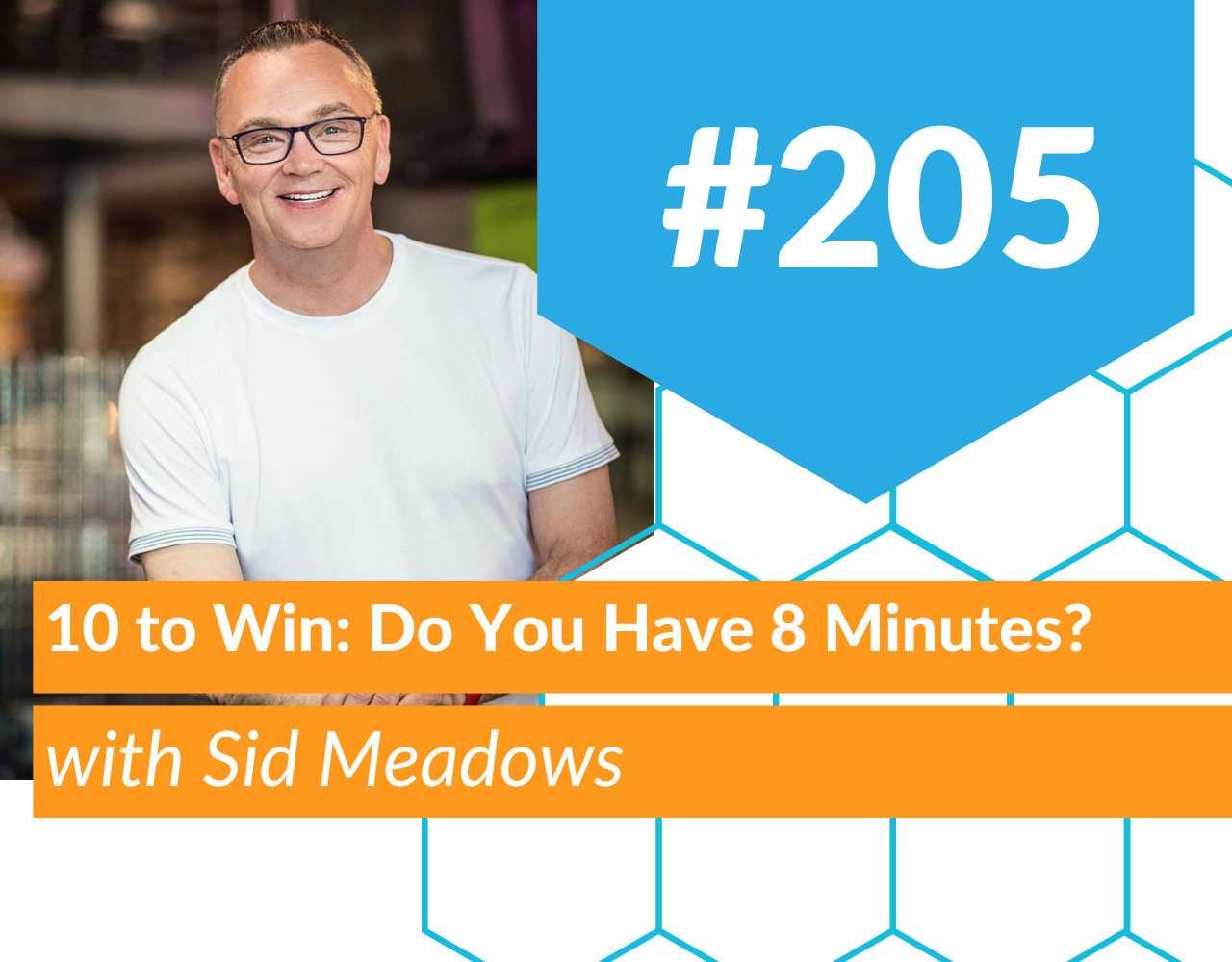
10 to Win: Do You Have 8 Minutes?
SPEAKERS
Sid Meadows
Intro:
Do you have eight minutes? You know, I was scrolling on social media recently and I came across a video from Simon Sinek. Now, like most of you, I scroll past a lot of videos, but this one made me stop. Simon told the story of having dinner with a close friend he hadn't seen in a couple of weeks. And as they were catching up, she told him that the previous week had been really difficult. His response was immediate. Why didn't you call me? She told him that she had. Simon pulled out his phone, looked through their messages, and saw the text that she had sent. But to him, they looked like completely normal messages. What are you doing? Do you want to have dinner Thursday? What his friend saw as an attempt to reach out, Simon saw as everyday conversation. He didn't recognize that she was asking for help. And friend, that's the part of the story that stayed with me. How often does someone reach out to us without actually saying, Hey, I need you. Hey, I need help. And how often do we do exactly the same thing? Sending a casual message and hoping the person on the other end somehow understands what we're really trying to say. You know, Simon's friend had read an article about the power of an eight-minute phone call. The idea was simple. Sometimes a person doesn't need you to solve their problem. They just need a few minutes of your attention so that they don't feel alone. So the two friends came up with a code. Whenever one of them genuinely needed the other, they would send a simple question. Do you have eight minutes? It didn't mean call me when you have time. It didn't mean let's schedule lunch three weeks from now. It meant I need you. I need to know I'm not alone. And the more I thought about that question, the more powerful it became. Do you have eight minutes?
Presenting Sponsors And Support
Sponsor:
We'd like to thank our presenting sponsors, Avanto, services and software that streamline how you operate and the collaborative network, a platform where leaders in the contract interiors industry unite.
Avanto Ad:
This episode is brought to you in part by Avanto, the workflow automation software built exclusively for the commercial furniture industry. Avanto automates the full quote to cash cycle for manufacturers, dealers, rep groups, and installers. Quoting, order entry, AP processing, PDF to SIF conversion, and more without replacing your existing systems. Over 130 companies trust Avanto to run their operations. Learn more at goavanto.com.
The Collaborative Network Ad:
What's one decision that's been keeping you up at night? Before you make it, imagine sitting around the table with five experienced executives who have faced similar challenges and are invested in helping you succeed. That's exactly what happens every month inside the collaborative network. Honest conversations, practical insights, trusted peers. Because leadership isn't about having all the answers, it's about having the right people in your corner. Check us out at thecollaborative.network.
Access Is Not Real Connection
Sid:
Welcome back or welcome to the Trend Report, your inside look at the people, products, and ideas shaping the future of workplace design. I'm your host, is Meadows, and I'm glad that you've joined me for another conversation with just you and me. You know, we're connected, but are we really? We are supposedly more connected than we have ever been before. We have text messages, social media, email, video calls, online communities, networking events, and hundreds, sometimes thousands, of professional contacts in our phone. But access to people isn't the same as connection with people. You can spend your entire day in meetings and still feel alone. You can lead a large team and still believe there is no one that you can talk to. You can walk into an industry event where everybody knows your name and still not have one person that you feel comfortable calling when life gets difficult. You know, the World Health Organization estimates that approximately one in six people worldwide experiences loneliness. But loneliness isn't simply just being alone, it's the gap between the connection we have and the connection that we need. And friend, that distinction matters because you don't have to be physically isolated to feel lonely. You can be surrounded by people and still feel unsupported. And you can have plenty of contacts, but very few genuine connections. And for leaders, that gap may be even greater. You know, Gallup's 2026 workplace research found that 31% of leaders experienced significant loneliness the previous day. Leaders were 10 percentage points more likely than individual contributors to report feeling lonely. The higher you rise, the more people may depend on you, and the fewer people you may believe you can depend on. Because leadership can be lonely. Leadership often creates distance. You're expected to have all the answers, you're expected to remain calm, you're expected to make difficult decisions, deliver the disappointing news, and carry the weight of what's happening next. People come to you with their problems, but who do you go to with yours? For business owners and executives, that question can be particularly difficult. There may be things you can't discuss with your employees. There may be concerns you don't want to take home to your family. You may hesitate to talk with someone in the industry because you're worried about confidentiality perception, or just simply appearing weak. So you carry it. You tell yourself that it's part of the job. You just keep moving, keep leading, and keep showing everyone that everything is fine when it's not. But being strong doesn't mean carrying everything alone. One of the lessons that I've learned through facilitating conversations with business leaders is that most of us are dealing with more than people actually realize. Behind the titles, the companies, the growth plans, and the social media posts are real people trying to make difficult decisions. And sometimes they don't need another strategy. They don't need advice. They don't need someone to fix the problem. They simply just need someone to listen. And friend asking for help isn't a weakness. Many of us, including me, struggle to ask for help because we don't want to become a burden. We tell ourselves, they're probably busy. My problem isn't serious enough. I should be able to handle this by myself. I don't want them to think I'm struggling. Or one of the most common ones, we'll catch up when things slow down. But when do things actually slow down? There's always another meeting, another deadline, another trip, another customer issue, or another urgent email. We keep waiting for a future moment when everyone magically has more time. And that moment rarely arrives.
Supporting Sponsors And Tools
Sponsor:
We'd like to thank our supporting Silver sponsors. KiSP, who helps furniture brands visualize and sell products before specification. Navitas Credit Corp. Navitas makes great workspaces affordable, turning furniture projects into easy monthly payments. Web Configurator Services, the leader in AI-powered online product configuration and quoting.
KiSP Ad:
Selling contract furniture shouldn't require bloated systems or massive investments to stay competitive. The reality is most teams just need tools that work and are easy to adopt and show ROI fast. KiSP helps dealers and manufacturers do exactly that with practical sales tools and services designed for real-world selling. Backed by 30 years of experience, KiSP helps teams visualize, configure, and get chosen early before specification ever starts. To learn more, visit KISP.com.
Navitas Credit Corp Ad:
Let's talk about what's really driving business decisions today: affordability and cash flow. Now here's the win for you. Close faster and get paid 100% up front because how many cash clients do you actually have? Bring financing in early and clients stop shopping and start saying yes, because financing isn't a life preserver, it's a closing tool. Contact Janine Waddell at Navitas Credit Corp at 609-206-4513, and she can help you with total project financing, including furniture, AV, sound masking, delivery, design, all in one single payment.
WCS Ad:
I saw a stat recently that stuck with me. 50% of commercial designers say their biggest challenge is just accessing the right imagery and support files. And pricing delays are still one of their top frustrations. Here's the reality: if designers can't get what they need on your website quickly, they move on. That's not an inconvenience, that's a lost opportunity. WCS addresses that directly with their CPQ platform, which gives instant access to visuals, BIM files, and accurate pricing all in one place. Check out webconfigurator.net and request a free demo. That
Why Eight Minutes Works
Sid:
That's what makes the eight-minute question simply so powerful. It removes one of the biggest barriers to asking for help. The fear that we are asking for too much. I'm not asking you to clear your afternoon. I'm not asking you to solve everything. I'm simply asking you to be present for eight minutes. Asking for help isn't a weakness, it's wisdom. It is recognizing that we were never meant to navigate everyday challenges by ourselves. And eight minutes can make a big difference. The New York Times article behind the idea referenced researched into brief, empathy-focused telephone calls. In one study, the calls were generally intended to last less than 10 minutes. The people making the calls weren't therapists. After four weeks, the participants receiving the calls experienced measurable improvements in loneliness, depression, anxiety, and overall mental health. The study doesn't mean eight minutes is a magical number, but it does reinforce something really important. A brief intentional conversation can make a meaningful difference. Eight minutes may not solve the problem. But it can interrupt the isolation. It can remind someone that they are seen. And it can remind them that they matter. And it can remind them that they don't have to carry everything alone.
Make An Agreement To Listen
Sid:
As I thought more about Simon's story, I realized this idea requires more than one person. It requires an agreement. You need people in your life who understand what the question means. People you trust enough to say, hey, I'm not okay, without first creating some polished explanation as to why. People who know that when you ask for eight minutes, you aren't making small talk. But there is another side to this agreement. You, friend, also have to be willing to answer when someone asks you. You have to listen without immediately trying to fix everything. You have to resist turning the conversation back towards yourself. You have to be fully present, even if it's only for eight minutes. And that may be the most important gift you can offer someone. Not advice, not answers, simple presence, your presence. So I have
The Challenge To Reach Out
Sid:
a challenge for you this week. I want you to identify two or three people that you trust. Tell them about the eight-minute question, or share this episode with them and create your own agreement. Let them know that if they ever received a message from you asking, Do you have eight minutes? It means you genuinely need to connect. Then give them permission to ask you the same question. But don't stop there. Think about someone you haven't heard from recently. Someone who may be carrying more than they're saying. Someone whose casual text you may have overlooked. Someone who is always checking on everyone else, but rarely gets asked how they are really doing. Reach out to them. Don't send a complicated message. Just simply ask them, do you have eight minutes? Because eight minutes may not solve someone's problem, and that's not the goal. But it could remind them that they don't have to face it all alone. And sometimes that is exactly what you, a friend or a leader needs.
Community Sponsors And Thanks
Sponsor:
We'd like to thank our community bronze sponsors, Catalyst Consulting Group, Prioritas and Reseat.
Catalyst Consulting Ad:
Public sector sales don't happen by accident. They happen by strategy. At Catalyst Consulting, we help small business manufacturers break into and grow within federal, sled, and cooperative contract markets. With over 100 years of combined experience selling to the public sector in the commercial furniture industry, we know what it takes to compete and win. We help you align with the right contracts, the right partners, and the right opportunities. Government sales are complex. Your strategy shouldn't be. Visit strategic-catalyst.com and take our Pathfinder assessment to see where you are on your public sector path.
Closing Encouragement And Farewell
Outro:
Hey,thanks for joining me today on the Trend Report, your inside look at the people, products, and ideas shaping the future of workplace design. Go out there and make today great. And we will see you in the next episode. And I hope that this short conversation gave you some inspiration and some courage to find those group of people that you can ask them if they've got eight minutes. Take care.