The Trend Report Podcast
A New Collaborative Tool (DOT) with Kari Anderson & Prakash Narasimhalu
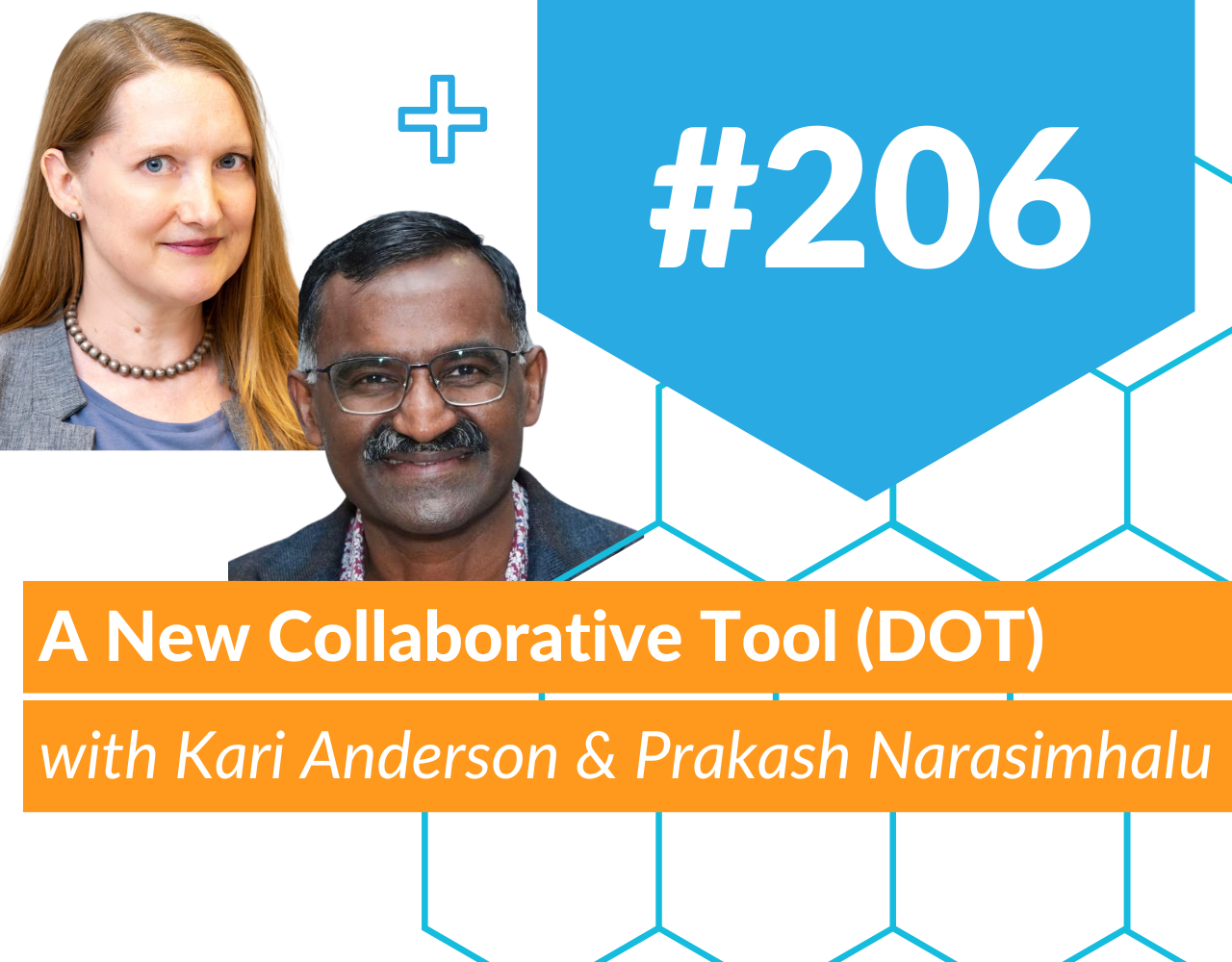
SPEAKERS
Sid Meadows, Kari Anderson, Prakash Narasimhalu
Intro:
You know, we spend a lot of time talking about product innovation. But what about process innovation? You know, during the early stages of a project, designers are still pulling images and product information from multiple websites, copying and pasting everything into PowerPoint or other tools, and managing feedback through long email chains. Hey, it works, but there may be a faster, more collaborative way. My guest today recognized this problem and decided to do something about it. So today we're going to explore the new platform DOT. What is it, the problem that it solves, and how it could change the way that our industry collaborates?
Sponsor:
We'd like to thank our presenting sponsors, Avanto, services and software that streamline how you operate and the collaborative network, a platform where leaders in the contract interiors industry unite.
Avanto Ad:
This episode is brought to you in part by Avanto, the workflow automation software built exclusively for the commercial furniture industry. Avanto automates the full quote to cash cycle for manufacturers, dealers, rep groups, and installers. Quoting, order entry, AP processing, PDF to SIF conversion, and more without replacing your existing systems. Over 130 companies trust Avanto to run their operations. Learn more at goavanto.com.
The Collaborative Network Ad:
What's one decision that's been keeping you up at night? Before you make it, imagine sitting around the table with five experienced executives who have faced similar challenges and are invested in helping you succeed. That's exactly what happens every month inside the collaborative network. Honest conversations, practical insights, trusted peers. Because leadership isn't about having all the answers. It's about having the right people in your corner. Check us out at thecollaborative.network.
Sid:
Welcome back or welcome to the Trend Report, your inside look at the people, products, and ideas shaping the future of workplace design. I'm your host, Ed Meadows, and I'm really glad you joined me today for this conversation with my two guests. And we're just going to jump right in and let them introduce themselves. Carrie, welcome back to the show because you've been on the show before. Please take a moment and introduce yourself.
Kari:
Hi, everybody. Sid, thanks for having me
Meet The Guests And Their Backgrounds
back. Kari Anderson. I started out in this industry as a dealer designer. Loved that experience. I have over two decades of experience in the dealership world. So I'm based here out of Minneapolis, Minnesota. And about eight years ago, I went back to school. I felt like I had designed my last six-pack workstation in my life. And so my career then took me to user experience design. So I transferred from designing physical spaces into the digital space and really thought I was going to leave the industry. I'm like, hey, Kari, a new chapter, you know, a whole new encyclopedia of life I was going through. But I realized that my network, my knowledge, and my experience really kept me here. And Sid, you're probably going to say the comment, you know, once you come into this industry, yeah, don't leave, right? How many of us experience that? So I started my own consulting business. And I work primarily with manufacturers and help them through their journey of onboarding, managing, maintaining their technologies. So not only working with manufacturers, you know, I work with our software development teams, anything amongst our industry that deals with technology, I'm probably involved in that conversation.
Sid:
That would give me a headache. Just for clarity. Having to deal with technology all day long in the little time I deal with it. So Kari, thank you for being here. And you brought a friend and another guest with you. Prakash, please take a moment. Welcome. It's great to have you on the show. And welcome. And take a moment, please, and introduce yourself. Tell us who you are and what you do.
Prakash:
Absolutely. Thanks, uh Sid, for having uh me here. And Kerry, thanks for uh inviting uh the partner in crime uh to this uh to this podcast. It's a pleasure. I am uh Prakash Narasim halu, CEO and co-founder of uh Riverstone Info Tech. By now, Riverstone has become a household name in the commercial furniture uh industry. We have been working with uh manufacturers, dealers, rep groups, and architects for well over two decades. Our specialty is turning product complexity into something simple that the industry partners can go from spec to code to close without friction. Right. And we do that using our decades of design experience and also the technology experience that we have gained from having done this for well over two decades.
Sid:
Okay, you just said something that like hits to my core. Friction. The last week I've experienced more friction trying to research something. And it's just like, why do we create friction? Like, why do we do this? And I'm thinking to myself, if I'm having this problem and I'm feeling this way, I can only imagine what an interior designer would feel like, what a dealer designer would feel like, what a dealer salesperson would feel like, and they're encountering the same friction. We're not gonna spend the whole episode talking about friction, but we could, honestly. We could pull some live demos and show some people like where friction really exists because we don't need to create friction today, right? We just don't need to. So I'm glad that you're here, Prakash. And I've had the opportunity to meet you a couple of times and excited to hear
UX Thinking And Where Friction Hides
Sid:
more about this product. And, you know, Carrie, I want to talk for a minute about user experience because that kind of ties directly into friction. What was it that drew you to wanting to know more, understand more about user experience or UX?
Kari:
Well, I've been experiencing, you know, as a dealer designer, as an interior designer, we're taught design thinking. So all of the methodologies that you think of from a UX perspective, uh, some of the simple examples that I use of how it translates between my interior design and my UX design. In fact, I spoke about this when I was back in school with everybody else. I'm like, you know, this just I didn't know it at the time. I like when UX, when I went to school for it, it wasn't a household name. I was on that cutting edge of, you know, people going into UX design. So for example, you know, as a good designer, I use the bathroom experience, right? You're at a restaurant and to have that nice traffic flow to be able to find the bathroom, you know, when you're at a restaurant, you know, like there's just certain things that you need to see and find, right? So a good designer is going to create that great user experience of having that back path and navigation. So that then translates if you go to a website, right? Like I have a task that I'm trying to complete. I want the least amount of friction. I need to purchase this product or even just find that product, right? Let's not even say purchase. I need to find that product. That product is the bathroom in the physical space. In the digital space, a good UX designer is going to ensure that that user in the least amount of clicks, the least amount of friction, can find what they're looking for. And that's going to keep you coming back to that, that vendor, that website, that whatever it may be. That's how I easily correlate.
Sid:
No, it's great. And I'm somewhat biting my tongue because I think that every manufacturer that's listening to this needs to call Carrie because I could point out the user experience friction on so many websites. I will not today, but it's just top of mind for me because I was trying to do some research on something. And again, I think about if it's me and I'm not even specifying the product, I'm just looking for stuff. Imagine what people that are really trying to specify, what they feel. So it's really important thing. And I'm just gonna say, I don't know that a lot of people think about it the way you just described it. It looks pretty, but how many clicks does it take for somebody to find something? And I just got the visual. I'm gonna date myself of the owl and the Tootsie Roll Pop. I'm familiar with that. How many licks does it take to get to the center of a Tootsie Roll Pop? I just for whatever reason that visual because it just takes too long in today's today's customer, they want things quickly. Started with Google, right? And then it migrated over to you know AI. We want everything instantaneously, so we just have to be very mindful of this. So, Prakash, tell us a little bit more. Thank you, Kari, for that explanation, Prakash, but tell us a little bit more about what you do at RiverStone. Because and you said you're the co-founder and CEO, is that what I heard you say correctly?
Prakash:
That's correct. Uh yeah. Yeah. So at Riverstone, we started the company focusing more on the dealer side, offering design services is how we started. But we have always been a, in heart, a technology company. So we always look for ways to apply technology to solve the problem, especially you talked about the process, and we're always looking for ways to automate the process using technology. And so we saw the Configura platform is something that is gaining foothold as a way to streamline the process, if you will, right? How things are being specified and so we became a Configura partner, and we are well known in the industry for building the Configura extensions and commercial interior libraries, is what we are known for. But that's just tip of the iceberg when it comes to Riverstone. So we have a uh we have been busy building a lot of tools and technology solutions for the industry over the last few years to the point where we have an answer to any question anyone can think of these days. And that's actually how Carrie sort of intersected with us is when when we started working together, when she started hearing more about the kind of things we are building using technology, she got excited. And um, you know, as you know, Carrie, she's very open about sharing ideas and brainstorming ideas. And so we have grown from purely offering a design service company to a full service end-to-end solution for the commercial interior industry, if you will.
Sid:
That's awesome. We're gonna be
The Collaboration Pain In Ideation
sure that both of your websites and all that information is down in the show notes so people can get in touch with you and learn more. But Kari, let's talk about the problem. What was the problem you were seeing in the way that teams were collaborating across a project? So set us up with the problem that you're solving here.
Kari:
So the problem that I was solving for isn't something that has been recent. So this problem I was even experiencing back in my dealership days. So I haven't been in a dealership for about nine years, but through my colleagues, my user experience, you know, testing and all that, I'm still hearing that that problem was happening. So during the ideation phase of a project, so ideation phase of a project is potentially there's a new customer that's you know looking for budgets, just starting to consider what type and style is their space. Maybe it's an RFP and RFI comes in. You know, like we're we're in that discovery part of a project. So whether it was 10 years ago with technology was in place 10 years ago, but it is not the same as it is today, right? So, you know, like I'm just gonna remove some of the details of that. What happens is that it either, you know, like from a today's state of it is is somebody opens up a PowerPoint, they go out to their 20 different manufacturers' website, and you're doing this in a silo. I'm doing all of my information. And Sid, let's say you're my salesperson, I send you an email. We're gonna collaborate because guess what? We're working hybrid now. You're not in the office with me. So we need to communicate and collaborate back and forth through the series of emails, which becomes impossible to track that information. Now let's bring in our reps. Now let's bring in our customers, let's get feedback. And it becomes this stale PDF that gets bounced around and the lack of communication. We lose a lot of time. We have those churns. As people are listening to this, like I think all of our heart rates are increasing because we're feeling. I'm gonna keep using the word friction. That's our key word uh for today, right? You can feel all of that friction was happening. I have a hundred tabs. Not only did I have 25 tabs open before, I have a hundred tabs. My computer shuts down, I lose all of that research information. In there, or I find that information, and now I have the taxing effort of typing in all retyping in all that information. So now I become in a secretary state. So me as a designer, it's totally lost my creative flow because now I've had to trigger over into more of a task-based Sid, you know, I'm not picking on a salesperson, but you know, your your attention span is totally gone. Like you're like, okay, Carrie, just get this done. I I like it. Pick option A. Done. Done, done with it.
Sid:
I'm like, identify with that. I'm not sure actually. So then you say approve. What's your next thing out of your mouth? Kari, what's the budget on that? Give me the numbers.
Kari:
Yeah, give me the budgets. Yeah, my customer's waiting for the budget. But I just had this also this visual of like I'm you you're you're you're working on all this, and you think the autosave is turned on, and then you close the document and everything's gone away. There's just so many little issues that happen and the emailing back and forth, and you know, who was the last person to get it? And then trying to follow. If you ever tried to follow a comment feed on a document, and like somebody resolves a comment before it's actually resolved, and you miss the comment, and the chair ends up being red and not pink or whatever, right? Because you didn't see the comment. I mean, it's just I just see so many issues, it's just in my limited view of the world today, not actually selling product, I see. So I'm literally reviewing a contract with someone and we're doing it through the comments. I'm like, oh, this makes my head hurt. So it has to be an easier way. So you've lived experience, you're working with people, and you're like, there's a problem here. And being Kari, you're gonna come up with an idea. So, Prakash, when she called you, did you Kari, are you crazy? Or did you say, Kari, I love this idea. We can make this happen.
Prakash:
That's a great question. Um, Sid. I mentioned earlier we are a technology company at heart, and we also have been playing around with AI and looking at what is possible with AI over the last three, four years. And so we are always looking at crazy ideas ourselves internally within our company. And oftentimes even customers come to us and say, I have a crazy idea, right? And we are like, we are ready, let's do it. So when Kari called, it was something that we are always used to. So we had the culture within the company where we had team members who are always coming up with new ideas and bringing it to uh my co-founder Annix and I, and saying, Hey, look, you know, I got this idea, what can we do with it? And let's just run with it. And so when Kari came to us, what kind of dawned on me was we already had a lot of the building blocks in our store shelf. Because by the time Kari came to us, she already knew some of those building blocks because we had been sharing with Kari openly about some of the things we have been working on. So we we looked at the idea and we said, hey, we have 80% of the pieces in the store shelf anyway, sort of like a Lego, Lego blocks. And so we pulled them out and we said,
Building DOT Fast With Existing Blocks
Prakash:
Hey, we could use these things to bring the idea to fruition very, very quickly. And so that got Kari excited.
Sid:
Okay.
Prakash:
And so, you know, no idea is crazy idea, right?
Sid:
So I love these of crazy ideas, let's be clear. And when Kari's face shows up on my phone, I get all excited, like, oh gosh, we're getting to get this up to Kari for 15 minutes that turns into an hour long conversation. But I love it when her when she and I love crazy ideas because I mentioned this in the intro. We talk a lot about product innovation. Some people will argue that we're not doing a really good job these days innovating products, but rarely do we talk about process innovation. And I honestly think there's a lot of areas where we don't talk about innovation at all that we need to be talking about innovation. So I love the fact that this is about a process innovation, but it's also not like a documented workflow process innovation. And we're gonna shorten the cycle time from quote to order entry to invoicing by 35%. That's not what it's about, but it's about it really is a process that we go through as sellers and designers and in users in trying to figure out what's going on in space, and you're modernizing, you're innovating this process. So, Kari, tell us a little bit about the product, please.
Kari:
So the product, the name is DOT, and the tagline is connect the ideas. So the whole concept with this too is about connecting the ideas, connecting the tools, connecting the people, the places, the process, all of that. So, what dot is is it's a Miro plugin, M-I-R-O. So if you're not sure.
Sid:
Before you get too far, yeah, to explain Miro, please.
Kari:
Yes, yes. So some people when they hear the word Miro, they're like, oh yeah, totally understand that. And then from the other half of the population that I speak to, they're like, Miro, what is Miro? So Miro is essentially an infinite whiteboard. It has been around over 10 years. I forget how many millions and billions of users there are across the globe that are using it. So, what a user can do is you can go in there and Miro already has its own operating systems. So, you know, whether you want to create a table, a table as in like an Excel table, kind of spreadsheet like that, cut and pasting information on manufacturers' websites, all of that is part of the core essence of Miro. Tons of really great trainings out there. What DOT is, it is an app, it is a plugin. And what that plugin does is it brings our
What DOT Does Inside Miro
Kari:
manufacturer's content into this infinite whiteboard, this space that people are already collaborating in. And when I say people are already collaborating in, I mention that globally everyone's using it. But if you're not familiar with it and you start asking around, we have A and D firms that are standardized on this. We have manufacturers that are using it internally for their marketing teams, their engineering teams. There's software developers out there, there's software companies that are using Miro. Many dealerships have adopted it as their internal processes too.
Sid:
So give us an example of something you would do on Miro. Like how would you like can you be a little more tactical there?
Kari:
Yeah, yeah. So I'll give you for my day-to-day process. So I'm working with a manufacturer, I'm collaborating with Riverstone on it, and we're building their CET extension. So how I bring into a mirror board on this software development perspective is it's my communication tool. So here's our sprint plan. Uh, here's everything that we're going to be doing for the next week. There's little post-it notes, there's assigned tasks. So this whole team of 15 people can log in there and see our sprint planning. As I'm going through, I may see something that the developers had built into CET. I do a screenshot, I paste it into the mural board, and now I can prototype on top of that and say, hey, please change this, that, whatever. And we're all collaborating inside of this space using those screenshots, using that documentation, creating what we call a sprint plan of the steps that we're we're going to take. Now that's very tactical at my level.
Sid:
No, it's very perfect. And at this point, no email has been sent, right? No email has been sent. Like, here's a screenshot of something I saw. So, like, yeah, that's good. That's really good.
Kari:
And I also, so if I saw something, I put at Prakash, please update, you know, this color or something like that. He gets a notification because that's all just part of the color.
Sid:
Because you called him out zero. You called him out.
Kari:
Right? Yeah.
Sid:
Okay. I've played around with it a little bit. And so it's uh it's interesting. I'm I'm I'm learning all the little things to do in it. But I just got an idea, like, oh wow, this would be really good for something I'm working on now that because I'm emailing my business partner saying, Hey, we need to do this, and I could actually put it in a mirror board and then I could add her, and she'd get really irritated about that. But I would love that. So but uh that's awesome, yeah. I like it.
Kari:
Oh, and and Miro is coming up with their own internal tools inside of their. So this isn't a sales pitch for Miro. Like, yes, we'll let we'll need to talk about Dot, but for instance, this actually let me say this is the reason that dot is an a Miro plugin is that we don't have to build those core operating functions. We can let Miro use that. So we're leveraging Miro's core platform, and then we're building in our technology, which you know is all about manufacturers content and doing from that side. So, like Miro has its own AI agent inside of there, Sidekick. So dot leverages off of that. You'll see on some of the training videos how you can use Sidekick, you know, to be able to bring in that content. Uh, you can embed your own videos. So I can actually embed my own video just part of Miro so that I don't have to go to Loom. It's like, hey Prakash, they watched this embedded video right inside of my board. They've got really fun things like I can create my own stickers. So I create my own. Stickers and I have this thumbs up. You know, it's like, hey, Carrie approves this. Like you can be as fun as you want. It brings that personality that we don't get in an email, right? Like an email and text. There's so much that can be read between that line where, you know, we're just trying to bring, you know, everybody can be authentic inside of this digital collaboration space.
Sid:
So I'm going to go back to thank you for that explanation about Mira. I'm going to have to go play around with it more. But um, Prakash, Kari comes to you with an idea, and you said we have things on the shelf. Like this would be like a fast track for us to get it to build. What excited you most about this new product, Dot?
Prakash:
I would say it's being able to package up what we already have innovated internally, and some aspects of what we innovated was already deployed in the form of products to customers, and some ideas were sitting on the shelf. So when I saw this, I saw an opportunity for us to readily deploy the arsenal of capability we already innovated and invented and sitting on the shelf to come to life. And that's what really got me excited, if you will. In fact, we were able to deliver what I would call as the minimum viable product in a matter of four weeks, you know, because of what Miro already had, right? What Miro does, plus also the pre-packaged, you know, pre-innovated solutions just waiting to be deployed through this opportunity. Two features that really come to my mind. Um, said one is if you think about it, designers need the most accurate data, right? We already have so many copies of data lying everywhere, and there is no single source of trustable data. Yep, right? So we already had built a cloud-based product information management platform. And so that platform was already being used, and so that became the back end of this whole mirror plugin. And so we already had figured out what is the easiest way to get data into this system in a more uh fast manner because our team has been dealing with catalog data for over 20 years, you know, helping manufacturers, right? And so and and the second piece was really the search function. When a designer is looking for something specific, searching and finding relevant information and product is very, very challenging, right? So we had already solved the search problem also to the point where nobody has to wait for more than a second to really find what they are looking for. The system is very intelligent, and if somebody starts typing, it automatically starts showing the results instantaneously. So those are some of the building blocks that really helped us fast track this and get the uh minimum viable product out so that um Carrie can uh then you know go around and you know show it to people and see what uh what people thought.
Sid:
And I was one of the lucky ones because I got a live demo at uh Neocon in the Gent Showroom. I got to sneak in and see Kari, my friend Kari demo it. It's really, really cool.
Sponsor:
We'd like to thank our supporting silver sponsors, KiSP, who helps furniture brands visualize and sell products before specification. Navitas Credit. Navitas makes great workspaces affordable, turning furniture projects into easy monthly payments. Web Configurator Services, the leader in AI-powered online product configuration and quoting.
KiSP Ad:
Selling contract furniture shouldn't require bloated systems or massive investments to stay competitive. The reality is most teams just need tools that work and are easy to adopt and show ROI fast. KiSP helps dealers and manufacturers do exactly that with practical sales tools and services designed for real-world selling. Backed by 30 years of experience, KiSP helps teams visualize, configure, and get chosen early before specification ever starts. To learn more, visit KISP.com.
Navitas Credit Ad:
Let's talk about what's really driving business decisions
Drag Drop Products With Smart Cards
today: affordability and cash flow. Now here's the win for you. Close faster and get paid 100% up front, because how many cash clients do you actually have? Bring financing in early and clients stop shopping and start saying yes, because financing isn't a life preserver, it's a closing tool. Contact Janine Waddell at Navitas Credit at 609-206-4513, and she can help you with total project financing, including furniture, AV, sound masking, delivery, design, all in one single payment.
WCS Ad:
I saw a stat recently that stuck with me. 50% of commercial designers say their biggest challenge is just accessing the right imagery and support files. And pricing delays are still one of their top frustrations. Here's the reality: if designers can't get what they need on your website quickly, they move on. That's not an inconvenience, that's a lost opportunity. WCS addresses that directly with their CPQ platform, which gives instant access to visuals, BIM files, and accurate pricing all in one place. Check out webconfigurator.net and request a free demo.
Sid:
Kari, give us a snapshot of the basics of what it does. What does it do? What does the dot plugin for Miro actually do?
Kari:
Yeah, so it brings our manufacturer's content and so not only furniture products, but also textiles. So when I'm in that ideation phase and I'm looking for a lounge chair, I can search for a lounge chair, including filtering all the way down to a price point, lead time, or even a specific brand. When I find that product, I just drag and drop it into my board. Now, what comes along with that is not only that white sweep image, but a from the app.
Sid:
I take it from the app and I just drag it over. No, go into somebody's website, screenshotting it, cropping it, putting it into some tool to remove the background. It's just all right there, and I just drag it over. That sounds so easy.
Kari:
Drag and drop. So it comes in with that white sweep or whatever image the manufacturer uh chooses to produce, and then it has a dot smart card that's associated with it. So on that dot smart card, one, it just shows you the preview, but you can expand it. And that dot smart card gives the user the ability to customize a tag. We're used to the CH1 or the T1, right? So now I can identify that specific product that is aligning with my project. It tells me the manufacturer's name, the product name, a starting price. If a manufacturer chooses to produce or publish that lead time, or the user can type in a lead time. It also gives you the URL link to go back to that page on a manufacturer's website and the product description. So all of that taxing information, typically that I see not only myself doing, but at dealership and AD level, they're taking a mural post-it note and they're typing in all of that information on every single product. So we're bringing that data, that content to them in that dot smart card.
Sid:
And that's the content you had, Prakash, right? Because you said you'd spent 20 years inside of manufactured product data. So that's one of the things you brought to the table was populating of that dot card, which I think is brilliant. And so I'm looking at a rendering. Hey Kitty. Kari and I both have orange cats, and our kitty just walked across the screen. If you're watching on YouTube, you saw Kari's orange cat walk across the screen. That's great. I love it. This is live podcasting people. Welcome. So, but Prakash, that's where you really came in, was with that data, right?
Prakash:
That's correct. You said uh, as we all know, the furniture industry's product data set is very complex because of uh the nature of the beast. But because we have spent uh decades working on understanding and synthesizing and simplifying how to deal with this data in building all these electronic catalogs over a long time. We had already built the product information management platform that I mentioned earlier, so it was very easy for us to compile the data there and then be able to publish the data real time into the dot plugin so the designers have access to the right data and don't have to second guess how accurate it is.
Sid:
The right data, not second guessing. It's all right there because it's pulled from the manufacturers. And if it's wrong, it goes all the way back up the tree because it's wrong everywhere, right? All right. I've laid out my client's lobby, and I've got my sofa, my lounge chairs, my coffee table, my reception desk, a beverage cart, and me and the customer and the designer have all figured out this is what we want, these are the finishes we want, here's
From Ideas To Budgets With BOM
Sid:
the fabrics we want, and everybody's happy. What happens next, Kari? Now it's ready to go to design and pricing, specing, but tell us what happens then, please.
Kari:
Yeah, so you and I are the sales team right now. It comes over to the dealership. So now that we've got the inspiration, what I would do is going via dot, I'm going to look for, we always, we not always typically have an option A, option B, whether it's a good, bad, or best, it's a pricing, maybe it's a style kind of deal like that. So I've actually done tests of this, is that I would go through and for each of those products, I would put, you know, drag and drop, you know, maybe I'm looking for a specific vendor or a price point, and I would bring those products in. I also, in addition, put it in my tags, you know, like maybe alt1, ch one, and then alt two, ch two. So I I've got those correlations side by side. I might pull in a color palette too, as I mentioned, that you know, there's there's textiles in there. There's also a dot manual card. So if you bring in some stuff that is not part of the library, you can still enter in that exact same data so that you're working through that similar data flow. You're not bringing in some random post-it note in there.
Sid:
So there's not like a zappier connection for simplification because I don't know other way to say it. There's not like a connection that's going to take what's in dot in the designer be able to pull it into CET. Is there? I'm getting this look like, oh I know.
Kari:
If you're listening, you can't see this look. So, you know, uh Prakash just said that we launched, um, the product actually launched in the end of June. And so that was based upon our MVP. Um, I couldn't wait, nor could Riverstone wait for anything to be perfect. We had a valid product, we we hit totally hit the market, but technology is never one and done. So there's definitely iterations. We've been hearing feedback. Dot connects the ideas, it connects to the next tools. So feedback that we are also hearing from, like currently inside of here, I can download a CSV and you can import that into spec worksheet your ERP system, right? Like, because I can create a bill of material. Inside of Dot I can create inside of Miro, I can create a bill of material. So from this floor plan, you know, like if we kind of want to go through a couple things, how do we keep that collaboration going, Sid? I invite my customers in. I'm using Miro's dots. So Miro has this little packet of dots, and you go in and you grab a red dot and a green dot. I did this 10 years ago with my customers all the time. Go and just put a dot, red dot, green dot. Do you like these products? Do you like option one? Do you like option two? Put a comment, put a post-it note to comment on it. Now I can have decided option one won the project, right? Like, hey, yep, let's continue down option one. Currently, using my default mirror capabilities, I simply go into Sidekick, which is Miro's AI. I type in these simple words. Create a B-O-M. We all have heard the word BOM, right? I circle, I highlight, I select all of those dot cards, and within moments, and this is anybody can do this. I did not program it. This is part the power of AI. It creates me a table of my BOM. And if I have a floor plan attached to that that has those same CH1s, it actually counted all the CH1s, T1s, and on that bill of materials, depending on you know the level of the detail, it gave me the part numbers, the products, the quantities, the price per objects, but it also extended the price. And within that, it's probably going to take about two minutes because you know we do have to pause. AI isn't, you know, as fast as we want it to be. But Sid within a couple minutes, I now have that budget that you are tapping your finger on my desk waiting for me to produce. It's a budget, you know, it's close to order ready, but but you can see that power of that speed to get decisions made. We've connected, you know, to the tools. Right now, just a CSV is downloaded. But, you know, future iterations coming up with DOT is how does it connect? How does it plug into our other industry tools? It is not an island, it is part of the ecosystem.
Sid:
There's never any such thing as perfect, I don't believe. But you, like you said, you got to the minimum viable product and you said, let's go. Let's get let's get out there, let's get using it. Let's see what the customers say about it or the users have to say about it. Let's listen to their feedback. Let's take that feedback and then create a version two or a version three or however many versions you need, and which you'll still keep iterating it because that's what's important, is you keep iterating it. So, Prakash, when you started reviewing the idea, did you come up to carry like, oh, we should be thinking about this, we should be about that? Like, talk about that feedback loop between the two of you and getting it to where it is today.
Prakash:
Yeah, uh, we uh initially talked about what the product could do, and we came up with at least a dozen different feature functions that we could build in this product that could take us a year or two. But we had to figure out what is the minimum viable product, and
Why Manufacturers And Dealers Join
we built that, but we by then already had a healthy backlog of quite a few features that we wanted to build just from the initial conversation within the first couple of calls. We already had all these ideas. So we still have those ideas in the backlog, and we have worked down those ideas, and then from working with users who are already using the platform, we are getting some additional feedback, and we have been adding those also into the backlog. So we have a healthy backlog of things we want to keep building in the coming months to add more value to this platform. So we're just getting started.
Sid:
I love that. So what I'm hearing from both of you is get the big audacious idea, the big audacious goal, if you will. And you put it out there like this is what we know that it can be, but we got to work towards that. And we got to figure, okay, this is actually a phase four kind of thing. We don't need that now. What we need to do is get started, and then we need to look at, okay, well, we can add that functionality, and then let's see how users like it. Let's get feedback from the users, and then let's do something else until you get to the big, hairy, audacious idea. Because I honestly believe that's where real innovation happens, is when the idea is really crazy. Because there's a real product inside of the crazy idea. And listen, I come up with some crazy ideas in my time, but there's a real product in that idea that's going to make people's lives better and easier. At the end of the day, that's what this is really about. It's about simplifying faster ideation, better collaboration, easier client feedback and easier working with the client and the interior designer, less administrative work, about product discovery, about faster creation, as you talked about, the bill of materials and grabbing and telling AI to make you a bill of material. That's like, wow, that's cool. I was doing something yesterday, unrelated but related. And I record most of my conversations because I need to be reminded of other things. And I was in my little recording tool and I was like, what did we talk about? And I typed into the little AI chat, said what was discussed around X, Y, and Z during this conversation. I was blown away. Well, you said this. Bill said this. As soon as he said that, I'm like, oh, I mean, it was just like shocking how easy and how fast it was. So being able to talk to it to help you do something, I love that idea. And that was already part of Miro?
Kari:
Exactly. We did not have to build that infrastructure. And because Miro is such a large adopted tool across the globe, they're continuously going to invest. So we're we're benefiting from it.
Sid:
Sure. All right, so I have two questions. First, I'm asking you, Prakash. Why should manufacturers want to have their products inside of DOT? It's real simple.
Prakash:
They want to be in the mind share during the ideation phase so that their product is considered. Otherwise, it's a missed opportunity.
Sid:
So in my thank you, that was that I love that. And I see this as all manufacturers talk about more visibility, greater visibility, greater discovery. How do I be discovered? This is just another option for discovery because somebody could find your product without having to go through a binder or something, and all of a sudden you're in a spec, right? This is not my second question, but Karen, I'm coming to you for the second one in just a second. Can I search inside a dot and say I would like a veneer table that's blah, blah, blah, with oval with a live edge. I'm making stuff out with a live edge, with a live edge, with a X base in bronze that's 26 inches tall. Can I go like that and it show me product options? Does it do that?
Kari:
Not to that level of detail yet. Because if you think of what you just described there, needs a lot of metadata, right? So even if you went to if you took a manufacturer's price list and you just went into a search function on a manufacturer's price list, we couldn't find that content because we don't have the data about it.
Sid:
Okay.
Kari:
But, you know, like my recommendations and also part of there's a group that I facilitate, it's based upon our data standards for the industry and how we need to evolve our data standards. Sid, you know, you and I have talked about this in a previous podcast, is that our data standards helps support the way that we did business 20 years ago. And now we are so much part of a metadata. If AI is going to be good, it needs that what I'm saying is a metadata, right? This table has a live edge, this table has a bronze base. Um, AI is really good about also visually identifying things. It's gotten so much better even to what was a year ago. So part of this too is that I know in the toolkit that Riverstone has their own AI agents. So Dot also has its spokesmodel. Dot's spokesmodel's name is Dottie. Dottie is your virtual assistant. Dottie doesn't do too much yet. You know, she's warming up, she's learning more and more about the industry. But you can see where this toolkit of what Riverstone has is that we can be bringing in that AI functionality to feed that AI agent. You know, like that's a whole other podcast, right? You know, talking about LLMs and how do you clone yourself and get all that information. So, you know, at an essence right now, we're dealing with basic manufacturers' content.
Sid:
Love it.
Kari:
And then how can we evolve that? And going back to dot connect the ideas, the content that a manufacturer is supporting for dot, I can guarantee that if another software platform isn't using that same content, they will be soon, meaning that metadata. So if you're not collecting that metadata right now for your website, I'm pretty sure if I could look into a crystal ball and prakash, you'll probably agree with me that you know it's something that all manufacturers are going to want to do for their content, you know, moving in the future.
Sid:
So thank you for the clarification. My second question, I asked Prakash why manufacturers want to be using DOT or on DOT. Carrie, why do dealers want to use DOT?
Kari:
To shorten that workflow cycle, to uh be able to have that information where they're working, when they're working, to be able to collaborate. It may be a change in their current work process. And I always say, hey, try anything once. Like, what do you have to lose? It is a space that is easy to onboard and get into. That's why I would recommend it. Other reason too is you want to get closer to the A and D firms, then work in the platforms where the A and D firms are. And that's mural.
Sid:
That's a mic job right there. When you get closer to the A and D firms, work in the platforms they're working in. That's great. So let's talk about because I'm to a degree.
Adoption Barriers And How To Try It
Sid:
Somewhat very familiar with adoption of new ideas. What's been the biggest struggle, either one of you, in getting our industry to adopt this new idea? One of you like to answer that?
Prakash:
I can probably answer it a little bit from the manufacturer standpoint, right? So currently the challenge manufacturers face is they have limited resources and there are so many tools and platforms out there, right? So which platform should I invest? How much should I invest? What is the value I'm gonna get? It's a real problem. And so that's the space we live in. And our goal is to educate manufacturers on the ROI from in various platforms that they could invest in and educate them, inform them, and then help them make the right decision. And so we see that. That's a struggle. And so that's definitely one of the challenges. And then I would probably turn it over to Carrie to add additional commentary on that, but that's something that just popped in my head right away.
Sid:
No, but you're not wrong with that because I hear that too. You know, in my role, there's so many pieces of tech, Carrie. We talked about this on the Collaborative Spark. There's so many techs, which one do I invest in? What do I do? Why do I choose it? Okay. And you help make sense of the ROI. So, Carrie, what are you seeing as potential issues of adoption from our industry to this really cool new product?
Kari:
Yeah, so I'm actually going to approach it from then the dealership side because I 100% agree with what Prakash said. From a dealership side, I ain't got time for another tool. I don't have time to train on something else. How do I integrate into it? You know, like I'm already exhausted. So I think there is that consideration of you know changing their workflow of it. And then the challenge comes on both sides. So from a manufacturer, they want to see how many users are using it before I invest into it. And from a user's when I'm presenting it, well, how many manufacturers are on board with there? So this is all about you know trusting and believing in this ideation and knowing that the barrier is very low for everybody to enter into this for immediate success.
Sid:
So we've talked about it, but we haven't talked about it. But one of the things I love about it is I'm the seller, you're my designer, precaution is the customer. We're in different time zones. I love that it's a universal product that ever all of us can access. And if Carrie, you like to work at 10 or 11 o'clock at night, you could log in and you could see and you could comment, you could add to our collaboration board in Miro that's being powered with dot. And then precaution is the end user can the next day look at it. And then when I get a chance on Saturday afternoon, whatever, I can look at it. I love that because you're meeting the user where they are, and typically that's in some form of technology, right? And you're also meeting them when they like to work because we know that people like to work in different times. We know they work differently, and also different time zones impact the timing that we work. And this is saving a whole bunch of emails, a whole bunch of attachments, a whole bunch of screenshots, saving a lot of work because we're collaborating inside of one tool that happens to be intelligent with our information about our industry, which makes life a lot better because I don't have to go to XYZ Fabric's website and clip the fabric. It's already inside of dot. I can just grab the fabric and drag it over. So that's accessibility. And I think that's really important to understand. We can work across time zones, we can work across the way we like to work, and we can still collaborate and be very effective and bring a project to market faster. And unfortunately,
Where To See DOT In Action
Sid:
in an audio-only podcast, we can't demo it, but Carrie, tell our listeners where they could go to actually see the product in action. How can they see this product working?
Kari:
Perfect. Okay, so two quick stops with that. Meet dot design. So meet dot dot and so period design. And I know you'll you'll publish that here with the podcast.
Sid:
It'll be in the show notes, yeah.
Kari:
So that's the landing page. It's gonna give you a quick demo of it and how to download it, contact all that information. So that's gonna be your screenshot. But if you're already a Miro user, you can access Dot right now. So DOT, as it stands, is a free app that's available to the entire industry. So if you use Miro and if you have not used Marketplace, in Miro, there's a little on your side toolbar where you have all your icons, there's a plus. Click on the plus, and it's gonna have a dialog box that pops up. Click on the word marketplace, type in the word dot, and you're gonna see a beautiful green dot that says dot with a pink period. It's an iconic colors, it's some iconic uh logo, right? It's a dot. And you click on that, pin it, and start searching and drag and drop.
Sid:
I might have to go play around with it now. I love that. But just for clarity, meet meet dot dot dot design. Is that that's a dot? It's actually meet period dot dot period design, right?
Kari:
Only one period. Meet dot period design.
Sid:
Oh, I threw an extra dot.
Kari:
Because we love our dots.
Sid:
Meet dots. Okay, meet dot dot period design. All right. I love it. I really appreciate you guys being here today. Uh any final thoughts you'd like to share? Prakash will come with you and then we'll end with Kari. Anything you'd like to share?
Prakash:
So I I want to go back to one word I heard from you, Sid, which is intelligent, right? I think there are a lot of platforms out there that has uh product data. Uh and I think what's different about Dot is the intelligence that is embedded inside Dot, both at the product level and also the platform level. Yeah. And so I think more to come on what else we are working on on the intelligence side. I will leave it at that and turn it over to Kari.
Sid:
Oh, that was like almost pulling the curtain back and then gonna show us something quickly closed it back saying, nope, I'm not gonna tell you. Thanks for causing that. I'm excited about what you guys are building together. So, Carrie, what final thoughts from you today, friend?
Kari:
Uh, final thoughts are go play around, go experience it and provide that feedback because I truly believe in this product. It was one of those big magic moments for me. Like I've come up with a lot of crazy ideas, Sid, and a lot of them just have never come to fruition, right? But this one, when it kept waking me up at night, I'm like, this is definitely has some legs to it. So I just would really love to have everyone else believe in uh what myself and Riverstone have been investing in. It's not just for me. Like, this is for the industry. This is not uh a self-preservation type project.
Sid:
That's fantastic. Kari Prakash, thank you both for joining me today and to giving us a little bit of an overview and a look inside of this new platform, DOT. So I love it. I love where it began. I love it's it started with a very real industry problem. And I love that you're taking on solving that problem. And I think DOT is a perfect example of what can happen when we stop accepting a complicated process simply because it's the way we've always done it. We're gonna include everything, as we mentioned before, down in the show notes for you guys to go check out DOT to meet Prakash, to meet Kari as well. And hopefully this conversation got you thinking differently about how we collaborate.
Sponsor:
We'd like to thank our community broad sponsors, Catalyst Consulting Group, Prioritas and Reseat.
Catalyst Consulting Ad:
Public sector sales don't happen by accident, they happen by strategy. At Catalyst Consulting, we help small business manufacturers break into and grow within federal, sled, and cooperative contract markets. With over 100 years of combined experience selling to the public sector in the commercial furniture industry, we know what it takes to compete and win. We help you align with the right contracts, the right partners, and the right opportunities. Government sales are complex. Your strategy shouldn't be. Visit strategic-catalyst.com and take our Pathfinder assessment to see where you are on your public sector path.
Outro:
Glad that you joined us for this. Please follow along with the trend report. You can hit that little follow button in your podcast player so you understand or you get notified when we launch more episodes. But I really appreciate you listening in today and for being here. Go out there and make today great. And we will see you in the next episode. Take care, everyone.