The Trend Report Podcast
Hot Takes with Clint Winn of Loftwall
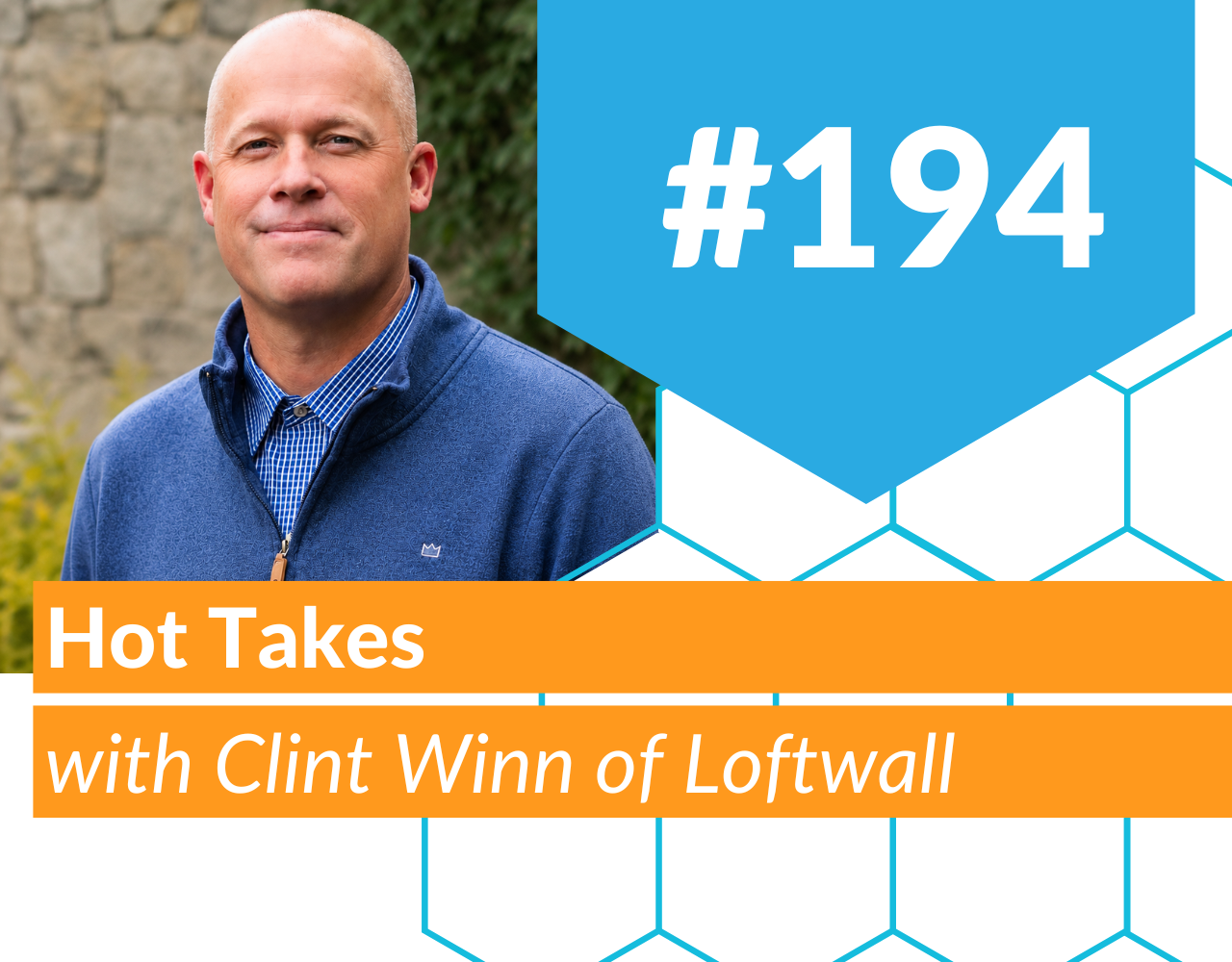
SPEAKERS
Sid Meadows, Clint Winn
Have you ever wanted to pick the brains of an industry leader, an influencer, or someone who's shaping the future of our industry? Or maybe someone who's been in the trenches for a while and has real thoughts and opinions? Well, today we're going to do just that.
Sponsor:We'd like to thank our presenting sponsors, Avanto, services and software that streamline how you operate and the collaborative network, a platform where leaders in the contract interiors industry unite.
The Collaborative Network Ad:If you're leading sales, marketing, or growth in the contract interiors industry, you already know this work can feel isolating. So that's why we built the Collaborative Network. It's a peer-driven community for manufacturers and leaders who want real conversations, real accountability, and practical insight, not generic advice. No posturing, no sales pitches, just experienced people working through real challenges together. If you're ready to grow smarter, check us out at thecollaborative.network.
Sid:Welcome
Hot Takes Format And Guest Intro
Sid:back or welcome to the Trend Report, your inside look at the people, products, and ideas shaping the future of workplace design. I'm your host, Sid Meadows, and I'm glad that you're here for another hot takes episode, where I'm joined by a co-host. We spin the wheel of topics and share our unscripted hot takes in real time. So please join me in welcoming to the show today Clint Winn, the president of Loft wall.
Clint:Hey Sid, thanks for having me. I'm doing good.
Sid:Well, I'm really glad to be here. So before we dive into all this, I got a couple of brief questions for you. First off, you mentioned you've only been in the industry three years. So what's this journey been for you and Loftwall? What's this been like for you guys?
Clint:Yeah, it's been fantastic. I uh like to say that I found Law, kind of at the tail end of my career. Spent 20-something years in sales uh in technology, and another eight or so in finance and construction, and was looking for something different. So just naturally fell into contract furniture as the natural finish to my career. Um but but found a really uh happy place here at Loftwall.
Sid:Well, natural finding the furniture businesses. The two actually don't align very well together, okay? But that's great. So you started Loftwall, you were the sales director, now you're the president of Loftwall so congratulations to you. So give us just a brief glimpse about the future that you see as the leader of Loftwall.
Loftwall Direction And Snap Privacy
Clint:Yeah, we have recently launched a new product called Snap. It is essentially a room in a room that's extremely adaptable. It lives kind of in between a pod system and an architectural walls, and it delivers a you know price per square foot, price per linear foot that's uh spectacular. It's going to be where we lean in as, you know, Loftwall likes to think of itself as leaders in privacy. We're going to lean in in that space, and this is going to be kind of the product that determines our future.
Sid:Oh, that's awesome. I'm I've seen it. I saw I got a sneak peek of it before you guys officially launched it. We happen to live in the same city, and so I got invited down to have a sneak peek at it. And then I did see it at Neocon. It's a great looking product, so excited to see what you guys uh do with that product. And I love the name Snap. That's a really cool name.
Clint:Yeah. Thank you. Yeah, yeah. We we spent a few years developing it and we're really proud of it. It's something uh different from anything else we've ever launched, and and couldn't be more excited.
Sid:All right, we're gonna be watching, all of us be watching.
3D Quoting Tool With WCS
Sid:So now, Clint, you are here today as a guest of WCS Web Configurator, one of our silver sponsors. So tell us briefly for a minute. I know you're a big client of WCS and you use their configurator. So tell us a little bit about the product that you're using and how it impacts your organization.
Clint:Sure. It impacts it in a very large way. When we for when I first started, we had no way to actually have an end user, a dealer, somebody to quote our product or see our product uh in a 3D action and um get pricing on it online. They would have to contact us and you know the slow, slow process that is. So we partnered with Tatiana and built out all of our products in a 3D image. We can get quotes, people can get the pricing they need right there without having to kind of so the way I looked at it was we need to make life easier for our dealers that were you know trying to get our pricing and for all the end users, and they want to see the product. It's great to look through a book, but that's not the world we live in today. And so it was easy for us to work with, Tatiana, and I'll give you some just high-level stats. Almost 40% of our quoting today is done through that tool. So if you think like just in a two-year time frame uh to move from zero to forty percent, and then you can think about the time savings, the people's savings, like that just the amount of time and how I can I can redistribute people's times to other things. So it's been a huge win for us. We've also it's helped us drive revenue. So it's a it's been a real win.
Sid:Oh, that's great. I appreciate you sharing that. And we appreciate WCS being part of our sponsorship pool and excited for them and what they're doing.
Spinning The Wheel Begins
Sid:So, Clint, are you ready to spin this wheel? Let's give it a whirl, see what happens. So, as a reminder, the questions are all random. We have no idea what's gonna pop up on the wheel, and we're gonna just hot take on it. So let's give it a spin. We're gonna get to four questions today, and let's see what our first one is as it comes up here. Oh,
People And Pride In The Work
Sid:this is a great question. So, Clint, what's your favorite thing about working in the industry?
Clint:That feels like it was teed up for me. I've never uh told you I've only been in the industry for three years, but I'll tell you what my favorite thing is and what drew me to it is actually the people. You have a lot of really quality people inside this industry. I thought it was me personally when I first started working with Law Fall. I thought, wow, this is this is something something different. That uh all the people here at Law Fall, very nice, you know, have a very quality background. I don't feel like it's uh necessarily a cutthroat. It was really more people working together to try to, you know, knock out common things. And that's different from my background, right? Finance, you think technology finance, it was like a dog eat dog world. So my favorite thing about the industry is how willing other people are to help you and to talk about the things that they're experiencing and sit down and try to you know find solutions together. So I've really enjoyed the people.
Sid:So, you know, I think that's a common answer for a lot of people is the people in our industry are pretty remarkable. And I agree with you, but I'm actually gonna share something else that I think is really one of my favorite parts about working in the industry. And it's not the product, but it's the end result. I remember when my first job at a dealership, and I finished a project and I was working with the designer inside the dealership, and um we finished it, we were walking away, and we stopped at the doorway, and she turned around and said, Look at this. She goes, We did that. Look at how great that looks. And I thought to myself, that's on point. Like we did do that. So to me, it's not just the product, it's the end result that we get to walk away and go, Hey, we created that. I created that. Look at this, look at how it's gonna impact this company. And to me, that's one of the most rewarding things about doing what we do is we get to see it.
Clint:Yeah, that makes sense. It's the pride in the uh finished product and what you've created, yeah.
Sid:Yeah, it's fun. All right, so let's try to spin this wheel again. And uh let's see if we get hopefully we get like a really challenging question for you. I want to see if we can test you. Oh,
Should Sales Be Certified
Sid:okay. So this question is should salespeople be certified? And so, you know, interior designers in our industry are required, not necessarily required, but a lot of them have their NCID, NCIDQ certification. Architects have an AIA certification. So, what do you think? Should salespeople in our industry be certified?
Clint:Yeah, that's an interesting one. I think training is crucial. So that's basically those kind of go hand in hand, right? What we're saying is should we be certified and trained in a certain way so that you're answering questions and you can uh you know adapt conversation to make sure it fits? I think yes. Do I think it needs to be a set certification? Then I get a little bit sideways because who is it that's that's deciding that in the right way to do it? I think I did pick up a question from your previous one that was like, should they be verticalized for salespeople?
Sid:Specialized, yeah.
Clint:And that's a little bit yeah, that's a little bit different question. I think you should have skills in knowing who you're talking to and the contracts and the things that apply. So that one I would lean more to yes, I think someone on your team should be, you know, verticalized and be available to talk in certain areas. Being certified, uh sometimes I would say I guess overall I would say no, because I think I've known I've spent 30 years in sales and I know people who have pages and pages of certification that I wouldn't listen to. And then I have some people who I don't think I have a certification that are some of the most honest salespeople I've ever dealt with and trustworthy. So I would probably say no. That's your final answer. Um Yeah, I would say no. My hot take would be no.
Sid:So, you know, I think this is an interesting question. And by the way, I appreciate you going back to Rob Kirkbride's episode and sneaking in your answer to the vertical market question. But uh, you know, I don't think they should be certified because to your point, who's gonna certify them? What is it that's certifying them? Now, you know, interior designer community had to come up with NCIDQ, don't ask me when it came up. It's a great, it's a standardization that's based on an exam that requires months and months and months of study and preparation to really test their knowledge base about codes and other things. Sales is a lot different than that. But here's what I do think because there are a lot of modalities as it relates to sales training. You could be trained in this philosophy or this philosophy, or you know, back in the day, we were trained on the Millerheiman blue sheet philosophy, right?
Clint:Yeah.
Sid:And so there's lots of modalities, and I'm not going to say one of them is right or one of them is wrong, but I think they're all beneficial to a degree. But what I do believe is that salespeople in our industry should be students of the industry so that they know all aspects of our industry so that they can speak and talk to their customers in an educated fashion about what we do, about trends in the industry, about you know, workplace policies, about hybrid work and remote work, all these things. Because we talk about a lot of things because we furnish the built environment. And so I think they need to be truly need to be students of our industry. I think salespeople should attend CEUs not to network, but to learn. And I think we should learn just like what the interior designers and architects do, because we can be better sellers if we embrace learning and education.
Clint:I love it. That's uh that's well said. Okay. If you're going to certify, yeah, I'm I'm at this, I'm with you on that 100%. Because if you're going to certify, which manufacturer gets to decide what they're certified? You know, we get into this really strange world. And what really matters is the the morality and the ethical nature of it, and then having the knowledge. So well said.
Sponsor:We'd like to thank our supporting Silver sponsors, KISP, who helps furniture brands visualize and sell products before specification. Navitas Credit Corp. Navitas makes great workspaces affordable, turning furniture projects into easy monthly payments. Web Configurator Services, the leader in AI-powered online product configuration and quoting.
Navitas Ad:Let's talk about what's really driving business decisions today: affordability and cash flow. Now here's the win for you. Close faster and get paid 100% up front, because how many cash clients do you actually have? Bring financing in early and clients stop shopping and start saying yes, because financing isn't a life preserver, it's a closing tool. Contact Janine Waddell at Navitas Credit Corp at 609-206-4513, and she can help you with total project financing, including furniture, AV, sound masking, delivery, design, all in one single payment.
Sid:All right, let's get our third spin in here. We're going really fast. We may get to five today, so let's see what happens.
Clint:All right, I like it. We're gonna get a tough one here.
Sid:Oh, how did we get the same question? Okay, we got the same question. We're gonna hide that and we're gonna spin again. That's where that's never happened to me where the same question came up. User error.
Winning The A And D Attention
Sid:Oh, okay. This is a hot topic, and I'm really interested in your perspective here. How should manufacturers, and I'm gonna say and dealers, rethink their relationship with the A and D community? That's a good question.
Clint:Yeah, I think they absolutely play an integral part. And if you're not engaging and you're not creating tools and reach outs and ways that they can work with you, then you're you're probably missing out at some level. So, how should we rethink it? I've only been in the industry for three years, but I would tell you I've heard stories about some people who went completely to a, you know, focused on the A and D market and away from a dealer market, and I don't know that that's the right answer. I think that's a that's a a poor direction. I think it's a fine nature of both. And what you're really asking is, you know, on the front end of projects, these are people who are sometimes leading what is going into those projects and deciding what is the right aesthetic. So if you're you're not speaking into that, the way I always like to say that is someone else is writing the project or the RFP for you and you're just reacting to it. So you must be engaged on the front end of that so that the community, the AD community knows your products and is positioning them in the right place. How could we do it differently? I don't know. Maybe I'm not the right person to answer that part.
Sid:No, it's okay. I mean, that's okay. What you're talking about is increased increased awareness, increased presence inside the A and D community. So I'm gonna give you my thoughts on this for a minute. So I believe the A and D community is one of the single most important influences in what we do. They are at the front end of the project way early on, and we come in at the tail end of the project as furniture, right? And we're the last in and we're the first cut. Our budgets are always the first one cut. They're not cutting carpet, they're not cutting lighting, they're cutting furniture, right? In order to make their necessary budgets. But in the recent years, and I'm gonna say this probably started in 2020. And if you're a frequent listener, you have heard me talk about this multiple times. One of our biggest challenges that we face, especially as sellers, whether you're a manufacturer or a dealer, is access to the A and D community. Early on in this season, I had Krystal Lucero on the show. We talked about this very issue. The Collaborative Network is hosting in July a panel discussion about this very issue because it's really hard to get in front of them. And I understand it, they are outnumbered. We outnumber them. And so there's a lot of furniture brands and carpet brands and flooring and lighting and all other kinds of things trying to get in front of the community because they are so very important and they have they hold a lot of specification power. But when you can only get one meeting a year, and in that one meeting that you get, these are averages, and I know everybody's gonna be a little bit different. When you get one meeting a year, and you only get 15 to 20 minutes to say who you are, what you do, and why you should be important to them, it is really hard for us to do our job. And so I think we all need to be rethinking how we get to this community, how we reach this community. And I think to me, one of the best ways to do this is to meet them where they are. What I mean by that, think lab research says that the average age of a specifier in the design community is 27 years old. Okay, that's a lot younger than me and you, buddy. So I got the gray hair. Right? And so we have to meet them where they are. Where are they? They're on social media, they're on TikTok, they're on Instagram, they're not on Facebook, and likely not as much on LinkedIn as we'd like them to be. And what they don't want to see from us, I feel like a broken record. If you're a listener and you're just about to start rolling your eyes for what I'm about to say, I'm gonna keep harping on it until I see significant improvements in our industry, right? We want to show pretty product photos everywhere, and that is important because we make a living selling product. But there is a better way for us to attract that audience through engaging content in video formats and putting people first, not product first, to get people to create awareness around who we are and what we do. And if all we do is continue to put our product first and say, hey, look at the features and business of this, and this is great, and this is low cost, and we can do this, right? Then they're gonna continue to turn a blind eye away from us because we're not needing them where they are, and we're not giving them content that they can actually really consume and enjoy. That's my hot take.
Clint:If you don't mind, I'm gonna ask you a follow-up on that one. I want to ask you.
Sid:Whoa, whoa, whoa, whoa, whoa, whoa, whoa, whoa, whoa, whoa, whoa, whoa, whoa. Who's got the mic? Go ahead, ask me, ask me. A lot of guests like to ask me questions, and but anyway, yeah, that was an interesting answer.
Clint:So uh I think what you're saying is meet them where they are. That could look like a let's say myself creating a video of our new product and just showing it in a two-minute video where it's actually me showing them something. Is that what you're saying? And then posting it's social media, it's not LinkedIn, it's or even a 30-second video that's like, hey, why this matters for your space and when you're speculing this or designing this.
Sid:So you're you're getting close, right? A yes, put a body, put you in front of it. And listen, people love to connect with business leaders. You're the president Loftwall. People love to connect with you, right? And they want to hear from you. What I wouldn't do, and I wouldn't do two minutes, I would do 30 to 30 seconds to a minute, right? Yeah because their attention span, like if you've got uh if you've got Gen Z kids, you know what I'm talking about. Their attention spans are like this. So you want to talk maybe about the problem that you were solving with this product. Rather than let me tell you about Snap and how it works. And here's the connector piece that works together and it snaps together. Maybe tell the story of the problem, maybe tell the story of why you created it, who designed it. Think about them, think about the audience, and really lean into them and give it to them and snippets because what you want them to do is be so intrigued by the story that you told them that they go to your website, that they seek the product out, that they save the video, they save the content. And if all we do is throw up product, then now I'm gonna kudos to one of your reps. Okay, let's hear it. Heartwood, Jason and Kelsey, Lauro, your rep in Northern California. Yeah, what do you think about their social these days?
Clint:They've been doing great. It's uh it's not called hot takes, it's uh marriage, let's see, what was it? It's marriage lessons or something. And and counseling or something, and I love it. I watch it.
Sid:We'll drop the Instagram link for Heartwood down into the show notes so people can go check it out. But they do a great job in creating engaging and fun and memorable social experiences, right? They do a great job. And so kudos to them, and that's what I'm talking about. Like, that's a great way to engage with them. I also think that we can over-inundate our customers and influencers with boring, I wish I could yawn and talk at the same time with like boring emails that are full of so many links that you want to click that they have no idea what to do, and so many product pictures, and we've just thrown up with them about how great our product is, but they don't know anything about us. Yeah, they don't know anything about me, they don't know anything about you, they don't really know anything about the company, they just know how great we think our product is, right? And so I think there's a better way to do email marketing. It's important because when you get the gift of the email, you gotta protect it because you don't want them to stay as part of it. So if you're gonna do a newsletter, think about reinventing the newsletter and adding fun things in it. So you know, my business partner at the collaborative network, Michelle Warren, she sends out her newsletter, and in her newsletter is always a cocktail recipe, like a fun cocktail that's appropriate to the month or the season. And people will remember that, they'll save that newsletter because, oh wow, I want to go make that cocktail, right? Those are the things that I'm talking about being unique and different, so you're remembered. Connection points. Yeah, I love it. It's a noisy world out there, buddy. There are a lot of competitors. It is, you gotta stand out in the crowd. The other thing, and I'll say one more thing about this. Our industry has not embraced YouTube. I talked about this with Larry Leet on his hot takes. We've not embraced YouTube, we're Almost non-existent on YouTube. We are a ghost town on uh Substack. Like, I can't find anybody except a couple of people on Substack, which is very interesting too, because of the popularity of that platform with Gen Z. And you know, I just think that there's so many areas for improvement in this that we could reach this community where they are and bring them into our ecosystem in a way that they want to know more about us.
Clint:So yeah, that is, I would say that's probably the largest challenge, right, facing this industry is connecting with the next generation, right?
Sid:Correct, correct. And I'm sorry to all the listeners that are tired of hearing me talking about this, but I am on my soapbox and I'm gonna keep preaching because we got to figure out how to improve. All right, the last question. Okay, here we go.
What Designers Get About Future Work
Sid:What's one thing workplace designers understand about the future of work that manufacturers still underestimate? Let's repeat this question. What's one thing workplace designers, so the interior design community, we just talked about them, what do they understand about the future of work that manufacturers still underestimate?
Clint:Wow, that is a that's a loaded one there, Sid, because I didn't say they were going to be easy. The changing world we're living in today, that makes that difficult. You want to give that a shot first, and I'll let me think about it for a second.
Sid:I will so this is this is one of the new questions, okay, and it is kind of a hard question, but what I'm gonna say that I think the the interior design community really understands that we we underestimate, and I'm saying manufacturer, I'm also gonna say dealer, right? That we underestimate, is they really understand how a building should be designed, how a floor plate should be designed. They understand because they've been involved with the customer, they understand what a collaborative zone looks like, what a you know an open space should be like. They understand the customer's needs, and I don't think we understand the customer's needs because they're in there with their customer, really diving into this, this, and this. We approach it as which piece of furniture can I put here, right? Sure. And which piece of furniture can I put here that's going to give me the best opportunity to win this without understanding the problem that we're solving. The designer understands the problem that our furniture solves for the customer because at the end of the day, that's why they're getting new furniture. They have a problem. That's why they're getting a new space. Furniture is part of that. And we are solving a problem for that customer. And I don't think we fully understand those problems, nor do we take the time to ask the question. We just look at a spec and go, oh, they want a lounge chair here. These are my lounge chairs. They want this, here's this, they want this, here's that. And then which one's going to give me the best opportunity to win this at the lowest price? And I don't think you necessarily can win on the lowest price.
Clint:I think that's a good take. That's where my mind was originally was things that we as manufacturers, dealers, sometimes I would say some dealers do. As manufacturers, we don't spend a lot of time is in the space planning part of the project. What I'm thinking is how many desks are you gonna have? How many desk dividers do we need? Uh, what's the sound issues gonna be in the space as you float through? Like I'm trying to solve a solution, right? I'm just I'm just trying to solve a problem. Whereas I think you're right. I think when you get to the design level, they're looking at it as like, okay, what's the flow of a space and what do we want the field to be? And then on top of that, like a lot of times sound issues are the last thing. They think about that a little more on the front end. Um I've noticed designers will build things in on the front end so you don't end up with you know acoustical issue or issues like that. So I think you're on the right place. I I would say if I had one thing to say, I would say they think far more about the planning of the entire space versus uh kind of what you're saying, like filling the space.
Sid:Yeah. So we agree actually, but we just took it from a different approach. I'm gonna admit, that's actually a really hard question to uh to answer. So it's gonna get hidden now, which means that nobody else is gonna get that question. And that may have been the question that stumps everybody.
How To Reach Clint And Sendoff
Sid:So, but Clint, did you enjoy your hot take session?
Clint:I did. I didn't didn't feel like I was on the hot seat at all. So it was fantastic.
Sid:Well, it's kind of the point, not to feel like you're on the hot seat, but uh to be able to share your thoughts and your insights about what's happening in our industry, because there are a lot of things happening, and it's always a bit of a moving target at times. And it's important for leaders to be present, to be seen, and to share their voice. So I really appreciate you being here today. If our community would like to get in touch with you, what is the best way for them to do that?
Clint:Yeah, you can reach out to us, uh, email through the website, phone, anything works. We are we like to say we're available and right around the corner.
Sid:So we'll be sure all of that's dropped down in the show notes so you can reach out to Clint. I just will say that if you do reach out to him, please let him know you heard him here on the trend report and you appreciate every one of his thought takes. They were amazing, and that's why you're reaching out to him. So, Clint, again, thank you very much for being here.
Sponsor:We'd like to thank our community bronze sponsors, Catalyst Consulting Group, RESEAT, and Prioritas.
Outro:For you listening today, thank you for joining me on the Trend Report, your inside look at the people, products, and ideas shaping the future of workplace design. Go out there and make today great, and we will see you in the next episode. Take care, everyone, and I'm gonna be able to do that.