
Design in Context and the Next Era of Workplace Design
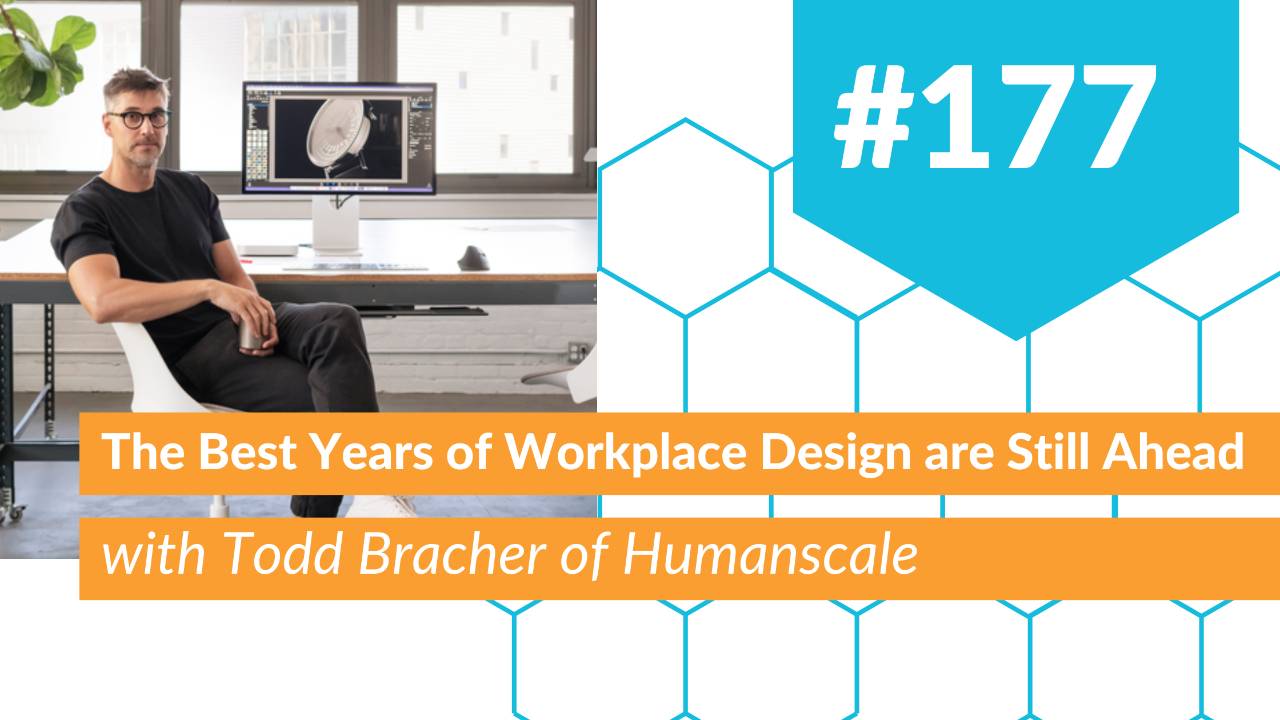
Sustainability, design, and the future of work are often discussed as if they are separate conversations. In reality, they are deeply connected. That was one of the clearest takeaways from my conversation with Todd Bracher, Creative Director at Humanscale, whose perspective challenged me to think differently about what design really is and what our industry should be paying attention to next.
Todd believes good design has very little to do with chasing a new shape for the sake of novelty. In his view, design is not about making something simply look appealing. It is about understanding how something works, why it exists, how it is made, and what responsibilities come with putting it into the world. That perspective is shaped by more than two decades of work across industrial design, furniture, and what he calls contextual design.
Todd shared that his early years in Denmark and later in Milan had a profound impact on how he thinks. In Europe, he argues, design often feels more personal and more deeply tied to craft. He described a culture where decision makers tend to understand design as part of the company’s DNA, not just as a commercial layer added at the end. By contrast, he sees the American market as more financially driven and more oriented toward scale. He does not frame one as better than the other, but he does believe those differences create very different priorities.
What Europe gave him, more than anything, was proximity to making. Todd shared that working closely with factories, craftspeople, and workshops taught him how things are actually built. That experience shaped his design process in a way that many product designers never fully get. He was not simply sending drawings off and waiting for a prototype to appear. He was learning from the people doing the work, and that hands-on understanding continues to inform how he designs today.
That foundation led to one of the most compelling ideas in our conversation, Todd’s concept of contextual design. He argues that while we often repeat the phrase "form follows function," we rarely stop to ask where function itself comes from. His answer is context. Form follows function, and function follows context. He used the example of a tree. A tree becomes what it needs to be because of its environment, light, rainfall, climate, and surrounding conditions. Change the context, and you get a different tree. Todd believes products should be approached the same way. The human need matters. The environment matters. The business reality matters. And when you fully understand those forces, the right design solution begins to reveal itself.
That way of thinking comes to life in Humanscale’s Path chair, which Todd shared as an example of design driven by context rather than styling. He believes the chair works because it started with the right questions. It needed to be the most sustainable task chair possible. It needed to fit nearly everyone. It needed to ship efficiently, assemble quickly, and perform comfortably. Those requirements shaped the solution. The flat-packed components, the 3D knit back, the recycled materials, and the reduced shipping footprint were not aesthetic choices first. They were responses to a set of environmental, human, and business needs.
Todd argues that this is where real innovation happens. Not in the constant cycle of introducing slightly different versions of the same product, but in rethinking the assumptions underneath the product itself. He believes our industry has been too comfortable with rinse and repeat. Another lounge chair. Another table. Another variation on the same familiar theme. In his view, we are still living in the long shadow of past workplace models, refining them around the edges but rarely questioning them at the core.
That is why his view of the future is so interesting. Todd believes the best years of workplace design are still ahead of us. Not because we will simply make better looking furniture, but because we have barely begun to explore how technology, behavior, and physical space can truly converge. He argues that furniture should become a vehicle for technology, not just a static object sitting in the room. Right now, many products remain essentially the same things they have been for decades, just with updated finishes and slightly different forms. Todd believes the bigger opportunity is to listen more carefully to how people actually work and let those needs shape what comes next.
This kind of thinking also shows up in Todd’s most recent book, Observations, Research and Design, a monograph that reflects on his career and the lessons he has learned along the way. In it, he explores the ideas, experiments, and questions that have shaped his work over the past twenty-five years. It is less about celebrating finished products and more about understanding the thinking behind them.
That idea of curiosity and reflection came up several times in our conversation. Todd believes the future will belong to companies willing to question assumptions rather than simply repeat them.
He feels just as strongly about sustainability. Todd shared that while designers can advocate and push, real power sits with manufacturers. They control sourcing, production, packaging, and scale. That makes their choices incredibly consequential. He gives Humanscale a great deal of credit for being willing to do the harder work of changing systems rather than simply talking about better outcomes.
When I asked Todd what advice he would give manufacturers right now, his answer was direct. Specialize. Stay in your lane. Do one thing exceptionally well.
He believes too many brands are distracted by the sea of sameness and the pressure to constantly add something new. Instead, he argues that the stronger path is to understand your core DNA and own it fully.
That may be the bigger lesson in all of this. The future of workplace design will not be built by chasing noise. It will be shaped by those willing to listen better, think deeper, and design with far more intention than repetition.
So here is the question I keep coming back to after this conversation.
Are we designing for what has always been, or are we willing to listen closely enough to shape what comes next?