
Leadership Lessons from Chris Hanes, CEO of Officeworks
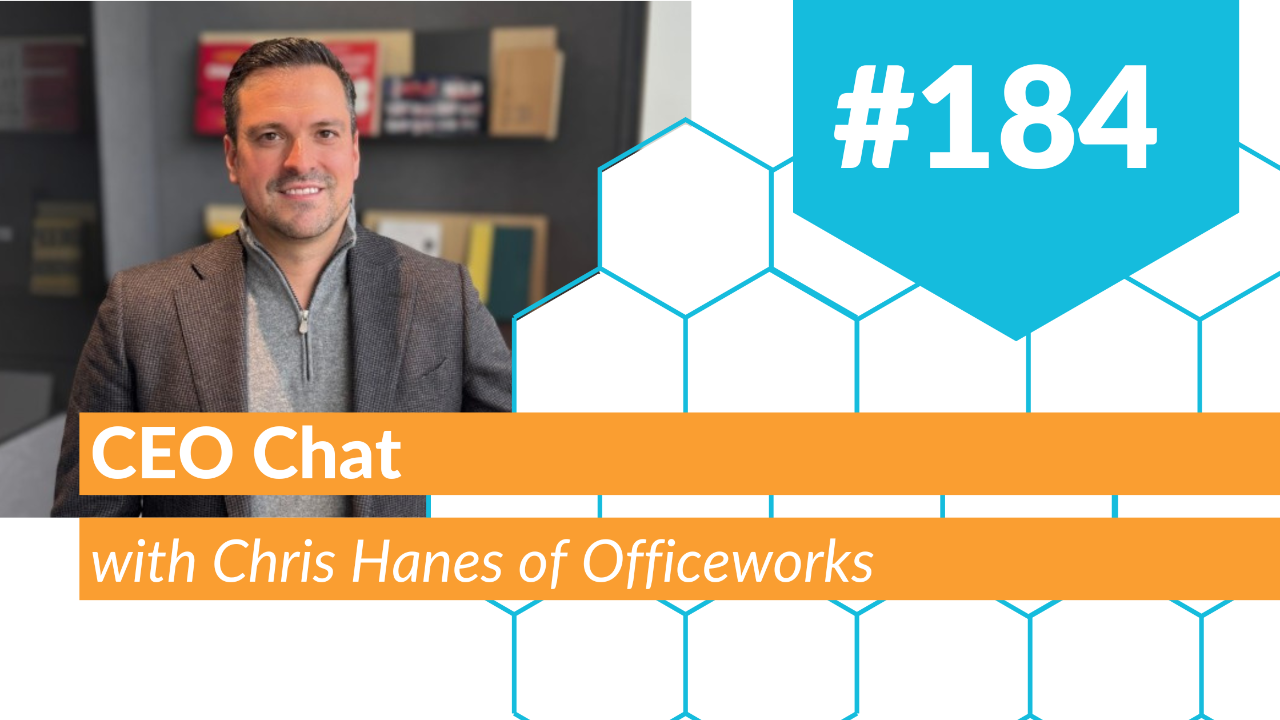
There's something about talking to a leader who is still in the middle of it. Not looking back on what they built. Not reflecting from a distance. Just leading through it, in real time, while the industry shifts around them.
In this CEO Chat episode of The Trend Report, I sat down with Chris Hanes, CEO of Officeworks, to talk about growth, consolidation, talent, and what it really means to lead a dealership in today's market.
Chris didn't plan on a career in furniture. Like a lot of people in this industry, he found his way here through a pivot. A job posting on a college career board led him to a small K-12 manufacturer outside of Grand Rapids, and the rest unfolded from there. Steelcase, Teknion, running a dealership, selling it, and now stepping into the CEO seat at Officeworks less than a year ago.
What struck me about his path isn't just the roles he held. It's the perspective he built along the way. When you've seen the industry from the manufacturer side, the rep side, and the dealer side, you understand how the whole ecosystem connects. And that kind of understanding matters enormously when you're leading at scale.
One of the things we talked about early on was consolidation. It's happening at the dealer level and the manufacturer level, and it's accelerating. Chris's take is that scale, done right, creates resilience. It allows you to serve clients better, support your people more fully, and weather the inevitable shifts in the market. But he was also honest about the risk. As organizations get bigger and expand into new geographies, there's a real danger of losing sight of what makes each local market unique. What works in Boston doesn't automatically translate to Atlanta or Nashville. The culture is different. The way business gets done is different. And the companies that get this right are the ones that resist the urge to show up and tell a new market how things are done. They listen first.
That word kept coming up throughout our conversation. Listening. And not just as a leadership platitude. Chris got certified as an executive coach through American University during the pandemic, and he talked about what that experience actually changed in him. The biggest shift wasn't a framework or a methodology. It was learning to listen with his eyes as well as his ears. To pay attention to what isn't being said. To notice the moment someone's expression shifts and have the courage to ask about it.
I think that's one of the most underdeveloped skills in our industry. We are trained to respond. To have the next question ready. To fill the silence. But the best leaders, and honestly the best salespeople, are the ones who slow down long enough to actually understand what's in front of them.
We also spent time talking about the evolving role of the dealer. And I think it's worth saying clearly: the dealer of today looks almost nothing like the dealer of twenty years ago. It's no longer just about selling furniture and coordinating delivery. It's about managing complexity, guiding stakeholders, mitigating risk, and being a trusted partner across a much broader scope of work. Decommissioning, asset management, sustainability tracking, architectural products, signage. The best dealers are becoming the connective tissue that holds a project together from start to finish.
And as that role expands, the question becomes: how do you build an organization capable of delivering all of that consistently, across multiple markets, while still feeling local?
That's where talent comes in. And I'd argue it's the most important conversation in our industry right now. Chris put it plainly: this is a people business, and it always will be. AI isn't going to change that. What AI can do is make us faster, more efficient, and better equipped to serve clients. Officeworks is in the middle of a full AI readiness assessment, which I think is exactly the right approach. Instead of grabbing tools and hoping for the best, they took a step back to understand their data, their processes, and where technology can actually create value. That kind of intentionality is rare, and it matters.
But even with all of that, the conversation kept coming back to people. Multiple generations in the workforce, each with different definitions of success, growth, and what a good career actually looks like. The ladder that motivated a Gen X leader means nothing to a Gen Z employee who wants integration, flexibility, and a sense that the people they work for actually see them. Building an organization that can hold all of that, and retain great people across all of it, is one of the hardest things a leader can do right now.
What stayed with me after this conversation is how connected all of it really is. Leadership, scale, technology, talent. They aren't separate challenges. They're happening all at once, and the leaders who are navigating it well are the ones doing what Chris described from the very beginning. Listening closely, staying adaptable, and refusing to assume they already have the answer.
Because in a business this complex, the leaders who stay curious will always outpace the ones who stop asking questions.