
The Workplace Crystal Ball Is Cloudy, but the Direction Is Clear
Curiosity is one of the most important ingredients in workplace design right now. But curiosity by itself does not solve the real problem most teams face: the workplace is still expected to work, even as the rules keep changing.
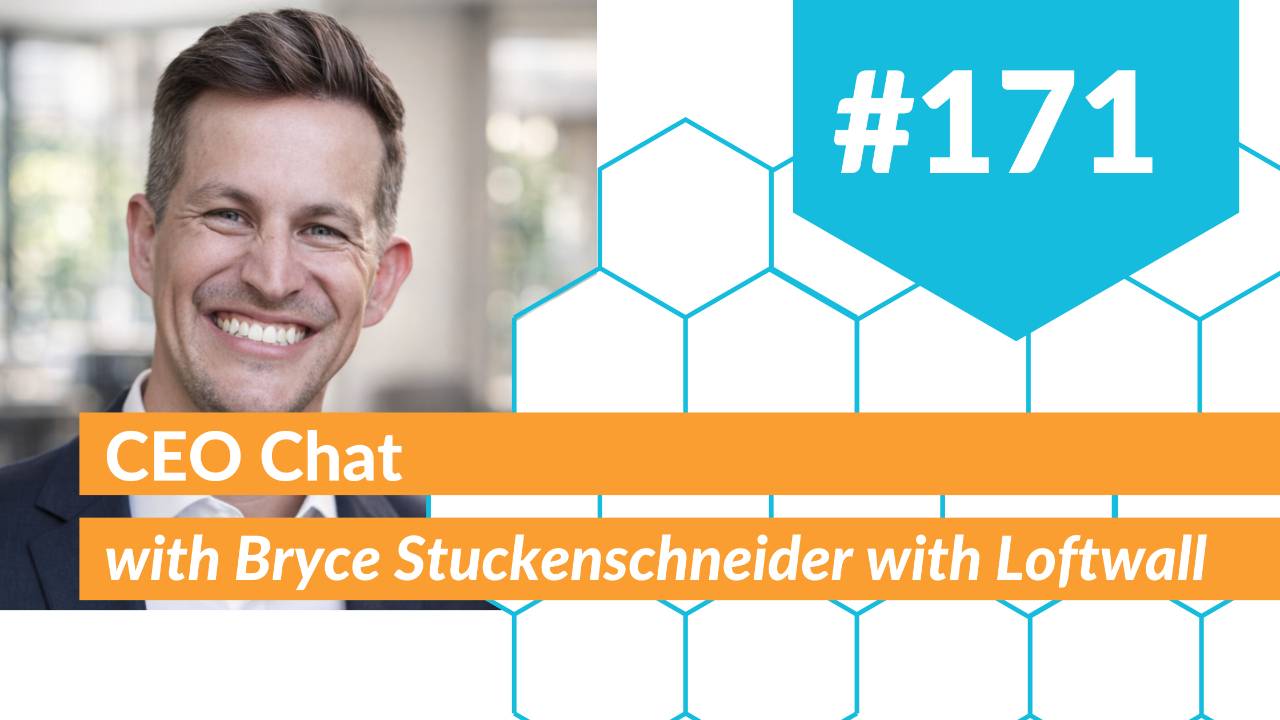
In this conversation with Bryce Stuckenschneider, CEO of Loftwall, that tension comes through clearly. Bryce believes curiosity has to be operationalized. It has to become speed, flexibility, and follow-through. Otherwise, it stays theoretical. He described Loftwall as a team where curiosity is “woven into everybody,” and that shows up in what they are willing to build, how quickly they move, and how seriously they take the human side of service. The goal is not to be busy. The goal is to be useful.
One of the strongest throughlines in the episode is that rethinking the workplace starts with rethinking what people actually need to work well. Bryce’s view is simple and sharp. Teams need flexibility, and they need it without friction. That is part of why Loftwall has evolved from being known primarily for partitions into a broader, privacy-first portfolio and a new wave of freestanding architecture. Bryce is clear about the language here. Loftwall does not want to be framed as a company that sells panels or walls. He believes they sell privacy in the office, and that framing opens the door to a bigger conversation about focus, performance, and how space supports behavior.
At the same time, this episode is not just about acoustics or privacy. It is about how companies build resilience in a market that keeps throwing curveballs. Throughout the episode, we joked that the industry never seems to get a long stretch of calm. Bryce put it bluntly. Every couple of years, something shifts, and leaders have to decipher where they are in the cycle and prepare for whatever comes next. In that context, Bryce believes the best strategy is not to chase everything. It is to double down on what you do exceptionally well.
He said it directly. Dealers love working with Loftwall because they “love going fast,” they like “saying yes to crazy ideas,” and you can “pick up the phone and talk to a person.” Those are not small operational choices. They are strategic. In a world of long lead times, chatbot layers, and unclear ownership, speed plus human support becomes a competitive edge.
That philosophy is also shaping Loftwall’s next product direction. Bryce described a push toward modular, freestanding architecture at a grander scale than what people might expect from a mid-market U.S. manufacturer. He believes there is a gap in the market where you either have to go to the biggest players or look to Europe. Both come with trade-offs. Loftwall’s aim is to find a sweet spot that delivers flexibility at scale, with performance and speed, and without forcing clients into complexity that slows everything down.
Travel and exposure play a surprising role here. Bryce called European shows like ORGATEC a kind of crystal ball, but he also admitted it is a cloudy one. You have to discern what matters. The bigger point is not trend collecting. It is an expanding worldview. He believes manufacturers should not keep that perspective limited to a select few leaders. Loftwall has intentionally brought more team members to these shows, letting them explore, absorb, and come home with conviction. When more people see what is possible, more people can fight for better ideas.
Leadership in turbulence shows up in what you refuse to tolerate. Bryce shared a question that has become a refrain at Loftwall, almost to the point of eye rolls, and that is usually how you know a principal is doing real work. What are you willing to tolerate? He applies it to lead times, quality, relationships, partnerships, and how people are treated. He also connected it to legacy. Not legacy as branding, but legacy as a daily filter for decisions, financial, cultural, and personal. Bryce believes chasing shiny objects rarely builds the kind of legacy you are proud of. Clarity does.
AI enters the conversation as another test of leadership clarity. Bryce is candid about how intense his learning curve was. At first, he found tools like ChatGPT impressive and scary, then he decided not to stand on the sidelines. He believes most people are using AI like enhanced search or email help, and he offered a great metaphor. That is like using an iPhone only for phone calls. The real leverage comes when AI is embedded into workflows and trained on what your company actually stands for.
He gave a concrete example. Loftwall trained AI on brand voice, values, competitive landscape, and how they win, then used it to pressure-test a new product launch across multiple buyer personas. Bryce believes that compressed several years of launch learning into a matter of days. He was also clear about the boundary. Customers do not interact with AI at Loftwall. Outputs can be accelerated, but they are always verified and delivered by a human. He framed the difference as AI-first versus AI-forward, and he is aiming for AI-forward, people-first. In his view, the point is not replacing people. It is expanding each person’s capability.
Then the conversation takes a turn that is quietly profound. Bryce’s dissatisfaction with the status quo does not stop at products. It extends to learning. He believes the traditional CEU model is fundamentally broken, from gatekeepers to long lead times to lunch distractions to inconsistent delivery. His solution is Design Stage, a new platform he described as what would happen if Netflix and MasterClass had a love child for the architecture and design industry. Studio-quality, on-demand CEUs, designed to work on your phone, built to be engaging, and structured so brands can tell a consistent story while designers can actually learn on their own schedule.
If there is a single takeaway from this episode, it is that the workplace does not improve through one big trend. It improves through a series of aligned decisions. Decisions to move faster without becoming careless. Decisions to stay human while adopting new tools. Decisions to protect what you do best instead of tolerating what erodes it. Bryce believes the future belongs to teams that can hold that line, with curiosity, yes, but also with conviction.
And maybe the most useful question to carry forward is his. What are you willing to tolerate?