
The Industry Isn’t Short on Opinions. It’s Short on Honest Conversations.
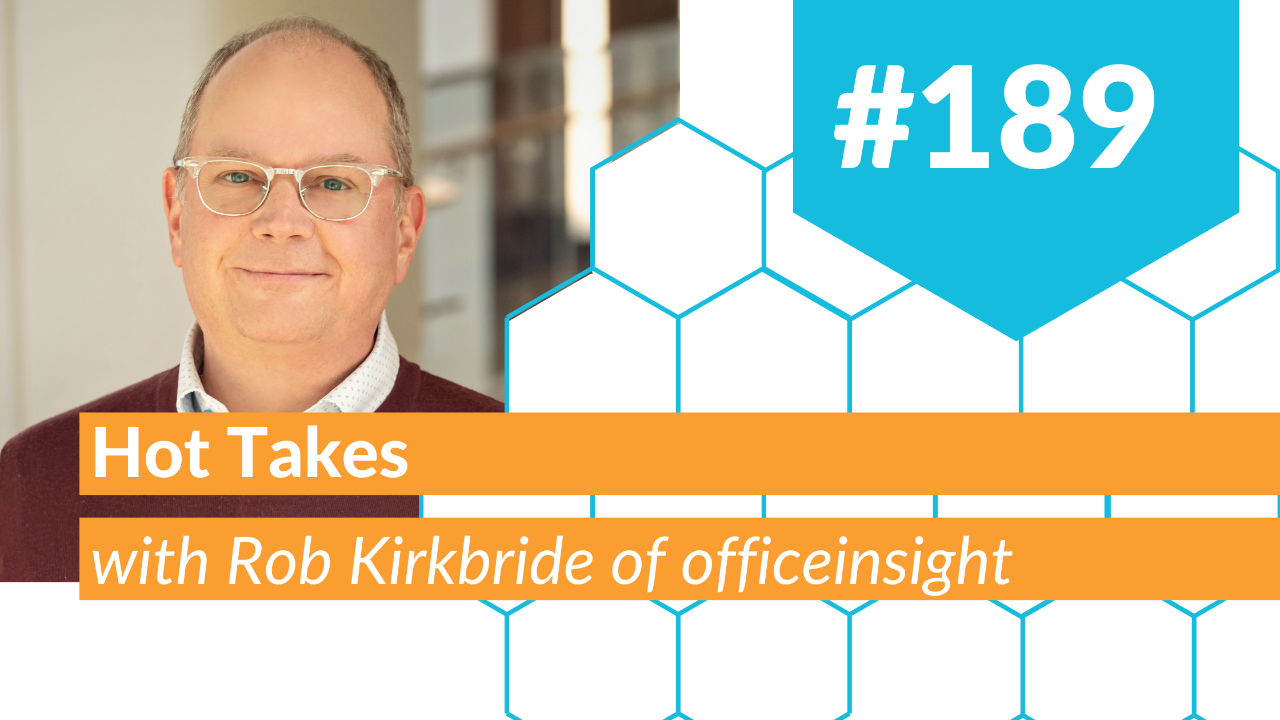
There's something refreshing about conversations that aren't polished, rehearsed, or filtered through corporate messaging. The contract interiors industry spends a lot of time talking about innovation, collaboration, and partnership. But when you peel back the layers, there are still uncomfortable realities we don’t discuss nearly enough.
That’s why candid conversations matter.
In a recent Hot Takes conversation on The Trend Report Podcast, industry journalist Rob Kirkbride and I explored several topics that continue to shape the future of our industry, from dealer loyalty and designer engagement to social media fatigue and the growing disconnect between storytelling and selling.
And honestly? The biggest takeaway wasn’t any single answer.
It was this: Our industry may need fewer talking points and more truth.
Specialization Isn’t the Problem. Isolation Is.
One of the first questions we tackled was whether dealers and reps should specialize by vertical market, or if specialization limits long-term growth.
Healthcare. Education. Hospitality. Workplace. Government.
Each segment speaks its own language. Each has unique buying behaviors, compliance considerations, and customer expectations. The deeper you go into any of them, the more obvious it becomes that surface-level expertise isn’t enough anymore.
The reality is that customers expect more than product knowledge.
They expect contextual knowledge.
A healthcare client doesn’t just want someone who can quote furniture. They want someone who understands patient flow, caregiver burnout, infection control, and how the environment impacts outcomes.
The same is true in education, hospitality, and every other vertical.
But there’s another side to this conversation that matters just as much.
Specialization cannot become isolation.
The best leaders, reps, dealers, and manufacturers remain students of the broader industry. They stay curious. They connect dots between sectors. They look outside their immediate niche to understand trends, behaviors, and opportunities that may reshape the future.
Depth matters.
But so does perspective.
Social Media Is Amplifying Noise More Than Value
Social media was supposed to make it easier to connect.
In many ways, it’s done the opposite.
The industry has fallen into a pattern where many brands confuse visibility with value. We post products endlessly. We celebrate installation photos. We share announcements, launches, and marketing campaigns.
But very little of it actually creates meaningful engagement.
The uncomfortable truth is this: Most content in our industry is promotional, not relational.
And audiences are becoming tone-deaf to it.
During the conversation, Rob made an observation that many people are quietly thinking but rarely saying out loud: AI-generated content is flooding platforms like LinkedIn, making much of social media feel increasingly impersonal and repetitive.
That doesn’t mean AI is the enemy. It means authenticity matters more than ever.
Technology can help organize ideas, improve clarity, and streamline workflows. But the human voice still matters. Perspective still matters. Storytelling still matters.
People don’t connect with polished corporate messaging nearly as much as they connect with honesty, insight, and lived experience.
The companies and leaders who stand out over the next five years won’t necessarily be the loudest. They’ll be the most human.
Dealer Loyalty Cannot Exist Without Trust
Few relationships in our industry are more complicated than the relationship between manufacturers and dealers.
Manufacturers want loyalty. Dealers want partnership.
But those two things are not always built in the same direction.
Trust breaks down when dealers feel unsupported during problems. It breaks down when policies prioritize process over partnership. It breaks down when the expectation is complete alignment, even when another manufacturer may genuinely have the better solution for the client.
The strongest partnerships are built when both sides remember the same thing: The customer matters more than the channel strategy.
That sounds obvious, but it’s surprisingly easy to lose sight of when margin pressure, incentives, and internal metrics enter the picture.
Dealers are on the front lines every day. They absorb the stress, complexity, and expectations of the customer experience in real time.
Manufacturers who truly want loyalty must think beyond contracts, programs, and quarterly goals.
They must ask a harder question: “Do our dealers genuinely feel like we are helping them win?”
Because loyalty is rarely demanded into existence. It’s earned through consistency, accountability, and trust.
Designers Don’t Need More Products. They Need Better Access to Insight.
Our industry often complains that designers only specify from a small group of major brands.
But perhaps the better question is: Have we actually made it easy for them to discover anything else?
Designers are overwhelmed with information. Reps struggle to get meetings. Lunch-and-learns have become increasingly difficult to schedule. Product introductions compete against nonstop noise from every direction.
Meanwhile, thousands of smaller manufacturers with incredible products remain largely invisible. Not because the products lack quality. But because the storytelling ecosystem is fragmented.
This is where manufacturers, dealers, reps, and industry media all have an opportunity to rethink how information is shared. Because furniture is not just furniture anymore. It influences collaboration, focus, wellness, learning, culture, and experience.
And yet too often, furniture brands are still treated as vendors instead of strategic partners.
That mindset limits everyone. The earlier furniture experts are brought into the conversation, the better the outcomes typically become—for the client, the designer, and the project itself.
The Industry Needs More Conversations Like This
One of the healthiest things any industry can do is create room for disagreement, debate, and honest perspective. Not performative controversy. Not outrage.
Just thoughtful conversations between people who care deeply about where the industry is headed. Because progress rarely happens when everyone says the same thing.
It happens when people are willing to challenge assumptions, question old models, and openly discuss what’s working and what isn’t. And right now, our industry needs more of that.
Not less.
Listen in to this episode here: The Trend Report: Episode 189