
What Designers Really Want (And the Quiet Way to Win)
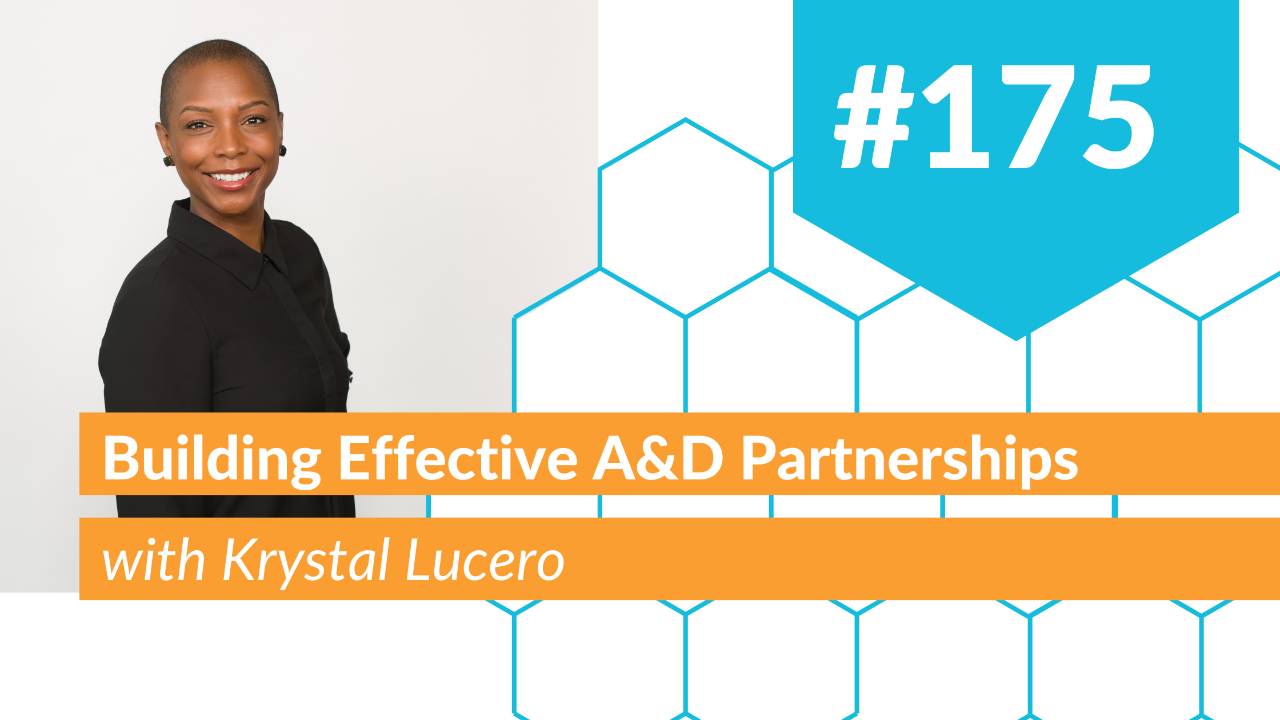
Building meaningful relationships with the A+D community has never been more important, and in many ways, never more complex. Designers are navigating hybrid teams, compressed timelines, and constant digital noise. Access looks different than it used to. Attention is fragmented. And trust has to be earned, not assumed.
In this episode of The Trend Report, I had the pleasure of sitting down with Krystal Lucero, Senior Interior Designer at Edwards + Mulhausen Interior Design. Krystal brings a thoughtful, human-centered perspective to design and leadership, and she understands firsthand what it takes to build relationships that actually last.
Krystal believes partnership is the real objective, not just access. She argues that designers do not need more drop-ins or more product pitches. They need reliable collaborators. When she is deep in a specification and reaches out with a few quick questions, what matters most is responsiveness and accuracy. If you answer quickly and get it right, you earn another opportunity. If you miss the small details, it becomes difficult to trust you with the big ones.
That insight reframes business development in a powerful way. Relationships are not built at the holiday party or over a single lunch. They are built in the quiet moments when someone needs help and you show up prepared.
Preparation, Krystal argues, starts with research. Her firm focuses heavily on higher education and healthcare. If someone walks in presenting hospitality solutions without understanding the firm’s core work, it signals a lack of intention. On the other hand, when a rep references a specific project or demonstrates knowledge of the firm’s focus areas, that immediately communicates care. It is not about being flashy. It is about being intentional.
Krystal also believes partnership is a two-way street. Designers have a responsibility to engage with the reps who invest time and energy into the relationship. Reps, in turn, bring access to broader networks and market intelligence that can benefit designers far beyond a single specification. When both sides recognize the value the other brings, the relationship shifts from transactional to strategic.
What struck me most in our conversation is how much Krystal’s approach to professional relationships mirrors her approach to leadership.
Outside of her role as a senior designer, she is a mom of two and a youth basketball coach. She believes in integration rather than balance. Work and life are not opposing forces to be perfectly equal. They are parts of a whole that need to work together. Coaching young athletes has taught her patience, communication, and how to manage chaos with clarity. She sees the same dynamics on project teams. When the light bulb goes off for a child on the court, it is not so different from when a design solution clicks for a client. Krystal believes leadership is less about control and more about creating environments where people feel seen, capable, and proud of their work.
Mentorship has also played a significant role in her journey. A relationship that began with connection and conversation eventually turned into the opportunity to join Edwards + Mulhausen, where she has now spent more than a decade. Krystal argues that mentorship is not transactional. It grows through consistency, honesty, and shared values. That same patience applies to business relationships. Quick wins are tempting, but sustainable growth requires time.
We also discussed thought leadership and visibility. Krystal shared that consistently seeing industry leaders post, write, and engage publicly keeps them top of mind. Even if she does not read every article in full, steady visibility communicates commitment and credibility. Familiarity builds trust. And trust influences decisions long before a project hits the specification stage.
Finally, we talked about representation in our industry. Krystal believes diverse talent is already here. The opportunity is to amplify those voices and bring them to the forefront. When students and emerging professionals see someone who looks like them in leadership, writing, or speaking roles, possibility expands. Representation is not a talking point. It is a lived experience that shapes who feels welcome at the table.
Rethinking how the workplace works is not only about flexible spaces or evolving technology. It is about how we show up for each other. It is about preparation instead of assumption. Partnership instead of pressure. Patience instead of urgency.
If you are in a selling role, Krystal’s perspective offers a clear challenge. Do your homework. Be responsive. Be accurate. Volunteer. Show up consistently. Ask questions when you do not know. Build credibility in the small moments.
If you are on the design side, her message is equally direct. Engage with the partners who invest in you. Recognize the value of their networks. And be intentional about the relationships you cultivate.
In a fast-moving and often noisy industry, the professionals who stand out will not be the loudest voices in the room. They will be the ones who prepare well, listen closely, and show up consistently. The future of our workplace will be shaped not just by the products we specify, but by the partnerships we choose to build and protect.
So here’s a question worth sitting with:
Are you building relationships that are convenient, or relationships that are intentional and worth keeping?