
Why Does This Brand Have 25 Chairs?
In an industry moving faster than ever, it's easy to get caught up in answering the questions in front of you. What's selling? What's trending? What does the client want? But sometimes the most valuable conversations are the ones that make you pause.
That's what happened in this episode of The Trend Report.
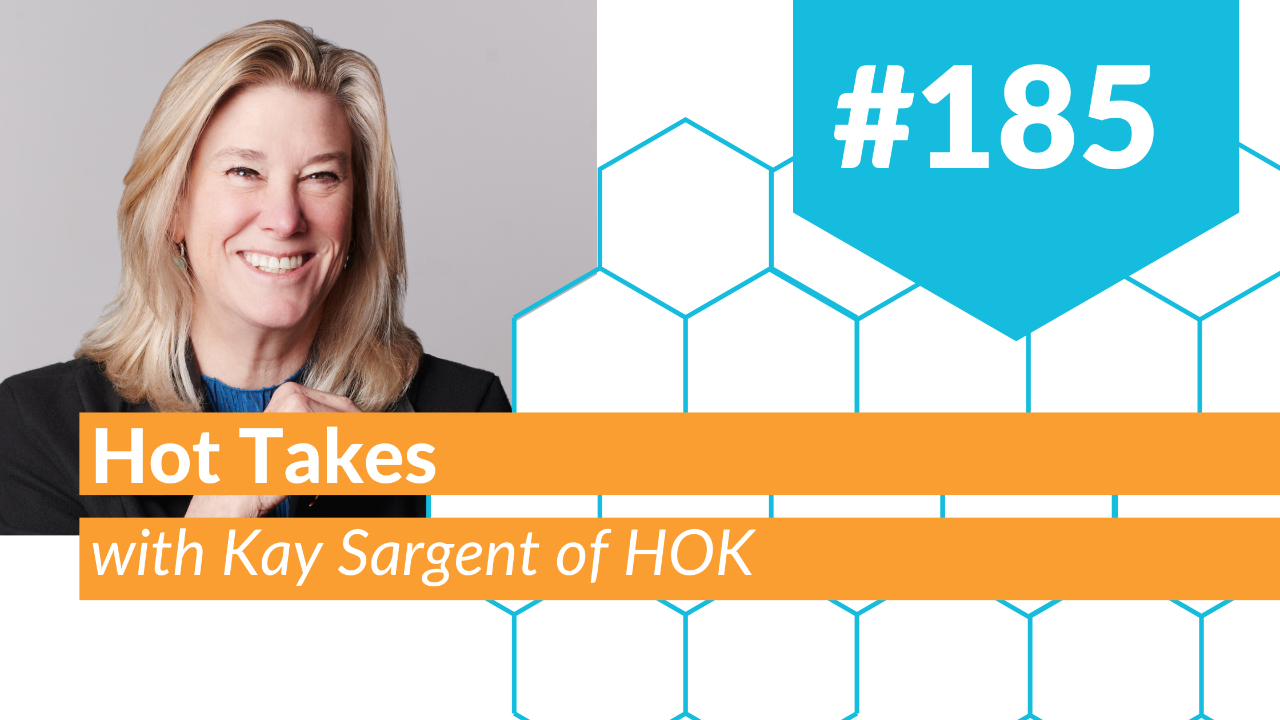
In this Hot Takes episode, I sat down with Kay Sargent, Director of Thought Leadership for Interiors at HOK, practicing designer of over 40 years, and one of the most respected voices in our industry. We spun the wheel, tackled seven topics, and let the conversation run.
One of the first topics we landed on was the role of dealers today. Are they strategic partners, or are they order takers? Kay's answer was clear: they should be strategic partners, and they have always had the ability to be. But she made a point that stuck with me. Designers are often asking dealers to go beyond their role, to do parts of the job that designers should be doing themselves. The result is that dealers get squeezed from both sides, and the strategic value they can bring gets buried under the transactional.
From where I sit, dealers are the glue. They connect the manufacturer to the end user, they manage the complexity of every project, and they are the front line for every brand they represent. That role isn't diminishing. If anything, it's becoming more important.
From there, the conversation turned to one of the more persistent challenges our industry faces: why is it so hard to recruit new and young talent?
Kay pointed to something that often gets overlooked. Architecture and design simply aren't presented as viable career paths early enough. By the time students are making decisions about their future, most of them have never heard a compelling story about what this industry actually offers. And the representation they do see, mostly on television, doesn't come close to capturing the depth and variety of what's possible here.
I think about this a lot. Our industry isn't just sales and interior design. It's marketing, engineering, manufacturing, graphics, logistics, thought leadership, and more. But if we're not showing up at career days, in classrooms, and in the right conversations, we can't be surprised when the next generation doesn't find us.
We also talked about whether we're making it harder for customers to buy from us. Kay reframed the question in a way I appreciated. It's not that we're making it harder. It's that it's genuinely more complicated than it used to be. The days of going to one manufacturer for 80% of your needs are largely gone. The market has expanded, the product mix has diversified, and the number of manufacturers, over 3,000 by some counts, means there are more decisions to navigate than ever before.
The real challenge, I think, is that we're adding complexity when we should be working to remove it. At the end of the day, the client wants a solution. They're not buying a brand. They're buying an outcome.
Then came the question I wasn't expecting to love as much as I did. What's your favorite sales question?
Kay's answer: what do you value? Not what do you need. Not what's your budget. What do you actually value? It's deceptively simple, but she's right. Most clients have to stop and think about it. And in that pause, you often find the real conversation.
My answer was a little different: what problem are you trying to solve? When you understand the real problem, you uncover more opportunities to help. As Kay put it, we basically asked the same question from two different angles. And I think that's the point. Better questions lead to better answers, and better answers lead to better outcomes for everyone.
We also dug into thought leadership, which felt fitting given Kay's role. Is individual thought leadership important? Absolutely. But Kay made a point that I think deserves more attention. Our industry is struggling with a fragmentation problem. Everyone is putting ideas out there, but without enough collaboration, we end up with ten different definitions for the same concept. "Flex space" is a perfect example. Depending on who you ask, it could mean coworking, hot desking, preset suites, or something else entirely.
Thought leadership only works if it clarifies. When it confuses, it does more harm than good. The goal has to be a shared language, not a louder individual voice.
We touched on consolidation next, at the dealer level, the manufacturing level, and beyond. Kay made a strong case that dealer expansion into multiple markets is largely good because it matches what clients actually need: partners who can support them wherever they operate. Manufacturing consolidation is more nuanced. Done well, it creates efficiency and focus. Done poorly, it creates redundancy, diluted brand identity, and a portfolio trying to be everything to everyone.
That last part is something I think about more and more. If a brand offers 25 versions of a task chair that all do essentially the same thing, who does that serve? Not the dealer. Not the customer. Simplicity is a competitive advantage, and I don't think enough brands treat it that way.
We closed the conversation on AI, and Kay didn't hold back. She sees it through three lenses: operational, analytical, and generative. And she's clear-eyed about both the potential and the risk. AI can analyze a 500-page RFP in seconds. It can help refine language and surface patterns. But it will also generate confident, well-written answers that aren't true, and if you don't know enough to question them, you won't know the difference.
The story she told about someone "reading" her book through ChatGPT and receiving a plausible but fabricated summary was one of the best illustrations I've heard of why human judgment still matters. AI will give you an answer every time. It will not be right every time.
What I took away from this conversation is something that applies to every topic we covered: the quality of our questions shapes the quality of our outcomes. Whether you're working with a client, developing your team, or thinking about the future of your business, it's worth slowing down long enough to ask something better.
What do you value? What problem are you trying to solve? Those aren't just great sales questions. They're great questions for an industry trying to figure out what comes next.